

Inpatient Rehab Options: Your Ultimate Guide 2025
Why Finding the Right Inpatient Rehab Program Is Critical for Recovery Success
Inpatient rehab options can feel overwhelming when you’re facing addiction or watching someone you love struggle with substance use. The statistics paint a stark picture: with over 54.6 million Americans needing substance use treatment but only 13.1 million receiving care, a massive treatment gap exists. This means that for every person who gets help, three others do not. This makes the decision to seek care—and to choose the right program—even more critical for achieving lasting recovery success.
To steer this decision, it’s helpful to understand the main categories of care available.
Key Types of Inpatient Rehab Options:
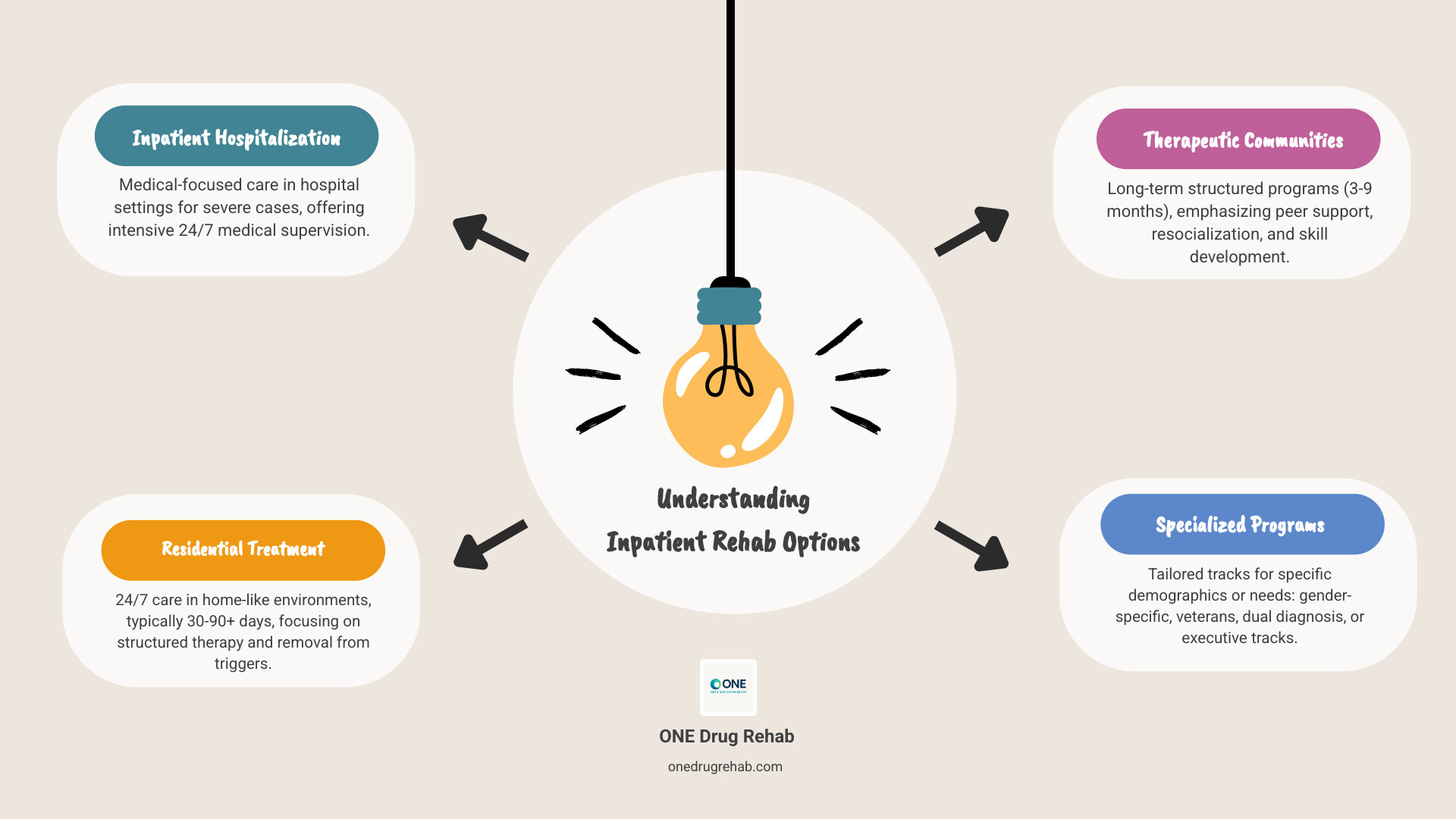
- Inpatient Hospitalization – This is the most intensive level of care, delivered in a hospital setting. It’s designed for individuals with severe medical or psychiatric conditions alongside their addiction, or those at high risk for dangerous withdrawal symptoms.
- Residential Treatment – The most common form of inpatient care, these programs provide 24/7 supervision and therapy in a structured, home-like environment. Stays typically last 30, 60, or 90 days, allowing clients to focus entirely on recovery away from daily triggers.
- Therapeutic Communities – These are highly structured, long-term programs, often lasting 3 to 9 months. The focus is on resocialization and uses the community itself as a key agent of healing, helping individuals develop personal accountability and new life skills.
- Specialized Programs – Recognizing that a one-size-fits-all approach doesn’t work, many centers offer specialized tracks. These can be gender-specific (for men or women), custom for veterans dealing with PTSD, designed for executives who need to maintain professional contact, or focused on treating dual diagnosis (co-occurring mental health and substance use disorders).
Addiction is a chronic disease, much like diabetes or hypertension. This comparison is not just a metaphor; it means addiction requires ongoing management, lifestyle adjustments, and a comprehensive care plan. It is not a moral failing or a lack of willpower. The research is clear: people who stay in treatment for 90 days or longer have significantly better outcomes, with almost 90% of those who remain abstinent for 2 years staying drug and alcohol-free at 10 years.
But here’s the challenge – not all rehab programs are created equal. Treatment can range from $200 per day at standard, state-funded facilities to over $3,000 daily at luxury centers. This price difference often reflects amenities, but more importantly, it can reflect staff-to-patient ratios, the availability of specialized medical staff, and the types of therapies offered. The approach, staff qualifications, and treatment philosophy vary dramatically between facilities.
This guide gives you a complete checklist to evaluate your options confidently. You’ll learn exactly what questions to ask, what red flags to watch for, and how to match your specific needs with the right program. Whether you’re looking at state-funded options or private facilities, we’ll help you steer this critical decision.
Important inpatient rehab options terms:
Understanding Inpatient Rehab: The Foundation of Recovery
When we talk about inpatient rehab options, we’re referring to the highest level of care available for substance use disorder. This is where you live at the treatment facility 24/7, fully immersing yourself in recovery. Think of it as creating a protective bubble around your healing journey. This bubble intentionally separates you from the people, places, and pressures that trigger substance use, allowing you the mental and physical space to focus solely on getting well.

What makes inpatient treatment so powerful is the constant medical and emotional support surrounding you. Imagine having doctors, nurses, and therapists available around the clock—people who understand the complexities of addiction and can intervene whenever you need help. This is especially crucial during medical detox, which is often the first step in treatment.
During detox, medical professionals carefully monitor your body as it clears itself of substances. They use medications and other therapies to manage withdrawal symptoms, address health complications, and provide immediate support. For substances like alcohol or benzodiazepines, withdrawal can be life-threatening, involving risks like seizures or delirium tremens. Medically supervised detox makes this process as safe and comfortable as possible, providing a stable foundation for the therapeutic work ahead.
The structured environment becomes your new normal, which is a powerful agent for change. Your days are thoughtfully planned with a mix of individual therapy, group sessions, educational workshops, personal reflection time, and wellness activities like yoga or meditation. This isn’t about restricting your freedom; it’s about replacing chaotic, addiction-driven routines with healthy, predictable ones that will serve you long after you leave treatment.
Inpatient rehab options focus on several key goals: stopping substance use, improving overall life functioning (physical, mental, and spiritual), and providing the tools to prevent or manage relapse.
Here’s something encouraging: addiction treatment has success rates similar to other chronic conditions like diabetes, high blood pressure, and asthma. Just like these conditions, addiction responds well to proper treatment and ongoing management. The research consistently shows that longer treatment periods lead to better outcomes. People who stay in treatment for 90 days or more have significantly better chances of lasting recovery. In fact, nearly 90% of those who remain substance-free for 2 years are still clean and sober at the 10-year mark.
For more detailed insights on what makes treatment effective, the Principles of effective addiction treatment from NIDA offers valuable research-based guidance.
Key Benefits of Inpatient Treatment
Medical detox supervision gives you the safest possible start to recovery. Beyond comfort, it’s about safety. Medical professionals monitor vital signs and manage withdrawal symptoms to prevent dangerous complications, ensuring you are physically stable enough to engage in therapy.
Integrated mental health services address the whole person. It’s estimated that about half of individuals with a substance use disorder also have a co-occurring mental health disorder (a “dual diagnosis”). Quality inpatient programs treat both issues simultaneously, recognizing that untreated depression, anxiety, or PTSD can be powerful triggers for relapse.
The peer support community becomes like a second family. You’re living alongside others who truly understand your struggles because they’re on a similar path. This shared experience breaks down feelings of isolation and shame, fostering powerful bonds and creating a built-in support network that often lasts a lifetime.
Focus on self-care helps rebuild your relationship with yourself. This goes beyond the basics. It includes nutritional counseling to heal the body, physical fitness to release stress and build strength, and mindfulness practices to manage cravings and regulate emotions. You learn to treat your body and mind with the kindness they deserve.
The comprehensive care model means you have an entire team working together on your behalf. Your case manager, primary therapist, psychiatrist, medical doctor, and wellness specialists all collaborate, sharing insights to create and adjust a treatment plan that is uniquely custom to your needs and goals.
Is Inpatient Rehab the Right Choice for You?
Deciding whether inpatient rehab options are right for your situation is one of the most important choices you’ll make. While outpatient programs offer flexibility, inpatient care provides an intensity and level of support that may be necessary for certain circumstances.
| Program Type | Intensity Level | Living Situation | Cost Range (Approx.) | Ideal Candidate |
|---|---|---|---|---|
| Inpatient Hospitalization | Highest | Hospital setting | $1,000-$2,000/day | Severe medical complications, dangerous withdrawal symptoms, multiple failed attempts |
| Residential Treatment | High | Home-like facility | $200-$800/day | Moderate to severe addiction, need for structure, co-occurring disorders |
| Therapeutic Communities | Moderate to High | Structured community living | $100-$400/day | Long-term addiction, need for life skills, criminal justice involvement |
| Specialized Programs | Varies | Custom environments | $300-$3,000/day | Specific populations (executives, veterans, women, etc.) or dual diagnosis needs |
Severe addiction often requires inpatient care. This may be indicated by a loss of control over substance use, spending a great deal of time obtaining and using substances, neglecting major responsibilities, and continuing to use despite serious negative consequences to your health, job, or relationships. If you’ve tried outpatient treatment without success, a higher level of care is likely needed.
Co-occurring disorders like PTSD, depression, or bipolar disorder benefit greatly from integrated treatment. When mental health issues and addiction are intertwined, one often fuels the other. An inpatient setting allows for simultaneous treatment from a team that can manage medications, provide specialized therapy, and address how the conditions interact, giving you the best chance for lasting recovery.
An unstable home environment can sabotage recovery efforts. If your living situation involves family members who use substances, high levels of conflict, a lack of emotional support, or easy access to drugs and alcohol, it can be nearly impossible to heal. Removing yourself from that environment is often essential.
Previous relapse history doesn’t mean you’ve failed—it means you need a different, more intensive strategy. Relapse is a common feature of chronic disease. For many, the 24/7 support, structure, and therapeutic intensity of an inpatient program are what’s needed to finally break the cycle and build a stronger foundation of recovery skills.