

Why Veterans Deserve Specialized Support in Addiction Recovery
Drug rehab programs for veterans are specialized treatment services designed to address the unique challenges military service members face with substance use disorders. These programs understand the military culture, trauma, and service-related injuries that make veterans more vulnerable to addiction.
Quick Guide to Veteran Drug Rehab Programs
What Makes Veteran Programs Different:
- Military Cultural Competence – Staff trained in military values and experiences
- Trauma-Informed Care – Specialized treatment for PTSD and combat trauma
- Peer Support – Connection with other veterans who understand service-related challenges
- Integrated Treatment – Simultaneous care for substance use and mental health conditions
Main Treatment Options:
- VA Healthcare System – Residential, outpatient, and intensive programs through VA medical centers
- VA Community Care Network – Access to private facilities when VA services aren’t available
- Specialized Veteran Programs – Private rehabs with dedicated veteran tracks
- State and Local Resources – Free or low-cost programs for veterans
Insurance Coverage:
- TRICARE for active duty and families
- VA healthcare benefits
- CHAMPVA for eligible family members
- Private insurance accepted at many facilities
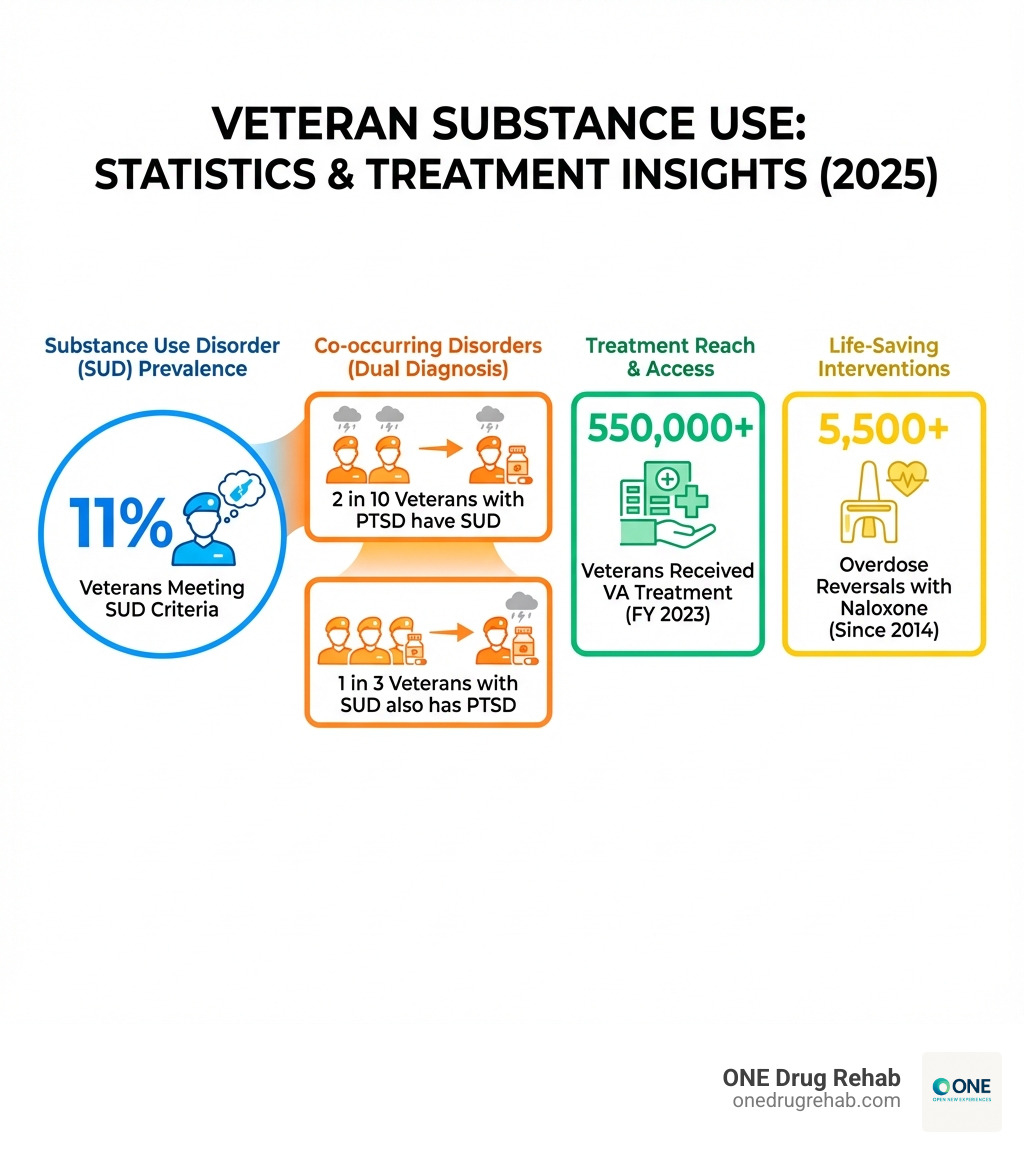
If you served in the military, you’re not alone. About 11% of military veterans meet criteria for a substance use disorder when they seek treatment. The physical demands of service, combat trauma, chronic pain, and the difficulty of transitioning to civilian life all contribute to substance abuse.
The good news? Recovery is possible, and specialized help exists for veterans like you.
Veterans face unique risk factors. Combat exposure, military sexual trauma, traumatic brain injuries, and access to prescription pain medications all increase addiction risk. More than 2 out of 10 veterans with PTSD also have a substance use disorder, creating a “dual diagnosis” that requires integrated treatment.
This guide explains treatment options, how to access care through VA or private programs, and what makes veteran-focused rehab unique. Whether you’re seeking help for yourself or a loved one who served, you’ll find clear information on the path forward.
Why Veterans Face Unique Addiction Challenges
Military service can come with significant physical and psychological costs. Veterans are at a higher risk for Substance Use Disorders (SUDs) than civilians, a direct consequence of the demands and traumas of service, not a reflection of personal weakness.
Combat exposure, for instance, can lead to lasting psychological tolls. High-stress environments and violence can create a need for relief from overwhelming feelings, often leading to self-medication with drugs or alcohol that can spiral into addiction.
Physical injuries are another major factor. A staggering 60% of veterans report chronic pain. To manage this, military physicians historically prescribed high volumes of pain relievers, with prescriptions quadrupling to almost 3.8 million between 2001 and 2009. When prescriptions run out, withdrawal can drive individuals to seek illegal drugs, entrenching the addiction cycle.
Beyond combat, military culture can sometimes contribute to substance use, with some environments normalizing heavy drinking. The transition to civilian life also sees a rise in illicit drug use among veterans. Losing structure and camaraderie can leave veterans feeling isolated and vulnerable to substance abuse. Stigma can also prevent veterans from seeking help, leading to self-medication and worsening conditions.
The Strong Link Between PTSD and Substance Use
One of the most profound connections in veteran addiction is the link between Post-Traumatic Stress Disorder (PTSD) and substance use. Over 11% of veterans who have seen combat now face PTSD. The relationship is often bidirectional: PTSD symptoms can prompt substance use as a coping mechanism, and substance use can worsen PTSD symptoms.
For instance, veterans with PTSD might use alcohol or drugs to sleep, but this often backfires, worsening sleep quality and increasing SUD risk. Substances are also used for emotional numbing, to cope with hypervigilance, or to escape trauma. While offering temporary relief, they ultimately exacerbate the underlying issues.
According to the U.S. Department of Veterans Affairs (VA), more than 2 out of 10 veterans with PTSD also have an SUD. Conversely, one in three veterans with an SUD also has PTSD. This highlights the critical need for integrated, dual diagnosis treatment that addresses both conditions simultaneously for lasting recovery. You can learn more at the VA’s page on PTSD and substance abuse in veterans.
Common Co-Occurring Mental Health Conditions
While PTSD is prominent, many veterans struggle with other mental health conditions alongside SUDs, requiring a comprehensive approach. Common co-occurring conditions include:
- Depression: Stemming from the toll of service, chronic pain, or reintegration challenges, depression can lead to self-medication that deepens depressive symptoms.
- Anxiety: High-stress military environments can foster anxiety disorders. Using substances like alcohol to calm nerves can lead to dependence and rebound anxiety.
- Traumatic Brain Injury (TBI): Common in combat, TBIs can cause cognitive, emotional, and behavioral changes that increase addiction vulnerability and complicate recovery.
- Insomnia: Sleep disturbances are rampant among veterans. Using substances to induce sleep is a common but counterproductive coping strategy.
Integrated treatment for these co-occurring disorders is crucial. Treating mental health and substance use disorders simultaneously offers the best outcomes for long-term recovery, leading to a more stable foundation for a healthier life.
Types of Treatment Programs Designed for Veterans
Not all drug rehab programs for veterans are created equal. Specialized programs offer distinct advantages by recognizing the unique needs of those who have served. These programs are built on military cultural competence, ensuring staff understand military culture and values. They often incorporate strong peer support networks, fostering camaraderie and trust vital for healing.

Levels of Care in Addiction Treatment
Addiction treatment involves various levels of care custom to individual needs and the severity of the SUD. Understanding these levels helps determine the best fit:
| Level of Care | Intensity | Living Situation | Best-Fit Candidate |
|---|---|---|---|
| Medical Detox | High | Inpatient (hospital or specialized facility) | Individuals with severe physical dependence requiring medical supervision for safe withdrawal. |
| Residential/Inpatient | High | Live-in facility, 24/7 support | Individuals needing a structured, immersive environment away from triggers, often with co-occurring mental health issues. Average stay in VA residential programs is 35 days. |
| Partial Hospitalization Programs (PHP) | Medium-High | Live at home, attend treatment during the day (5-7 days/week) | Individuals needing intensive support without 24/7 supervision, often stepping down from residential care. |
| Intensive Outpatient Programs (IOP) | Medium | Live at home, attend treatment several times a week (9-20 hours/week) | Individuals with a stable living environment who need significant support while maintaining work/life responsibilities. VA IOPs are typically 8 weeks. |
| Outpatient Programs | Low | Live at home, attend weekly sessions | Individuals with mild to moderate SUDs or those in long-term recovery needing ongoing support and relapse prevention. |
Many drug rehab programs for veterans offer all these levels, ensuring a seamless transition as you progress. The VA, for instance, offers medically managed detoxification, outpatient counseling, IOP, and residential care.
What Are the Benefits of Specialized Drug Rehab Programs for Veterans?
Specialized drug rehab programs for veterans offer distinct benefits that significantly impact recovery:
- Shared Experience and Camaraderie: Being surrounded by fellow veterans creates an environment of understanding and trust. There’s a shared understanding of military life, trauma, and reintegration challenges that reduces isolation.
- Reduced Stigma: In a veteran-specific program, the stigma of seeking mental health and addiction treatment is significantly lessened. Peers understand the courage it takes to ask for help.
- Therapists Trained in Military Culture: Staff often have specific training in military cultural competence and trauma-informed care. They understand military service, moral injury, and combat trauma, allowing for more effective treatment.
- Focus on Veteran-Specific Issues: These programs tailor therapy to address issues unique to veterans, such as deployments, military sexual trauma, and loss of military identity. This focus ensures treatment is relevant and resonant.
- Evidence-Based Therapies: Specialized programs use evidence-based therapies proven effective for veterans, often integrating approaches for co-occurring disorders from day one.
These benefits create a healing environment where veterans feel seen and understood, paving the way for lasting recovery.
Modern Approaches: Integrated Treatment and Harm Reduction
Modern drug rehab programs for veterans accept two critical approaches: integrated treatment and harm reduction.
Integrated Treatment: Given the high prevalence of co-occurring conditions like PTSD, integrated treatment is paramount. This approach means treating substance use and mental health conditions simultaneously. Research shows addressing both at the same time leads to more sustainable recovery. The VA emphasizes this, offering integrated care for veterans with both SUDs and mental health challenges.
Harm Reduction: This approach focuses on reducing the negative consequences of substance use, even if abstinence isn’t immediately achievable. This pragmatic philosophy prioritizes safety. For veterans, harm reduction can be life-saving. For example, the VA makes naloxone available to reverse opioid overdoses, reporting over 5,500 reversals since 2014. Harm reduction also includes education on safer use, access to clean supplies, and relapse prevention. It protects a person’s life while they pursue recovery.
Navigating Benefits and Accessing Drug Rehab Programs for Veterans
Navigating benefits to access drug rehab programs for veterans can feel complex, but many resources can help you find the care you deserve.
Accessing Treatment Through ONE Drug Rehab
As a non-affiliated resource, ONE Drug Rehab simplifies your search for specialized drug rehab programs for veterans. Our goal is to provide clear, unbiased information to connect you with reputable treatment options.
When you reach out to ONE Drug Rehab, our team can:
- Guide you through our extensive directory: We offer an online directory of addiction treatment providers, allowing you to filter by specific needs, including veteran-focused programs.
- Help you understand different program types: We can explain what each program offers, from inpatient to outpatient and specialized trauma therapies.
- Support you with initial steps: We don’t handle admissions, but we help you identify programs that align with your needs and provide contact information so you can take the next step.
- Connect you to specialized veteran programs: We can assist you in finding centers that understand military culture and provide trauma-informed care.
Our mission is to give you the information needed to make informed decisions about your treatment journey.
Eligibility, Costs, and Community Resources
Accessing care often involves navigating the VA healthcare system, understanding eligibility, and considering costs.
VA Eligibility and Costs:
- Enrollment in VA Health Care: Eligibility for VA substance use treatment is usually tied to enrollment in the VA health care system. You can apply online.
- Discharge Status: Your discharge typically needs to be “other than dishonorable.” However, exceptions exist; those with undesirable or bad conduct discharges may still qualify based on a VA determination.
- Cost Coverage: The VA offers many treatment programs, but costs can vary based on your VA eligibility, length of stay, income, and whether the need for rehab is service-related.
- Service-Connected Disability: If your SUD is determined to be a direct result of your military service, VA disability benefits may help cover the full cost. Only the VA can make this determination.
VA Community Care Network:
If the VA cannot provide necessary care, the VA Community Care Network can help. This program allows veterans to access private facilities outside the VA system with prior VA approval, significantly expanding your options.
TRICARE and CHAMPVA:
- TRICARE: For active-duty members, retirees, and their families, TRICARE covers recovery services like detox, inpatient rehab, and outpatient therapy, often with prior authorization.
- CHAMPVA: This program provides healthcare benefits for eligible spouses and children of veterans with permanent and total service-connected disabilities or who died from service-connected conditions. It can help cover treatment costs for eligible family members.
Free or Low-Cost Options Outside the VA:
- State and Local Government Programs: Many states offer free or low-cost treatment programs.
- Medicaid: If you qualify, Medicaid can cover most of the cost of treatment.
- Non-Profit Organizations: Groups like The Salvation Army often provide free or low-cost rehabilitation services.
- Private Treatment Centers: Some private facilities offer sliding scale fees or scholarships. You can find these options through the SAMHSA treatment locator.
Multiple pathways to treatment exist. We encourage you to explore these options and contact organizations to understand your eligibility.
Exploring Additional Support Options for Veterans
Beyond the VA, many support options exist to help veterans in recovery. Finding the right fit means looking at specialized veteran rehab centers, state and local resources, and non-profit organizations. Our ONE Drug Rehab directory can help you find programs catering to the unique needs of veterans.
Many specialized drug rehab programs for veterans exist, such as the FORTITUDE program at The Recovery Village or the “Salute to Recovery” track available through American Addiction Centers. These programs understand military culture and trauma, offering a validating environment.
Finding Free or Low-Cost Drug Rehab Programs for Veterans
Affordable treatment is a common concern, but many free or low-cost drug rehab programs for veterans exist. Our ONE Drug Rehab directory can help you identify these options. We list programs that accept Medicaid or offer sliding scale fees and scholarships.
Here’s how to look for these options:
- State and Local Government Programs: Many state and local agencies fund treatment centers that provide services at reduced or no cost. These can be a lifeline for veterans without extensive insurance.
- Scholarships and Financial Aid: Some private centers offer scholarships or financial assistance for veterans. Don’t hesitate to ask about these options when researching facilities.
- Medicaid: If you qualify, Medicaid can cover most or all of your treatment costs. It’s worth checking your eligibility.
- SAMHSA Treatment Locator: The Substance Abuse and Mental Health Services Administration (SAMHSA) offers an online treatment locator that can help you find facilities, including those offering free or low-cost services.
You don’t have to steer this alone. We can help you identify potential resources and connect you with facilities that offer these affordable options.
Resources for Homeless Veterans
For homeless veterans, substance use challenges are compounded. Thankfully, dedicated resources are available for both housing and treatment.
- National Call Center for Homeless Veterans: This 24/7 resource (877-424-3838) connects veterans with trained counselors for immediate assistance and links them to local VA services for homeless veterans.
- VA Homeless Programs and Community Resource and Referral Centers: The VA offers programs to prevent homelessness, including temporary housing, case management, and treatment connections. These centers also connect veterans to non-VA housing and support resources.
If you or a veteran you know needs housing support while struggling with substance use, please reach out. Housing stability is a critical step toward recovery.
Taking the First Step: Resources and Long-Term Recovery
Taking the first step to seek help is daunting, but it’s an act of courage. Overcoming the stigma of addiction and mental health is a battle, but you are not alone, and help is available.
We encourage you to start the conversation with a trusted friend, family member, or a healthcare professional. Initial assessments are crucial to determine the best level of care and type of drug rehab programs for veterans for your needs. Quitting “cold turkey” on your own can be dangerous and is not recommended without medical supervision.
Immediate Crisis Support for Veterans
If you or a veteran you know is in crisis, immediate help is available:
- Veterans Crisis Line: This free, confidential, 24/7 resource is for veterans, service members, and their families. You can connect with responders by:
- Calling 988 and Pressing 1
- Texting 838255
- Using the Chat online confidentially option
- For TTY, call 711 then 988.
- Emergency Services: If someone is showing symptoms of overdose or is in immediate danger, dial 911 right away.
Support for Families and Loved Ones
Addiction impacts the entire family, and loved ones of veterans also need support:
- Al-Anon and Alateen: These fellowships support friends and family of people who drink excessively. Alateen is for younger people.
- Nar-Anon Family Groups: These groups support loved ones of people who use drugs.
- VA Caregiver Support Program: The VA offers programs to support caregivers of veterans.
- Community Reinforcement and Family Training (CRAFT): The National Center for PTSD offers an online CRAFT course, teaching families how to encourage a loved one to seek treatment.
These resources can provide invaluable guidance and emotional support for families.
Aftercare and Sustaining Long-Term Recovery
Recovery is an ongoing process requiring sustained support after a drug rehab program for veterans concludes. Aftercare planning is a critical part of effective treatment.
Options for aftercare and long-term recovery include:
- Continuing Care Programs: Many facilities offer structured aftercare, including weekly group therapy, counseling, and check-ins. For instance, some VA programs offer 13-week SUD maintenance programming after residential treatment.
- Sober Living Homes: These provide a supportive, drug-free environment for those transitioning from inpatient care.
- Peer Support Specialists: These are people in recovery who provide guidance and mentorship, playing a crucial role in a veteran’s journey.
- Mutual Support Organizations:
- 12-Step Groups: Alcoholics Anonymous (AA) and Narcotics Anonymous (NA) are fellowships providing community-based support through a structured program.
- SMART Recovery: This program offers a secular, science-based approach focusing on self-empowerment.
These resources help veterans build a foundation for sobriety and reintegrate into their communities. If you’re looking for specialized drug rehab programs for veterans that prioritize long-term recovery, you can explore options in our directory, such as veteran rehab centers in Florida or veteran rehab centers in Texas.
Conclusion
Military service leaves an indelible mark, and for many veterans, this includes struggles with substance use. We’ve explored the unique challenges veterans face—from combat trauma and chronic pain to reintegration—which contribute to a higher vulnerability to addiction. We’ve also highlighted the importance of specialized drug rehab programs for veterans offering military cultural competence, trauma-informed care, and integrated treatment.
Recovery is a reality for countless veterans who have bravely sought help. You served our country and deserve the best care to heal and reclaim your life.
At ONE Drug Rehab, we are a non-affiliated resource to help you steer addiction treatment. Our directory lists drug rehab programs for veterans, offering transparency to empower your search. Taking the first step is the hardest, but most important.
Your path to healing is waiting. Don’t hesitate to reach out and explore the options available. Find a specialized veteran treatment program in our directory today.