

Why Lack of Insurance Shouldn’t Stop Your Recovery
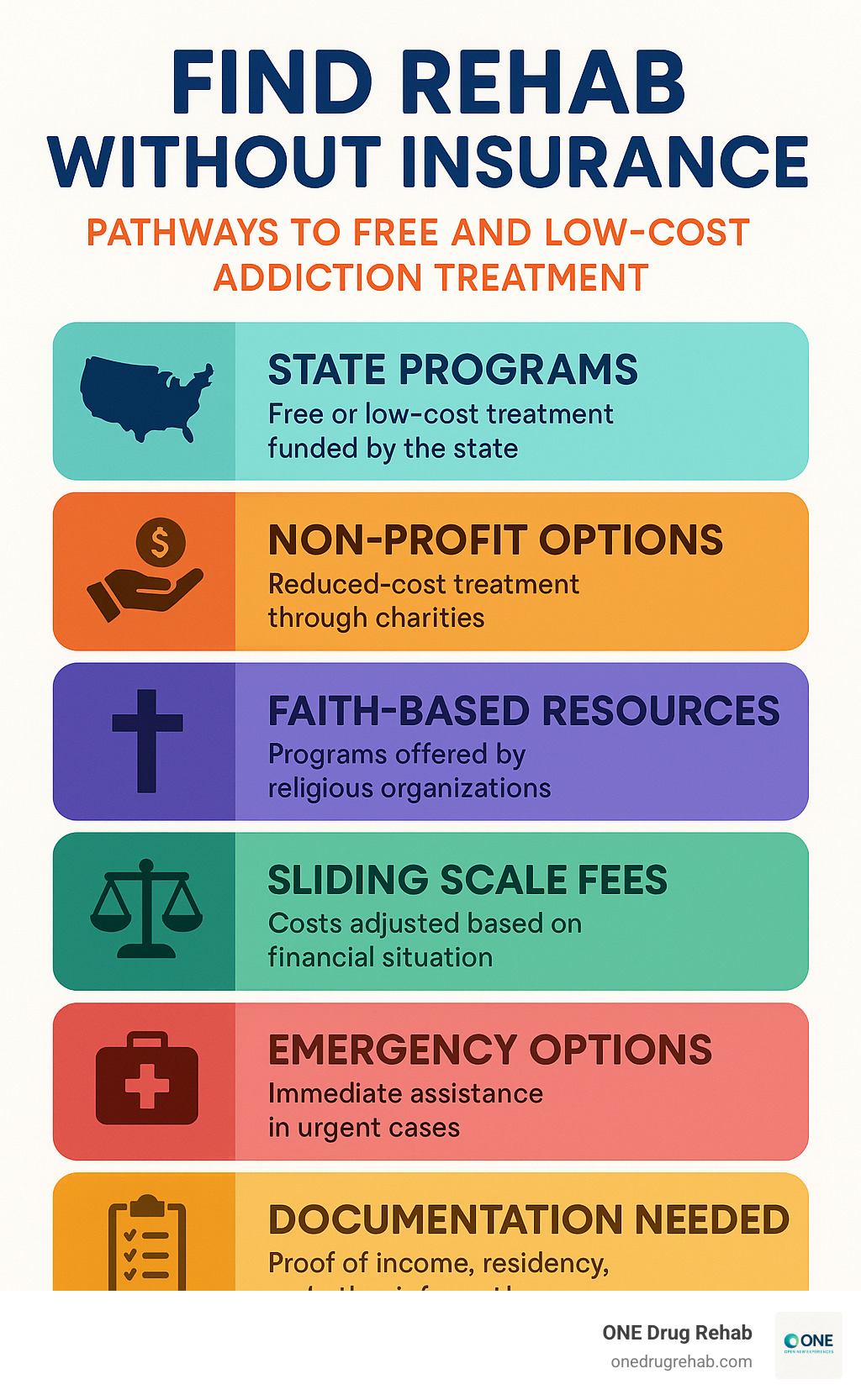
When you need to find rehab without insurance, you have more options than you might think. Here are the main ways to access addiction treatment without health coverage:
Quick Options for Uninsured Treatment:
- State-funded programs – Free or low-cost rehab through government funding
- Non-profit organizations – Sliding-scale fees based on your income
- Faith-based programs – Free treatment through religious organizations
- Scholarships and grants – Financial aid specifically for addiction treatment
- Payment plans – Spread costs over time with treatment centers
- Community health centers – Local resources with reduced fees
The numbers tell a sobering story about the treatment gap in America. In 2022, 54.6 million people aged 12 or older needed substance use treatment. Yet only about 13.1 million received any form of treatment in the previous year.
Cost remains the biggest barrier. Only 7.1% of Americans with alcohol use disorder and 11% addicted to illicit drugs received specialty treatment in 2015. Many people assume they can’t afford help, but that’s simply not true.
Every state provides funds for addiction services for the uninsured. Some facilities offer payment plans or sliding scales where costs adjust to your income. The Salvation Army runs more no-cost rehab centers than any other group in the United States.
The reality is this: the cost of staying addicted often exceeds the cost of getting clean. An alcoholic buying a 12-pack daily spends over $3,000 per year. Former heroin users report spending tens of thousands on their addiction. Meanwhile, year-long methadone treatment costs around $4,700.
Understanding the Real Costs of Addiction vs. Treatment
Before we explore how to find rehab without insurance, let’s talk about something that might surprise you: the real cost of addiction versus getting treatment.
When you’re struggling with addiction, treatment costs can feel overwhelming. Outpatient detox typically runs $1,000 to $1,500 total. Inpatient rehab programs range from $6,000 to $20,000 for a 30-day stay. A three-month outpatient program costs around $5,000, while methadone maintenance runs about $4,700 per year.
Those numbers can make your heart sink. But here’s what many people don’t realize—staying addicted costs far more than getting clean.
Why Treatment Is Cheaper Than Staying Addicted
We’ve done the math, and it’s honestly shocking. That daily beer habit where you grab a 12-pack costs over $3,000 per year. People dealing with heroin addiction often spend $10,000 or more annually—sometimes much more.
But the financial damage goes way beyond what you spend on substances. Think about the lost productivity when you miss work or perform poorly. Consider the health bills that pile up from emergency room visits and ongoing medical problems. Don’t forget legal fees from DUI charges, court costs, and fines.
When you think about rehab with an investment mindset, everything changes. That one-time treatment cost of $6,000 to $20,000 can save you from years of financial bleeding. It’s like fixing a leaky roof—expensive upfront, but it prevents thousands in water damage later.
| Yearly Addiction Costs | One-Time Rehab Investment |
|---|---|
| Beer habit: $3,000+ | 30-day inpatient: $6,000-$20,000 |
| Heroin addiction: $10,000+ | Outpatient program: $5,000 |
| Lost wages: Varies | Methadone treatment: $4,700/year |
| Legal/health costs: $1,000s | Outpatient detox: $1,000-$1,500 |
Factors That Drive Rehab Prices
Understanding what makes treatment cost more or less helps when you need to find rehab without insurance. Think of it like shopping for a car—you need to know what features you’re paying for.
Level of care makes the biggest difference. Inpatient programs cost more because you get 24/7 supervision, housing, and meals. Outpatient treatment costs less since you sleep at home and handle your own meals.
Program length obviously affects price. A 30-day stay costs less than 60 or 90 days, though longer treatment often leads to better outcomes. It’s a balance between what you can afford and what you need.
Amenities can drive prices through the roof. Some facilities offer spa services, gourmet meals, and resort-like settings. Others focus on core treatment services without the frills. Both can be effective—it depends on your budget and preferences.
Location matters too. Treatment centers in expensive areas like California or New York charge more than those in rural areas or states with lower living costs. Sometimes traveling for treatment actually saves money.
How to Find Rehab Without Insurance
Here’s the reality: when you need to find rehab without insurance, you’re not out of options. In fact, you might be surprised by how many doors are actually open to you.
The journey starts with knowing where to look. Think of it like having a roadmap—once you know the route, the destination becomes much more reachable.
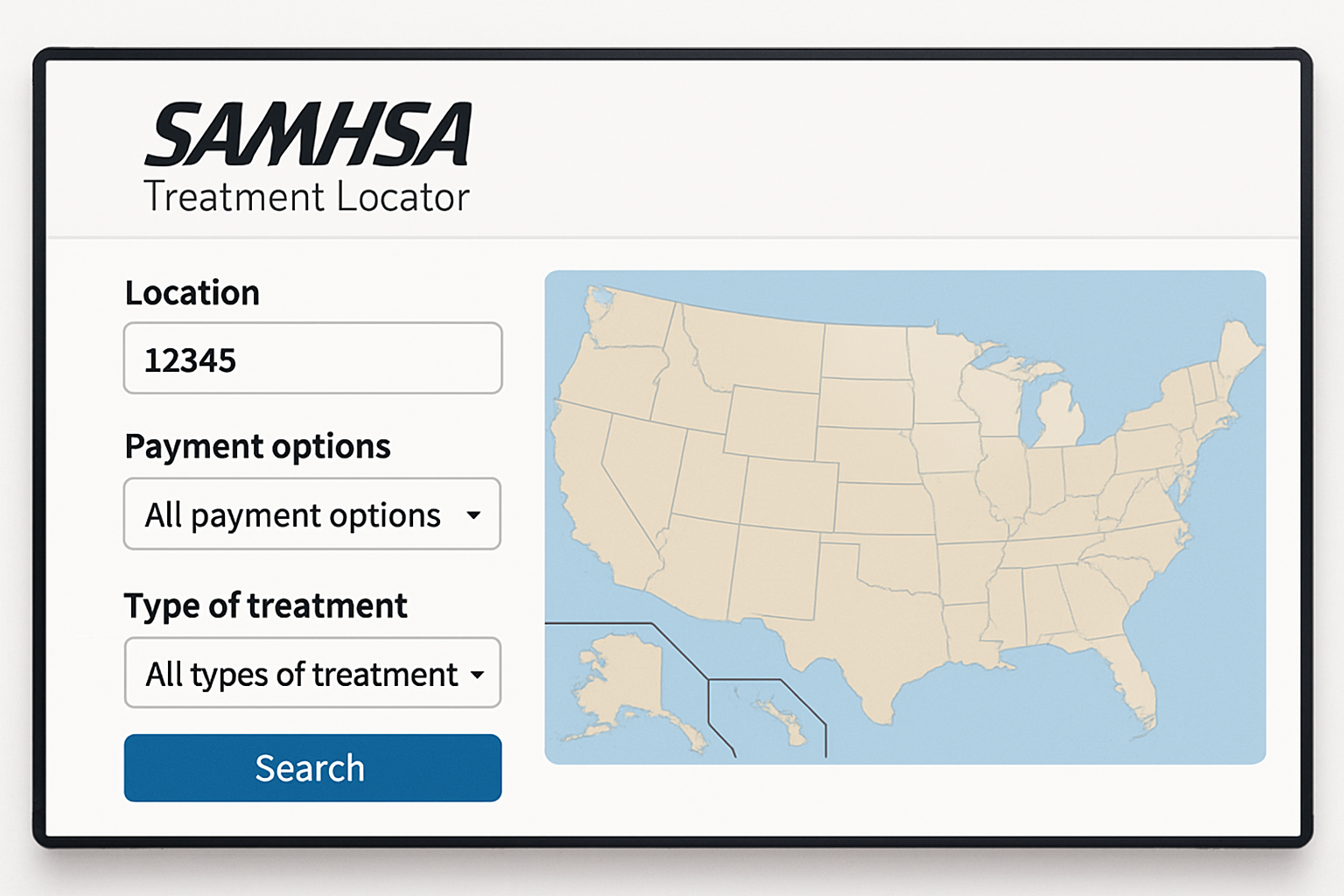
Your best first stop is the SAMHSA treatment locator. This government-run database isn’t just comprehensive—it’s specifically designed to help people in your exact situation. You can filter results by “sliding fee scale” and “payment assistance,” which are fancy terms for “we’ll work with what you can afford.”
The smart approach is to cast a wide net initially. Start with government resources since they offer the most comprehensive free options. Then explore non-profit organizations that often provide sliding-scale fees based on your income. Don’t overlook faith-based programs—many are completely free and welcome people regardless of their religious background. Scholarships and grants exist specifically for addiction treatment, and most treatment facilities are willing to discuss payment plans.
State & Government Programs to Find Rehab Without Insurance
Every single state in America receives federal money specifically to help uninsured people get addiction treatment. This isn’t charity—it’s your tax dollars at work, designed for exactly this situation.
Here’s how it works: The federal government gives grants through SAMHSA, and states distribute this money to approved treatment facilities. Some programs cost absolutely nothing. Others use sliding-scale fees where you pay based on what you actually earn, not some arbitrary number.
Who can get help? The requirements are usually pretty straightforward. You’ll need to prove you’re a U.S. citizen or legal resident, show your income with pay stubs or tax returns, and demonstrate that you don’t have adequate insurance coverage. Most states also require you to be a resident.
Some groups get moved to the front of the line: pregnant women and mothers with children, veterans, people facing medical emergencies, and individuals with both addiction and mental health issues. If you fall into any of these categories, mention it when you call.
To find your state’s specific programs, check out the State Agencies page or contact your state’s substance abuse office directly.
Before you make any calls, gather your paperwork. You’ll need a photo ID, Social Security card, proof of income (last three pay stubs or your most recent tax return), proof of residency like a utility bill or lease, and if you’ve been denied insurance coverage, bring that letter too.
Non-Profit, Faith-Based & Community Resources
Non-profit organizations often become lifelines for people who need to find rehab without insurance. These groups exist specifically to fill the gaps that traditional healthcare leaves behind.
The Salvation Army runs more no-cost rehab centers than any other organization in the country. Their programs typically blend addiction treatment with spiritual guidance and work therapy. While they’re faith-based, most accept people from all backgrounds—you don’t need to share their beliefs to get help.
The 10,000 Beds Program offers scholarships for addiction treatment. They accept applications every Monday until they hit their limit of 50 applications, so timing matters. The application process is straightforward, and it’s absolutely worth trying if you qualify.
Local churches and religious organizations frequently partner with treatment centers or run their own programs. Even if you’re not religious, many of these programs focus primarily on recovery rather than conversion. The worst they can say is no, and many will surprise you with their openness.
Community health centers provide addiction counseling and can connect you with treatment programs. These federally qualified health centers exist in most communities and often serve as excellent starting points for finding comprehensive care.
Using Online Tools to Find Rehab Without Insurance
The internet can be your best friend when searching for treatment options. Several reliable tools can streamline your search and save you hours of phone calls.
The SAMHSA Treatment Locator remains the gold standard. It’s updated regularly and allows you to filter by payment options, location, and treatment type. When you’re searching, look for facilities that offer “sliding fee scale,” “payment assistance,” or “free treatment.”
FindTreatment.gov is the government’s newest directory, updated weekly with current facility information. It’s particularly useful for finding the most up-to-date contact information and services.
At ONEDrugRehab, we maintain a comprehensive directory without favoring any particular provider. Our location listings include detailed information about payment options, helping you compare facilities objectively. We’re not trying to sell you on any specific center—we just want you to find the right fit.
Most state health department websites also maintain their own directories of funded treatment programs. These can be goldmines for finding local resources that might not appear in national databases.
Scholarships, Grants & Financing Plans
Financial aid for addiction treatment comes from more sources than most people realize. The key is knowing where to look and being persistent in your applications.
SAMHSA awards targeted grants throughout the year, including specific funds for pregnant women, people who inject drugs, and other priority groups. These grants filter down to treatment centers, which then offer free or reduced-cost care.
Many treatment centers offer their own scholarship programs. Don’t be shy about calling facilities directly to ask about available financial aid. The worst they can say is that they don’t have any current openings, but many will work with you or refer you to other options.
MyTreatmentLender specializes in financing options for addiction treatment. They often offer more flexible terms than traditional loans because they understand the unique circumstances people face when seeking treatment.
Private foundations like the National Association of Addiction Treatment Providers maintain updated lists of grants and scholarships specifically for addiction treatment. These resources change frequently, so it’s worth checking back regularly.
The 10,000 Beds program deserves another mention here—they’re specifically designed to provide scholarships for people who can’t afford treatment. Their application process is user-friendly, and they’ve helped thousands of people access care.
Cutting Your Rehab Bill Even Further
Once you’ve found some promising options to find rehab without insurance, don’t stop there. You can often slash those costs even more with a few smart moves.
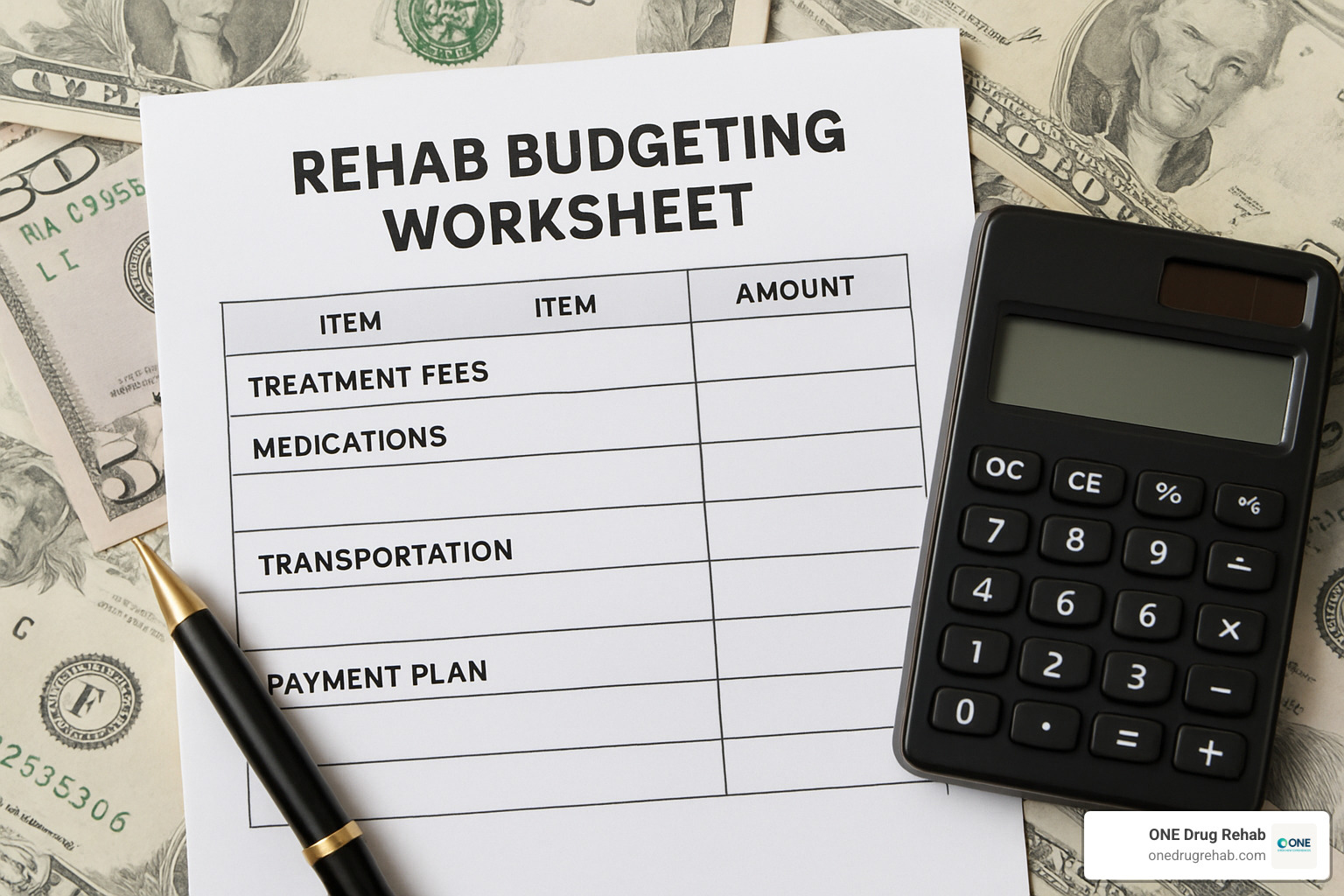
The key is knowing what to ask for and how to ask for it. Most treatment centers want to help you get clean—they just need to cover their costs too. That’s where creative solutions come in.
Don’t accept the first price you hear. When a facility quotes you a rate, ask specifically about sliding-scale options. You might be surprised to learn that 58% of facilities offer these reduced fees, but many don’t advertise it upfront. They’re waiting for you to ask.
Payment plans can be a game-changer. Many facilities will let you start treatment with just a partial payment, then spread the rest over several months. Some even let you defer payment until after you complete treatment and get back on your feet. The worst they can say is no, but you’ll often hear yes.
Think strategically about location. A quality treatment center in rural Tennessee might charge half what you’d pay in Los Angeles or New York. The clinical care is often identical—you’re just paying less for overhead. If traveling means saving thousands of dollars, it’s worth considering.
Bring your own medications if you take prescriptions. Treatment centers often mark up pharmacy costs significantly. Your regular medications from your home pharmacy can save you hundreds of dollars.
Mix and match your treatment levels for maximum savings. Start with a brief inpatient detox for medical safety, then transition to intensive outpatient programming. You get the medical supervision you need during withdrawal without paying for expensive residential days you might not require.
DIY Cost-Reduction Checklist
Here’s your action plan for squeezing every dollar of savings from your treatment search:
Get your paperwork ready first. Gather recent pay stubs, tax returns, and bank statements before you start calling. Having this documentation ready speeds up the process and shows you’re serious about treatment.
Ask every single provider about financial assistance. Don’t assume anything. That high-end facility might have a scholarship program they don’t mention on their website. That state-funded center might have additional grant money available.
Compare program lengths carefully. Sometimes a 28-day program costs nearly the same as a 30-day program at the same facility. Other times, extending from 30 to 60 days adds significant value for just a small price increase.
Look into telehealth options for counseling and follow-up care. Many programs now offer remote sessions at lower costs than in-person visits. This works especially well for ongoing therapy after initial treatment.
For more guidance on how sliding fee scales work, check out this sliding fee scale resource to understand what documentation you’ll need and how facilities calculate reduced rates.
Negotiating treatment costs isn’t about being cheap—it’s about removing barriers to getting the help you need. Treatment centers understand that financial stress can sabotage recovery, so they’re often willing to work with you on creative payment solutions.
What to Expect: Intake, Assessment & Waiting Lists
Understanding the admission process helps you prepare and avoid delays when you find rehab without insurance.
Pre-screening Call: Most facilities start with a phone assessment covering your substance use history, medical conditions, insurance status, and treatment goals. Be honest—this information helps them determine if they can help you and what level of care you need.
Medical and Psychosocial Evaluation: If you qualify for admission, you’ll complete comprehensive assessments covering:
- Physical health and withdrawal risk
- Mental health status and suicide risk
- Substance use patterns and history
- Social support systems and living situation
- Previous treatment experiences
Waiting Lists: State-funded and free programs often have waiting lists due to high demand and limited funding. Don’t let this discourage you—get on multiple waiting lists and ask about interim services.
Interim Outpatient Services: Many programs offer outpatient counseling or support groups while you wait for residential admission. This keeps you engaged in recovery and may move you up the waiting list.
Preparing Your Paperwork
Having documentation ready speeds up the admission process:
Essential Documents:
- Government-issued photo ID
- Social Security card
- Proof of residency (utility bill, lease, mail with your address)
- Income verification (pay stubs, tax returns, benefit statements)
- Medical records (if available)
- List of current medications
- Insurance denial letter (if you applied and were denied)
Substance Use Information:
- Types of substances used
- Frequency and quantity of use
- Date of last use
- Previous withdrawal experiences
- Any overdoses or medical complications
Emergency Options if You Can’t Wait
If you’re in immediate danger or can’t wait for admission to a program, these resources provide immediate help:
Call 911: For overdoses, severe withdrawal symptoms, or thoughts of suicide. Emergency rooms must provide stabilizing care regardless of insurance status.
SAMHSA National Helpline: 1-800-662-HELP (4357) provides 24/7 treatment referrals and information services in English and Spanish.
Crisis Text Line: Text HOME to 741741 for immediate crisis support.
Harm Reduction Services: Many communities offer needle exchanges, overdose prevention programs, and peer support that can provide immediate assistance and treatment referrals.
Frequently Asked Questions About Finding Rehab Without Insurance
Can I really get into rehab with no money?
The short answer is yes, absolutely. We understand this might sound too good to be true when you’re facing addiction and financial stress, but we’ve seen it happen countless times. Real people with empty bank accounts have walked into treatment centers and received the same quality care as those with premium insurance plans.
Here’s what makes this possible: Every state receives federal funding specifically to help uninsured people access addiction treatment. These aren’t charity programs or second-class options—they’re legitimate treatment facilities funded by your tax dollars.
The numbers back this up. A 2018 SAMHSA survey revealed that 45% of treatment facilities provide free or minimal payment treatment, while 58% offer sliding fee scales. That means more than half of all treatment centers have real options for people who need to find rehab without insurance.
The key is persistence and knowing where to look. Some people give up after calling one or two places, but the resources are out there. State-funded programs, non-profit organizations, and faith-based facilities all provide pathways to treatment regardless of your financial situation.
What documents do free or low-cost programs require?
Most programs need to verify a few basic things about your situation before they can offer free or reduced-cost treatment. Think of it like applying for any government assistance—they need to confirm you qualify for the help.
The essential documents include proof of identity like your driver’s license or state ID, and proof of citizenship or legal residency status. You’ll also need to show your income level through recent pay stubs, tax returns, or benefit statements if you receive disability or unemployment.
Programs also require proof that you lack adequate insurance coverage. If you’ve been denied coverage, bring that denial letter. If you simply can’t afford insurance, a simple statement usually suffices.
State residency verification is crucial since most programs prioritize residents. A utility bill, lease agreement, or any official mail with your current address typically works.
Some programs ask for additional documentation depending on your situation. If you have medical conditions that affect treatment, bring any medical records you have. Court documents are necessary if your treatment is court-ordered. Parents need custody papers if they have dependent children.
Our advice? Start gathering these documents as soon as you decide to seek treatment. Obtaining copies can take time, and you don’t want paperwork delays to postpone your recovery.
How does state-funded rehab compare to private centers?
This question comes up constantly, and we get why people worry about this. Nobody wants to feel like they’re getting second-rate treatment just because they can’t pay premium prices.
Here’s the reality: State-funded programs provide the same core treatment services as private facilities. You’ll receive medical detox when needed, individual and group counseling, addiction education, and aftercare planning. The clinical staff often hold the same credentials and use the same evidence-based treatment approaches.
The differences show up in comfort and amenities rather than treatment quality. State-funded programs typically offer shared rooms instead of private suites, basic nutritious meals rather than gourmet dining, and standard recreational activities instead of spa services and luxury amenities.
You’ll likely encounter longer waiting lists due to high demand and limited funding. The patient population tends to be more diverse economically and socially, which many people find beneficial for their recovery journey.
Some people actually prefer the environment in state-funded programs. There’s less pressure to “keep up appearances” and more authentic peer support. You’re surrounded by people who understand financial struggles and real-world challenges.
The most important factor—the quality of clinical care—remains consistently high across both state-funded and private facilities. Your counselors care just as much, the therapy sessions are just as intensive, and the medical supervision is just as thorough.
Successful recovery depends far more on your commitment and the clinical program than on thread count in the bedsheets or gourmet meal options.
Conclusion
Taking that first step to find rehab without insurance might feel overwhelming, but you’re not alone in this journey. Thousands of people just like you have walked this path and found their way to recovery without traditional health coverage.
The truth is, help is out there waiting for you. Every single state in America provides funding specifically for people who need addiction treatment but can’t afford it. More than half of all treatment facilities offer sliding fees or payment assistance—you just need to know how to ask for it.
Think about it this way: you’ve already taken the hardest step by deciding you want to get better. Everything else is just logistics. Whether it’s calling the SAMHSA helpline, visiting your state’s addiction services website, or reaching out to local faith-based programs, each phone call brings you closer to the help you deserve.
The math is on your side too. That daily drinking habit or drug use is probably costing you thousands of dollars every year—money that could pay for treatment instead. When you frame rehab as an investment in your future rather than just another expense, it starts to make perfect sense.
At ONEDrugRehab, we’ve built our directory to be your neutral research partner. We don’t push any particular facility or take kickbacks from treatment centers. We simply want to help you find accurate information about all your options so you can make the best decision for your situation.
Your action plan is straightforward: Start with the SAMHSA treatment locator today. Call your state’s addiction services office tomorrow. Begin gathering those income documents and proof of residency. Each small step builds momentum toward the life you want.
Don’t let another week, month, or year slip by. The treatment gap in America is real, but it doesn’t have to include you. Recovery is absolutely possible, and financial barriers don’t have to stand in your way.
If you’re a treatment provider who wants to help more people access care, consider adding your listing to our directory. Together, we can make sure everyone who needs help can find it.
The question isn’t whether you can afford treatment—it’s whether you can afford to wait any longer. Your new life is just one phone call away.