

Making Rehab Affordable: Your Options
Many people facing addiction wonder how to afford rehab. The cost can feel overwhelming, and financial concerns prevent many from getting the help they need. But cost does not have to be a barrier to recovery. There are numerous ways to pay for treatment.
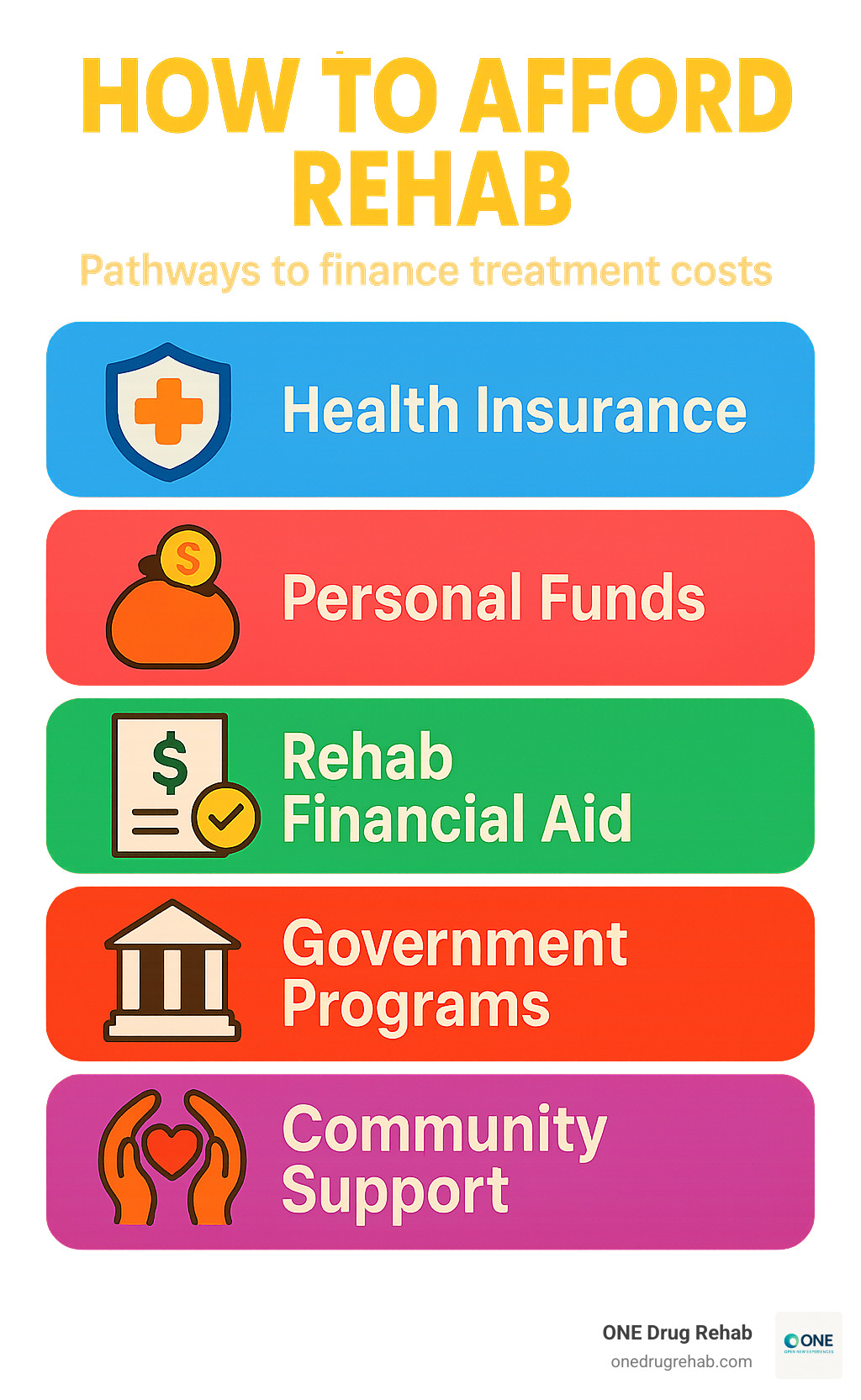
Consider these main options:
- Health Insurance: Private plans, Medicare, Medicaid, and military coverage.
- Personal Funds: Savings, personal loans, or help from loved ones.
- Rehab Financial Aid: Payment plans, sliding scale fees, or scholarships.
- Government Programs: Federal grants and state-funded options.
- Community Support: Assistance from non-profits and charities.
- Employer Benefits: Employee Assistance Programs (EAPs) and FMLA.
Think of rehab as an investment in your future. The long-term benefits far outweigh the initial costs.
Understanding the True Cost of Treatment
When considering how to afford rehab, the price tag can seem daunting. However, the cost of treatment varies widely depending on the type of program and its features. Understanding these differences is the first step to finding an affordable path.
Here’s how different treatment programs generally compare in cost:
| Type of Rehab | Average Costs (Estimate) | Duration | Intensity | Ideal Candidate |
|---|---|---|---|---|
| Medical Detox | $250 – $800 per day | 3-10 days | High, 24/7 medical supervision | Individuals with severe physical dependence, high risk of withdrawal complications. |
| Inpatient Rehab | $5,000 – $80,000+ per month | 30, 60, 90 days+ | High, 24/7 residential care, structured therapy | Individuals needing a complete change of environment, severe addiction, co-occurring mental health issues. |
| Outpatient Rehab | $1,400 – $10,000 per program | 3-6 months | Moderate, regular therapy sessions, living at home | Individuals with milder addictions, a stable home environment, or as a step-down from inpatient care. |
As the table shows, costs vary significantly. A 30-day inpatient program might cost $6,000, while luxury centers can exceed $80,000 per month. Outpatient treatment is often the most budget-friendly, with a three-month program typically costing around $5,000. Longer programs of 60 or 90 days will have higher total costs, ranging from $12,000 to $60,000 or more.
What Factors Influence Rehab Pricing?
Several factors determine the final cost of a treatment program:
- Level of Care: Inpatient (residential) rehab includes room, board, and 24/7 care, making it more expensive than outpatient programs where you live at home.
- Specialized Therapies: Facilities offering unique treatments like dual diagnosis care for co-occurring mental health conditions or holistic therapies like yoga often have higher costs.
- Staff-to-Client Ratio: A lower ratio allows for more personalized attention but increases operating costs and fees.
- Facility Amenities: Luxury centers with private rooms, gourmet meals, fitness centers, or scenic locations charge significantly more.
- Geographic Location: Costs can be higher in major cities or popular areas compared to rural regions.
- Program Duration: A 30-day program will cost less than a 60- or 90-day program.
To learn more about the different treatment options available, you can explore our guide: More info about different treatment options.
Is Rehab a Worthwhile Financial Investment?
Yes, rehab is a worthwhile financial investment. While the initial cost may seem high, it pales in comparison to the long-term financial drain of untreated addiction.
Consider the ongoing costs of addiction:
- Substance Costs: Daily use of alcohol or drugs can amount to thousands or even tens of thousands of dollars per year.
- Legal Fees: DUIs, arrests, and court fines can lead to significant legal expenses.
- Lost Wages: Addiction often leads to job loss, reduced productivity, and unstable employment, resulting in substantial lost income.
- Healthcare Expenses: Chronic illnesses and emergency room visits due to substance abuse can lead to massive medical debt.
Investing in rehab breaks this costly cycle. Successful treatment leads to:
- Long-Term Savings: Eliminating substance costs and avoiding legal and medical fees.
- Improved Earning Potential: Gaining stable employment and advancing your career.
- Health-Related Savings: Reducing healthcare needs and improving overall well-being.
- Rebuilding Life: The ultimate payoff is a fulfilling life with healthy relationships.

Investing in rehab is an investment in a healthier, more financially stable future.
Using Insurance to Pay for Rehab
For many, health insurance is the most direct path when figuring out how to afford rehab. Navigating policies can be confusing, but most private plans cover at least a portion of substance abuse treatment.
Your coverage depends on your specific plan, including deductibles, copayments, and whether the facility is in-network or out-of-network.
Your first step is to Verify Your Benefits. Call the number on your insurance card and ask these key questions:
- What types of addiction treatment are covered (detox, inpatient, outpatient)?
- What is my deductible and out-of-pocket maximum?
- What are my copayments or co-insurance for treatment?
- Are there limits on the number of days or sessions covered?
Choosing an in-network provider is usually more affordable, as insurance companies have pre-negotiated discounted rates with them. Using an out-of-network facility may result in higher out-of-pocket costs. Many rehab admissions teams can help you verify your benefits and explain your coverage.
The Affordable Care Act (ACA) and Your Rights
The Affordable Care Act (ACA) made substance use disorder services an “essential health benefit” that most health plans must cover. This provides significant protections:
- No Denial for Pre-existing Conditions: Insurers cannot deny you coverage or charge more because you have a history of addiction.
- Mental Health Parity: The Mental Health Parity and Addiction Equity Act (MHPAEA) ensures that limits on mental health and substance abuse treatment are no more restrictive than those for medical care.
- Marketplace Plans: Plans on the ACA marketplace (Bronze, Silver, Gold, Platinum) cover a percentage of rehab costs, ranging from about 60% to 90% depending on the plan tier. You may qualify for help with monthly premiums. Check your eligibility for subsidized coverage.
How to afford rehab with public insurance programs
If private insurance isn’t an option, several government-funded programs offer coverage for addiction treatment:
-
Medicare: This federal program for individuals 65 or older, or younger people with certain disabilities, covers a range of substance use disorder services. Part A covers inpatient treatment, while Part B covers outpatient services. For details, visit: Learn more about Medicare.
-
Medicaid: This state-based program provides healthcare for low-income individuals and families. Eligibility varies by state, but many states have expanded Medicaid to cover comprehensive addiction treatment. To find your state’s agency, visit: Find your state’s Medicaid agency.
-
State-Financed Health Insurance: Some states offer their own insurance programs or direct funding for addiction treatment to help residents who don’t qualify for other programs. Contact your state’s health department for information.
-
Federal Military Insurance (Tricare/VA Benefits): Active-duty service members, veterans, and their families have access to comprehensive substance abuse treatment coverage through programs like Tricare and VA benefits.
How to Afford Rehab Without Insurance
If you don’t have health insurance or your plan’s coverage is insufficient, don’t lose hope. Many people without insurance find ways to afford rehab through other excellent options.

Government Grants and State-Funded Programs
Federal and state governments provide funding to make treatment accessible.
- SAMHSA Grants: The Substance Abuse and Mental Health Services Administration (SAMHSA) provides block grants to states, such as the Substance Abuse Prevention and Treatment Block Grant (SABG). States use this funding to support treatment centers, enabling them to offer free or low-cost services.
- State and Local Programs: State and local health departments often fund programs that charge on a sliding scale based on income, sometimes providing services at no cost.
To find these providers, use the official SAMHSA treatment locator. You can filter your search to find facilities that offer no-fee or sliding-scale payment options.
How to afford rehab using private funds and financing
If government programs aren’t the right fit, consider these private funding methods:
- Sliding Scale Fees: Many non-profit centers adjust treatment costs based on your income. Always ask if this is an option.
- Payment Plans: A growing number of facilities allow you to pay for treatment in manageable monthly installments.
- Healthcare Loans: Banks and private lenders offer loans specifically for medical expenses, including rehab. Compare interest rates and terms to find the best fit.
- Credit Cards: While high interest rates can be a risk, a low-interest card can provide immediate access to funds if you have a solid repayment plan.
- Crowdfunding: Websites like GoFundMe allow you to share your story and raise money from a community of supporters.
- Loans from Family or Friends: This can be a flexible, interest-free option. It’s wise to put the terms in writing to avoid misunderstandings.
Scholarships and Non-Profit Assistance
Many organizations offer financial aid specifically for addiction treatment.
- Rehab Scholarships: Ask the admissions team at any facility about their internal scholarships or financial aid. Programs like the 10,000 Beds Scholarship Program are also dedicated to this cause.
- Non-Profit Facilities: Organizations like The Salvation Army run large rehabilitation programs that often provide services at little to no cost. Explore The Salvation Army’s programs.
- Faith-Based Organizations: Your church, mosque, or temple may offer financial assistance or run their own low-cost treatment programs.
- Community Health Centers: These centers often provide affordable mental health and substance abuse services on a sliding scale and can refer you to more intensive treatment if needed.
Leveraging Your Job and Community for Support
When figuring out how to afford rehab, don’t overlook resources available through your job and local community. These avenues can provide both financial and emotional support.

Employee Assistance Programs (EAPs) and FMLA
Your workplace can be a valuable resource.
- Employee Assistance Programs (EAPs): Many employers offer EAPs, which are free, confidential counseling services. They can provide referrals for substance abuse treatment and help you understand your benefits.
- Family and Medical Leave Act (FMLA): This federal law allows eligible employees to take up to 12 weeks of unpaid, job-protected leave for serious health conditions, including addiction treatment. Your job and health benefits are protected while you’re away.
- Americans with Disabilities Act (ADA): The ADA protects individuals with a history of addiction from discrimination, meaning an employer generally cannot fire you for seeking treatment. Learn more about recovery-friendly workplaces.
Asking Family and Friends for Help
Asking loved ones for financial help can be difficult, but they are often eager to support your recovery. To maintain trust, consider having funds sent directly to the rehab facility. If the money is a loan, a simple written agreement can clarify repayment terms. Their emotional support is just as valuable. For guidance on involving loved ones, see our resources for families.
Community Resources
Your local community is a goldmine of support.
- Support Groups: Free groups like Alcoholics Anonymous (AA), Narcotics Anonymous (NA), and SMART Recovery offer invaluable peer support and guidance.
- Charities and Non-Profits: Local charities, community centers, and religious groups may have funds or connections to help with treatment costs.
- Local Health Department: This is a great resource for information on state-funded programs and other low-cost services in your area.
Frequently Asked Questions about Affording Rehab
We know that figuring out how to afford rehab brings up many questions. Here are answers to some of the most common concerns.
What is the cheapest type of addiction treatment?
Generally, outpatient programs are the most budget-friendly option because they don’t include the cost of room and board. A three-month outpatient program might cost around $5,000, compared to inpatient care which can be much more expensive.
Even more affordable options include:
- Support groups like AA and NA, which are free.
- State-funded facilities and non-profits like The Salvation Army, which may offer treatment at no cost based on income.
- Telehealth services, which provide counseling and therapy from home at a lower cost.
However, the cheapest option isn’t always the best for everyone. Severe addiction may require more intensive care, so it’s crucial to choose the level of treatment that matches your needs.
Can a rehab center help me figure out payment?
Yes, absolutely. Most reputable rehab centers have admissions or financial counselors dedicated to helping you steer payment options. They are experts who can:
- Verify your insurance benefits and explain your coverage.
- Set up payment plans or connect you with healthcare lenders.
- Inform you about scholarship opportunities.
- Connect you with government programs and other resources.
Don’t hesitate to be open about your financial situation. Their goal is to help you access the care you need.
How does the cost of rehab compare to the cost of active addiction?
Viewing rehab as an investment becomes clearer when you compare its one-time cost to the endless expenses of active addiction. The financial drain of addiction includes:
- Substance Costs: Thousands of dollars spent annually on drugs or alcohol.
- Legal Fees: Costs from DUIs, arrests, and other legal troubles.
- Lost Income: Job loss and reduced earning potential over a lifetime.
- Healthcare Expenses: Emergency room visits and treatment for related health issues.
Successful treatment breaks this expensive cycle. By investing in rehab, you stop spending on substances, avoid legal and medical bills, and restore your earning potential. The financial return on investment is significant, often paying for itself within the first year of recovery. The question isn’t whether you can afford rehab, but whether you can afford not to.
Take the First Step Towards an Affordable Recovery
Figuring out how to afford rehab can feel like a major hurdle, but it’s one you can overcome. Recovery is possible, and financial challenges do not have to stop you from getting the help you deserve.
As we’ve shown, multiple payment paths exist. From insurance and government grants to scholarships and payment plans, there is likely a solution that fits your situation. The key is your willingness to explore these options and ask for help.
Don’t let finances stop you. The ongoing cost of addiction—in money, health, and relationships—is far greater than the one-time investment in treatment. Rehab breaks that expensive cycle and helps you build a stable, productive future.
Research is your first step. Call treatment centers and speak with their admissions teams. They are experts in navigating payment options and can connect you with resources you might not find on your own.
At ONEDrugRehab.com, we are a third-party, non-affiliated resource. Our mission is to provide the information you need to make the best decision for your recovery journey.
Take action now. The longer you wait, the more addiction costs. Start exploring your options today. Your future self will thank you.
Ready to begin? Our directory can help you find rehab facilities that offer flexible payment options.