

Success rate of rehab for drugs: Find 75% Hope
Understanding the Reality Behind Drug Rehab Success Rates
The success rate of rehab for drugs varies widely depending on how you define “success” and what factors you consider, but research shows that 40-60% of people maintain sobriety one year after treatment, with 75% of people eventually recovering from addiction according to CDC and NIDA studies.
Quick Facts About Drug Rehab Success Rates:
- Treatment completion is key: 76-78% abstinence for those who complete treatment vs. 51-52% for non-completers
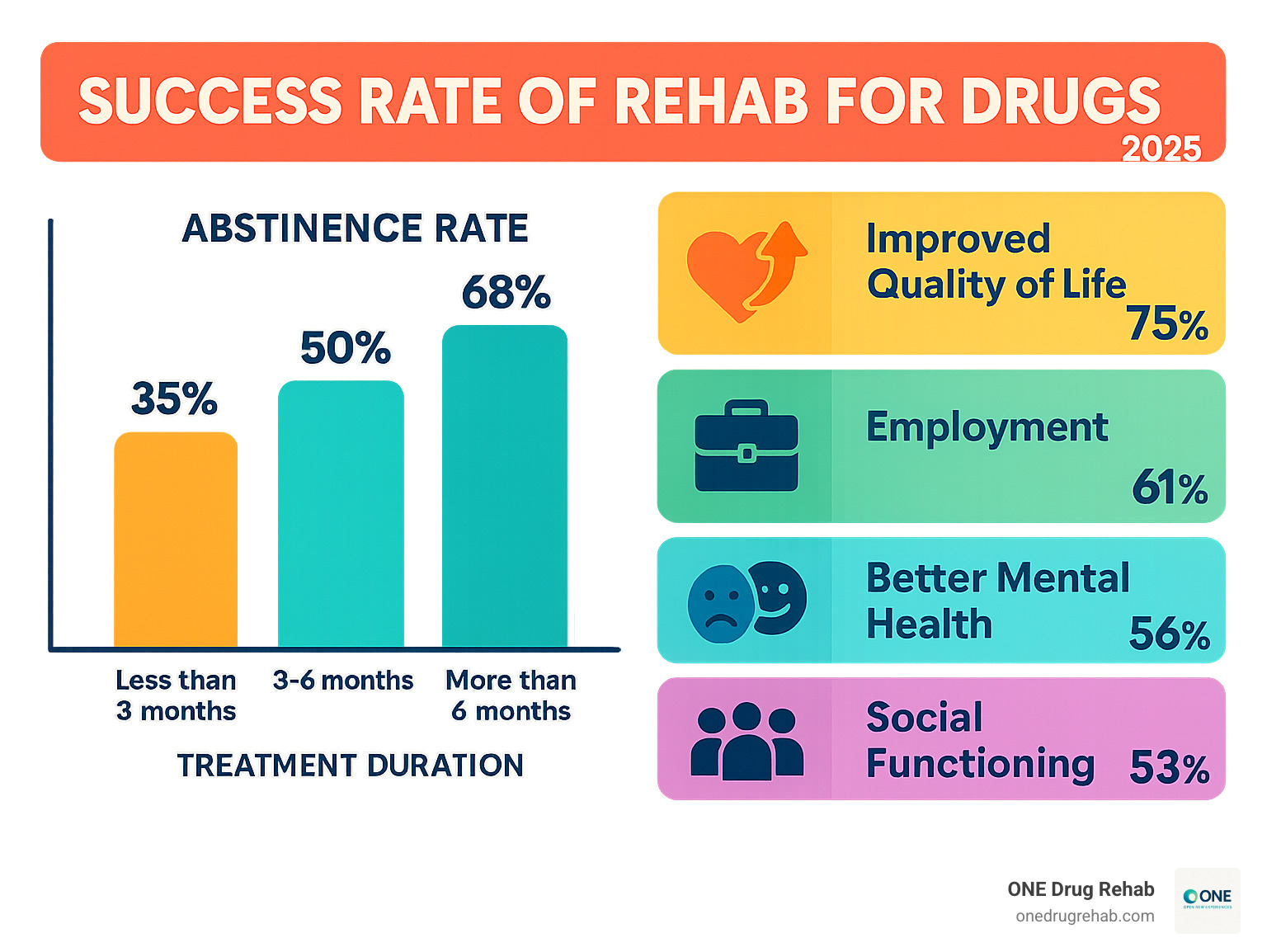
- Duration matters: 68-71% success rate for stays of 6+ months
- Multiple attempts are normal: Median of 2 recovery attempts before success
- Relapse is common: 40-60% relapse rate, similar to other chronic diseases
- Success isn’t just sobriety: Includes improved mental health, relationships, and quality of life
When you’re facing addiction or watching a loved one struggle, these numbers might feel overwhelming. But here’s what the research really shows: recovery is not only possible—it’s common.
The challenge isn’t that rehab doesn’t work. It’s that we often misunderstand what “success” means and expect addiction treatment to work like a broken bone that heals completely. In reality, addiction is a chronic disease more like diabetes or hypertension—manageable with the right treatment and ongoing care.
As one participant in a Canadian recovery study put it: “Recovery gives me freedom. It gives me choice. It allows me to follow my dreams. I am no longer chained to my addiction.”
The key is understanding that success looks different for everyone. For some, it’s complete abstinence. For others, it’s dramatically reduced use, better mental health, stable employment, or rebuilt relationships with family.
Beyond Abstinence: What Does ‘Success’ in Rehab Really Mean?
When people ask about the success rate of rehab for drugs, they usually mean permanent sobriety. But that’s a narrow view of how recovery works. Addiction is a chronic illness, much like diabetes or hypertension. If a diabetic’s blood sugar spikes, their treatment isn’t a failure; it’s adjusted. Addiction treatment works the same way.
The Office of National Drug Control Policy’s definition of effective treatment reflects this broader view. Success includes reduced substance use, improved performance at work or school, better physical and mental health, and improved relationships.
This perspective highlights the real-world outcomes. A study by the Canadian Centre on Substance Use and Addiction found that 90.7% of people in recovery reported their quality of life as good to excellent. Other stunning improvements included:
- Employment: Rose from 52.6% to 79.1%.
- Financial Stability: Those unable to pay bills dropped from 61.2% to 17.3%.
- Legal Issues: Arrests plummeted from 42.3% to just 2.3%.
Why It’s So Hard to Measure Rehab Success
Success rates vary wildly because there is no standardized definition of “success.” Some facilities measure only complete abstinence, while others track reduced use or improvements in life quality. The timing also matters—a 30-day success rate is very different from a one-year rate. Since there’s no standardized reporting system and most data is self-reported, comparing programs is like comparing apples to oranges.
Understanding Relapse as Part of the Journey
Relapse is common, but it is not a sign of failure. The relapse rate for addiction is 40-60%, which is comparable to or even better than other chronic diseases like hypertension (50-70%) and asthma (50-70%).
NIDA research on treatment and recovery emphasizes that relapse is a signal to adjust treatment, not abandon it. It’s feedback, not failure. Encouragingly, a national study found the median number of serious recovery attempts before success was just two. While some struggle with multiple relapses, the majority achieve stable recovery within their first few serious attempts.
The Numbers Game: What Is the Actual Success Rate of Rehab for Drugs?
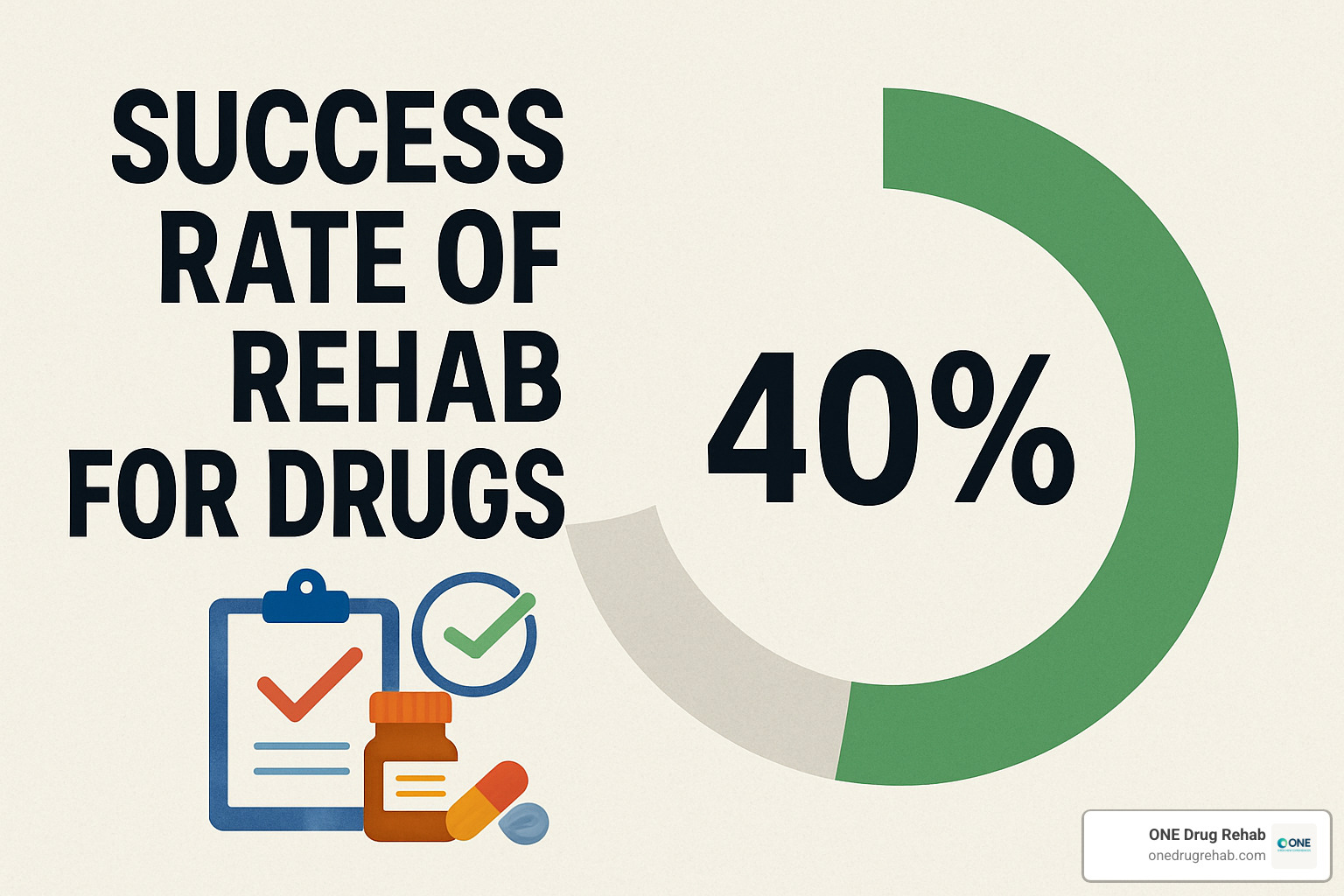
When people ask for a single “success rate,” they’re usually surprised to hear there isn’t one. Outcomes swing with the person, the program, and the follow-up care. The good news: the overall picture is much more hopeful than most headlines suggest.
A joint CDC and NIDA analysis found that about 75 % of people who receive treatment eventually recover. That translates to more than 22 million Americans living in recovery today.
Why Treatment Completion and Duration Matter
- 76-78 % abstinence for people who complete 3-5-month programs
- 51-52 % for those who leave early
The “90-day mark” is a proven threshold; stays of six months or more push success near 70 %.
Substance-Specific Highlights
Below are broad ranges from large, peer-reviewed studies. Exact numbers differ by study design, but each substance has evidence-based paths to recovery.
- Opioids: Medication-Assisted Treatment (MAT) can cut illicit use by up to 90 % and halves overdose deaths.
- Alcohol: Roughly 1 in 4 stay completely sober the first year; most others reduce drinking by 80 % or more.
- Methamphetamine: About one-third are abstinent three months after residential care; specialized models such as the Matrix approach double that rate at six months.
- Cocaine: Long-term residential care reduces weekly use to roughly 25 % in the year after treatment.
The takeaway? Different drugs call for different tools, but effective options exist for each.
Key Factors That Influence Addiction Recovery Success

No two recoveries look the same, yet studies keep pointing to the same winning formula: evidence-based care + enough time in treatment + steady support after discharge.
What Effective Programs Have in Common
- Evidence-based therapies such as Cognitive Behavioral Therapy (CBT), Dialectical Behavior Therapy (DBT), Motivational Interviewing, and Contingency Management
- Dual-diagnosis capability—vital because roughly three-quarters of clients enter treatment with a mental-health concern
- Medication-Assisted Treatment (MAT) when appropriate, especially for opioid use disorder
- A full continuum of care (detox, inpatient or IOP, aftercare) and proactive follow-up
Research even shows that well-run Intensive Outpatient Programs (IOP) can rival residential care outcomes .
The Human Side: Motivation and Support
Treatment works best when clients lean in. Active participation, honest communication, and practice of new coping skills boost outcomes dramatically.
Family, friends, and peer groups matter, too. People who attend about six months of mutual-support meetings are almost twice as likely to stay sober long-term. For resources on involving loved ones, see Rehab for Families.
Put simply, quality treatment gives you the tools; commitment and community keep those tools sharp.
How to Choose a Rehab Facility to Maximize Your Chances of Success
A great program doesn’t have to be glamorous; it does have to be qualified. Use the checklist below to separate marketing hype from clinical quality.
Quick Quality Checklist
- Accreditation by The Joint Commission, CARF, or your state licensure board
- Licensed medical and mental-health staff with manageable caseloads
- Evidence-based therapies (CBT, DBT, MAT, etc.)
- Complete continuum of care and aftercare planning
- Individualized treatment plans, not cookie-cutter schedules
You can Compare Rehab Centers to see how different facilities score on those points.
Key Questions to Ask
- How do you define and measure success?
- Which evidence-based therapies do you use, and why?
- How do you handle relapse?
- Do you treat co-occurring mental-health disorders on-site?
- What does aftercare look like once I leave?
Reputable programs will gladly supply credentials, outcome data, and alumni references. If answers feel vague, keep looking—your recovery is too important to gamble.
Frequently Asked Questions about the Success Rate of Rehab for Drugs
Does a higher price tag mean a higher success rate?
Here’s something that might surprise you: that $50,000-a-month luxury rehab facility isn’t necessarily more effective than a well-run program that costs a fraction of the price. It’s one of the biggest misconceptions in addiction treatment.
Don’t get me wrong—some expensive programs offer excellent care. But those marble countertops, gourmet meals, and spa treatments? They might make treatment more comfortable, but they don’t actually improve your chances of staying sober.
What really matters for success rate of rehab for drugs has nothing to do with thread count or fancy amenities. The programs that get results focus on evidence-based treatment approaches like CBT and DBT, employ qualified, licensed staff, provide appropriate treatment duration, offer dual diagnosis capabilities for mental health issues, and have strong aftercare programs.
Some of the most effective treatment centers I’ve researched are surprisingly modest in their facilities but laser-focused on proven clinical methods. Meanwhile, some high-end places spend more on interior design than staff training.
Your best bet? Look for accreditation and licensing as indicators of quality, not price tags. Organizations like The Joint Commission and CARF don’t care about your marble bathrooms—they care about whether you’re delivering effective treatment. Many excellent programs accept insurance and offer sliding scale fees, making real recovery accessible regardless of your bank account.
If I relapse, does that mean rehab failed?
This question breaks my heart every time I hear it, because the answer is absolutely not—but so many people believe it means exactly that.
Here’s the truth: relapse is incredibly common and doesn’t mean you’ve failed or that treatment doesn’t work. It’s actually a normal part of recovery for many people. Remember those statistics we talked about earlier? 40-60% of people experience relapse during recovery, and that’s similar to relapse rates for other chronic diseases like diabetes or hypertension.
Think about it this way: if someone with diabetes has a blood sugar spike, we don’t say their medication failed. We adjust their treatment plan. Addiction works the same way—it’s a chronic condition that sometimes requires ongoing management and treatment adjustments.
The research shows that many people achieve long-term sobriety after multiple treatment episodes. Each period of sobriety, even if followed by relapse, contributes to long-term recovery. You’re learning what works, what doesn’t, and building skills for next time.
As one treatment provider told me: “When someone has an emotional, mental, or physical relapse, it’s not a failure, it’s a lesson.” The key is getting back into treatment quickly after a relapse. People who return to treatment often have better outcomes because they’ve learned from their previous experience and can adjust their approach.
How long should I stay in rehab to be successful?
If you’re looking for a simple answer, you’re not going to like this: there’s no one-size-fits-all timeline. But the research does give us some helpful guidance about what typically works.
NIDA recommends at least 90 days for optimal outcomes, and the data backs this up consistently. Studies show that people who stay in treatment for 90 days or longer have significantly better long-term success rates than those who leave earlier.
The numbers tell a clear story about duration and success. People who stay 28 days or more are five times more likely to remain abstinent than those who leave earlier. For longer stays, the success rate jumps to 68-71% for people who spend 6 months or more in residential treatment.
But here’s what’s really interesting: 71% of successful treatment completers needed 6 months or more to finish their program. That suggests that for many people, meaningful recovery simply takes time.
Your individual situation affects how long you might need to stay. If you’re dealing with severe addiction, co-occurring mental health disorders, or have tried treatment multiple times before, you might need a longer stay. The type of substance you’re recovering from also matters—some require longer treatment protocols than others.
People with strong support systems at home might be able to transition to outpatient care sooner, while those returning to challenging environments might benefit from extended residential treatment.
The best programs don’t use arbitrary timelines—they assess your individual progress and adjust treatment length accordingly. Quality treatment is about making real changes in your life, not just marking time on a calendar.
Conclusion: Finding Hope in the Statistics
Most headlines about addiction focus on tragedy; the data tell a different story. Three out of four people who seek help eventually recover—a far cry from the “once an addict, always an addict” myth.
Success isn’t limited to perfect abstinence. Employment, mental health, family relationships, and financial stability all improve dramatically once treatment begins. Arrests drop from 42 % to 2 %, and the ability to pay bills nearly quadruples.
What makes the difference? Completing an evidence-based program, staying engaged for at least 90 days, and surrounding yourself with ongoing support. Relapse, if it happens, is a cue to adjust the plan—not a verdict of failure.
The only guaranteed way to fail is never to start. Explore your options at Find a Rehab Near You and take that first step today. The odds—and your future self—are on your side.