

Understanding the Critical Need for Teen Addiction Support
When searching for addiction help for teens, families need immediate access to specialized resources. Here’s what you need to know:
Immediate Resources:
- Crisis Support: Call 988 (Suicide & Crisis Lifeline) or text ABOVE to 741-741
- Treatment Referrals: Contact SAMHSA at 1-800-662-HELP (4357)
- Professional Assessment: Consult your teen’s doctor or an addiction specialist
Key Treatment Options:
- Outpatient and intensive outpatient programs (IOP)
- Residential treatment centers
- Day treatment and family therapy
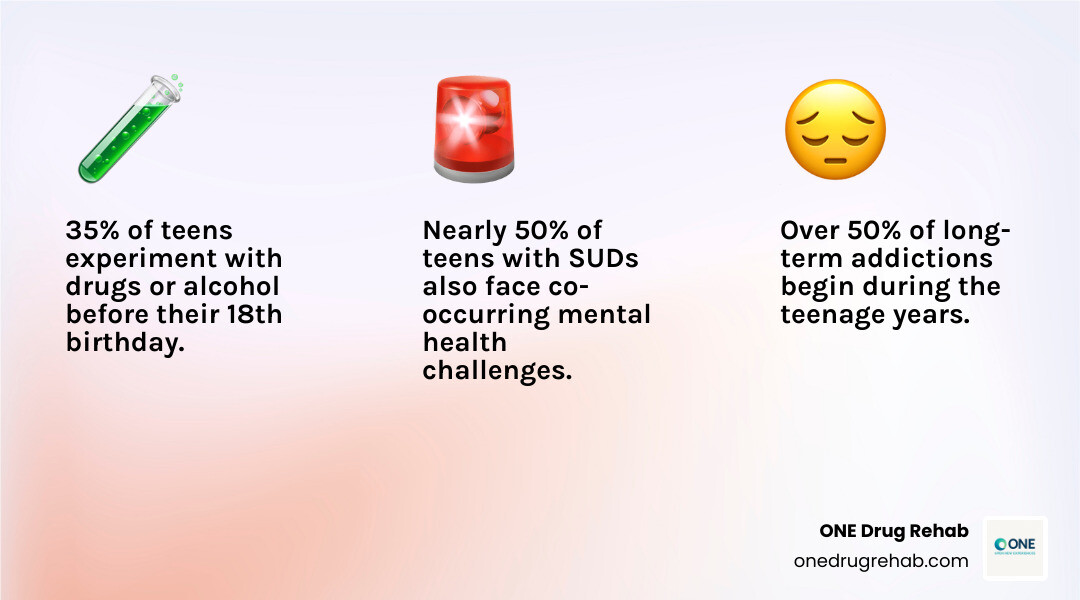
Statistics show that about 35% of teens experiment with substances before age 18, and over 50% of long-term addictions begin during these years. The developing adolescent brain is uniquely vulnerable to substance use, but it’s also highly responsive to treatment.
If you suspect your teen has a problem, you’re not alone, and early intervention makes a significant difference. The good news is that teens often respond better to treatment than adults. With the right support and specialized care, recovery is absolutely possible.
Recognizing the Signs of Teen Substance Use
It can be hard to distinguish normal teenage behavior from signs of substance use. The key is to look for persistent, negative changes across multiple areas of your teen’s life, not just one-time incidents.

Watch for significant shifts that last for weeks or months. These can include:
- Behavioral Changes: Increased secrecy, hostility, lying, or dramatic mood swings. A sudden loss of interest in hobbies, sports, or family activities they once enjoyed.
- Physical Symptoms: Changes in sleep patterns (too much or too little), bloodshot eyes, unusual smells, or a decline in personal hygiene and appearance.
- School and Social Problems: Dropping grades, skipping classes, a sudden change in friend groups, or avoiding old friends and family.
It’s also vital to understand the difference between substance abuse (harmful use) and addiction (compulsive need). Two key signs of addiction are tolerance (needing more of the substance for the same effect) and withdrawal (feeling sick or anxious when the substance wears off). If you see these patterns, it’s time to seek addiction help for teens. The Principles of Adolescent Substance Use Disorder Treatment offers research-based guidance.
Common Substances Abused by Teenagers
Knowing common substances can help you identify risks:
- Alcohol and Marijuana: Still the most commonly abused substances. Today’s marijuana is significantly more potent, and many teens underestimate the risks of both.
- Vaping and Nicotine: Highly addictive, with appealing flavors that mask the danger. Many teens who start vaping find they cannot stop.
- Prescription Medications: Stimulants like Adderall (“study drugs”), painkillers like OxyContin, and anti-anxiety drugs like Xanax are often abused and can be extremely dangerous, especially when mixed.
- Opioids and Fentanyl: The opioid crisis has hit teens hard, with street drugs often laced with deadly fentanyl.
- Household Products: Inhalants like glue or aerosols and even over-the-counter cough medicines can be abused with devastating effects.
Physical and Psychological Aspects of Addiction
Addiction affects teens differently because their brains are still developing. The prefrontal cortex, responsible for decision-making, isn’t fully mature until age 25, making teens more prone to risk-taking.
Substances hijack the brain’s reward system by flooding it with dopamine. Over time, the brain adapts, producing less natural dopamine. This means the teen needs the substance just to feel normal, leading to powerful cravings and a compulsive need to use.
Physical dependence occurs when the body adapts to the substance, causing withdrawal symptoms (nausea, anxiety, seizures) when it’s removed. Psychological dependence is the emotional reliance on the substance to cope with stress or difficult feelings.
Long-term consequences are severe, including permanent changes to brain development, damaged relationships, and worsening mental health issues. However, the teen brain’s adaptability also makes it highly responsive to treatment. With proper addiction help for teens, recovery is possible. You can find more info about Teen Addiction Treatment to explore options.
Why Teens Turn to Substances: Underlying Causes
Understanding why a teen uses substances is complex; it’s rarely a single issue but rather a combination of factors. The teenage years are a turbulent time of self-findy, social pressure, and academic demands, and substances can seem like an easy escape.

Common underlying causes include:
- Peer Pressure and Social Anxiety: The powerful desire to fit in can lead teens to experiment. Sometimes, just being around peers who use substances normalizes the behavior.
- Academic Stress: The pressure to succeed can be overwhelming. Some teens use stimulants like Adderall to study, while others use alcohol or marijuana to de-stress.
- Mental Health Challenges: Many teens with substance issues also have co-occurring disorders like depression, anxiety, or trauma. They may use substances to self-medicate emotional pain or quiet racing thoughts, which ultimately worsens their mental health.
- Trauma: Experiences of abuse, neglect, or other traumatic events are significant risk factors. Substances can offer a temporary escape from painful memories and feelings.
- Family History and Environment: A genetic predisposition to addiction, a chaotic home life, or witnessing parental substance abuse can increase a teen’s risk.
- Curiosity and Media Influence: Normal adolescent curiosity, combined with the glamorization of substance use in media, can make drugs and alcohol seem appealing.
Effective addiction help for teens must address these root causes, not just the substance use itself. Treatment should equip teens with healthy coping skills to manage stress, peer pressure, and mental health challenges. To understand how these issues intersect, you can Learn more about co-occurring mental health issues.
Navigating Addiction Help for Teens: Treatment Options
Finding the right addiction help for teens begins with a thorough assessment. This process evaluates your teen’s physical and mental health, substance use history, and family dynamics to create a personalized recovery roadmap. A multidisciplinary team will then recommend the appropriate level of care.
Here’s a comparison of the main treatment options:
| Feature | Inpatient/Residential Treatment | Outpatient Programs (IOP/PHP) | Day Treatment |
|---|---|---|---|
| Environment | 24/7 supervised, structured, live-in facility | Live at home, attend scheduled sessions at a facility | Attend structured program during the day, return home at night |
| Intensity | Highest level of care, immersive, removes from triggers | Moderate to high, allows for school/work while in treatment | High intensity during the day, combines structure with home life |
| Duration | Typically 30-90+ days (NIDA suggests 90+ days for best outcomes) | Varies (e.g., several hours/day, multiple days/week for IOP/PHP) | Daily, for several hours, over a period of weeks or months |
| Focus | Stabilization, intensive therapy, skill-building, peer support | Therapy, skill development, relapse prevention, maintaining daily life | Intensive therapy, academic support, structured activities |
| Ideal for | Severe addiction, unstable home, co-occurring disorders, relapse risk | Moderate addiction, stable home, need for flexibility, step-down from inpatient | Significant issues, need for structure, can’t commit to residential |
| Family Role | Often integrated with family therapy and visits | Encouraged, family therapy sessions | Highly integrated, often includes family sessions |
Transitional youth (ages 17-25) often face a gap between adolescent and adult services, requiring specialized programs that address their unique developmental stage. For a comprehensive look at programs, visit ONE Drug Rehab Teen Programs.
Types of Teen Treatment Programs
- Detoxification: A medically supervised first step to safely manage withdrawal symptoms from substances like alcohol or opioids. This should never be attempted at home.
- Inpatient/Residential Treatment: The most intensive option, where teens live 24/7 at a facility. This immersive approach removes them from triggers and provides constant support. Programs like those from Youth and Family Services specialize in this model.
- Outpatient Programs (IOP/PHP): These programs allow teens to live at home while attending treatment. Intensive Outpatient Programs (IOP) involve a few sessions per week, while Partial Hospitalization Programs (PHP) are more structured, with treatment occurring for most of the day.
- Day Treatment: A hybrid model where teens attend a structured program with therapy and academic support during the day and return home at night.
The Importance of Specialized Addiction Help for Teens
Teen treatment must be different from adult treatment because their brains are still developing. Effective programs include:
- Adolescent-Focused Therapy: Addresses unique teen challenges like identity, peer pressure, and family dynamics.
- Peer Support Groups: Connect teens with others who understand their struggles, reducing isolation and providing hope.
- Academic Components: Ensure teens don’t fall behind in school, which reduces stress upon their return.
- Family Involvement: Family therapy is crucial for healing relationships and building a supportive home environment.
- Evidence-Based Therapies: Methods like Cognitive Behavioral Therapy (CBT) and Dialectical Behavior Therapy (DBT) are proven to help teens change negative thought patterns and regulate emotions.
Steps for Finding Addiction Help for Teens
Taking the first step is the hardest. The process generally involves an initial contact with a helpline, doctor, or treatment center; a professional assessment to determine the right level of care; insurance verification to understand costs; and finally, treatment admission. To explore options and begin this process, you can Find treatment options via ONE Drug Rehab.
The Family’s Role in Recovery
When a teen struggles with addiction, it impacts the entire family. The good news is that your family can be the most powerful force in their recovery. Active family participation leads to dramatically better outcomes.

Key roles for the family include:
- Creating a Supportive Home: Make your house a safe haven by removing substances and establishing predictable, calm routines.
- Setting Clear Boundaries: Consistent rules and consequences provide structure and help your teen rebuild decision-making skills. Follow through is essential.
- Improving Communication: Focus on listening and expressing your own feelings with “I” statements (“I was worried”) instead of interrogating. A calm tone is crucial.
- Avoiding Enabling: Do not make excuses for them or shield them from the natural consequences of their actions. This is tough but necessary for them to learn.
- Practicing Self-Care: You cannot support your teen from an empty cup. Join a support group, see a therapist, and take time for yourself. Also, ensure siblings receive support, as they are often overlooked.
Family Therapy and Support
Family therapy is a critical component of addiction help for teens. It helps heal broken trust and teaches healthier ways to communicate and solve problems.
Multidimensional Family Therapy (MDFT) is a highly effective model that addresses family dynamics, school issues, and peer influences. It helps families find solutions together. Support groups are also invaluable. Parent support groups like Al-Anon connect you with others who understand, while Alateen provides a space for teenage siblings affected by addiction.
For more information, explore More info on family support in recovery through the National Association for Children of Alcoholics.
Beyond Treatment: The Importance of Aftercare and Ongoing Support
Graduating from a treatment program is a major milestone, but it’s the beginning of the recovery journey, not the end. The real work of maintaining sobriety begins when a teen returns to their everyday life. A strong aftercare plan is essential for long-term success.
Relapse prevention planning is a core part of aftercare. With a counselor, your teen will identify personal triggers and develop concrete strategies for handling cravings. This plan acts as a roadmap for navigating difficult situations.
For some, a transition period is helpful. Sober living environments offer a supervised setting where teens can practice recovery skills with peer support before returning home full-time. Recovery high schools provide a substance-free academic environment, surrounding students with peers who are also committed to sobriety.
Staying connected is key. Many treatment centers have alumni programs that foster a supportive network of friends who understand the recovery journey. Continued therapy is also important for navigating real-world challenges and reinforcing coping skills.
A challenge is building a new social network. This involves finding new friends and sober activities. Encouraging involvement in sports, clubs, or volunteer work can help your teen find that a fun, fulfilling life is possible without substances. Recovery is about building a life so meaningful that drugs and alcohol no longer have a place in it.
Frequently Asked Questions about Teen Addiction
As a parent, you likely have many questions and concerns. Here are answers to some of the most common ones we hear when families are seeking addiction help for teens.
How do I know if my teen’s substance use is just a phase or a real problem?
While some experimentation can be part of adolescence, a real problem emerges when substance use leads to significant negative consequences. Are their grades dropping? Are they in legal trouble? Have they abandoned old friends or hobbies? Another key indicator is a loss of control, where they continue to use despite the harm it’s causing and are unable to stop or cut back.
If you notice persistent behavioral changes, secrecy, and a life that revolves around substance use, trust your instincts. A professional assessment is not an overreaction; it’s a crucial step to get clarity and help.
Can I force my teenager into rehab?
As a parent, you generally have the legal right to make medical decisions for your minor child, which can include admitting them to treatment. However, recovery is most effective when the individual is motivated to change. While you can’t force them to get better, many resistant teens have a change of heart once they are in a supportive treatment environment, away from their triggers.
An intervention specialist can help facilitate a conversation that encourages willingness. Frame treatment as an act of love and concern for their future, not as a punishment. Sometimes, being in a safe place is what a teen needs to find their own motivation.
What happens if my teen relapses after treatment?
Relapse is a common part of the recovery process for a chronic condition like addiction. It does not mean treatment has failed or that your teen is a failure. The most important thing is to avoid blame and shame.
Instead, take immediate action. Re-engage with their therapist, support group, or treatment center right away. A relapse is an opportunity to learn and adjust the treatment plan. By identifying what triggered the relapse, you can build a stronger, more resilient recovery strategy for the future. A quick, compassionate, and supportive response can get your teen back on track without losing all the progress they’ve made.
Conclusion
The path to finding addiction help for teens can feel daunting, but seeking information is a courageous first step. We’ve covered the warning signs, the underlying causes of substance use, and the various treatment options available to your family.
Remember this critical truth: recovery is absolutely possible. The adolescent brain is uniquely resilient and responsive to treatment. With specialized care, strong family involvement, and comprehensive aftercare, teens can and do achieve lasting recovery.
Early intervention makes all the difference. Acting on your concerns sooner rather than later provides the best chance for a positive outcome. You are not alone in this journey. A network of resources, from crisis hotlines to treatment centers and support groups, is ready to help you and your teen.
ONE Drug Rehab is here to be your trusted, unbiased resource. Our goal is to connect you with the information you need to research treatment options without pressure. Your teen’s future is bright. Take the next step today and [explore different therapeutic programs to find the right fit for your teen](https://onedrugrehab.com/wilderness-therapy-programs/). A healthier life is waiting.