

Addiction treatment without insurance: Free & Possible 2025
Addiction Treatment is Possible, Even Without Insurance
When you need help for addiction without health insurance, the cost can feel like an impossible barrier. The good news is that addiction treatment without insurance is achievable, and you have many options.
Don’t let the cost stop you. The long-term financial and personal burden of untreated addiction—including lost jobs, health problems, and broken relationships—is often far greater than the cost of getting help. Seeking treatment is an investment in a healthier, more stable future and a chance to reclaim your life.
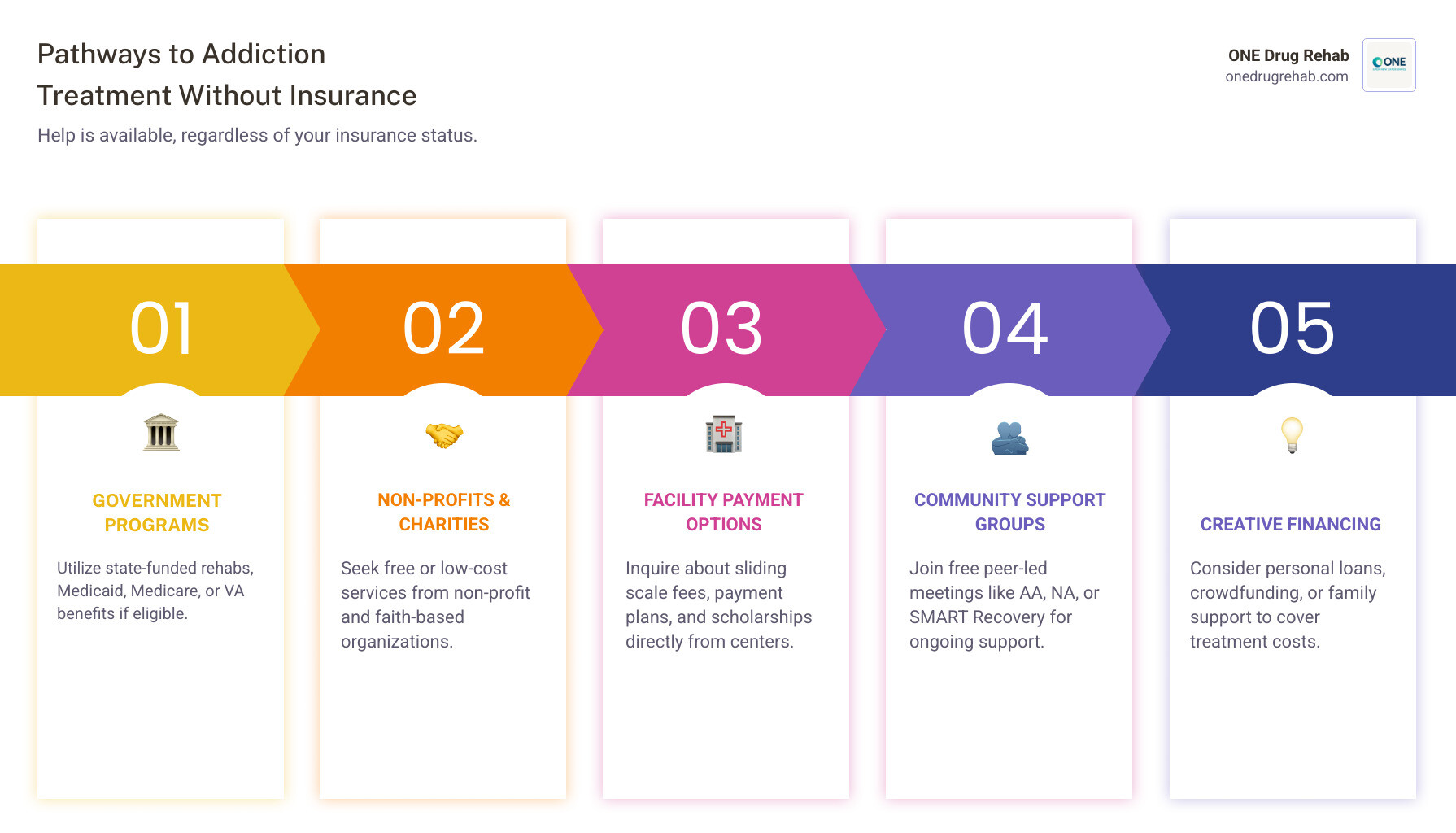
Here are the main ways to get addiction treatment without insurance:
- Government-funded programs: Access state-funded rehabs, or use Medicaid and Medicare if eligible.
- Non-profit and faith-based organizations: Many charities offer free or low-cost services.
- Direct facility payment options: Ask about sliding scale fees, payment plans, or scholarships from treatment centers.
- Free community support groups: Join peer-led meetings like Alcoholics Anonymous (AA) or SMART Recovery.
- Creative financing: Explore personal loans, crowdfunding, or borrowing from friends and family.
Basic addiction treatment without insurance glossary:
Understanding the Real Cost of Addiction vs. Treatment
It’s natural to feel overwhelmed by the cost of addiction treatment without insurance. However, it’s crucial to consider the long-term cost of not getting help, which impacts your entire well-being.
Untreated addiction carries a heavy financial burden. The constant expense of substances, potential legal fees, and lost wages can quickly surpass the cost of treatment. The personal costs are also immense, including damaged relationships, derailed careers, and severe health consequences like chronic illness and organ damage.
The cost of rehab varies depending on whether you choose inpatient (living at the facility) or outpatient (living at home) care, program length, amenities, and location. You can explore more info about different treatment options.
The Long-Term Value of Seeking Help
Viewing addiction treatment as an investment in your future is a game-changer. It can lead to career stability, better health, and a more meaningful life. Over time, this investment pays off as you save money previously spent on substances and regain your ability to thrive.
Here are some typical costs to give you a realistic idea:
- Inpatient Rehab: Providing 24/7 care, these programs are more expensive. A 30-day stay can cost $5,000 to $20,000, while 60- or 90-day programs can range from $12,000 to $60,000.
- Outpatient Programs: A less expensive option where you live at home. Costs typically range from $1,400 to $10,000. Intensive Outpatient Programs (IOPs) are often $3,000 to $10,000, and outpatient detox can cost $1,000 to $1,500.
- Medication-Assisted Treatment (MAT): Costs for medications add to the total. For example, a year of methadone treatment can be around $4,700.
What Factors Influence the Price of Rehab?
The cost of addiction treatment without insurance varies based on several factors:
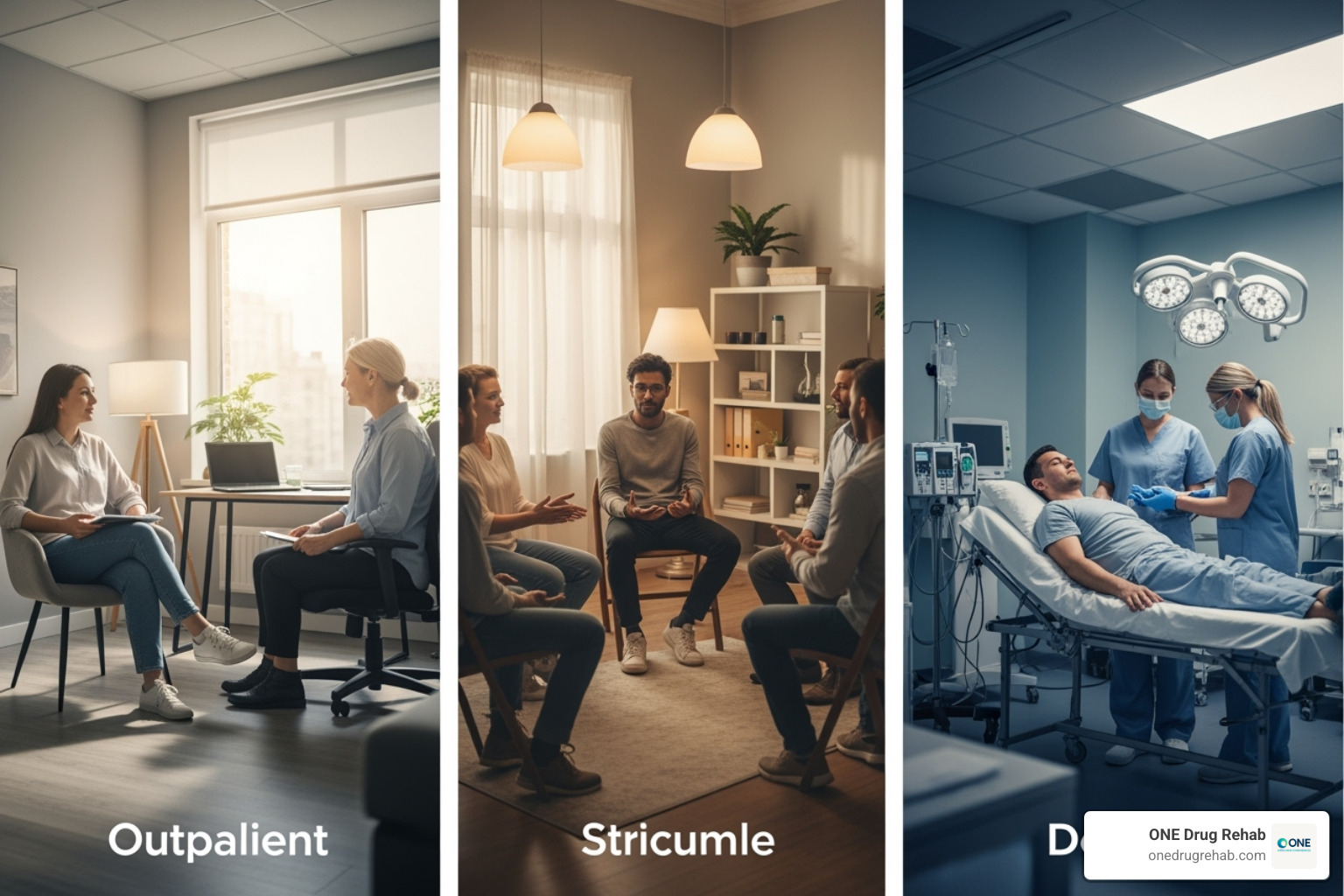
- Level of Care: This is the biggest factor.
- Medical Detox: Necessary for safely stopping substances like alcohol or benzodiazepines. Costs range from $250 to $800 per day.
- Residential/Inpatient Treatment: Living at the facility 24/7 for the most intensive care.
- Partial Hospitalization Programs (PHPs): Day treatment with 9-20 hours of treatment per week.
- Intensive Outpatient Programs (IOPs): Less intensive than PHPs, with fewer weekly hours.
- Standard Outpatient Programs: The least intensive, with 1-3 sessions per week.
- Program Duration: Programs typically last from 28 or 30 days to 90 days or longer. Longer programs cost more.
- Amenities and Services: Luxury centers with spa services, private rooms, and gourmet meals are more expensive than basic programs.
- Location: Facilities in major cities or popular destinations often have higher prices.
- Specialized Therapies and Staff-to-Patient Ratio: Programs with specialized therapies or more staff per patient can increase the cost.
Finding Free and Low-Cost Addiction Treatment Programs
You don’t need insurance to get quality addiction treatment. Many free and affordable options for addiction treatment without insurance exist, and they can be just as effective as expensive private programs. The key is knowing where to look: community support groups, non-profits, and faith-based programs.
Encouragingly, SAMHSA’s FindTreatment.gov lists nearly 230 U.S. rehabs that are completely free, recognizing that treatment should be accessible to all. Many of these programs take a holistic approach, offering mental health support and peer connections to help you rebuild your life.
Free Community Support and Self-Help Groups
Community support groups offer powerful help at no cost.

- 12-Step programs like Alcoholics Anonymous (AA) and Narcotics Anonymous (NA) use a spiritual approach and are widely available. The only requirement is a desire to stop using.
- SMART Recovery uses a science-based, cognitive-behavioral approach to help you change thoughts and behaviors related to substance use. It offers thousands of weekly meetings, including online options.
- Other peer-led groups like Secular Organizations for Sobriety (SOS) and LifeRing Secular Recovery offer non-spiritual paths to recovery focused on self-management.
- Local community meetings create genuine connections with people who understand what you’re going through, forming supportive recovery networks.
Non-Profit and Community-Based Organizations
When you need more intensive help, non-profit organizations offer services ranging from counseling to residential treatment.
- Local non-profit organizations often use sliding scale fees based on your income, ensuring financial barriers don’t prevent you from getting help.
- Faith-based programs are a significant resource. The Salvation Army runs numerous no-cost rehab centers offering housing, work therapy, and spiritual guidance. Other groups like JACS provide culturally specific support.
- Community health centers are federally funded and provide comprehensive services, including substance use treatment, on a sliding scale. You can find a health center near you via the HRSA website.
- Local churches and community outreach programs often run recovery programs or can connect you with affordable resources, regardless of your religious affiliation.
How to Get Addiction Treatment Without Insurance Using Government Programs
Government programs are a key resource for accessing addiction treatment without insurance. Federal and state governments allocate funds to ensure people can get help regardless of their financial situation. This funding often comes as federal block grants that states distribute to local treatment providers.
To qualify for state-funded programs, you generally need to provide proof of U.S. citizenship, income verification, and proof of residency. You will also be asked about your substance use history to determine the best care for you. A great first step is to find your state’s substance abuse agency.
State-Funded Rehab Centers
State-funded rehab centers are a lifeline for those seeking addiction treatment without insurance. They use government funds to offer services like detox and treatment programs at little to no cost for eligible individuals.
Here’s a comparison between state-funded and private rehabs:
| Feature | State-Funded Rehab | Private Rehab |
|---|---|---|
| Cost | Low to no cost, often free for eligible individuals. Substantially lower. | Significantly more expensive, often tens of thousands of dollars. |
| Amenities | Fewer amenities, basic facilities. Focus on essential care. | Luxurious amenities (spa, gourmet meals, private rooms, pools, gyms). |
| Wait Times | Can have waiting lists due to limited funding and high demand. | Generally little to no waiting time, immediate admission often possible. |
| Therapies | Employs certified professionals using evidence-based therapies, peer support. | Wide range of therapies, often including specialized and holistic options. |
| Counseling | May lack in-house counseling or other extensive support services. | Comprehensive counseling, individual, group, and family therapy. |
| Coverage | Primarily for those with no insurance or limited income. | Often covered by private insurance, but high out-of-pocket costs without it. |
| Access | Priority given to certain populations (e.g., pregnant women, IV drug users). | Open to anyone who can afford it or has adequate insurance. |
Due to high demand and limited funding, state-funded programs may have a waiting list. It’s important to get on the list as soon as possible. Certain populations, like pregnant women, may receive priority. To find programs, use SAMHSA’s treatment locator. For state-specific resources, you can look for your state’s portal, such as the one for substance use services in Texas.
Federal Programs: Medicaid, Medicare, and VA Benefits
Several large federal programs can help cover the cost of addiction treatment without insurance.
- Medicaid is a federal and state program for low-income individuals and families. Eligibility varies by state but is primarily based on income. Medicaid covers a significant portion of addiction treatment costs. You can check if you qualify for Medicaid online.
- Medicare is a federal program for people 65 or older and some younger individuals with disabilities. It covers various aspects of substance use treatment, including inpatient (Part A) and outpatient (Part B) services. Learn more about Medicare to see what it covers.
- Veterans Administration (VA) Benefits: The VA offers comprehensive substance use treatment programs for veterans. These services are a vital resource. Find details on VA substance abuse program resources on the VA website.
SAMHSA Grants and Scholarships
The Substance Abuse and Mental Health Services Administration (SAMHSA) provides financial assistance for treatment.
SAMHSA Grants are federal funds given to treatment centers to provide services at a reduced cost or for free to those who can’t afford them. These grants are accepted at over 3,500 U.S. rehab centers. You can explore SAMHSA grants for treatment on their website.
In addition to federal grants, many individual facilities and non-profits offer their own non-profit scholarships. These can cover part or all of treatment costs for qualifying individuals. Always ask potential facilities if they have scholarship opportunities and don’t be discouraged if you don’t get one on your first try—keep applying.
Creative Payment Strategies and Financial Aid for Rehab
If government programs or non-profits aren’t the right fit, or if you face a waiting list, there are still creative ways to finance addiction treatment without insurance. Many treatment centers offer flexible payment solutions, so don’t hesitate to ask facilities about their options. You can use our directory to find rehab centers to compare and explore what’s available.
Sliding Scale Fees and Payment Plans
Two of the most common solutions are sliding scale fees and payment plans, designed to make treatment affordable.

- A sliding scale adjusts the cost of treatment based on your income. Lower-income individuals may see fees reduced significantly. You will typically need to provide proof of income. You can learn more about what counts as income for these purposes.
- Many centers also offer payment plans, allowing you to pay for treatment in manageable monthly installments after an initial down payment. Discuss your financial situation openly with the admissions team, as they can often create a customized plan.
Financing, Loans, and Crowdfunding for Addiction Treatment Without Insurance
Personal financing can be a viable route to getting help right away.
- Personal bank loans or healthcare credit cards can provide immediate funds for treatment. Healthcare credit cards may offer lower interest rates or deferred interest periods.
- Borrowing from friends or family is another option. If you approach them with a clear commitment to recovery, they may be willing to help fund your treatment.
- Crowdfunding platforms like GoFundMe allow you to share your story and raise funds from a wider network.
- Selling personal items of value, such as electronics or a vehicle, can also generate funds for treatment quickly.
Frequently Asked Questions about Treatment Without Insurance
It’s normal to have questions when seeking addiction treatment without insurance. Here are answers to some common ones.
Is it really possible to get quality addiction treatment for free?
Yes, it is possible to get quality addiction treatment without insurance for free. State-funded programs, non-profit organizations like The Salvation Army, and free community support groups (AA, NA, SMART Recovery) all offer help at no cost. While they may have fewer luxury amenities or potential waiting lists, they provide effective, evidence-based therapies from certified professionals. The core of the treatment is focused on helping you heal.
What are the first steps I should take to find help without insurance?
Finding addiction treatment without insurance can feel daunting, but you don’t have to do it alone. Here are the first steps to take:
- Contact SAMHSA’s National Helpline at 800-662-HELP (4357). It’s a free, confidential service that can connect you with local resources.
- Use the SAMHSA online treatment locator. This tool lets you search for facilities, filtering by cost and services offered.
- Contact your state’s substance abuse agency to learn about state-funded programs and eligibility in your area.
- Inquire directly with local treatment centers. Ask about payment plans, sliding scales, or other financial assistance.
How do I know if I’m eligible for state-funded rehab or Medicaid?
Eligibility for these programs is designed to help those in need.
- For state-funded rehab, eligibility generally depends on your income level, residency status in the state, lack of insurance, and your substance use history. Rules vary by state.
- For Medicaid, eligibility is also state-specific but is primarily based on income. It serves low-income individuals, families, pregnant women, and others. You can check Medicaid eligibility here to see your state’s guidelines.
The best way to confirm eligibility for either program is to contact your state or local health services agency directly. They can provide the most accurate information and guide you through the application process.
Your Path to Recovery Starts Today
We hope this guide has shown that addiction treatment without insurance is a real possibility. While the journey can feel overwhelming, cost should not be a barrier to reclaiming your life.
We’ve explored many avenues, from free community support groups and non-profit organizations to government-funded programs and creative financing like sliding scales. With persistence, you can find the right option for your situation.
Addiction is a treatable medical condition, not a personal failing. You deserve professional care and support, and help is available. Taking the first step—making a call, finding a group, or searching online—is a crucial and courageous part of your recovery journey.
Our mission at ONE Drug Rehab is to provide clear, helpful information to guide you through your options. Please, don’t let the fear of cost stand in the way of the healthier, happier life you deserve. Your path to recovery can truly start today.
To begin your search and find resources custom to your needs, you can find rehab without insurance near you using our comprehensive directory.