

The Hopeful Reality of Overcoming Alcohol Addiction
What percentage of alcoholics recover is a question that concerns millions affected by alcohol addiction. The answer is surprisingly encouraging.
Key Recovery Statistics:
- 35.9% of people with alcohol dependence achieve full recovery
- 60% enter remission within a 30-year timeframe
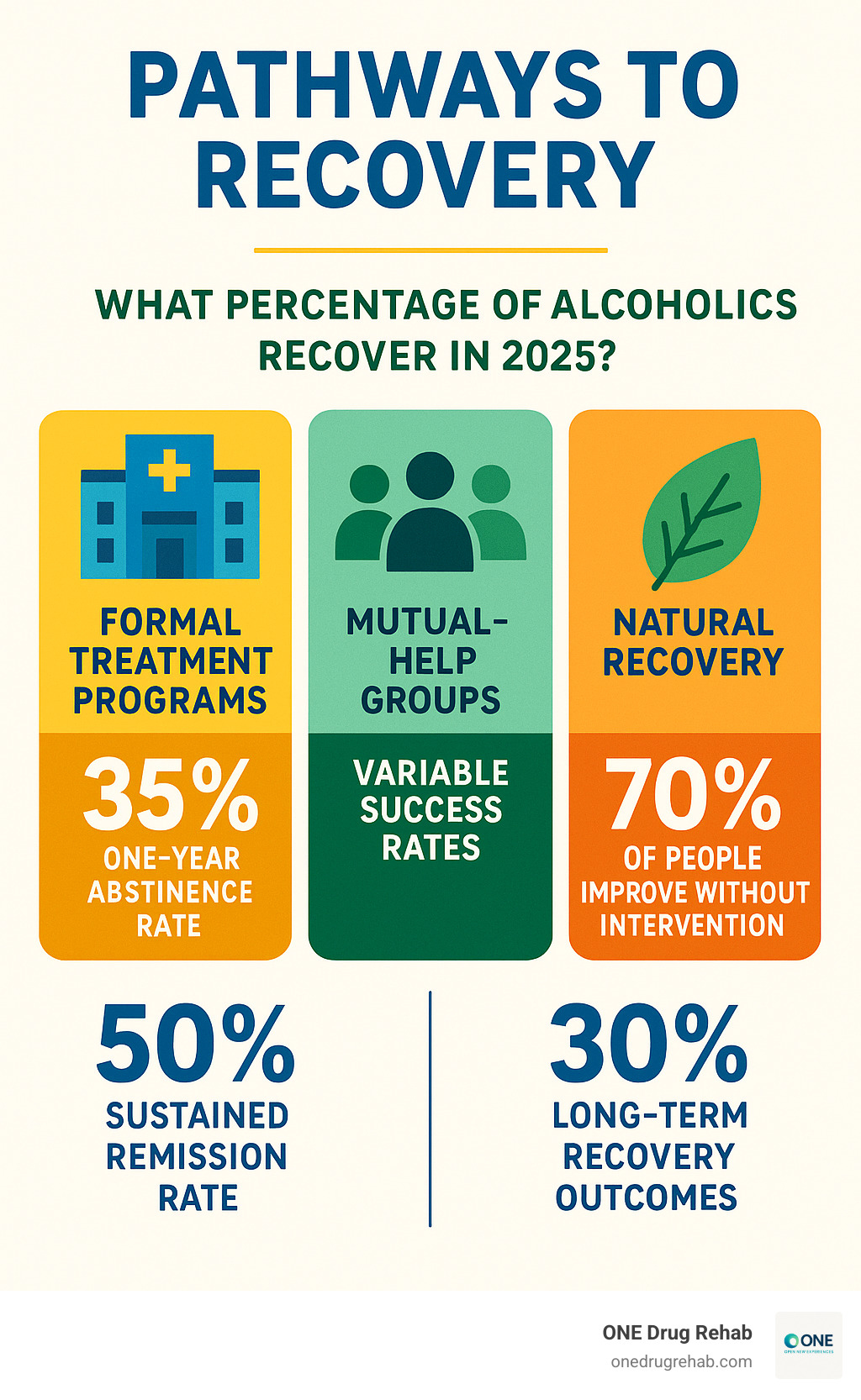
- 70% improve without formal treatment intervention
- 45% of those who achieve remission maintain sustained recovery
- After 5 years of sobriety, relapse risk drops below 15%
The reality is that recovery from alcohol use disorder (AUD) is common. Millions successfully overcome alcohol addiction each year, whether through formal treatment, mutual-help groups, or on their own.
Understanding these numbers isn’t simple. Rates vary based on the definition of “recovery,” addiction severity, and treatment. Some achieve total abstinence, while others return to low-risk drinking.
The key takeaway? Recovery happens more often than relapse. This challenges the old belief that alcoholism is a hopeless disease. Research shows most people with alcohol problems eventually resolve them, often without formal treatment.
What percentage of alcoholics recover terms you need:
What Does ‘Recovery’ from Alcoholism Really Mean?
To understand what percentage of alcoholics recover, we must first define “recovery.” The definition is complex and varies. For some, it means total abstinence. For others, it’s occasional, problem-free drinking or no longer meeting the clinical criteria for Alcohol Use Disorder (AUD). Many focus on overall life improvement.
The DSM-5 (the manual doctors use for diagnosis) defines AUD on a spectrum, and recovery exists on a spectrum too. It’s not just about stopping drinking; it’s about rebuilding your life. Recovery involves more than abstinence, including new coping skills, mended relationships, and personal growth. The Betty Ford Institute defines it as a process of improving health and wellness to live a self-directed life and reach one’s full potential.
Measuring recovery is tricky. Shame can lead to dishonest reporting, and varying study methods (e.g., different timelines) produce different results.
The Spectrum of Recovery: Abstinence vs. Moderation
Not everyone who recovers from alcoholism stops drinking completely, challenging a common belief about recovery.
Complete abstinence is the gold standard for many, especially those with severe alcohol problems, as it is often the safest path.
However, research shows many people resolve drinking problems by moving to low-risk drinking patterns (no more than three drinks a day for women/four for men, and less than seven drinks a week for women/14 for men). Others achieve asymptomatic risk drinking, where they might drink above low-risk limits but no longer meet AUD criteria or experience significant problems.
A surprising fact: 18.2% of people who achieved full recovery are abstainers, while 17.7% are low-risk drinkers. This means roughly equal numbers recover through abstinence and moderation. The key is reducing alcohol-related harm.
Why Are Recovery Rates So Hard to Pinpoint?
Pinpointing an exact percentage for recovery is challenging for several reasons.
- No universal definition of recovery exists. A 30-day program’s success metric differs from a five-year research study’s criteria.
- Many people recover naturally without formal treatment, making them invisible to studies that focus on clinical populations.
- Time matters. Success rates at one year look very different from those at five or 30 years. Short-term studies can miss eventual success stories.
- Shame and stigma lead to underreporting of both struggles and recovery, making accurate data collection difficult.
- Different research methods across studies contribute to the wide range of reported percentages.
Despite these challenges, epidemiological studies like the Epidemiology of Recovery From Alcohol Use Disorder provide valuable insights. The bottom line is that recovery is real, common, and looks different for everyone.
What Percentage of Alcoholics Recover? A Look at the Data
Contrary to common belief, the data on what percentage of alcoholics recover is quite hopeful. Recovery happens more often than most realize and through various pathways.

The numbers tell a story of resilience. Some find their way through treatment, others through support groups, and many through their own determination. What matters is that recovery is happening.
Recovery Rates with Formal Treatment
Professional treatment can be a game-changer. While not a magic bullet, statistics show it makes a real difference.
One-third of people who receive treatment for alcohol dependence stay sober for at least a year. More encouragingly, people who get treatment early have about ten times better chances of long-term recovery. This highlights the importance of early intervention.
Both inpatient and outpatient programs can be effective. Inpatient programs offer an intensive, 24/7 supportive environment, which is helpful for those needing medical detox or a trigger-free space. Outpatient programs offer flexibility for work and family commitments.
Treatment doesn’t end after the program. Aftercare—like ongoing therapy or support groups—is crucial for maintaining recovery. The initial treatment provides a foundation, but follow-up care helps you stay strong.
What percentage of alcoholics recover without formal treatment?
Surprisingly, many people overcome alcohol problems without formal treatment or support groups. About 70% of people with alcohol use disorder improve without any formal intervention. The majority resolve their issues independently.
In fact, fewer than 25% of people with AUD use professional services. Most find their own path through what researchers call “self-change.”
This often happens after a wake-up call, like a health scare or relationship problem, or a major life change like having a baby or starting a new job. Research confirms this: one study found that more than three-quarters of people who recovered for a year or more did so without formal help. Many of these individuals learned to drink in moderation. You can read more in Recovery from alcohol problems with and without treatment.
What percentage of alcoholics recover in the long term?
The long-term data on recovery is even more encouraging.
Within 30 years, 60% of people who develop AUD will enter remission. Research shows that by age 50, about 60% of people in long-term studies had achieved either first-time or sustained remission.
Of those who achieve remission, 45% maintain it long-term. And once someone has been sober for five years, their chance of relapse drops to less than 15%.
This shows that recovery strengthens over time. While the first few years are challenging, the chance of sustained recovery increases significantly after that. These numbers come from long-term research, which you can explore further in Long-term recovery in alcoholics.
The bottom line is that recovery is common. The data shows that most people who develop alcohol problems eventually overcome them.
Key Factors That Influence Alcohol Recovery Success
Recovery from alcohol addiction is not a one-size-fits-all journey. While the overall what percentage of alcoholics recover is encouraging, individual paths vary. Understanding what influences these differences helps set realistic expectations.

Several factors are key predictors of success:
- Individual Motivation: A genuine desire to change is the most powerful predictor. Recovery cannot be forced.
- Severity of AUD: Milder problems are often easier to resolve, but recovery from severe addiction is absolutely possible, though it may require more intensive support.
- Co-occurring Mental Health Disorders: Addressing issues like depression, anxiety, or trauma alongside addiction dramatically improves outcomes.
- Social Support: Encouragement from family, friends, and peers provides emotional strength and accountability.
- Economic Stability: Stable housing and employment reduce stress and create a solid foundation for change.
- Access to Quality Care: Evidence-based treatment programs significantly improve outcomes. Key predictors for sustained remission include lower pre-treatment drinking frequency, early intervention, and higher education levels.
The Role of Support Systems and Treatment Programs
Finding the right combination of support can transform a recovery journey. Family and peer support provides crucial day-to-day encouragement.
Mutual-help groups like Alcoholics Anonymous (AA) and SMART Recovery offer structured support and community. Millions have found sobriety through these programs.
Cognitive Behavioral Therapy (CBT) provides tools to handle triggers and cravings. Medication-Assisted Treatment (MAT) can also be very helpful, using medications like naltrexone or acamprosate to reduce cravings or block alcohol’s effects.
The bottom line: your chances of recovery are significantly higher if you seek support. Reaching out demonstrates commitment and opens doors to vital resources.
How Demographics Impact Recovery
Recovery patterns vary across different groups due to social, cultural, and biological factors.
- Age: Many people naturally “mature out” of problematic drinking in their twenties and thirties as life responsibilities change.
- Gender: Women can face unique barriers to treatment, such as greater stigma and childcare duties. Research on Gender differences in use of alcohol treatment services shows women use formal treatment less, though this doesn’t mean lower overall recovery rates.
- Race and Socioeconomics: Minority groups may face cultural barriers or socioeconomic disadvantages that impact access to care. Lower income and higher stress can challenge recovery for anyone.
Recognizing these demographic differences helps create more inclusive and effective recovery strategies.
Understanding Relapse: A Step on the Path, Not a Failure
When discussing what percentage of alcoholics recover, we must have an honest conversation about relapse. For most, recovery isn’t a straight line. It’s a journey with ups and downs.
Relapse doesn’t mean failure. It’s a common part of the process, similar to setbacks in other chronic conditions like diabetes or asthma. It’s not a moral failing but an indication that a recovery plan needs adjustment. View relapse as feedback—an opportunity to strengthen coping skills or seek more support.

The Science Behind Relapse
Understanding why relapse happens can reduce its stigma. Alcohol addiction changes the brain’s reward system, making it highly sensitive to reminders of drinking.
- Stress is a major trigger. Research shows how stress increases the risk of alcohol relapse through real brain chemistry.
- Environmental cues, like places or people associated with drinking, can activate old neural pathways.
- Emotional triggers, such as sadness, anger, or even celebration, can overwhelm coping skills.
The relapse process often occurs in stages: emotional relapse (neglecting self-care), mental relapse (thinking about drinking), and finally, physical relapse (consuming alcohol). Recognizing the early stages is key to getting back on track.
Common Misconceptions About Alcohol Recovery
Let’s clear up some common myths:
- The “rock bottom” myth: You don’t have to lose everything to deserve help. Seeking help early is always better.
- The “relapse equals failure” myth: This belief can trap people in a cycle of shame. In reality, a relapse can lead to a stronger, more resilient recovery plan.
- The “quick fix” myth: Recovery is a lifelong journey of growth. Building a sober life takes time and patience.
- The “all or nothing” myth: While total abstinence is safest for most, some individuals with less severe issues successfully return to low-risk drinking with professional guidance.
Frequently Asked Questions About Alcoholism Recovery
Answering what percentage of alcoholics recover often leads to more questions. Here are answers to the most common ones.
Can a person with Alcohol Use Disorder ever return to moderate drinking?
This is a debated topic. The answer depends on the severity of the Alcohol Use Disorder (AUD) and individual circumstances. For those with severe AUD, experts strongly recommend complete abstinence due to the high risk of returning to problematic use.
However, research shows a more nuanced picture. 17.7% of people in full recovery are low-risk drinkers, not abstainers. This suggests that for some, particularly those with less severe problems, a return to controlled drinking might be possible. This path requires professional guidance and honest self-assessment and is not recommended without it. The NIAAA acknowledges varied recovery outcomes, as noted in its report Many Recover from Alcoholism.
How successful is Alcoholics Anonymous (AA)?
While AA has helped millions, its core principle of anonymity makes tracking success rates with traditional research methods difficult. AA doesn’t keep membership records or conduct follow-up studies.
Despite this, research shows AA participation provides significant benefits. A comprehensive Cochrane Review found AA can be as effective as, and sometimes better than, other evidence-based treatments for achieving abstinence. AA’s effectiveness comes from its supportive community, the structured 12 Steps, and peer mentorship. Its anonymity creates a safe space for honest sharing, which is vital for recovery.
AA’s success often depends on an individual’s commitment to the program. For more on the science, see Does Alcoholics Anonymous Work?.
What is the difference between “remission” and “recovery”?
These terms are often used interchangeably but have distinct meanings.
Remission is a clinical term. It means a person no longer meets the diagnostic criteria for AUD. It can be “partial” or “full” and focuses on the absence of symptoms.
Recovery is a broader, holistic concept. The Substance Abuse and Mental Health Services Administration (SAMHSA) defines it as “a process of change through which individuals improve their health and wellness, live a self-directed life, and strive to reach their full potential.” Recovery includes personal growth, improved health, and building a meaningful life.
A simple way to think about it: remission is about the absence of symptoms, while recovery is about the presence of wellness.
Your Path to Recovery is Possible
The data on what percentage of alcoholics recover reveals a remarkable truth: recovery from alcohol use disorder is not just possible, it’s the most common outcome.
Consider the facts: 60% of people with alcohol problems enter remission within 30 years, and 70% improve without formal treatment. This shows the many pathways to healing, without diminishing the value of professional help.
Crucially, after five years of sobriety, the relapse risk drops below 15%. Recovery is about building a fulfilling life where alcohol loses its appeal.
Your recovery journey is your own. You might find strength in a treatment program, a support group, or through your own commitment with the help of loved ones.
What matters is taking that first step. This transforms you from someone wondering about recovery to someone actively pursuing it.
At ONE Drug Rehab, we’ve seen countless people find strength they never knew they had. Recovery isn’t for a select few—it’s available to anyone willing to reach for it.
You don’t need all the answers now. You just need the courage to begin, knowing millions have successfully walked this path.
Find a treatment facility near you using our directory