
Understanding Faith-Based Treatment: A Path to Holistic Recovery
Faith based treatment is an approach to addiction recovery that combines spiritual practices and religious principles with clinical, evidence-based therapies. These programs address not just the physical and psychological aspects of addiction, but also the spiritual dimension—helping individuals find purpose, forgiveness, and connection to a higher power as part of their healing journey.
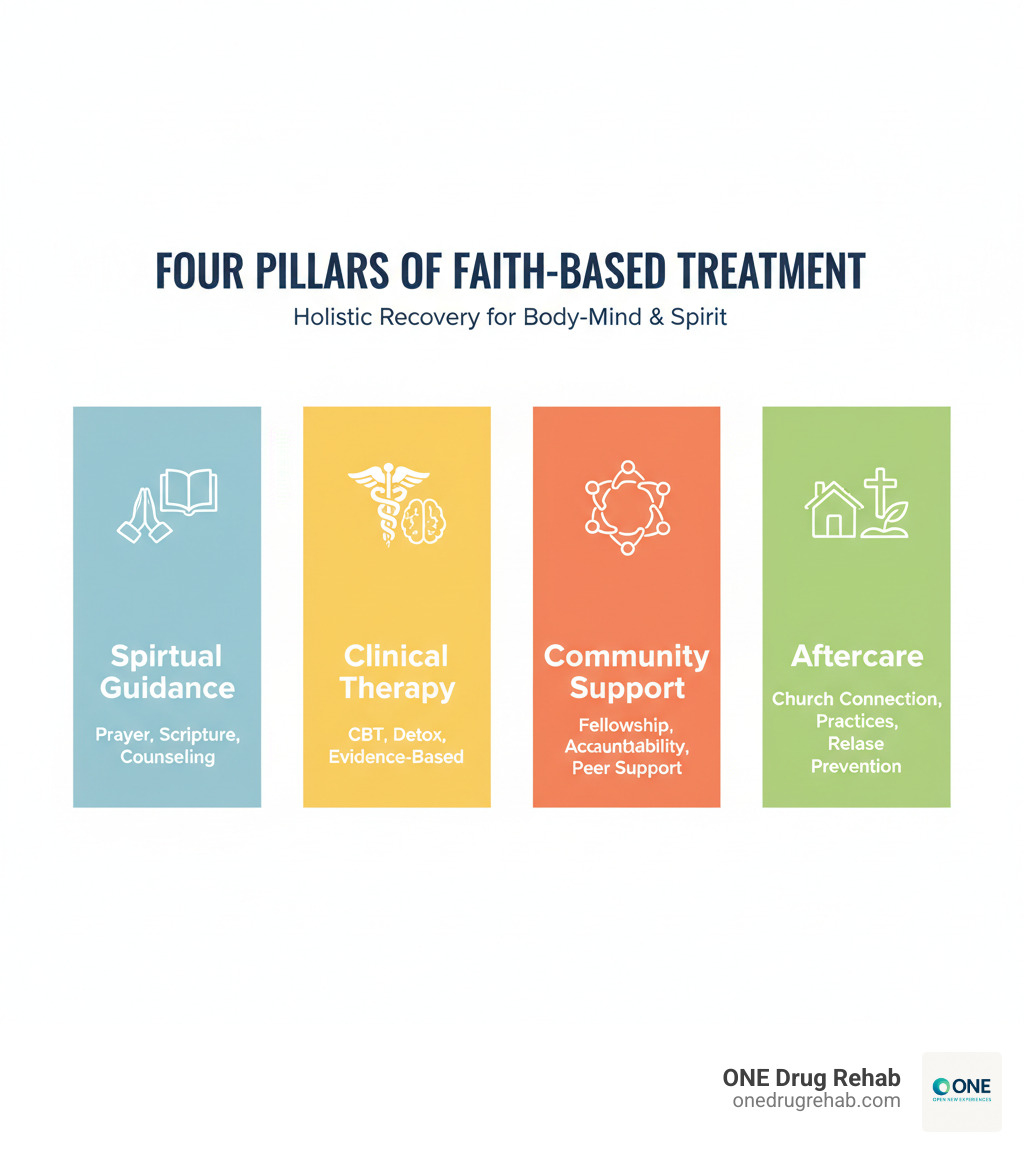
Key Components of Faith-Based Treatment:
- Spiritual Guidance – Daily prayer, scripture study, meditation, and pastoral counseling
- Clinical Therapy – Evidence-based treatments like CBT, group therapy, and medical detox
- Community Support – Fellowship with others who share similar beliefs and values
- Religious Practices – Worship services, faith-based 12-step programs, and spiritual retreats
- Aftercare Planning – Connection to local faith communities for long-term recovery support
Addiction often creates a spiritual crisis. Many of the 22.7 million Americans struggling with substance abuse feel a profound sense of emptiness, guilt, and disconnection from their values. As one recovering addict put it: “I didn’t just get sober. I found God and found my purpose.”
Faith-based treatment centers aim to address this spiritual void. They recognize that lasting recovery requires healing on all levels: physical, emotional, mental, and spiritual. By integrating religious teachings with proven medical and psychological interventions, these programs offer a holistic path forward.
Research supports this approach. Studies show that individuals who develop stronger religiosity during treatment have significantly higher abstinence rates, with one study finding that religious support increased the odds of staying sober by over 50%. For many, faith provides an anchor of unconditional love and redemption.
However, faith-based treatment isn’t one-size-fits-all. Programs exist across many religious traditions and vary in their integration of spirituality. Understanding what these programs offer—and whether they align with your beliefs—is essential. This guide will cover the core principles and practical considerations to help you make an informed decision.
What is Faith-Based Treatment?

When someone struggles with addiction, they often face a spiritual emptiness that substances cannot fill. Faith based treatment recognizes this reality and offers a path that heals the whole person: body, mind, and spirit. This holistic approach, sometimes called the bio-psycho-social-spiritual model, helps individuals find meaning, hope, and a reason to stay sober by addressing the spiritual void that can fuel addiction.
What is faith-based treatment and how does it differ?
Faith based treatment weaves religious or spiritual beliefs and practices into the therapeutic process. While secular programs focus on the medical, psychological, and social aspects of addiction, faith-based programs add the crucial element of spirituality. The primary difference is an explicit emphasis on a higher power—whether God, Allah, or a divine presence. This is grounded in specific religious texts, prayers, and rituals.
Importantly, faith-based programs complement, not replace, clinical care. You will still receive evidence-based therapies like Cognitive Behavioral Therapy (CBT) and medically supervised detoxification. The difference is that these treatments are delivered within a framework that integrates your faith, making it a source of strength throughout the process.
Core Principles and Philosophies
Several core principles form the foundation of faith-based recovery. These are not abstract concepts but practical tools for change:
- Surrender to a higher power: Acknowledging you cannot overcome addiction alone and turning to a spiritual source for strength.
- Redemption and forgiveness: Countering the shame and guilt of addiction by emphasizing that forgiveness is possible, both from a divine source and from oneself.
- Grace: Receiving unconditional love and acceptance, which provides an antidote to the self-condemnation that fuels substance use.
- Service to others: Finding purpose beyond your own recovery by helping others.
- Moral framework: Using religious teachings as a compass to guide decisions and rebuild your life on a stable foundation.
- Hope: Instilling a deep belief that lasting recovery is possible through divine intervention and spiritual growth.
Common Religious Affiliations in Treatment
Faith based treatment programs exist across many traditions, though some are more common in the United States.
Christianity is the most prevalent. These programs typically include Bible study, prayer, worship, and pastoral counseling, often emphasizing a Christ-centered approach. Well-known examples include Teen Challenge, Adult Teen Challenge, and The Salvation Army centers. Many use resources like The Life Recovery Bible, which connects 12-step principles with scripture.
Jewish programs draw from The Torah and combine spiritual principles with clinical methods, focusing on developing healthy responses to stress with guidance from pastoral caregivers.
Islamic programs are based on the view that substances should be avoided to protect life, health, and one’s relationship with Allah. These centers weave Islamic principles throughout the rehabilitation process.
Non-denominational spiritual programs welcome individuals from various backgrounds or those simply seeking a spiritual connection. They often incorporate universal practices like meditation and mindfulness, focusing on truths that transcend any single tradition.
Inside a Faith-Based Program: Practices and Therapies
Effective faith based treatment programs don’t ask you to choose between prayer and professional care. They recognize that addiction is both a medical condition and a spiritual crisis, and they treat it accordingly. These programs integrate spiritual healing with evidence-based clinical care because they understand that addiction attacks your body, mind, and spirit. To truly heal, you need to address all three.
Common Spiritual Practices
Spiritual practices are woven into the fabric of daily life in a faith-based treatment center, creating a foundation of meaning and connection. Common activities include:
- Daily prayer and meditation to provide quiet moments for reflection and guidance. Meditation is also a recognized tool for managing cravings.
- Scripture reading and study from texts like the Bible, Torah, or Quran. Resources like The Life Recovery Bible are specifically designed for people in recovery.
- Worship services to create a sense of community and spiritual nourishment.
- Pastoral counseling for one-on-one guidance to process shame, guilt, and grief.
- Journaling to reflect on your spiritual journey and feelings.
- Fellowship with others who share your faith and understand your struggles.
Integrating Clinical and Spiritual Care
Modern faith based treatment stands on two legs: spiritual care and clinical excellence. On the clinical side, you’ll find proven therapies like Cognitive Behavioral Therapy (CBT), which helps change destructive thought patterns, and Dialectical Behavior Therapy (DBT), which teaches emotional regulation.
For many, recovery begins with medical detoxification. Withdrawal can be dangerous, and medical supervision is essential for safety. Faith-based programs provide this, recognizing that stabilizing the body is the first step toward spiritual healing.
Quality programs also address co-occurring disorders like trauma, anxiety, or depression. Treating only the addiction while ignoring the underlying pain is rarely effective long-term. This requires licensed professionals—therapists, counselors, and medical staff—working alongside spiritual advisors to provide comprehensive care.
The Role of 12-Step Programs
Twelve-step programs like Alcoholics Anonymous (AA) play a significant role in many faith based treatment settings. While not formally religious, AA’s foundation is deeply spiritual. Concepts like admitting powerlessness, believing in a “higher power,” and turning your will over to God (as you understand Him) align naturally with faith-based approaches.
The twelve steps guide individuals through a process of spiritual change, including making a moral inventory, confessing wrongs, and serving others. For many people of faith, these steps feel familiar and resonant.
Some programs use faith-based adaptations like Celebrate Recovery, a Christian version of the 12-step model, or programs like The Genesis Process and Life Recovery. In rehab, 12-step meetings provide structure, accountability, and a peer community where you can share your struggles and victories with people who understand both the addiction and the faith journey.
Weighing the Pros and Cons of Faith-Based Treatment

Choosing the right path to recovery is a deeply personal decision. Faith based treatment offers powerful advantages, but it’s not a universal solution. The key is understanding whether it aligns with your personal needs and beliefs. Recovery is about finding your program—the one that speaks to your heart and gives you the tools to heal.
Potential Benefits of a Spiritual Approach
For many, the spiritual dimension adds layers of healing that clinical approaches alone might miss. Key benefits include:
- Purpose and Meaning: Faith can restore your “why,” reconnecting you to your values and a larger story.
- Built-in Community: Faith-based programs provide instant fellowship with people who share your beliefs, combating the isolation that fuels addiction.
- Hope and Forgiveness: Belief in divine grace and redemption can provide the fuel to get through the hardest days. It offers a path to forgiveness, reducing the crushing weight of shame and guilt.
- Positive Coping Skills: Practices like prayer and meditation become healthy outlets for stress and emotional pain, replacing destructive habits.
- Moral Framework: Religious teachings offer ethical guidelines that can be incredibly grounding when rebuilding your life.
Research supports these benefits. Studies show that people who develop stronger religiosity during treatment have significantly higher abstinence rates. Faith isn’t just comforting—it’s statistically protective against relapse, leading to improved mental health and a more positive outlook.
Potential Drawbacks and Ethical Considerations
It’s also important to be honest about the potential downsides. Faith based treatment is not for everyone.
- Exclusivity: Some programs are heavily focused on a single denomination, which can feel alienating to those from different backgrounds or with no faith.
- Judgment or Guilt: While many centers emphasize grace, some may frame addiction as a moral failing rather than a disease, which can increase shame.
- Resistance to MAT: Historically, some programs have been resistant to medically assisted treatment (MAT). While this is changing, it’s crucial to ask about a program’s stance on medications for addiction.
- Proselytization: Ethical programs support your spiritual journey without pressuring you to convert. Be wary of any program that feels manipulative.
- Not a Fit for Everyone: If you are an atheist or agnostic, a program centered on a higher power will likely feel irrelevant or frustrating.
How effective is faith-based treatment?
Does it work? For many people, yes. Multiple studies show a positive correlation between religiosity and abstinence. A significant study found that as religiosity increased during treatment, the odds of staying sober rose by 57%. Faith and spirituality are consistently shown to positively impact overall health and well-being.
People with strong religious beliefs are less likely to use substances and more likely to maintain sobriety if they do struggle with addiction. Faith acts as a protective factor against relapse, providing strength and resilience. However, effectiveness depends on the quality of the program, the individual’s commitment, and whether the approach is a good personal fit. For those to whom spirituality is meaningful, integrating faith into recovery can be essential for filling the spiritual void that addiction creates.
Finding the Right Program and Community Support

Finding a faith based treatment program that truly fits you can make all the difference between simply getting through treatment and truly changing your life. The journey to recovery requires the right support system.
How to Know if a Program is Right for You
Think of this as finding a home for your healing journey. Start by asking critical questions:
- Personal Beliefs: Does the program’s denomination or spiritual approach align with your own beliefs? Are you more comfortable with a specific tradition or a broader, non-denominational style?
- Level of Religious Integration: How deeply is faith woven into the daily schedule? Would you prefer mandatory worship and daily study, or a gentler approach with optional spiritual activities?
- Treatment Philosophy: Does the program view addiction as both a medical disease and a spiritual crisis? The best programs address both.
- Staff Qualifications: Does the staff include licensed therapists, certified counselors, and medical professionals in addition to pastoral counselors? Clinical expertise should complement spiritual guidance.
- Accreditation and Licensing: Is the program accredited by organizations like The Joint Commission or CARF? Is it licensed by the state? These credentials ensure safety and quality standards.
- Aftercare Planning: Does the program help you connect with long-term support like local faith communities or 12-step groups?
The Power of a Faith Community
Addiction thrives in isolation, but healing flourishes in connection. A faith community provides:
- Fellowship: You are surrounded by people who share your values and understand the spiritual dimension of your struggle.
- Accountability: This community offers deep, meaningful support from people who genuinely care about your progress.
- Reduced Isolation: Hearing the stories of others who have walked the same path and found grace can provide immense hope.
- Long-Term Support: Your local congregation can become a safety net after treatment ends, offering continued spiritual growth and mentorship. SAMHSA highlights “Faith and Community Engagement” as a critical component of recovery.
Resources for Finding Help
You don’t have to figure this out alone. Several resources can help you find the right faith based treatment program.
- FindTreatment.gov is a confidential federal website to locate various treatment options, including faith-based ones.
- SAMHSA’s National Helpline offers free, confidential referrals and information 24/7.
- The HHS Center for Faith-based and Neighborhood Partnerships provides guides for faith communities on supporting mental health and recovery.
- Local clergy like your pastor, rabbi, or imam can often recommend programs and provide spiritual guidance.
Well-established programs include The Salvation Army adult rehabilitation centers, as well as groups like The Genesis Process and Life Recovery. Here at One Drug Rehab, we provide a directory to help you research your options, including providers like Teen Challenge, Mission of Hope Ministries, and U-Turn for Christ. We are not affiliated with these providers but are here to help you make an informed decision.
You’ve already taken the hardest step by deciding to seek help. Now it’s about finding the right place to begin your spiritual path to recovery.
Conclusion
We’ve explored how faith based treatment offers a holistic approach to recovery, addressing the body, mind, and spirit. By integrating principles like surrender and redemption with evidence-based therapy, these programs address the spiritual void at addiction’s core. The evidence is compelling: individuals who engage their faith during treatment show significantly higher abstinence rates. Faith provides purpose, community, hope, and a moral framework for rebuilding a life.
However, recovery is a deeply personal journey. The most effective treatment is one that aligns with your values and addresses your unique needs. Whether you’re drawn to a specific denomination or a broader spiritual path, the right fit is out there.
At ONE Drug Rehab, we are a third-party resource. Our goal is not to push you toward any specific program but to provide comprehensive, honest information so you can make the best decision for yourself. We simply want you to find the path that leads to lasting recovery.
If you feel that spiritual connection might be the missing piece in your healing, trust that instinct. You deserve a program that honors all of who you are. Recovery is possible, healing is real, and you don’t have to walk this path alone.
Explore our directory of faith-based recovery centers to find a program near you and take that courageous next step.