

Why Access to Free Addiction Treatment Matters in Louisville
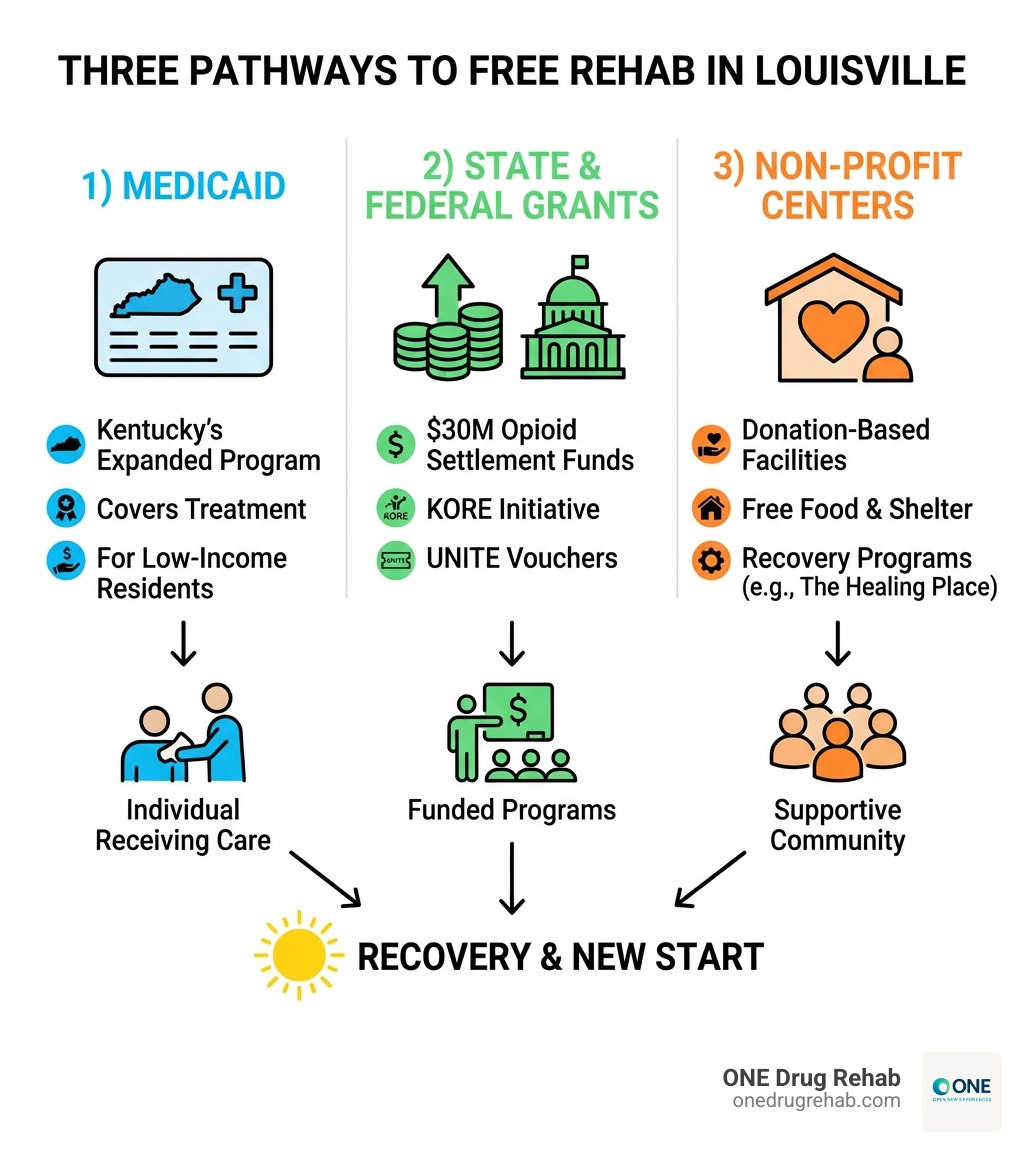
Free rehab centers in louisville ky provide hope for thousands of residents struggling with substance use disorders who cannot afford traditional treatment. If you’re searching for no-cost addiction care in Louisville, here are your primary options:
Quick Answer: 3 Ways to Access Free Rehab in Louisville
- Kentucky Medicaid – Covers addiction treatment for low-income residents; apply through benefind.ky.gov
- The Healing Place – Free long-term residential program at 1020 W Market St (Men’s) and 1503 S 15th St (Women’s); no insurance required
- State & Federal Grants – Programs like KORE and UNITE Treatment Vouchers fund free care; call KY HELP at 1-877-318-1871
The cost of addiction treatment creates a massive barrier for people who need help most. In 2020, 12.28% of Kentucky residents with substance use disorders didn’t get the help they needed. About 30% of people couldn’t access treatment simply because they lacked healthcare coverage or couldn’t afford the cost.
But here’s the reality: free and low-cost options do exist in Louisville.
Louisville will receive over $30 million from the national opioid settlement, with significant funds directed toward treatment, prevention, transportation, and housing for people in recovery. Combined with state initiatives like the Kentucky Opioid Response Effort (KORE), Medicaid expansion, and donation-based centers, Louisville offers multiple pathways to free care.
The good news? You don’t need insurance. You don’t need money upfront. What you need is a desire to get sober and knowledge of where to find help.
This guide breaks down every free option available, from long-term residential programs to outpatient services, so you can start your recovery today.
How to Access Free Addiction Treatment in Louisville
We understand that facing financial hardship while battling a substance use disorder can feel like an impossible obstacle. The statistics are stark: in 2020, a significant 12.28% of Kentuckians with substance use disorders didn’t receive the help they desperately needed, often due to financial constraints. About 30% of people needing help couldn’t get into a facility because they lacked healthcare coverage or couldn’t afford the costs on their own.
But here’s the crucial message: multiple pathways to care exist, and many of them are designed specifically to overcome these financial barriers. Whether it’s through government programs, state initiatives, or community-funded organizations, finding free rehab centers in louisville ky is a very real possibility. We encourage you to explore every avenue, because your recovery is worth it. For more information on navigating treatment options without the burden of cost, you can find more info about Free Alcohol Rehab.
How Medicaid Covers Free Rehab Centers in Louisville, KY
Kentucky Medicaid is a cornerstone for accessing free or very low-cost addiction treatment services in Louisville. For low-income residents, Medicaid (which includes plans like Passport Health Plan, Anthem Blue Cross and Blue Shield, and Humana CareSource) can be a lifeline. The expansion of Medicaid has significantly broadened coverage, making it easier for more Kentuckians to qualify.
Eligibility and Application:
To apply for Kentucky Medicaid, individuals can visit benefind.ky.gov. Eligibility typically depends on income and household size, but the expanded program covers a wider range of individuals.
Services Covered:
Medicaid often covers a comprehensive range of addiction treatment services, including:
- Detoxification: Medically supervised withdrawal.
- Inpatient/Residential Treatment: Structured programs with 24/7 care.
- Outpatient Programs: Including Intensive Outpatient Programs (IOP) and Partial Hospitalization Programs (PHP).
- Medication-Assisted Treatment (MAT): Such as Vivitrol and Suboxone, which are crucial for managing cravings and preventing relapse.
- Therapy and Counseling: Individual, group, and family therapy sessions.
Thanks to the Mental Health Parity and Addiction Equity Act, insurance plans, including Medicaid, are required to cover mental health and substance use disorder treatment at the same level as medical and surgical care. This means that if Medicaid covers a medical procedure, it should also cover comparable addiction treatment services, ensuring more equitable access to care.
State and Federal Grants
Beyond Medicaid, state and federal grants play a vital role in funding free rehab centers in louisville ky and across Kentucky. These grants are often designed to target specific needs, such as the opioid crisis, or to support general substance use disorder treatment for underserved populations.
Opioid Settlement Funds:
Louisville is set to receive over $30 million from a national settlement related to the opioid epidemic. These funds are specifically earmarked for treatment and prevention efforts. For example, the first $2.6 million is allocated for essential services like transportation and housing for individuals in recovery, while another $744,000 is dedicated to expanding free Naloxone distribution and overdose prevention programs. This influx of capital directly supports the infrastructure for free and low-cost addiction care.
Kentucky Opioid Response Effort (KORE):
The Kentucky Opioid Response Effort (KORE) is a comprehensive state initiative that provides funding for addiction treatment services. KORE aims to create an equitable, recovery-oriented system of care, expanding access to prevention, treatment, recovery, and harm reduction services across the state. This means more resources for local programs, including those in Louisville.
SAMHSA Block Grants:
The Substance Abuse and Mental Health Services Administration (SAMHSA) provides federal block grants, such as the Substance Abuse Prevention and Treatment Block Grant (SABG). These grants are distributed to states to fund a wide array of substance use disorder services, often benefiting individuals who lack insurance or financial resources. You can learn more about SAMHSA block grants and their impact on funding treatment.
UNITE Treatment Vouchers:
Operation UNITE offers a unique program through its UNITE Treatment Vouchers. Low-income individuals living in UNITE’s 32-county service area (which includes some counties near Louisville) may qualify for these vouchers to help cover the costs of residential treatment. This is a targeted approach to ensure that financial barriers don’t prevent access to intensive care. If you’re seeking assistance, Operation UNITE provides a toll-free Treatment Referral & Help Line at 1-866-90-UNITE (1-866-908-6483).
Non-Profit and Donation-Based Centers
Many free rehab centers in louisville ky operate as non-profit or donation-based organizations. These centers are often fueled by community funding, charitable donations, and grants from foundations and private donors. This model allows them to offer services at no cost to the client, removing the financial barrier entirely.
A common approach among these centers is the “social model of recovery.” This model emphasizes peer support, community living, and personal responsibility within a structured, drug-free environment, rather than a primarily medical approach. These programs often provide a holistic approach to recovery, understanding that basic needs must be met for an individual to focus on healing. This includes providing:
- Food: Ensuring nutritious meals are available.
- Shelter: Offering a safe, stable place to live.
- Clothing: Meeting essential personal needs.
By providing these fundamental necessities alongside a robust recovery program, non-profit centers create an environment where individuals can truly focus on their journey to sobriety without the added stress of survival.
Directory of Free Rehab Centers in Louisville, KY
Finding the right facility can feel like searching for a needle in a haystack, but we’re here to help guide you. Louisville is home to some incredible resources, and knowing what to expect can make all the difference.
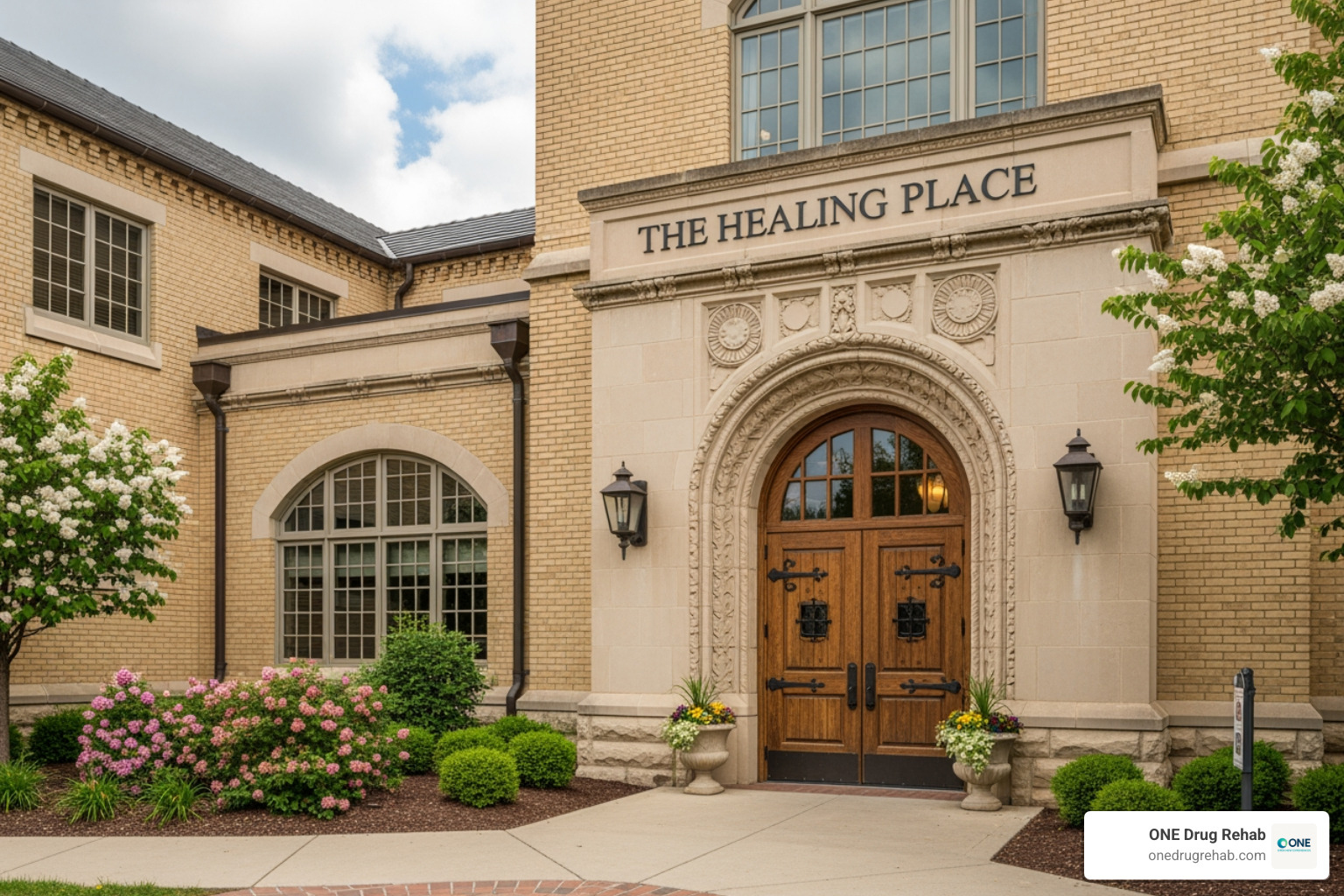
When you’re looking for free rehab centers in louisville ky, treatment options can vary significantly from one facility to another. It’s always a good idea to call ahead to confirm their current services, admission criteria, and any potential waiting lists (though some, like The Healing Place, pride themselves on having an open-door policy).
Here’s a list of essential documents and items you should prepare when seeking admission to a free or low-cost rehab program:
- Government-issued ID (driver’s license, state ID)
- Proof of residency (utility bill, mail with address)
- Proof of income (pay stubs, tax returns) for sliding scale or grant applications
- Medical records and a list of all current prescribed medications (non-narcotic)
- Contact information for emergency contacts
- Any legal documents related to court dates or probation (if applicable)
The Healing Place
When we talk about free rehab centers in louisville ky, The Healing Place immediately comes to mind. It’s a nationally recognized, no-cost model of recovery that has been serving the community since 1989. The organization provides food, shelter, clothing, and its recovery program to nearly 1,000 individuals daily, completely free of charge to the client.
Key Features:
- No-Cost Model: The Healing Place does not charge any fees for its program and does not accept insurance, Medicaid, or Medicare for its residential services.
- Separate Campuses: They operate dedicated campuses for both men (1020 W Market St) and women (1503 S 15th St) in Louisville.
- Non-Medical Detox: For those needing to safely withdraw from substances, they offer a non-medical detox program lasting 3-10 days.
- Long-Term Residential Program: This is a comprehensive, peer-driven, 12-step based program that typically lasts 6-9 months. It’s built on a social model of recovery, fostering community and mutual support.
- Impressive Success Statistics: The Healing Place boasts remarkable outcomes:
- 91% of clients reported any illegal drug use at intake, compared to just 19% at follow-up.
- Heroin use dropped from 37% at intake to 4% at follow-up.
- Opioid misuse decreased from 56% at intake to 3% at follow-up.
- Homelessness among clients fell from 31% at intake to 4% at follow-up.
- Transitional Living: After completing the residential program, clients can access transitional living options for approximately three months, providing a supportive bridge back into independent living.
The Healing Place’s only requirement for entry into its free residential program is a genuine desire to get sober. It operates on a first-come, first-served, open-door policy for its pre-screening process. You can find more details on their program directly on their website.
Other Notable Low-Cost & State-Funded Options
While The Healing Place is a standout, Louisville and the surrounding areas offer other valuable resources for low-cost and state-funded addiction treatment. These facilities often work with Medicaid or other government funding to make care accessible.
- UofL Health – Peace Hospital: Located in Louisville, Peace Hospital offers inpatient programs for substance use and co-occurring mental health disorders. They emphasize an integrated approach to treatment and provide 24/7 no-charge assessments, which is a great first step. While not entirely free for ongoing treatment, they accept Medicaid and other insurance, making their services accessible to many.
- Central State Hospital: This state psychiatric hospital is listed in some directories as offering free options for detox and inpatient services. As a state-funded facility, it plays a critical role in providing care to individuals who might otherwise struggle to access it.
- Seven Counties Services: As a major community mental health center in Louisville, Seven Counties Services provides a wide range of addiction treatment options. They offer outpatient services, a 24/7 crisis line, and often have walk-in hours, embodying a “no-barrier” approach to help. They accept Medicaid and other payment options, making them a crucial resource for the community.
These centers, along with others that accept Medicaid, Medicare, or state funding, provide essential services including crisis stabilization, inpatient care, and various outpatient programs.
Statewide Kentucky Recovery Resources
Kentucky has developed a robust network of statewide resources designed to support individuals in their journey to recovery, many of which are accessible to Louisville residents.
- Recovery Kentucky Program: This innovative program was created to help Kentuckians recover from substance abuse, which often leads to chronic homelessness. There are 13 Recovery Kentucky centers across the Commonwealth, providing housing and recovery services. These centers use a model of peer support, daily living skills classes, and job responsibilities to help individuals regain control of their lives and eventually secure permanent housing. You can find more information about housing for recovery through the Kentucky Housing Corporation.
- KSP Angel Initiative: The Kentucky State Police (KSP) offers the Angel Initiative, a compassionate program where individuals struggling with addiction can walk into any of the 16 KSP Posts across the Commonwealth and ask for help. An “Angel” at the post will then connect them with treatment centers, all without the fear of criminal charges. It’s a powerful way to reduce barriers to seeking help.
- Operation UNITE: This organization provides a toll-free Treatment Referral & Help Line (1-866-90-UNITE) for anyone seeking assistance with a substance use disorder or to inquire about qualifying for a UNITE Treatment Voucher. While their vouchers are primarily for a 32-county service area, their referral line can still provide valuable guidance for Louisville residents.
- After-Care Support Groups: Recognizing that recovery is a lifelong journey, many state and non-profit initiatives emphasize after-care support. Organizations like Operation UNITE also provide information about after-care support groups, which are crucial for maintaining sobriety and building a strong recovery community. These groups, such as Alcoholics Anonymous (AA) and Narcotics Anonymous (NA), are often free and offer invaluable peer support.
Alternative & Low-Cost Rehab Options
We understand that even with the options for free rehab centers in louisville ky, some individuals might not qualify for completely free care, or they might be looking for alternatives that better suit their specific needs. It’s disheartening to know that about 30% of people who need help don’t get it because they can’t afford the cost. But don’t despair! There are still many avenues to explore that can make treatment affordable.

If free options aren’t suitable or immediately available, various low-cost solutions can bridge the gap. For those without insurance, navigating the financial aspect of rehab can be particularly daunting, but resources exist to help. You can find more comprehensive information on how to access treatment if you don’t have coverage on our page about Find Rehab Without Insurance.
Sliding-Scale Fees
Many addiction treatment centers, even those that aren’t entirely free, offer services on a sliding-scale fee basis. This means the cost of treatment is adjusted according to your income and household size. It’s an excellent way to make quality care affordable for individuals with limited financial resources.
How it works:
- You’ll typically need to provide proof of income (e.g., pay stubs, tax returns, unemployment benefits statements) and information about your household.
- The facility will then determine a fee that is manageable for your financial situation.
We highly recommend asking facilities about their sliding-scale options during your initial inquiries. Don’t be shy – this is a common and compassionate approach to making treatment accessible.
Payment Plans and Scholarships
If a facility doesn’t offer a sliding scale, or if your income still makes the adjusted fee challenging, other financing options might be available.
- In-house Financing/Payment Plans: Some rehab centers offer their own payment plans, allowing you to spread the cost of treatment over several months or even years. This can make the monthly payments much more manageable than a large upfront sum.
- Non-Profit Scholarships and Financial Assistance: Many non-profit organizations, as well as some treatment centers themselves, offer scholarships or financial assistance programs specifically for addiction treatment. These can be competitive but are absolutely worth pursuing. Inquiring with the admissions team at any facility you’re considering is the best way to uncover these opportunities. They often have dedicated staff who can help you explore all available funding avenues.
Frequently Asked Questions About Louisville Rehabs
We know you probably have a lot of questions about accessing addiction treatment, especially when looking for free rehab centers in louisville ky. It’s completely normal to feel overwhelmed, but getting clear answers is an important step in preparing for treatment. Here, we address some of the most common concerns.
Eligibility for Free Rehab Centers in Louisville, KY
Eligibility for free rehab services in Louisville generally hinges on a few key factors:
- Proof of Residency: Most programs require you to be a resident of Kentucky, and sometimes specifically Louisville, to qualify for their services.
- Income Verification: Programs funded by Medicaid or grants, or those operating on a sliding scale, will require documentation of your income and household size to confirm financial need.
- Lack of Insurance: Many free programs prioritize individuals who are uninsured or underinsured, as they face the greatest barriers to accessing care.
- Specific Grant Requirements: Some grants, like the UNITE Treatment Vouchers, might have additional criteria related to geographic location (e.g., specific counties) or the type of substance use disorder.
- Desire to Get Sober: This is a universal and fundamental requirement for almost all recovery programs, especially those like The Healing Place, which operates on a peer-driven social model.
Always be prepared to provide documentation and openly discuss your situation with the admissions team.
What Services and Addictions Are Treated?
Free rehab centers in louisville ky and low-cost options offer a diverse range of services to address various substance addictions and co-occurring disorders.
Common Treatment Types:
- Detoxification: This can be non-medical (like at The Healing Place, offering a safe place to withdraw) or medically supervised (often available at hospitals or state-funded facilities like UofL Health – Peace Hospital or Central State Hospital).
- Medication-Assisted Treatment (MAT): Many programs, particularly those supported by state and federal grants, offer MAT options such as Suboxone, Vivitrol, or methadone to help manage cravings and withdrawal symptoms.
- Inpatient/Residential Treatment: These programs provide 24/7 structured care in a live-in facility, focusing on intensive therapy and support.
- Outpatient Programs (IOP/PHP): Intensive Outpatient Programs (IOP) and Partial Hospitalization Programs (PHP) offer structured therapy and counseling while allowing individuals to live at home.
- Therapy and Counseling: Individual, group, and family therapy are staples, utilizing evidence-based practices like Cognitive Behavioral Therapy (CBT) and Dialectical Behavior Therapy (DBT).
Substances Treated:
Facilities can treat a wide range of addictions, including:
- Opioids (heroin, fentanyl, prescription painkillers)
- Alcohol
- Stimulants (methamphetamine, cocaine)
- Prescription drugs (benzodiazepines, Adderall)
- Inhalants
- Some centers may also offer support for other behavioral addictions like gambling.
Co-occurring Disorders (Dual Diagnosis):
Many reputable free and low-cost centers understand the strong link between substance use disorders and mental health conditions. They often provide “dual diagnosis” treatment, addressing both the addiction and any co-occurring mental health issues like depression, anxiety, or PTSD simultaneously for more effective and lasting recovery.
Can I Take Prescribed Medications or Have Visitors?
These are very common and important questions for anyone considering entering a rehab program. The answers often depend on the specific facility and the phase of your treatment.
Medication Policies:
- Review Process: Upon admission, all facilities will review any medications you are currently taking. It’s crucial to bring a complete list and the medications themselves, ideally with a 30-day supply for non-narcotic prescriptions.
- Restrictions: Generally, narcotic medications (like opioid painkillers or certain benzodiazepines) or any medications containing alcohol are not permitted within addiction treatment programs, as they can interfere with the recovery process and create a risk of relapse.
- Non-Narcotic Prescriptions: If you have non-narcotic prescribed medications for other health conditions (e.g., blood pressure, diabetes, mental health conditions like antidepressants), these are typically allowed and administered by staff as part of your care plan.
Visitation Policies:
- Varies by Facility and Phase: Visitation rules differ significantly. Some facilities encourage family involvement from the start, while others, particularly during initial detox or stabilization phases, may restrict visitors to allow the client to focus solely on their immediate recovery.
- The Healing Place Example: At The Healing Place, for instance, detox clients typically have no visitors. As clients progress through the Motivational Track and into later phases, visitation privileges increase, often allowing for off-campus visits or on-campus meetings.
- Family Therapy: Many centers strongly encourage family therapy sessions, as family support is a critical component of long-term recovery. These sessions can help heal relationships, educate family members about addiction, and build a stronger support system for the client.
- Communication: Even if in-person visits are restricted initially, most facilities will facilitate phone calls or other forms of communication with approved family members. Always clarify the specific visitation and communication policies with the facility’s admissions team.
Your Path to Recovery in Louisville Starts Here
We hope this extensive guide has illuminated the many paths available for finding free rehab centers in louisville ky. While the journey to recovery can be challenging, we want to reiterate that free and low-cost help is not only available but is often of exceptional quality, backed by dedicated professionals, peer support, and compassionate communities.
Taking the first step is often the hardest, but it’s also the most courageous. Whether you reach out to Kentucky Medicaid, contact The Healing Place directly, explore state and federal grant programs, or investigate sliding-scale options, know that a new start is within reach. Your desire to get sober is the most powerful tool you have.
For a comprehensive list of addiction centers in Louisville, including those with various payment options and specialized services, we invite you to browse our directory at Find a comprehensive list of addiction centers in Louisville. We are here to be a third-party, non-affiliated resource, helping you research treatment options and find the support you deserve. You don’t have to walk this path alone.