

intensive outpatient rehab programs near me: 90-Day Help
Why Finding the Right Intensive Outpatient Program Can Transform Your Recovery
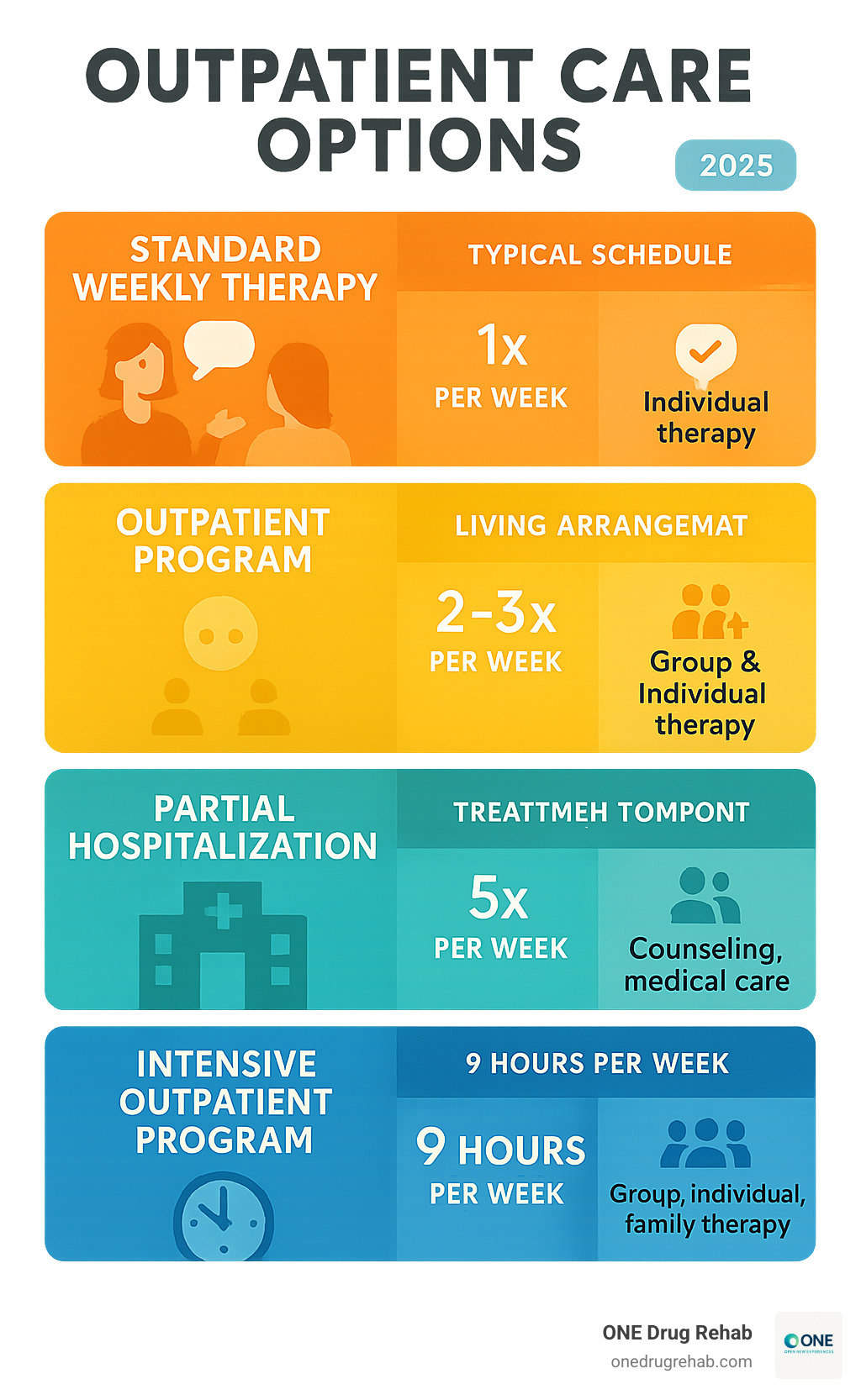
When searching for intensive outpatient rehab programs near me, you’re looking for a solution that offers a powerful combination of structured support and real-world flexibility. These programs are a vital part of the addiction treatment landscape, providing a middle ground for those who need substantial care but can’t step away from their lives completely. Typically involving at least 9 hours of therapy per week, spread over several days, an IOP allows you to integrate recovery into your daily routine, maintaining crucial connections to work, school, and family.
Quick Answer: How to Find Intensive Outpatient Programs Near You
- Ask your doctor or therapist for referrals: Your primary care physician or mental health professional is an excellent starting point. They often have established relationships with local treatment providers and can recommend programs that align with your specific needs.
- Use SAMHSA’s treatment locator: The Substance Abuse and Mental Health Services Administration (SAMHSA) offers a confidential, free online treatment locator that allows you to search for IOPs and other rehab services by zip code. This is an unbiased, comprehensive resource for finding licensed providers.
- Contact your insurance provider: Call the member services number on the back of your insurance card to get a list of in-network IOPs. This will help you understand your coverage and minimize out-of-pocket costs.
- Search online directories: Reputable directories like ONEDrugRehab.com provide detailed information about various programs, allowing you to compare options and find specialized care that fits your situation.
- Call treatment centers directly: Once you have a shortlist, don’t hesitate to call the centers. Ask about their program structure, therapies offered, staff credentials, and availability. This direct contact can give you a feel for the center’s culture.
What IOPs Offer: A Deeper Look
- Group Therapy Sessions: The cornerstone of IOP, where you connect with peers, share experiences, and build a sober support network.
- Individual Counseling: One-on-one sessions with a therapist to address personal triggers, underlying issues, and progress toward your recovery goals.
- Family Support Programs: Addiction affects the whole family. These programs educate loved ones and help repair relationships through guided therapy.
- Relapse Prevention Training: Learn to identify high-risk situations, develop coping strategies, and create a concrete plan to manage cravings and prevent a return to substance use.
- Co-occurring Disorder Treatment: Many IOPs are equipped to treat both substance use disorders and mental health conditions like depression or anxiety simultaneously, which is crucial for lasting recovery.
The impact of these programs is significant. While data from 2011 showed that IOPs served 141,964 patients—representing 12% of all individuals in addiction treatment—their importance has only grown. More importantly, the evidence is clear: for most individuals, IOPs can be just as effective as inpatient treatment. A comprehensive review of studies published by the National Institutes of Health confirms that IOPs lead to significant reductions in substance use and improvements in social functioning.
This makes an IOP an ideal choice whether you’re transitioning from a residential program and need to solidify your recovery skills, or you require more intensive support than weekly therapy can provide. By allowing you to heal within your own community, IOPs empower you to face real-world challenges with professional guidance, building a resilient and sustainable recovery. Many programs improve this flexibility with evening sessions for working professionals or specialized tracks for needs like detox support or extended 90-day care.
Intensive outpatient rehab programs near me word list:
What is an Intensive Outpatient Program (IOP)?
Think of an intensive outpatient program (IOP) as your recovery safety net. It provides serious, structured support without pulling you away from the life you’re working hard to rebuild. An IOP occupies a crucial space in the continuum of care, sitting perfectly between the 24/7 supervision of residential treatment and the once-a-week check-ins of standard therapy.
Intensive outpatient rehab programs near me are specifically designed for individuals who need more than occasional counseling but do not require round-the-clock medical monitoring. You receive a high level of structured support through a consistent schedule of group sessions, individual therapy, and educational workshops. The key benefit is that you do this while sleeping in your own bed and keeping up with your work, school, or family responsibilities.
The true power of an IOP lies in its flexibility and real-world application. You are not isolated in a controlled facility; instead, you are actively practicing your new recovery skills in your daily environment. When you encounter stress at work, face a trigger at home, or steer a challenging social situation, you have fresh tools and immediate support to handle it. This real-time practice is what forges a stronger, more resilient, and sustainable recovery.

IOPs are effective for both addiction recovery and primary mental health treatment. This level of care is often a perfect fit for those stepping down from a residential or partial hospitalization program, or for individuals who find that weekly therapy isn’t providing enough support to prevent relapse. By living at home and maintaining responsibilities, you build confidence and prove to yourself that recovery is possible alongside everyday life.
For a complete picture of your treatment options, check out More info about Types of Addiction Treatment.
Core Components and Structure of an IOP
While every IOP has its own unique approach, they are all built on a foundation of evidence-based components that make them so effective.
Group therapy is the heart of the IOP experience. Far more than just a support circle, these professionally facilitated sessions are where much of the therapeutic work happens. You’ll be with a small group of peers who genuinely understand your struggles. Groups often focus on specific themes, such as:
- Skills Development Groups: Using modalities like Cognitive Behavioral Therapy (CBT) to change negative thought patterns or Dialectical Behavior Therapy (DBT) to improve emotional regulation and distress tolerance.
- Psychoeducational Groups: Providing structured learning on topics like the neurobiology of addiction, nutrition for recovery, and managing post-acute withdrawal syndrome (PAWS).
- Process Groups: Offering a safe space to process emotions, share personal challenges, and receive feedback from peers and therapists.
Your individual counseling sessions provide dedicated one-on-one time with a licensed therapist. This is your opportunity to dive deeper into personal challenges, explore the root causes of your addiction, and tailor recovery strategies to your specific life circumstances. While residential treatment might focus on long-standing trauma, IOP counseling often prioritizes tackling the immediate, practical challenges you face day-to-day, ensuring you have the tools to steer your current environment successfully.
Psychoeducation sessions are designed to empower you with knowledge. Understanding the science behind addiction and recovery demystifies the process and gives you a sense of control. You’ll learn how substances impact brain chemistry, how to establish healthy lifestyle choices that support sobriety, and how to recognize and understand your personal triggers on a deeper level.
Skill-building workshops translate therapeutic concepts into practical, real-world tools. These are hands-on sessions where you actively practice new behaviors. You might role-play how to refuse a drink at a social event, learn mindfulness and meditation techniques to manage stress, or work on communication exercises to repair damaged relationships. These are not abstract ideas; they are tangible skills you can use the moment you walk out the door.
Relapse prevention is woven into every aspect of an IOP. You will work with your therapist to create a detailed, personalized relapse prevention plan. This involves identifying your unique warning signs (emotional, mental, and behavioral), listing your high-risk situations, and developing a clear, step-by-step action plan for what to do when you feel vulnerable. Regular check-ins monitor your progress and allow for adjustments to the plan as you grow in your recovery.
Many IOPs also provide case management services to help you steer the logistical challenges of rebuilding your life. A case manager acts as your advocate, connecting you with vital community resources for housing assistance, vocational training, educational opportunities, or legal aid. This holistic support addresses the external stressors that can often derail recovery.
Recovery is a journey that touches every part of your life—physical, mental, and spiritual. Many successful programs accept this whole-person approach to healing. Learn more about this comprehensive method at More info on Holistic Treatment Programs.
How IOPs Differ from Other Levels of Care
Understanding where IOPs fit on the treatment spectrum is key to making an informed choice. Addiction treatment is a continuum of care, and IOPs serve as a vital bridge between high-intensity and maintenance levels of support.
| Feature | Intensive Outpatient Program (IOP) | Standard Outpatient | Residential/Inpatient |
|---|---|---|---|
| Hours per week | 9-20 hours across 3-5 days | 1-3 hours across 1-2 days | 24/7 structured programming |
| Living arrangements | Live at home, maintain daily routine | Live at home, minimal schedule impact | Live at the treatment facility |
| Treatment Focus | Applying recovery skills in real-time, relapse prevention, building support systems | Maintaining stability, ongoing support, addressing specific issues as they arise | Medical stabilization, detox, intensive therapy in a controlled environment |
| Ideal candidate | Medically stable, needs structured support, has a safe home environment | Stable in recovery, needs maintenance support, stepping down from IOP | Needs medical detox, lacks a stable home environment, high risk of relapse |
As the table shows, intensive outpatient rehab programs near me offer significantly more structure and therapeutic contact than regular outpatient therapy but are less restrictive and disruptive than residential programs. You get the best of both worlds: robust professional guidance when you need it most, combined with the freedom and responsibility to apply your recovery skills in your actual life.
This middle-ground approach is particularly effective if you are transitioning from a higher level of care or if you have found that standard outpatient treatment alone is not enough to keep you on track.