

Understanding the Fentanyl Detox Process: A Critical First Step
Fentanyl detox programs provide medically supervised withdrawal management to help individuals safely stop using one of the most dangerous opioids available today. Here’s what you need to know:
Key Components of Fentanyl Detox:
- Medical supervision to manage withdrawal symptoms and prevent complications
- Symptom management using medications and comfort care
- Duration typically ranging from a few days to several weeks
- 24/7 monitoring to address severe symptoms like dehydration, high blood pressure, and cardiac risks
- Transition support to long-term addiction treatment programs
The statistics are sobering. Overdose deaths involving synthetic opioids—primarily fentanyl—increased from 70,029 in 2020 to 80,816 in 2021. This powerful synthetic opioid is up to 100 times more potent than morphine and 50 times stronger than heroin.
If you or someone you love is struggling with fentanyl addiction, understanding the detox process is crucial. While withdrawal from fentanyl is rarely life-threatening, it can be extremely uncomfortable and potentially dangerous without proper medical care. Severe dehydration, electrolyte imbalances, and the high risk of relapse make professional detox the safest path forward.
The good news? Recovery is absolutely possible with the right support. Medically supervised detox programs provide round-the-clock care to manage withdrawal symptoms safely and comfortably. These programs serve as the critical first step in a comprehensive treatment plan that addresses both the physical dependence and underlying causes of addiction.
This guide explains what to expect during fentanyl withdrawal, the importance of medical detox, and the treatment options available afterward. Learn about withdrawal timelines, medications, and how to find a program to begin the journey to recovery.
Understanding Fentanyl Withdrawal: Symptoms and Timeline
Fentanyl is a synthetic opioid that is 50-100 times more powerful than morphine, making it incredibly dangerous and addictive. When a person uses fentanyl repeatedly, their brain adapts, leading to physical dependence. This means the body relies on the drug to function and reacts with withdrawal symptoms if the drug is stopped.
Fentanyl is also lipophilic, meaning it’s absorbed into fat cells. While its short half-life means withdrawal often starts quickly, this characteristic can contribute to prolonged symptoms in some users.
Several risk factors influence the severity of fentanyl withdrawal:
- Dosage and Duration of Use: Higher doses and longer use lead to more severe withdrawal.
- Frequency of Use: Frequent use builds dependence more rapidly.
- Method of Administration: How fentanyl is used (injected, smoked, etc.) affects withdrawal onset.
- Polysubstance Use: Using other substances like benzodiazepines complicates withdrawal.
- Overall Health: Underlying medical or mental health conditions can worsen symptoms.
- Individual Metabolism: Each person’s body processes drugs differently.

What are the Primary Symptoms of Fentanyl Withdrawal?
Fentanyl withdrawal symptoms are similar to those of other opioids but are often more intense. Clinicians use tools like the Clinical Opiate Withdrawal Scale (COWS) to assess severity. Common symptoms include:
Early Symptoms:
- Anxiety and agitation
- Muscle aches and bone pain
- Insomnia
- Watery eyes and runny nose
- Sweating and yawning
Peak Symptoms:
- Abdominal cramping, diarrhea, nausea, and vomiting
- Dilated pupils
- Chills and goosebumps (“cold turkey”)
- Rapid heart rate (Tachycardia)
- High Blood Pressure (Hypertension)
- Muscle spasms
Psychological Symptoms:
- Intense cravings
- Depression and severe anxiety
- Irritability and restlessness
- Difficulty concentrating
What is the Typical Timeline for Fentanyl Withdrawal?
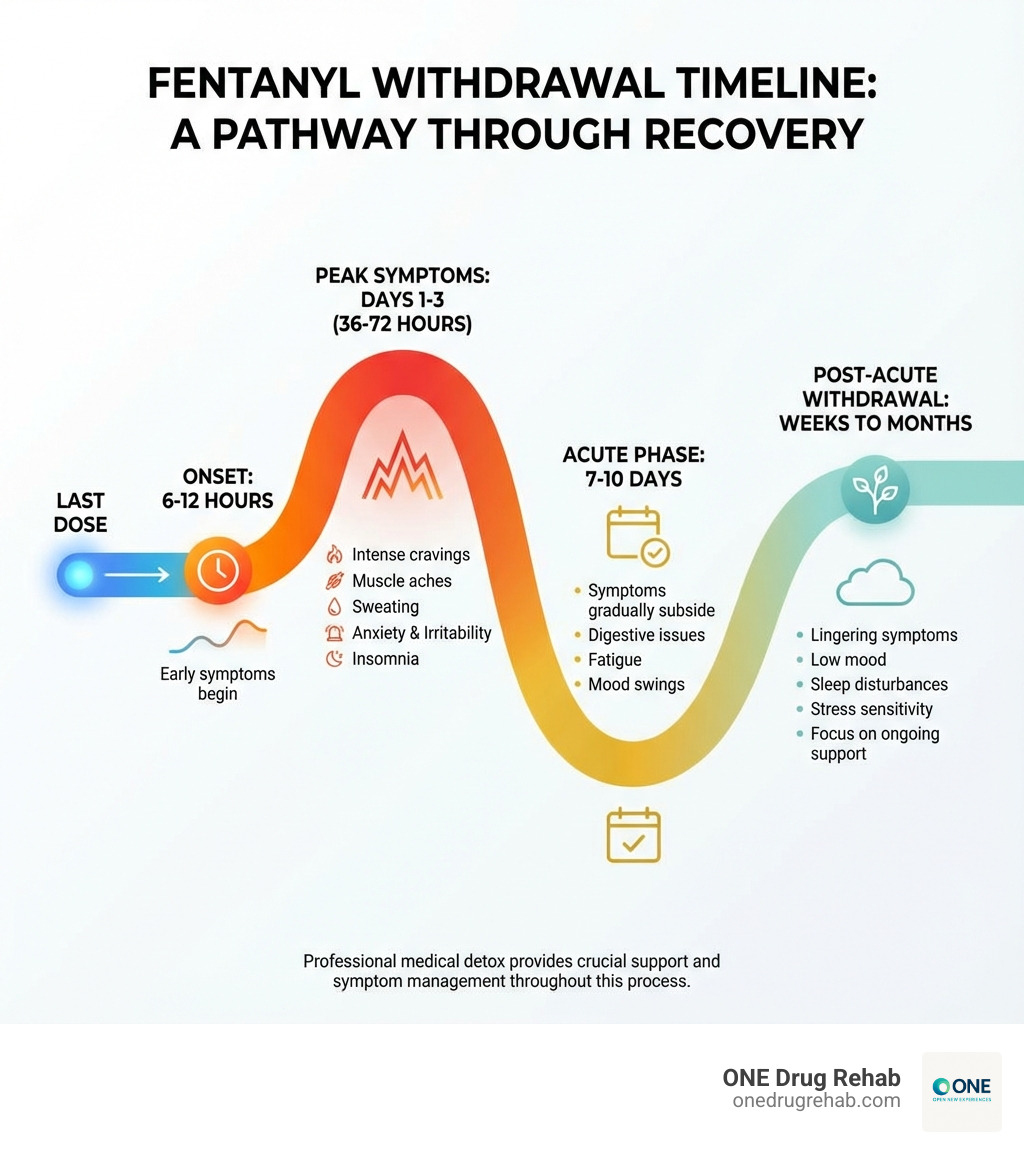
The timeline for fentanyl withdrawal varies, but a general progression is as follows:
- Onset (6-12 hours after last dose): Early symptoms like anxiety, muscle aches, and sweating begin.
- Peak (36-72 hours after last dose): Symptoms are at their worst. Physical symptoms like nausea, vomiting, and diarrhea are most pronounced.
- Acute Phase (7-10 days): Severe physical symptoms gradually begin to subside over this period.
- Post-Acute Withdrawal Syndrome (PAWS): For some, less acute symptoms like mood swings, anxiety, and sleep disturbances can persist for weeks or months. Addressing PAWS is a crucial part of long-term recovery.
Understanding this timeline highlights the importance of professional support. For more information on the broader recovery process, visit our guide: More info on the addiction recovery process.
The Critical Role of Medical Detox for Fentanyl
Attempting to detox from fentanyl “cold turkey” at home is not only difficult but also dangerous. While opioid withdrawal itself is rarely fatal, the complications can be severe.
Potential complications of unsupervised fentanyl withdrawal include:
- Severe Dehydration: Caused by persistent vomiting and diarrhea.
- Electrolyte Imbalance: Can lead to critical heart and nerve function problems.
- Cardiac Events: In extreme cases, electrolyte imbalances can cause heart failure or cardiac arrest.
- Aspiration Pneumonia: Risk of inhaling stomach contents into the lungs during vomiting.
- Relapse and Overdose: This is the most significant danger. After a period of abstinence, tolerance decreases, and using the same amount as before can lead to a fatal overdose.
This is why medical detox is essential for safely navigating fentanyl withdrawal. Professional fentanyl detox programs offer 24/7 medical supervision to manage complications and make the process as safe and comfortable as possible.
Why are Professional Fentanyl Detox Programs Recommended?
Professional detox is the gold standard for managing fentanyl withdrawal for several key reasons:
- Safety and Comfort: Medical staff monitor vital signs around the clock, using medications and supportive care to alleviate discomfort and prevent dangerous complications.
- Management of Severe Symptoms: Intense physical and psychological symptoms, such as pain, vomiting, anxiety, and cravings, are actively managed with prescribed medications.
- Emotional and Psychological Support: Detox is emotionally taxing. Professional programs provide counseling and a supportive environment to help individuals cope.
- A Safe Transition to Further Treatment: Detox is only the first step. A professional program ensures a smooth transition to the next phase of treatment, such as inpatient or outpatient rehab, which is vital for addressing the root causes of addiction. To explore inpatient rehab options, click here: Explore inpatient rehab options.
What Medications are Used to Manage Withdrawal?
Medications are crucial for making fentanyl detox safer and more manageable. These are prescribed and administered by medical professionals in a supervised setting.
- Medications for Opioid Withdrawal:
- Methadone: A full opioid agonist that reduces cravings and withdrawal symptoms. It is administered in certified opioid treatment programs.
- Buprenorphine (e.g., Suboxone): A partial opioid agonist that eases withdrawal and cravings with a lower risk of overdose.
- Lofexidine Hydrochloride (Lucemyra): A non-opioid medication approved by the FDA to reduce withdrawal symptoms like muscle aches and anxiety.
- Comfort Medications for Symptomatic Relief:
- Medications for nausea, pain, and diarrhea.
- Clonidine: Often used to alleviate physical symptoms like sweating, cramps, and anxiety.
- Sleep aids and anti-anxiety medications to manage insomnia and agitation.
These medications are custom to each person’s needs, helping to stabilize them so they can engage in the next stages of recovery. For more information about medication-assisted treatment, we recommend this resource: Find more information about medication-assisted treatment.
Comprehensive Treatment After Fentanyl Detox
Detox is the first step in addressing fentanyl addiction, not a cure. It manages physical dependence, but it doesn’t address the psychological and behavioral factors behind addiction. Lasting recovery requires a full continuum of care that includes behavioral therapies, counseling, and medication-assisted treatment (MAT) to address the root causes of the disease.

What are the Different Levels of Care?
After detox, individuals transition to a structured treatment program based on their needs.
- Inpatient/Residential Treatment: Provides 24/7 care in a live-in facility. This structured, drug-free environment is ideal for those with severe addiction or co-occurring disorders, offering intensive therapy away from triggers.
- Partial Hospitalization Programs (PHP): Known as “day treatment,” PHP offers structured care during the day while allowing patients to return home or to a sober living facility at night. It serves as a step-down from inpatient care.
- Intensive Outpatient Programs (IOP): A flexible option where patients attend scheduled therapy sessions several times a week, allowing them to maintain work or family responsibilities while applying recovery skills in real-world settings.
- Standard Outpatient Programs: The least intensive level of care, involving fewer hours of therapy per week, often used as a long-term maintenance program.
For a deeper dive into various behavioral health treatment options, explore our guide: Guide to behavioral health treatment.
What is Medication-Assisted Treatment (MAT)?
Medication-Assisted Treatment (MAT) combines FDA-approved medications with counseling and behavioral therapies. It is a highly effective, evidence-based approach for treating opioid use disorder (OUD).
The primary MAT options for fentanyl addiction include:
- Methadone: A full opioid agonist that prevents withdrawal and reduces cravings, dispensed daily in specialized clinics.
- Buprenorphine (e.g., Suboxone): A partial opioid agonist that reduces cravings and withdrawal with a lower risk of misuse.
- Naltrexone (Vivitrol): An opioid antagonist that blocks the euphoric effects of opioids, used to prevent relapse after detox is complete.
MAT is a comprehensive approach that treats addiction as a chronic disease. Medications manage the physical aspects, while therapy addresses the behavioral and psychological components, building a foundation for long-term recovery. To learn more about MAT, you can visit: Learn about addiction therapy methods.
What Behavioral Therapies are Used in Treatment?
Behavioral therapies are a cornerstone of addiction treatment, helping individuals change the thought patterns and behaviors that contribute to substance use.
- Cognitive-Behavioral Therapy (CBT): Teaches coping skills to manage cravings and stress by identifying and changing negative thought patterns.
- Motivational Interviewing (MI): A client-centered approach that helps individuals find their own motivation to change.
- Contingency Management (CM): Uses positive reinforcement, such as tangible rewards, to encourage abstinence.
- Family Therapy: Involves family members to heal relationships and build a supportive home environment.
- Holistic Therapies: Includes approaches like mindfulness, yoga, and art therapy to heal the whole person—mind, body, and spirit.
These therapies provide the tools needed to manage triggers, prevent relapse, and build a fulfilling life in recovery. To explore more about holistic treatment programs, we have a resource for you: Explore holistic treatment programs.
Navigating Your Recovery Journey
The journey to recovery from fentanyl addiction is a long-term commitment. After initial treatment, the focus shifts to sustaining sobriety, which requires an ongoing relapse prevention plan and a strong support system.
Rehab program lengths vary, with many finding that longer programs (30, 60, or 90 days) offer a more robust foundation for change. A relapse prevention plan is essential, helping individuals identify triggers and develop coping strategies. Building a sober support system through groups like Narcotics Anonymous (NA) or SMART Recovery provides invaluable community and accountability.
Aftercare planning starts early in treatment and outlines the resources needed post-discharge, such as ongoing counseling, medical follow-ups, and recovery housing to support continued sobriety.
How to Find Reputable Fentanyl Detox Programs
Finding the right fentanyl detox programs is a critical step. Here are key factors to consider to ensure you receive high-quality care:
- Accreditation and Licensing: Reputable facilities are licensed by the state and accredited by organizations like The Joint Commission (JCAHO) or the Commission on Accreditation of Rehabilitation Facilities (CARF), ensuring they meet high standards for safety and quality.
- Evidence-Based Practices: The program should use scientifically proven treatments, such as MAT and behavioral therapies like CBT.
- Staff Qualifications: The team should include licensed physicians, nurses, and therapists specializing in addiction treatment.
- Individualized Treatment Plans: A good program creates a personalized plan that addresses your unique needs, including any co-occurring mental health conditions.
- Continuum of Care: The program should offer a full range of care, from detox to outpatient and aftercare services, to ensure a smooth recovery journey.
- Family Involvement: Look for programs that offer family therapy or educational resources for loved ones.
- Insurance Coverage: Confirm that the facility accepts your insurance and inquire about other payment options.
To begin your search, you can explore our national rehab directory or contact a public resource like the SAMHSA National Helpline.
Understanding the Costs of Treatment
The cost of fentanyl detox programs and addiction treatment varies based on the level of care, location, and length of stay. Inpatient programs are generally more costly than outpatient services.
Fortunately, there are several options for financial assistance:
- Using Insurance for Rehab: The Affordable Care Act (ACA) mandates that most insurance plans cover substance use disorder treatment. Always verify your specific coverage with the facility and your provider.
- State-Funded Programs: Many states offer publicly funded treatment for individuals who meet certain income criteria.
- Grants and Scholarships: Some non-profits and treatment centers offer financial aid.
- Private Pay Options: Facilities often work with individuals to arrange payment plans or offer services on a sliding scale based on income.
Don’t let cost deter you from seeking help. For more information on navigating treatment costs, especially without insurance, visit our guide: Information on addiction treatment without insurance.
Frequently Asked Questions about Fentanyl Detox
Here, we address some common questions about fentanyl detox and recovery.
How is fentanyl withdrawal different from other opioid withdrawal?
While fentanyl withdrawal shares symptoms with other opioids (e.g., muscle aches, nausea), there are key differences due to its unique characteristics:
- Rapidity and Intensity: Fentanyl is extremely potent and short-acting. This means withdrawal can start very quickly (within 6-12 hours) and be particularly intense compared to longer-acting opioids.
- Overdose Risk on Relapse: Because fentanyl is so potent, the risk of a fatal overdose is significantly higher if someone relapses after detox. Their tolerance is lower, making a previously used amount deadly. This makes medically supervised detox even more critical.
- Lipophilic Nature: Fentanyl is stored in fat cells. For heavy users, this may contribute to prolonged or fluctuating post-acute withdrawal symptoms.
In short, fentanyl withdrawal is often faster to begin and more severe than withdrawal from other opioids, making professional medical management essential.
What is the Bernese Method for fentanyl induction?
The Bernese Method is an advanced technique for starting buprenorphine treatment while an individual is still using fentanyl. It is designed to avoid precipitated withdrawal—a sudden and severe reaction.
Here’s how it works under close medical supervision:
- Micro-dosing Buprenorphine: Very small doses of buprenorphine are introduced while the person continues to use fentanyl.
- Gradual Titration: Over several days, the buprenorphine dose is slowly increased as the fentanyl dose is decreased.
- Transition: This process allows the body to gradually adapt to buprenorphine, effectively weaning the person off fentanyl without a severe withdrawal shock.
This sophisticated method is used in controlled settings to manage complex dependencies on high-potency opioids like fentanyl.
What is the success rate of rehab for fentanyl addiction?
Defining a single “success rate” for fentanyl rehab is difficult, as success can be measured in many ways (e.g., long-term sobriety, improved quality of life) and data often aggregates all opioid use disorders.
However, key insights from addiction treatment show:
- Detox is Only the Start: Detox alone has a very high risk of relapse. Continued treatment is necessary for long-term recovery.
- Comprehensive Treatment is Key: Programs combining detox with Medication-Assisted Treatment (MAT) and behavioral therapies have significantly better outcomes.
- Long-Term Engagement Matters: Research consistently shows that longer engagement in treatment and aftercare (like support groups and therapy) is associated with better long-term recovery.
- Success is Individual: Factors like co-occurring mental health disorders, a strong support system, and commitment to aftercare all play a significant role in an individual’s success.
While a definitive number is elusive, recovery from fentanyl addiction is absolutely possible with sustained, comprehensive treatment.
Conclusion: Take the First Step Towards a New Life
The journey through fentanyl addiction and into recovery is undoubtedly challenging, but it is a journey that does not have to be faced alone. As we’ve explored, fentanyl detox programs are a critical and often life-saving first step, providing the essential medical supervision and support needed to safely steer the intense withdrawal symptoms of this potent opioid.
Detox is just the beginning. True, lasting recovery is built upon a comprehensive treatment plan that extends beyond initial withdrawal, incorporating medication-assisted treatment, evidence-based behavioral therapies, and robust aftercare planning. With the right support, resources, and personal commitment, a life free from fentanyl addiction is not just a possibility—it’s a reality within reach.
We understand that taking this first step can feel overwhelming. That’s why resources like ONE Drug Rehab exist: to provide clear, unbiased information and help you connect with reputable treatment options. Don’t hesitate to seek the help you deserve. Your new life is waiting.
To start your search for the right path forward, we invite you to explore and compare rehab facility reviews: Find and compare rehab facility reviews to start your search.