
Why Understanding the Addiction Recovery Journey Matters
The addiction recovery journey is a lifelong process of healing and growth, not a destination. It involves regaining control of your life through sustained effort, professional support, and a personal commitment to change.
Addiction is a chronic brain disease requiring ongoing management, similar to diabetes or heart disease. The path isn’t always linear; setbacks are common and don’t signify failure. Recovery is challenging due to physical dependence, changed brain chemistry, social pressures, co-occurring mental health conditions, and stigma.
However, millions of Americans have found lasting recovery. Treatment works when it addresses your whole person—including medical needs, mental health, relationships, and life skills. Research shows that with sustained abstinence, the brain’s reward pathways begin to heal, making a new life possible.
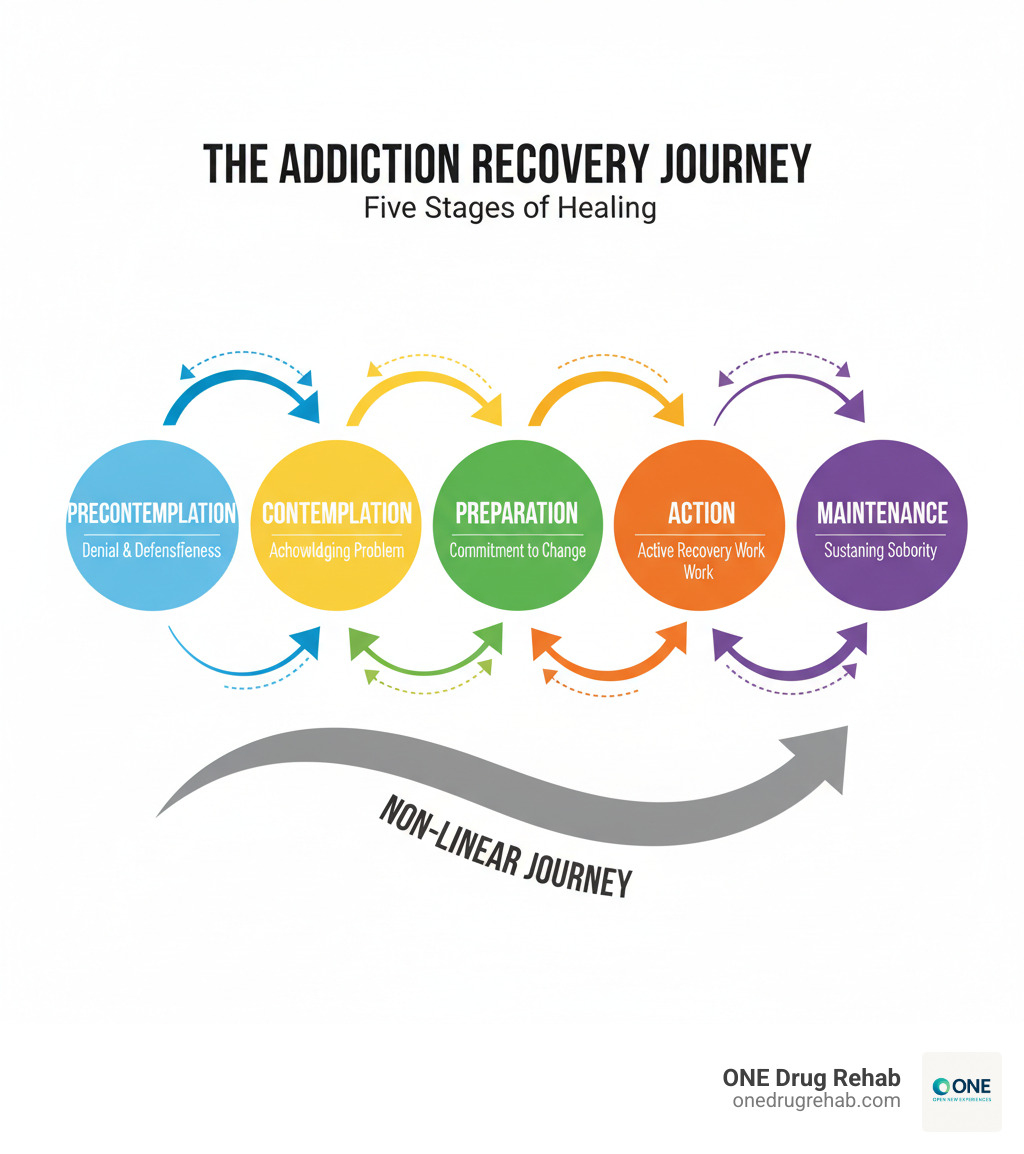
The Stages of Recovery: From Precontemplation to Maintenance
Recovery is a winding path, not a straight line. The Transtheoretical Model, or Stages of Change model by Prochaska and DiClemente, provides a roadmap for this process. It shows that change happens in predictable stages, but everyone moves at their own pace. This model removes judgment, recognizing that your readiness for change guides your next steps.
1. Precontemplation Stage
In this stage, you likely don’t believe you have a problem. Denial and defensiveness are common as you focus on the perceived benefits of substance use. When loved ones express concern, you may feel frustrated or angry. External pressure from family or legal systems is common, but the internal motivation to change hasn’t developed yet. You are unaware of the problem because your brain isn’t ready to process the information.
2. Contemplation Stage
This stage is defined by ambivalence. You are acknowledging the problem but are also afraid of what change might entail. You begin weighing the pros and cons of your substance use. The fear of change can feel overwhelming as you worry about losing friends, facing difficult emotions, or not knowing how to have fun without substances. Considering quitting is a daily thought, but taking action feels distant. Many people remain in this stage for a long time as their brain adjusts to the idea of change.
3. Preparation Stage
Here, the commitment to change solidifies. You begin taking small steps toward recovery, signaling that you’re getting serious. This may involve seeking information about treatment, reading articles like this one, or having honest conversations. Making a plan becomes a priority. This is an excellent time to find addiction treatment centers and understand what options are available.
4. Action Stage
This is the stage of active change. You are working toward abstinence while developing new behaviors to replace old patterns. Using coping skills becomes a daily practice, and attending therapy provides professional guidance. The first 90 days are crucial, as this is when your brain begins making significant adjustments. This stage requires tremendous energy as you learn new ways to socialize, cope with emotions, and structure your time.
5. Maintenance & Termination Stage
Maintenance is about sustaining change long-term. After 6+ months in recovery, the initial intensity settles into a manageable rhythm. Long-term sobriety shifts from simply avoiding substances to building a new life you enjoy. Relapse prevention becomes more refined as you understand your triggers and have a reliable support network. While some may reach a “termination” stage where temptation ceases, most view recovery as a lifelong journey of growth. This stage of the addiction recovery journey often brings unexpected gifts like deeper relationships and better health.
The Science of Healing: How Your Brain Recovers from Addiction
Addiction is not a character flaw; it’s a complex brain disease that physically alters how your mind works. The addiction recovery journey involves the literal healing of your brain.

Substances hijack the brain’s reward system, which is centered around a chemical called dopamine. This system is designed to reward survival behaviors like eating and social connection. Drugs and alcohol flood the system with unnatural levels of dopamine. In response, the brain reduces its natural dopamine production and receptors.
As a result, normal activities feel less rewarding, and the brain signals an urgent need for the substance just to feel normal. This process also damages the parts of the brain responsible for judgment, decision-making, and impulse control. This is why someone may want to stop using but feels powerless to do so.
The Role of Neuroplasticity in the Addiction Recovery Journey
Fortunately, the brain has neuroplasticity—the ability to heal and rewire itself. Even after years of substance use, your brain can form new neural pathways.
Research shows that with 14 months of abstinence, brain scans reveal noticeable healing of this damage. The brain’s dopamine system begins to normalize, and executive functions like decision-making strengthen. The key ingredient for this healing is abstinence, which gives the brain the time it needs to rebuild.
This healing process explains why early recovery is challenging but gets easier over time. As your brain rewires, healthy choices become more natural. Recovery isn’t just about changing behavior; it’s about giving your brain the space to heal. To learn more, you can explore the science of addiction.
Navigating Treatment: The Core of Your Addiction Recovery Journey
When you’re ready to start your addiction recovery journey, finding the right treatment is key. There is no one-size-fits-all solution. Effective treatment addresses you as a whole person, including your medical needs, mental health, and social connections—not just your substance use. The goal is to counteract addiction’s effects on your brain and behavior so you can regain control. The Principles of effective treatment from NIDA offer research-based guidance.

Principles of Effective Treatment
Research shows the best treatment programs are readily available, address multiple needs (like co-occurring depression or legal issues), last for an adequate duration, use evidence-based practices, and provide continual assessment to adjust your plan as you progress.
Behavioral Therapies
Behavioral therapies are the backbone of treatment, helping you change thought patterns and behaviors that fuel addiction.
- Cognitive-Behavioral Therapy (CBT) helps you identify and interrupt negative thought patterns that lead to substance use.
- Motivational Improvement Therapy helps resolve ambivalence about treatment and strengthens your motivation to change.
- Family Therapy improves communication and helps heal the family system, as addiction affects everyone.
- Somatic Experiencing Therapy focuses on releasing trauma stored in the body, which can be a significant factor in substance use.
Medication-Assisted Treatment (MAT) and Detox
MAT combines therapy with medications to manage withdrawal symptoms, reduce cravings, and sometimes block the euphoric effects of substances. It is particularly effective for opioid, alcohol, and nicotine addiction. Detoxification is often the first step, providing a safe, medically supervised withdrawal from substances. However, detox alone is rarely sufficient for long-term recovery. You can explore options like Outpatient Detox Programs to start.
Levels of Care
Treatment intensity varies based on your needs. You can move between levels as your recovery progresses.
- Medical Detox: 24/7 medical supervision during withdrawal, essential for substances like alcohol or benzodiazepines.
- Residential Treatment: Living at a facility for intensive, 24/7 therapy and support in a structured environment.
- Partial Hospitalization (PHP): Intensive day treatment while living at home or in sober living.
- Intensive Outpatient (IOP): Several hours of therapy per week, allowing you to maintain work or school.
- Outpatient Rehab: The most flexible option, with therapy sessions scheduled around your daily life.
Comparing residential and outpatient programs can help you decide what’s best for your situation.
Building Your Lifelong Support System
There’s a saying in recovery: “the opposite of addiction is connection.” Navigating the addiction recovery journey requires building meaningful relationships. Addiction thrives on isolation and shame, while recovery is about reaching out and realizing you are not alone.

Research shows that relationships are often the most important factor in the decision to seek help. Connection makes recovery feel possible.
The Impact of Family and Social Support
Family and friends can be your greatest allies. Studies show that people with supportive families are less likely to relapse after treatment. For teens, parental belief and support are especially critical. In fact, treatments that involve family members have a 6% better success rate than individual therapy alone. Families also need to heal by learning healthy communication skills and setting appropriate boundaries.
Peer Support and Mutual-Help Groups
Connecting with others who share your experience is powerful. Peer support groups offer a unique understanding that even caring family members cannot provide.
- Alcoholics Anonymous (AA) and Narcotics Anonymous (NA) are widely available 12-step programs.
- SMART Recovery offers a different approach focused on self-management and practical tools.
- Al-Anon and Nar-Anon provide crucial support for family and friends of those with addiction.
Aftercare and Continued Care
Completing a treatment program is a huge accomplishment, but the addiction recovery journey continues. Aftercare is essential for long-term success. Most experts recommend at least one to two years of ongoing support.
A solid aftercare plan includes relapse prevention strategies, and may involve sober living homes for a structured transition. Many treatment centers offer alumni programs to keep you connected to a supportive community. Ongoing therapy, whether individual or group, provides a regular space to process challenges and continue developing coping skills. Asking for help is a sign of strength that protects the new life you’re building.
Overcoming Obstacles: Managing Relapse and Building Resilience
Let’s be honest: the addiction recovery journey is not a straight line. Setbacks are part of the process and do not mean you’ve failed. Relapse rates for addiction are similar to those for other chronic conditions like diabetes or asthma. When a treatment plan is not followed, symptoms can return. This perspective helps us see setbacks as part of managing a chronic condition, not as personal failures. For a realistic picture, you can explore drug rehab success rates.
Understanding and Preventing Relapse
Relapse is a process, not a single event. It often begins with emotional and mental changes weeks before substance use occurs. Identifying your personal triggers is a powerful prevention tool. Triggers can be internal (stress, cravings) or external (people, places). Many in recovery use the acronym HALT to remember common emotional triggers: Hungry, Angry, Lonely, Tired. Taking care of these basic needs can prevent significant struggle.
Creating a solid relapse prevention plan is your roadmap for navigating difficult situations. This plan should evolve as you grow and include coping strategies and a list of support contacts. If a relapse happens, it’s not a sign of failure but an indication that your treatment plan needs adjustment. The key is to get back on track quickly.
Developing Coping Mechanisms for the Addiction Recovery Journey
Building resilience takes practice and patience. Every healthy coping skill you develop makes you stronger.
- Stress management techniques like deep breathing or yoga can train your nervous system to handle stress more effectively.
- Mindfulness and meditation help you stay present and respond thoughtfully rather than reacting impulsively. Even five minutes a day can make a difference.
- Healthy hobbies and activities help rebuild your identity around positive experiences. This creates a fulfilling life that doesn’t revolve around substances.
- Practicing gratitude can shift your perspective during tough times by training your brain to notice the good.
For those dealing with co-occurring anxiety, holistic anxiety treatment can provide additional tools. Developing these skills is an investment in your long-term well-being. Be patient with yourself as you learn what works for you.
Frequently Asked Questions about the Addiction Recovery Journey
If you’re considering recovery, you likely have many questions. Understanding the basics can ease your worries and provide a clearer picture of the addiction recovery journey.
How long does addiction recovery take?
Recovery is a lifelong process, not a task with a finish line. However, there are meaningful milestones. Many people feel a significant shift after 90 days of sobriety, and the one-year mark often brings a sense of stability. By five years, many have built new lives. Everyone’s timeline is different, depending on factors like substance use history, mental health, and support systems. The key is to focus on one day at a time.
Does relapse mean treatment has failed?
No. Relapse does not mean you or your treatment have failed. Because addiction is a chronic condition, relapse is a common part of the process, similar to setbacks in managing diabetes or high blood pressure. A relapse is a signal that the treatment plan needs to be adjusted. The most important step is to return to treatment quickly, as many people learn valuable lessons from a relapse that strengthen their long-term recovery.
Can addiction be cured?
No, addiction cannot be cured in the sense that it disappears completely. However, addiction can be managed very effectively. Like other chronic diseases, people with addiction can learn to manage their condition and regain control of their lives. Treatment provides the tools to repair brain changes and develop new behaviors. Millions of people live full, happy lives in recovery by staying connected to support, using coping skills, and giving their recovery ongoing attention.
Conclusion: Embracing Your Path to a New Life
Recovery is possible. Every day, thousands of people prove that the addiction recovery journey is a pathway to a more meaningful life. It’s a process of growth and healing that extends far beyond stopping substance use. Some days will be hard, others will be joyful—both are part of your unique path.
Each step forward matters. Whether you’re just considering change or have been in recovery for years, every moment of progress counts. Your brain is healing, relationships are mending, and your future is taking shape one day at a time.
The science shows your brain can heal. Effective treatments are available. The support systems you build will become your foundation.
You are not alone. Millions of Americans are living proof that recovery works. They have walked through fear and setbacks to build lives of purpose and connection. When obstacles arise, they don’t erase your progress.
ONEDrugRehab.com exists to help you research your options without pressure or bias. We provide information to help you make informed decisions about your care. Whether you’re exploring your first treatment program or seeking long-term support, access to comprehensive information empowers you to choose what’s right.
To learn more, we encourage you to explore different types of addiction treatment. Your addiction recovery journey is about embracing hope. The path ahead may be winding, but it leads to a new life where you are in control. Your journey starts with a single step. Take it when you’re ready.