

Holistic Trauma Therapy: Ultimate Healing 2025
Why Holistic Trauma Therapy Offers Hope for Complete Healing
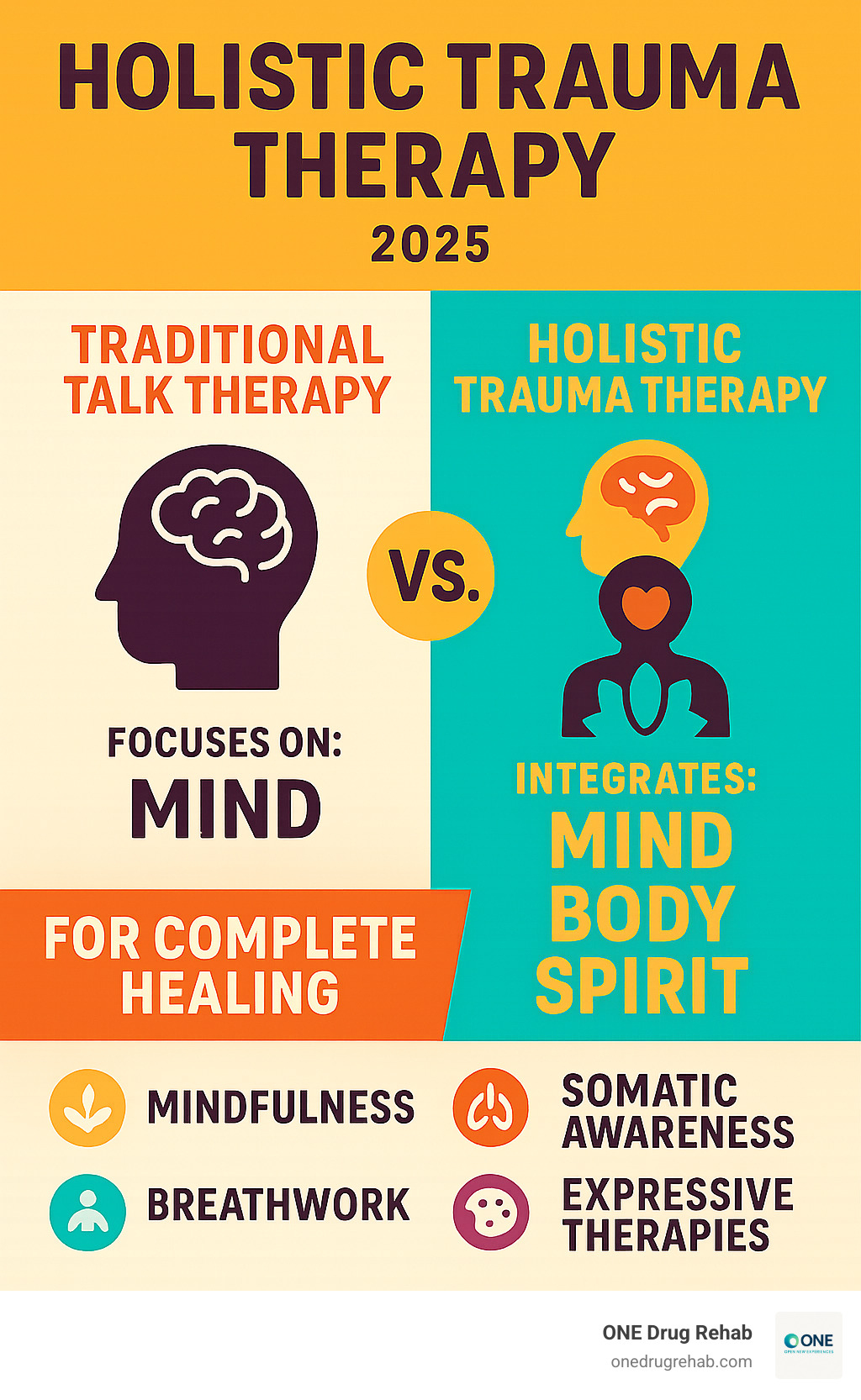
Holistic trauma therapy is a comprehensive approach that treats trauma by addressing the mind, body, and spirit as an interconnected system. Unlike traditional talk therapy that focuses primarily on thoughts and emotions, this method integrates the whole person into the healing process.
Key benefits of holistic trauma therapy:
- Addresses physical, emotional, mental, and spiritual aspects of trauma.
- Uses somatic techniques to release trauma stored in the body.
- Builds lasting resilience through mind-body integration.
- Empowers you to reconnect with your body’s natural healing abilities.
- Complements cognitive approaches for deeper, more complete healing.
Trauma affects more than just our thoughts. Up to 70% of adults have experienced a traumatic event, and many find that talk therapy alone isn’t enough. As Bessel van der Kolk explains in “The Body Keeps the Score,” trauma changes our bodies and nervous systems, often leaving the fight-or-flight response stuck “on.”
This is where holistic trauma therapy excels. It recognizes that healing must happen on all levels—mental, physical, emotional, and spiritual—to be truly effective. The good news is that your body has an incredible capacity to heal when given the right support.
Understanding Holistic Trauma Therapy: An Integrated Path to Healing
Holistic trauma therapy views healing differently. Instead of focusing only on thoughts and feelings, it recognizes that trauma impacts your entire being: mind, body, and spirit. When a traumatic event occurs, it doesn’t just create difficult memories; your body remembers, too. This can manifest as tense muscles, shallow breathing, or a feeling of disconnection.

This approach is built on several key principles:
- Whole-Person Approach: Your therapist considers physical sensations as important as anxious thoughts.
- Safety and Trust: Rebuilding a sense of security is the first step. A therapist works at your pace, never pushing you.
- Collaboration and Empowerment: You are an active partner in your healing, and your inner wisdom is honored.
While methods like Cognitive Behavioral Therapy offer valuable tools, holistic trauma therapy adds body-based techniques, mindfulness, and spiritual elements for a more complete experience.
How It Works: Healing the Whole Self
Holistic therapy aims to heal the root causes of distress. Trauma can get “stuck” in the nervous system, leaving your body in a constant state of fight, flight, or freeze. This therapy focuses on:
- Nervous System Regulation: You learn tools to recognize and calm your body’s stress response, retraining it to feel safe in the present.
- Somatic Awareness: By paying attention to bodily sensations, you can tap into your body’s wisdom, leading to powerful emotional release.
- Reconnecting with Self: The process helps you move past feeling fragmented and refind your sense of purpose and spiritual connection.
The core philosophy is that the mind and body are inseparable in recovery. As research shows, treating the whole person leads to better, more lasting outcomes. By addressing your physical, emotional, mental, and spiritual health together, this approach invites your entire being to participate in healing.
How Trauma Manifests and How a Holistic Approach Responds
Trauma doesn’t stay confined to our minds; it ripples through our entire being. Understanding how it shows up helps explain why holistic trauma therapy is so effective—it meets trauma wherever it resides.

When we experience something overwhelming, our fight, flight, or freeze response activates. If that survival energy isn’t released, it can get trapped. This trapped energy can manifest as unexplained chronic pain, digestive issues, or persistent muscle tension. Emotionally, it can lead to anxiety, depression, or mood swings. Spiritually, it can cause a feeling of disconnection and hopelessness.
The Body’s Memory: Somatic and Physical Manifestations
Your body remembers trauma, often keeping the nervous system on high alert. This can appear as hypervigilance, chronic muscle tension (especially in the jaw, shoulders, and back), or constant fatigue. Research on body-oriented psychotherapy confirms that working directly with the body is highly effective. Holistic trauma therapy uses somatic-based approaches to help you reconnect with your body safely. Through body awareness and gentle movement, you teach your nervous system that the danger has passed and it’s safe to relax.
The Mind’s Burden: Cognitive and Emotional Scars
Trauma also leaves deep cognitive and emotional scars. You might experience intrusive thoughts, flashbacks, or nightmares. Many survivors develop negative thoughts about themselves, believing they are broken or to blame. Others struggle with dissociation or classic PTSD symptoms. These are normal responses to abnormal events. Holistic therapy helps rewire the brain’s response to trauma, connecting difficult memories to feelings of safety and strength. Many facilities listed in our types of addiction treatment directory offer integrated approaches that address these interconnected challenges.
The Spirit’s Wound: Restoring Connection and Purpose
Perhaps the deepest wound is to the spirit, leading to feelings of hopelessness and existential questions. Trauma can create a profound disconnection from self and others. Holistic trauma therapy nurtures the spirit through mindfulness and spiritual practices, which don’t require a specific religion. These practices—like meditation, art, or time in nature—help you reconnect with what gives your life meaning. They remind you that you are more than your trauma story and that your spirit, while wounded, is not broken.
Key Modalities and Techniques in Holistic Trauma Therapy
Holistic trauma therapy uses a flexible toolkit of healing approaches, recognizing that different methods work for different people. The power of this approach lies in how various modalities collaborate to support your healing on every level: mind, body, and spirit. Common techniques include mindfulness-based practices, breathwork, yoga-informed therapy, art and music-inspired therapy, and integrative group therapy.
Mind-Body Integration Techniques
Healing happens when we bring the mind and body back into harmony.
-
Mindfulness-Based Practices: These techniques teach present-moment awareness without judgment. A trauma-informed approach to mindfulness creates a safe space to observe thoughts and feelings, rather than being swept away by them. Research from the APA shows its benefits for reducing stress, anxiety, and pain.
-
Breathwork: Using conscious connected breathing, you can directly influence your nervous system. Slowing your breath sends a powerful signal to your body that it’s safe to relax. Studies on breathwork’s effect on the brain show how it can improve brain function and give your nervous system a gentle reset.
-
Body Awareness: Techniques like gentle movement and grounding exercises help you rebuild trust with your physical self. Grounding anchors you in the present, while gentle movement allows stored tension to release naturally.
Expressive and Creative Therapies
When words aren’t enough, creative therapies offer another path to healing.
-
Art-Inspired Therapy: Visually externalizing trauma through drawing, painting, or sculpting can be profoundly healing. It’s about non-verbal expression and allowing your inner experience to flow without judgment. You don’t need to be an artist to benefit.
-
Music and Movement: Music can access parts of us that talk therapy can’t. Movement therapies, like dance, allow you to embody your healing journey, process emotions physically, and improve resilience. The focus is on authentic expression, not perfect technique.
If you’re looking for treatment centers that offer these creative approaches, you can find rehab centers that offer these therapies through our directory.
Is a Holistic Approach Right for You? Benefits and Considerations
Have you ever felt “stuck” in talk therapy? You might understand your trauma intellectually, but your body still holds the tension and anxiety. If this sounds familiar, or if you’re dealing with physical symptoms of trauma with no clear medical cause, a holistic approach may be the missing piece.

Many people are drawn to this path because of a desire for deeper self-connection and an openness to integrative methods. Here’s how holistic therapy compares to a more traditional approach:
| Feature | Traditional CBT for Trauma | Holistic Trauma Therapy |
|---|---|---|
| Focus | Cognitive processing, challenging negative thoughts, exposure | Mind, body, spirit integration; addressing root causes in all areas |
| Primary Tools | Talk therapy, thought records, behavioral experiments | Talk therapy + somatic work, mindfulness, breathwork, expressive arts |
| Trauma Storage | Primarily in the mind (thoughts, memories) | In mind AND body (cellular level, nervous system) |
| Goal | Symptom reduction, cognitive restructuring | Wholeness, nervous system regulation, embodied awareness, spiritual connection |
| Pace | Often more structured, goal-oriented | Often more fluid, client-led, emphasizing gentle processing |
| View of Patient | Individual with symptoms to be managed/reduced | Whole person with innate capacity to heal, requiring integration |
The Long-Term Benefits of Holistic Trauma Therapy for Resilience
Holistic therapy builds lasting resilience from the inside out. Key benefits include:
- Increased self-awareness: You learn to recognize your body’s signals and triggers before becoming overwhelmed.
- Improved emotional regulation: You develop tools like breathwork to influence your emotional state and calm your nervous system.
- Reduced physical symptoms: As your body releases stored trauma, chronic pain and other physical issues often ease.
- Greater sense of empowerment: You shift from feeling like a victim to an empowered survivor with tools to heal yourself.
- Sustainable coping skills: You gain an improved mind-body connection and portable skills you can use anytime.
How to Know if This Path is a Good Fit
This approach could be right for you if:
- You feel disconnected from your body or find physical sensations overwhelming.
- You experience unexplained physical ailments like chronic pain, fatigue, or digestive issues.
- Traditional talk therapy has helped, but you feel something deeper needs to be addressed.
- You want to heal the root cause of your trauma, not just manage symptoms.
- You are open to exploring mindfulness or other practices that nurture your spirit and sense of connection.
Finding Your Path: Choosing a Therapist and Building a Future
Choosing the right therapist is a critical step in your holistic trauma therapy journey. It’s about finding a practitioner who understands how trauma affects your whole being and can guide you with both expertise and compassion.
When finding a qualified practitioner, look for someone with specialized training in trauma-informed, body-centered approaches. The right fit is crucial; after a first session, you should feel heard, hopeful, and safe. Don’t hesitate to ask a potential therapist about their experience with trauma and how they integrate mind-body techniques.
What to Look for in a Holistic Trauma Therapist
Seek a therapist who brings both science and soul to their work. Key qualifications include:
- Specialized Training: Look for certifications in modalities like Somatic Experiencing, EMDR, or Internal Family Systems. This training goes beyond basic counseling to address how trauma is held in the body.
- Trauma-Informed Approach: A trauma-informed therapist creates an environment of safety and trust, understanding that this is the foundation for healing.
- Collaborative Spirit: The therapist should treat you as an expert on your own experience, respecting your pace and empowering you in the healing process.
- Relevant Experience: Ensure the therapist has experience with your specific concerns, whether it’s complex PTSD, childhood trauma, or other issues.
Integrating Cultural Competence and Sensitivity
True healing requires feeling seen and understood, including your cultural background and identity. Cultural competence is essential in holistic trauma therapy.
A culturally competent therapist understands that trauma experiences and expressions of distress are shaped by cultural contexts. They will avoid a one-size-fits-all approach and instead tailor care to your individual background. As research on cultural contexts in trauma care highlights, honoring individual backgrounds is vital for effective and non-harming treatment. Your cultural identity is a source of strength, and a good therapist will recognize and integrate it into your healing journey.
Conclusion: Reclaiming Your Wholeness
As we conclude this exploration of holistic trauma therapy, remember this: you already possess the capacity to heal. This approach is not about fixing something broken, but about refinding the whole, authentic self that lies beneath the hurt.
We’ve seen how trauma can affect every part of us, but healing can be just as comprehensive. Holistic trauma therapy offers empowerment through integrated care. By working with your mind, body, and spirit together, you can find harmony again. Your body can feel safe, your mind can learn new patterns, and your spirit can reconnect with purpose.
Healing is a journey, not a destination. It’s about gentle progress at your own pace. Trauma does not have to define your future. You are resilient, worthy, and capable of profound healing.
By choosing a holistic path, you are not just surviving—you are learning to thrive. You are reclaiming the parts of yourself that trauma tried to take and building a future defined by peace and resilience.
If you’re ready to take the first step, ONEDrugRehab.com is here to help. Our directory can help you explore different types of addiction and trauma treatment facilities that use these comprehensive, whole-person approaches. You don’t have to walk this path alone. Your journey to wholeness is waiting.