

Why Sober Living Homes Are Critical for Long-Term Recovery
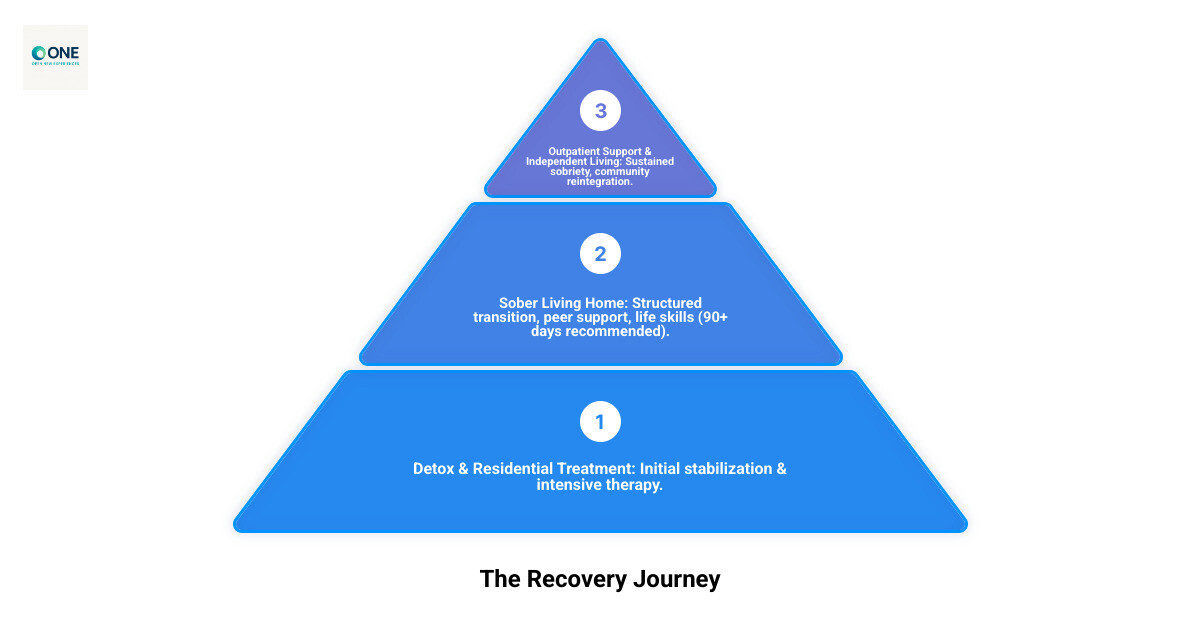
Sober living homes are alcohol- and drug-free residences where individuals in recovery live together in a supportive, structured community. These homes serve as a crucial bridge between formal addiction treatment and independent living, offering a safe space to practice sobriety skills while reintegrating into everyday life.
Quick Guide to Sober Living Homes:
- What they are: Transitional housing for people in recovery, not formal treatment facilities.
- Who they’re for: Anyone committed to sobriety needing structure and peer support.
- What they require: Abstinence, rent, chores, meeting attendance, and following house rules.
- Average cost: Comparable to modest apartment rent (typically $800-$2,950/month).
- How to find them: Through treatment centers, 12-step groups, or online directories like NARR and ONEDrugRehab.com.
The stakes for finding quality post-treatment support are high. Without structured support, an estimated 90% of individuals in recovery experience relapse. As one researcher noted, “Lack of a stable, alcohol and drug free living environment can be a serious obstacle to sustained abstinence. Destructive living environments can derail recovery for even highly motivated individuals.”
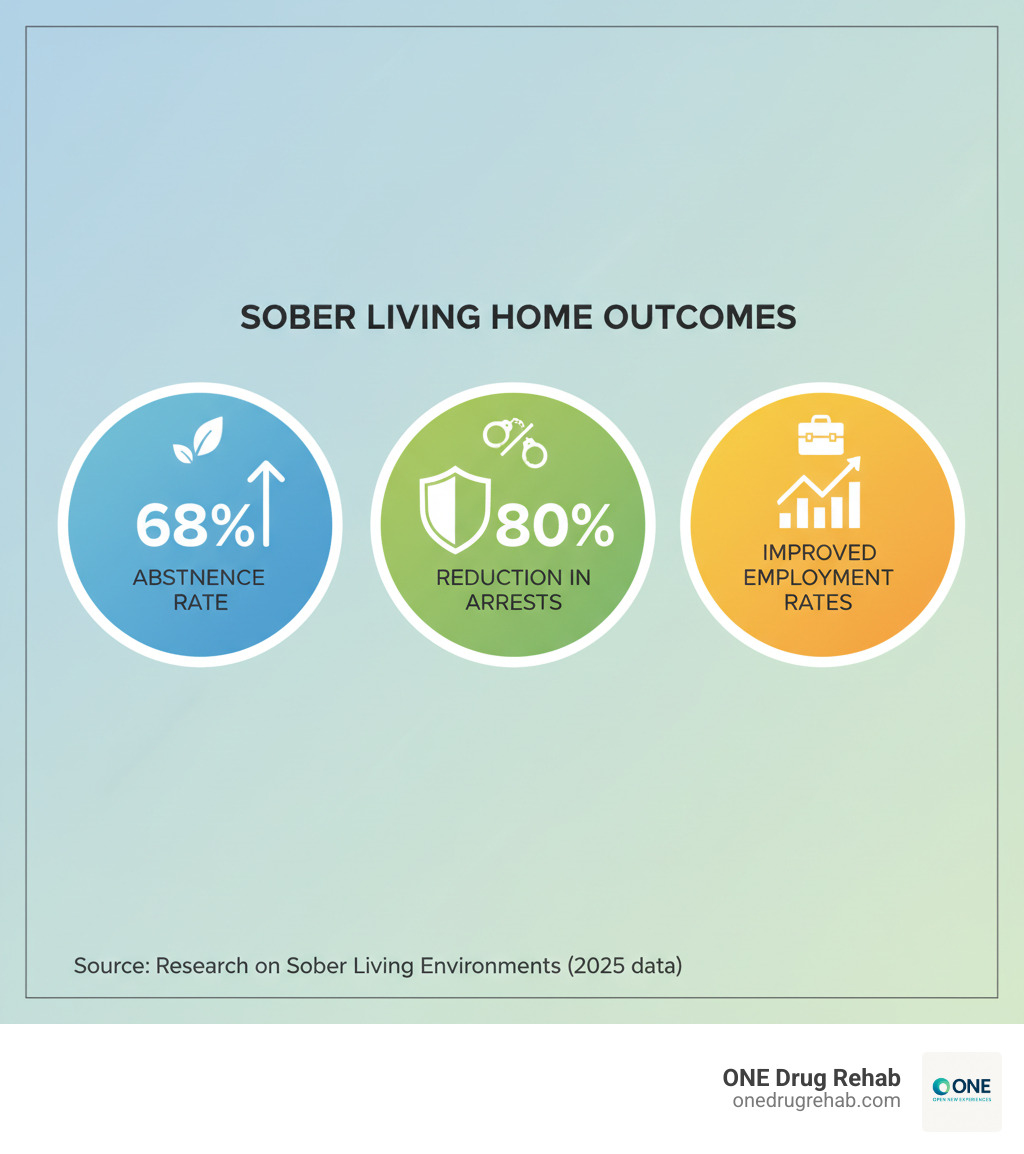
Sober living homes address this gap. Research shows dramatic improvements: in one study, residents improved their abstinence rates from just 11% at baseline to 68% at six and twelve months. These environments work by combining structure, accountability, and peer support during the vulnerable transition out of treatment.
The challenge is navigating the unregulated landscape to find a quality home that fits your needs and budget. This guide will show you how.
What Are Sober Living Homes and How Do They Work?
Sober living homes are shared residences where people committed to staying sober live together, supporting each other while navigating life without substances. They are not treatment centers with medical staff, but actual homes where residents are part of a household working toward the same goal. The core principle is community as therapy.
This peer-driven approach puts you in the driver’s seat of your recovery. After completing a formal treatment program, returning to an old environment can be a recipe for relapse. A sober living home like Hensley House Sober Living creates a protective buffer, allowing you to practice new skills in a real-world setting with housemates who provide accountability.
The philosophy centers on personal responsibility. Most homes strongly encourage participation in 12-step programs like Alcoholics Anonymous or Narcotics Anonymous. Residents cover their own expenses, which is empowering and prepares them for independent living. This approach, often called the “social model,” contrasts with clinical settings. Instead of therapists, your housemates become your accountability partners and support system.

Typical Resident Requirements and House Rules
Every sober living home has rules to create structure and safety. These are not arbitrary but serve as guardrails for everyone in a vulnerable time.
- Abstinence: A zero-tolerance policy for drugs and alcohol is the foundation. Violence and unauthorized overnight guests are also typically prohibited.
- Drug and Alcohol Testing: Random testing ensures the integrity of the home and confirms everyone’s commitment to sobriety.
- Financial Responsibility: Paying rent and utilities on time is required, rebuilding essential life skills.
- House Chores: Shared responsibilities teach cooperation and respect for the living space.
- Curfews: Common especially for new residents, curfews help establish healthy routines and avoid risky late-night situations.
- House Meetings: Regular meetings allow residents to address concerns, celebrate progress, and resolve conflicts, strengthening community bonds.
- 12-Step Meetings: Attendance at groups like AA or NA is typically required or strongly encouraged, as research shows it improves long-term outcomes.
- Productive Activity: Residents are expected to be employed, in school, or attending outpatient treatment. Having a purpose is vital in recovery.
These requirements work together to build the structure that many people in early recovery need.
Different Models of Sober Living Homes
Not all sober living homes are the same, which allows you to find the right fit for your needs.
- Freestanding homes operate independently of any treatment program, relying on peer support and resident autonomy.
- Treatment-affiliated programs are connected to outpatient centers, providing seamless care with professional oversight.
- The social model emphasizes peer leadership and shared decision-making, empowering residents to lead their own recovery community. Oxford House is a well-known example.
- The strong manager model features an owner or house manager who sets rules and provides more direct oversight.
- Gender-specific housing for men or women can provide a more focused environment. Options like The Palisades House Men’s Sober Living cater to this preference.
- Sober colleges are designed for young adults pursuing education while maintaining sobriety.
People often confuse “sober living homes” with “halfway houses.” Halfway houses typically serve individuals transitioning from incarceration, often have government funding and oversight, and limit the length of stay. Sober living homes are resident-funded with flexible stays for anyone committed to sobriety. For those interested in mixed-gender options, resources like LA Recovery Coed Sober Living Los Angeles are available.
| Feature | Sober Living Home (SLH) | Halfway House |
|---|---|---|
| Primary Purpose | Sustained sobriety, life skills, peer support | Reintegration after incarceration or treatment |
| Treatment Requirement | Often not required, or for those post-treatment | Typically requires recent completion of formal treatment |
| Length of Stay | Flexible, often open-ended as long as rules are followed | Usually time-limited (e.g., 6-12 months) |
| Funding Source | Resident-funded (rent, fees) | Often government-funded or subsidized |
| Oversight | Generally self-governed, voluntary certification (NARR) | Often government-regulated or licensed |
| Clientele | Individuals seeking sobriety | Often includes individuals from the criminal justice system |
The Proven Benefits of Sober Living Environments
For someone fresh out of treatment, the real world can be overwhelming. Sober living homes bridge this gap by providing benefits that significantly improve the chances of long-term recovery.
They offer structure and accountability that keep you grounded. Curfews, chores, house meetings, and random drug tests help you develop the discipline and routines that support sobriety. These homes are also safe from triggers—an explicitly alcohol- and drug-free space where you can practice new coping skills without constant temptation.
One of the most powerful aspects is building sober social networks. Addiction often leads to isolation or surrounds you with enablers. In a sober living home, you live with peers who understand your struggles and share your commitment, which reduces isolation profoundly. Research shows these positive social connections are critical to sustained abstinence. Finally, these environments help you re-learn life skills like budgeting, cooking, and maintaining employment, helping you regain competence and confidence.

If you’re looking for an environment custom to specific needs, you can find a men’s sober living home that addresses the unique challenges men face in recovery.
Evidence-Based Outcomes for Residents
The benefits of sober living homes are backed by solid research demonstrating measurable improvements.
- Improved Abstinence Rates: Studies show dramatic results. In one, residents’ abstinence rates jumped from 11% at baseline to 68% at six and twelve months. Another study saw rates climb from 20% to 45% over a year. Research shows abstinence rates improved from 11% to 68% in some homes, providing clear evidence that these environments work.
- Increased Employment: Recovery involves rebuilding your life, and employment is key. Studies show residents’ employment problems decrease significantly, reflecting improved stability and self-respect.
- Reduced Arrests: For those with past legal troubles, the data is striking. One study found residents were 80% less likely to be arrested after six months in the home. Another saw arrest rates drop from 42% pre-entry to 22% at twelve months.
- Better Psychiatric Outcomes: Many people in recovery also face mental health challenges. Research shows that residents experience a meaningful improvement in psychiatric symptoms during their stay.
- Length of Stay: The National Institute on Drug Abuse recommends a minimum 90-day stay for maximum benefit. Successful homes often see residents stay longer, allowing new habits and coping strategies to take root. A structured sober living environment can provide this foundation.
Key Factors for Success in a Sober Living Home
While sober living homes provide a powerful framework, certain factors significantly boost your chances of success.
- 12-Step Group Involvement: Active participation in groups like Alcoholics Anonymous or Narcotics Anonymous is the single strongest predictor of positive outcomes. These groups provide a proven framework for recovery and a vast support network.
- Positive Peer Influence: When housemates genuinely support each other, it reinforces everyone’s commitment to sobriety. This “community as agent of change” is the lived experience of feeling understood by people on the same path.
- Avoiding Negative Social Networks: Research clearly shows that maintaining relationships with heavy drinkers or drug users harms recovery outcomes. A sober living home provides a safe space to build new, healthier relationships.
- Personal Motivation: The structure of an SLH is an invaluable tool, but you must want sobriety for yourself. Homes that select for genuinely committed residents tend to create more successful environments for everyone.
- Minimum 90-Day Stay: This period, recommended by the National Institute on Drug Abuse, appears to be a crucial threshold. It provides enough time to stabilize, internalize new skills, and build a solid foundation.
Your Guide to Finding Quality Sober Living Homes
Finding the right sober living home is a critical step in early recovery. The landscape is varied, but with some guidance, you can find a quality environment that supports your journey. You’re not just looking for a room; you’re seeking a community to help you build a new life.
If you’re in a treatment program, your counselors are an excellent first resource, as they know the reputations of local homes. Members of 12-step groups can also offer honest, real-world insights.
When vetting potential homes, ask direct questions and trust your instincts. A quality home will be transparent about its rules, costs, and relapse protocols. Be wary of red flags, such as homes that pressure you into specific treatment programs (often for insurance kickbacks), appear chaotic, or make promises that sound too good to be true. Laws have been enacted to target fraudulent sober homes, but personal vigilance remains essential.
Beyond avoiding scams, the importance of a good fit is paramount. Every home has its own personality—some are highly structured, others more autonomous. Visit multiple homes if possible, talk to residents, and trust your gut feeling about whether the environment is right for you.

Steps to Find Sober Living Homes Near You
Here are practical steps to locate sober living homes in your area.
- Treatment Center Referrals: Your treatment team can match you with local homes that fit your specific needs and have established relationships with them.
- 12-Step Group Recommendations: The lived experience of people in recovery is invaluable. Ask your sponsor or other members for trustworthy recommendations.
- Online Directories: Websites like ONEDrugRehab.com and the National Alliance for Recovery Residences (NARR) offer searchable databases. Many states also maintain their own resource lists, often accessible by calling 211 or checking with the state’s addiction services department.
- NARR Certification: Voluntary certification through NARR or its state affiliates indicates that a home meets specific quality and ethical standards. Exploring a certified sober living option provides peace of mind that you’re entering a professionally operated environment.
- Questions to Ask Operators: Inquire about rules, costs, curfews, and relapse policies. Also ask about the house culture, support systems, and conflict resolution. A good operator will welcome your thoroughness.
Understanding Costs and Payment Options
Understanding the costs of a sober living home helps you plan realistically.
Typical rent ranges from $800 to $2,950 per month, depending on location and amenities. This is often comparable to or less than renting an apartment. A security deposit is usually required.
Your rent payment typically includes a furnished room, utilities (electricity, water, internet), and sometimes basic household supplies. The structure and peer support are the most valuable, standard inclusions.
Financial assistance programs exist but vary widely by location. Some government programs or local housing authorities offer rent subsidies for supportive housing. It’s worth researching what’s available in your area. Some affordable sober living options are designed to work with these programs.
Regarding insurance coverage, most health insurance plans will not cover the rent for a sober living home because it’s not a clinical treatment facility. However, your insurance may cover concurrent outpatient therapy sessions. Always call your insurance provider to clarify your benefits.
Sober living homes offer incredible value—not just housing, but a supportive community during a critical time. With research and careful budgeting, most people can find a way to make it work.
Frequently Asked Questions about Sober Living
We understand you likely have many questions about sober living homes. Here, we address some of the most common inquiries to provide clarity and help you make informed decisions.
How is a sober living home different from a halfway house?
While both provide supportive housing, there are key differences:
- Length of Stay: Sober living homes offer flexible, open-ended stays, while halfway houses are often time-limited (e.g., 6-12 months).
- Treatment Requirements: SLHs often don’t require recent completion of a formal program, whereas halfway houses typically do.
- Funding Sources: Sober living homes are resident-funded through rent. Halfway houses are more likely to be government-funded or subsidized.
- Structure and Oversight: Halfway houses, especially those tied to the justice system, may have a more rigid structure and direct government oversight. SLHs are generally self-governed, though many seek voluntary certification.
Can I be evicted from a sober living home?
Yes. To protect the safety and recovery of all residents, eviction can occur for rule violations.
- Zero-Tolerance Policies: The most common reason for immediate eviction is using alcohol or drugs. Violence, theft, or other illegal activities also result in expulsion.
- Relapse Consequences: In most sober living homes, a relapse is a breach of the core agreement and will lead to eviction to maintain a safe environment for others.
- Rule Violations: Repeatedly breaking other house rules (curfews, chores, meeting attendance) can lead to eviction.
- Non-Payment of Rent: As with any rental situation, failure to pay rent will result in eviction.
The goal is to maintain the integrity of the safe space for everyone committed to recovery.
Are sober living homes regulated?
This is a complex issue. For the most part, sober living homes are not formally regulated by state governments in the same way as medical facilities. Because they don’t provide clinical treatment, they often fall outside state licensing.
This has led to several developments:
- Voluntary Certification (NARR): To ensure quality, the National Alliance for Recovery Residences (NARR) offers a voluntary certification program. NARR-certified homes adhere to national standards for safety, ethics, and operational practices. Checking for this certification is a strong indicator of a quality home.
- Community and Legal Issues: The unregulated nature can sometimes lead to zoning disputes with local communities. It has also allowed for exploitation by fraudulent operators. In response, some states have passed laws targeting unethical practices like patient brokering and false advertising.
- Resident Rights: Reputable homes, especially certified ones, uphold a clear set of resident rights to ensure fair treatment and a safe environment.
The trend is toward greater accountability, whether through voluntary certification or specific legislation targeting fraud.
Conclusion: Taking the Next Step in Your Recovery Journey
Recovery is a journey, and a sober living home can be a vital part of it. If you’ve read this guide, you’re already taking an important step toward building a stable, sober life.
We’ve seen how these homes provide structure, accountability, and peer support when it’s needed most. The evidence is clear: they lead to higher abstinence rates, reduced legal issues, and better employment outcomes. But the statistics only tell part of the story. The real power lies in the community you build and the life skills you regain.
What matters most is finding a home that’s right for you. Use the steps we’ve outlined: consult with treatment providers, ask your support network, check for NARR certification, and ask operators direct questions. Trust your instincts to find a place where you feel you can thrive.
Your recovery is worth this effort. At ONEDrugRehab.com, we’re here to help you explore your options. Our directory is a third-party resource for researching homes and services on your own terms.
You have the strength to build a fulfilling, sober future. Now is the time to turn your knowledge into action.

Ready to explore your options further? Explore sober living options and other recovery services available to support you or your loved one.