
Holistic Treatment Programs: Ultimate Healing 2025
Understanding Holistic Treatment Programs
Holistic treatment programs are changing how we think about healing from addiction. They look at the whole person, not just the symptoms of drug or alcohol use.
What is a Holistic Treatment Program?
A holistic treatment program is an approach to recovery that:
- Treats the whole person: It focuses on your mind, body, and spirit.
- Goes beyond symptoms: It aims to find and heal the root causes of addiction.
- Uses many tools: It combines traditional therapies with other proven methods.
- Promotes overall well-being: The goal is to help you build a healthier, more balanced life.
Addiction can affect every part of your life: your physical health, your thoughts, your emotions, and even your sense of purpose. Traditional methods often focus on just stopping substance use. But a holistic approach understands that true healing needs to address all these different areas together.
More and more people are looking for this kind of comprehensive care. In fact, about 4 out of 10 adults in the U.S. now use some form of complementary and alternative medicine. This shows a growing trend towards looking at health in a more complete way. For lasting recovery, treating the whole person can make all the difference.
What is Holistic Addiction Treatment?
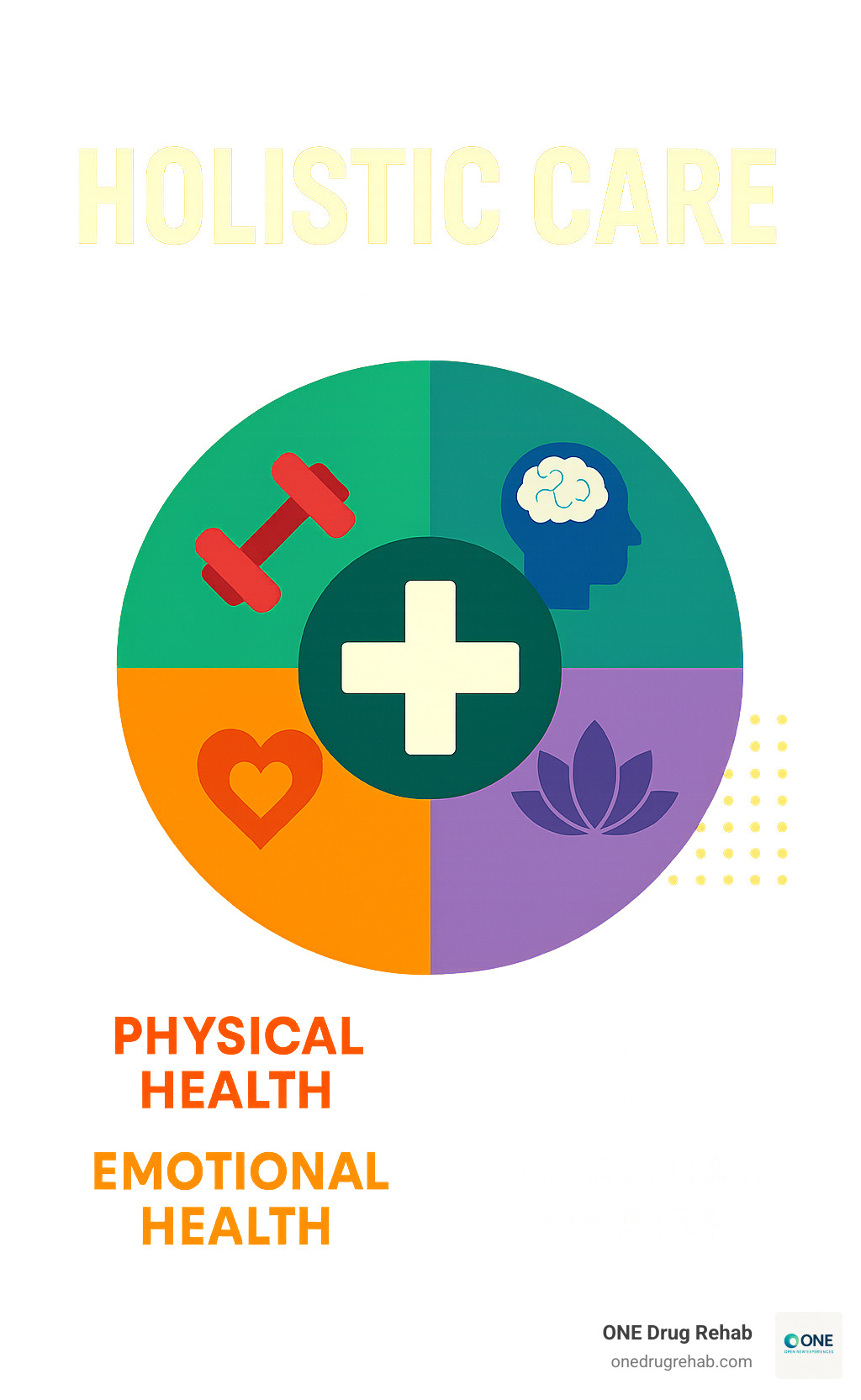
A holistic program treats you as a complete human being—mind, body, and spirit—instead of reducing recovery to simple abstinence. The aim is to uncover and heal the root causes of substance use. Renowned trauma expert Gabor Maté notes that dependency often grows out of unaddressed trauma or painful life stressors, so lasting change requires deeper work than symptom management alone.
Holistic care does not throw out proven medical or psychological therapies; it complements them. Medical detox, CBT, or group therapy remain the backbone, while yoga, nutrition, or art therapy add extra layers of support. This integrated model allows you to rebuild every area of life at the same time.
Holistic vs. Traditional Treatment
| Feature | Holistic Treatment | Traditional Treatment |
|---|---|---|
| Focus | Whole person (mind, body, spirit) | Primary symptoms of substance use |
| Philosophy | Addiction as an imbalance; heal underlying causes | Disease model; chronic brain disorder |
| Methods | Evidence-based care plus yoga, meditation, nutrition, art, etc. | Mainly CBT, DBT, 12-step, group therapy |
| Goal | Balanced lifestyle & long-term wellness | Immediate abstinence |
The Core Principles of a Holistic Approach
- Unconditional Positive Regard
- The Individual as a Whole
- Finding Balance
- Personal Responsibility and Empowerment
- Innate Healing Capacity
For a broader look at these concepts, see Principles of Holistic Medicine.
Common Therapies in Holistic Treatment Programs
Ready to explore the amazing tools in holistic treatment programs? This is where things get really exciting! Think of it like a wellness buffet, offering so many different paths to healing. The best part? We can pick and choose what truly works for you. These aren’t just extra activities; they’re key parts of a plan built to help you every step of the way.

We bring together all sorts of healing methods. This includes experiential therapies like art and music, somatic therapies that help you connect with your body, and even ancient alternative medicine practices. These mind-body practices work hand-in-hand with proven, evidence-based treatments. Why? Because addiction touches every part of you, and healing needs to be just as broad.
Mind-Focused Therapies
Our minds are truly amazing, and learning how to handle our thoughts and feelings is super important in recovery. That’s why holistic treatment programs offer some fantastic mind-focused therapies:
- Mindfulness and Meditation: These practices help you be more present and aware. You learn to watch your thoughts without judgment and find a sense of calm inside. Studies show that mindfulness meditation can really help with anxiety and stress. It can even help you manage cravings and tough emotions. Many experts agree that meditation can lessen anxiety, depression, pain, and improve sleep, all while helping you focus better.
- Biofeedback and Neurofeedback: These cool techniques teach you to control things your body usually does on its own, like your heart rate or brain activity. When you learn to guide these, you can lower stress, boost your focus, and even handle cravings better.
- Cognitive Behavioral Therapy (CBT) Integration: CBT is a well-known, proven therapy. But guess what? It works amazingly well with holistic practices! For instance, if you combine CBT with meditation and yoga, it can really help you handle stress. This way, you learn to spot and change old thought patterns that might lead back to addiction.
Body-Centered Practices
Addiction can really wear down your body. That’s why holistic treatment programs make physical healing and feeling good a top priority. It’s a key part of getting better.
- Nutritional Counseling and Biochemical Repair: What we eat plays a huge role in how we feel. Nutritional counseling helps you see how your diet affects your mood, energy, and even cravings. Some places, like InnerBalance Health Center, even work on biochemical repair. This means they fix imbalances in your body that might make you more likely to struggle with addiction. For example, they’ve found that low blood sugar (hypoglycemia) is common in people with addiction, showing how important good food is. Eating well can truly energize your mind and body, speeding up your recovery.
- Yoga and Tai Chi: These age-old practices bring together body movements, breathing, and quiet meditation. Yoga, for example, is great for lowering stress hormones like cortisol. It can also help you avoid relapse and make healthier choices. Experts say yoga even boosts helpful brain chemicals, which can ease stress and worry.
- Acupuncture and Massage Therapy: Acupuncture is a traditional Chinese practice where tiny needles are placed at certain points on your body to bring back energy balance. It can help calm anxiety, lessen cravings, reduce feeling irritable, and ease withdrawal symptoms. And who doesn’t love a good massage? It helps melt away worries, relax your muscles, and make you more aware of your body.
- Fitness and Recreational Therapy: Moving your body regularly is a super strong tool for getting better. Exercise can fight off feelings of sadness, lift your mood, and boost your energy. Many holistic treatment programs offer fun activities like sports, hiking, rock climbing, or swimming. These activities help you build a healthy routine, shake off stress, and make your body stronger.
Want to learn more about all the different ways to heal? You can explore more on different treatment types.
Soul and Spirit-Enriching Activities
Beyond just your mind and body, holistic treatment programs understand that feeding your spirit is super important too. This doesn’t mean you have to be religious. It’s more about helping you find purpose, meaning, and a sense of connection in your life.
- Art Therapy and Music Therapy: These creative activities give you a way to express your feelings without words. They can help you work through tough past experiences and learn more about yourself. For instance, art therapy lets you show what’s inside and can help you handle your actions better.
- Equine-Assisted Therapy: Spending time with horses can teach you so much about trust, how to communicate, and how to handle your feelings. People who try equine-assisted therapy often stick with their treatment longer and are more likely to finish it!
- Nature Immersion: Just being in nature can be incredibly healing. Many holistic treatment programs include outdoor activities, beautiful natural settings, and ways to connect with the world around you. This helps bring a sense of peace and a fresh way of looking at things.
- Guided Psychedelic Therapies: Now, this is a more cutting-edge option and not something every program offers. But some very special holistic treatment programs are looking into plant medicines (like Ibogaine or Ayahuasca). They use these in a super careful, controlled way, with doctors watching closely. These are advanced treatments, meant to help with the very root causes of addiction and deep past hurts. It’s totally different from using these substances for fun; it’s part of a medical program.
- Spiritual Guidance (Non-Denominational): This part of treatment helps you find purpose, meaning, and a quiet peace inside. It doesn’t have to be about religion. Instead, it might involve things like mindfulness, setting daily goals, or feeling connected to yourself, other people, or something bigger than you. As Pastor Stephen Boyarsky, who knows a lot about faith-based recovery, often says, it’s really about “spirituality, not religion.”
The Benefits and Challenges of a Holistic Path
Choosing a holistic path for addiction recovery can be a transformative experience. It goes beyond stopping substance use; it’s about rebuilding your life, fostering a sense of completeness and well-being. It’s a journey where you not only heal but also find new strengths and a brighter way to live. However, like any approach, it has its own considerations. Understanding both sides helps you make the best choice for you.
Key Benefits for Lasting Sobriety
The comprehensive nature of holistic treatment programs offers a wealth of benefits that contribute significantly to long-term recovery and relapse prevention. It’s about building a foundation that truly lasts.
For starters, you’ll likely experience increased self-awareness. By diving into practices that explore your mind, body, and spirit, you begin to understand yourself on a much deeper level. You’ll get to know your triggers, understand your emotional landscape, and find what truly makes you tick. This kind of self-knowledge is an incredibly powerful tool for navigating life’s challenges while staying sober.
Many holistic therapies, like meditation, yoga, and even engaging in fun recreational activities, are fantastic tools for stress reduction and developing healthy coping skills. Life throws curveballs, and learning how to manage stress without turning to substances is crucial. These practices help you build a toolkit of healthy ways to deal with pressure and discomfort.
When it comes to your body, expect improved physical health. Addiction takes a toll, but holistic programs actively work to help your body heal. By focusing on nutrition, exercise, and overall physical well-being, you’ll feel more invigorated, mentally sharper, and simply better. This physical healing really helps to speed up your overall recovery. You’ll also find improved emotional regulation, meaning you’ll get better at understanding, processing, and managing your feelings. Techniques from mindfulness to art therapy can significantly boost this skill.
One of the great things about this approach is the increased treatment satisfaction. When people feel their treatment truly addresses all their needs, they’re happier, more engaged, and more willing to stick with the program. This increased satisfaction often leads to much better treatment outcomes in the long run. Plus, holistic treatment programs are often excellent at addressing co-occurring disorders. Many individuals dealing with addiction also struggle with mental health issues like anxiety or depression. Holistic care offers a more complete experience for those with multiple needs, treating the whole person rather than just one symptom at a time.
By teaching new skills, promoting self-worth, and fostering a balanced lifestyle, holistic programs equip you with the tools and resilience needed to prevent relapse and maintain long-term sobriety. It’s about building a robust, healthy, and happy life that makes staying sober feel natural and empowering.
Potential Challenges and Considerations
While the benefits are truly compelling, it’s also important to be aware of potential challenges and things to consider when exploring holistic treatment programs:
One key area is the lack of regulation and varying practitioner credentials. The term “holistic” can be used very broadly, and sometimes, certain modalities within holistic care might not have strict oversight. This means the qualifications of practitioners can vary quite a bit. It’s super important to do your homework and thoroughly check out any program or therapist you’re considering. Don’t be afraid to ask for credentials!
Another point to consider is the limited scientific backing for some modalities. While many holistic therapies have plenty of anecdotal success stories and some promising early research, extensive, large-scale studies proving the efficacy of every single holistic treatment for addiction are still limited, and sometimes the results are inconclusive. This means for some specific practices, their effectiveness in supporting lasting recovery is still being explored and debated. It’s a field that’s constantly evolving!
Then there’s the practical side: cost and insurance coverage. Holistic treatment programs, especially those offering a wide range of specialized therapies or a more luxurious setting, can sometimes be more expensive. While your insurance might cover the evidence-based parts of treatment (like therapy sessions), some of the complementary therapies might not always be fully covered, which could lead to out-of-pocket expenses. The average cost of licensed treatment can really vary, so it’s always a good idea to verify your insurance benefits beforehand.
Finally, with the growing popularity of holistic care, you’ll find that many facilities claim to be “holistic.” This means finding a quality program requires careful due diligence. You want to make sure you choose a program that truly embodies the holistic philosophy and effectively integrates it with proven, evidence-based practices, rather than just offering a few “add-on” activities without real depth. Look for places that genuinely commit to healing the whole person, not just checking off boxes.
How to Find the Right Program for You
Choosing the right holistic treatment program is a deeply personal decision, and it’s important to approach it thoughtfully. Just like finding the perfect pair of shoes, there isn’t a “one-size-fits-all” solution. What works wonders for one person might not be the ideal fit for another.

We encourage you to conduct thorough due diligence, focusing on personalized care and asking the right questions. The effectiveness of a program is highly dependent on it being the “right fit” for you. To aid in your search, you can always check out Rehab Facility Reviews to hear from others who have walked this path.
What to Look For in Holistic Treatment Programs
When you’re evaluating potential holistic treatment programs, here are some key indicators of a high-quality facility:
- State Licensure and Accreditation: Ensure the facility is licensed by the state and holds reputable accreditations. This indicates they meet certain standards of care and safety.
- Qualified Staff Credentials: Look for programs where the staff, from therapists to nutritionists to yoga instructors, are well-trained, licensed, and experienced in their respective fields, particularly in the context of addiction recovery.
- Integration with Evidence-Based Care: The best holistic treatment programs don’t replace traditional, evidence-based therapies (like CBT, DBT, or medical detox) with holistic ones. Instead, they seamlessly blend and complement them. They understand that conventional, research-based detox and treatment are more likely to support an individual in maintaining recovery.
- Personalized Treatment Plans: A truly holistic approach understands that every individual’s journey is unique. The program should offer customized plans based on your specific needs, history, health status, and goals. There isn’t a “one-size-fits-all” approach to addiction treatment, and you shouldn’t settle for one.
- Continuum of Care: Recovery is a journey, not a destination. A good program will offer a continuum of care, including intensive outpatient programs and transitional living options, to support you as you move from residential treatment back into daily life.
- Aftercare Support: Look for robust aftercare planning and support. This might include ongoing therapy, support groups, alumni programs, and resources to help prevent relapse and sustain long-term sobriety. Aftercare programs can even be designed as whole-family programs.
Important Questions to Ask a Potential Center
Once you’ve narrowed down your options, it’s time to ask some specific questions. Don’t be shy – this is your health and your future!
- What specific holistic therapies do you offer and what is the training of the practitioners?
- How are holistic practices integrated with clinical therapies like CBT or DBT?
- How do you personalize treatment plans?
- What is your approach to nutrition and physical wellness?
- What does your aftercare program entail?
Frequently Asked Questions about Holistic Treatment
As you explore the wonderful world of holistic treatment programs, it’s natural to have questions. We hear a few common ones all the time, and we’re here to help shed some light on them!
Is holistic treatment covered by insurance?
Ah, the million-dollar question! Or, more accurately, the “how-many-dollars-will-this-cost” question. The simple answer is: it varies. Much like choosing a flavor of ice cream, what’s covered depends entirely on your specific insurance plan and provider.
Generally, the more traditional, evidence-based components of treatment—like medical detox, individual therapy sessions, and group counseling—are often covered. These are typically seen as medically necessary.
However, when it comes to more specialized complementary therapies, such as acupuncture, therapeutic massage, or advanced nutritional counseling, coverage can be a bit trickier. Sometimes, these are covered if delivered by a licensed healthcare professional as part of a broader treatment plan. Other times, they might be considered out-of-pocket expenses.
It’s also worth noting that some holistic treatment programs offer luxurious amenities or highly specialized treatments, which can naturally come with a higher price tag. Even if some aspects are covered, you might still have a larger financial responsibility.
To avoid any surprises, your best bet is always to verify your insurance benefits directly. Reach out to your insurance provider and the treatment center’s admissions team beforehand. They can give you the clearest picture of what’s covered and what your financial commitment might look like. You can even start by exploring how to verify your insurance benefits on our site.
Can holistic treatment work without traditional therapy?
This is a really important question! While the idea of a purely holistic path might sound appealing, it’s generally not recommended to pursue holistic treatment programs without the integration of traditional, evidence-based therapies.
Think of it like building a sturdy house. You wouldn’t just focus on the beautiful interior design (holistic practices) without first laying a strong foundation and sturdy walls (traditional therapy). The most effective treatment models use holistic practices to complement and improve proven treatments. They don’t replace them.
Research consistently shows that holistic therapies truly shine when they’re combined with traditional approaches for substance use disorders, like medical detox and psychotherapy. They’re not meant to stand alone, but rather to augment and boost your standard recovery efforts.
For example, if you had a broken leg (which, let’s hope you don’t!), you wouldn’t just do yoga to fix it. You’d get a cast (the evidence-based medical treatment) and then use yoga to strengthen and rehabilitate the limb. In the same way, for addiction, therapies like CBT, DBT, and medical supervision often form the essential foundation, while holistic practices support and accelerate the healing process across your entire being. For a deeper dive into this integrated approach from an academic perspective, you can read more here: An academic perspective on an integrated approach.
How does holistic care address the spiritual side of addiction?
The “spiritual” aspect of holistic treatment programs often raises eyebrows, and it’s a common misconception that it’s always tied to religion. Let’s clear that up! In most holistic settings, “spiritual” doesn’t necessarily mean religious. While faith-based programs certainly exist for those who seek them, the broader spiritual component focuses on a deeper sense of meaning, purpose, and connection.
Here’s how it often plays out:
- Finding Purpose and Meaning: Addiction can feel like it strips away your direction in life. Holistic care helps you explore your values, find new goals, and reconnect with what truly gives your life meaning beyond substance use. It’s about rekindling that inner spark.
- Inner Peace and Connection to Self: Practices like meditation and mindfulness are fantastic tools for cultivating a deeper connection to your inner self. This fosters self-acceptance and a sense of serenity that can be profoundly healing.
- Connection to Others and Nature: Many programs emphasize building healthy relationships and spending quality time outdoors. This helps foster a sense of belonging and interconnectedness with the world around you, reminding you that you’re part of something bigger.
- Non-Denominational Exploration: This could involve anything from daily “Morning Spiritual” sessions focusing on mindfulness and setting positive intentions, to opportunities to attend AA/NA meetings, or even various spiritual or religious services if you wish. The goal is simply to support your personal spiritual growth, whatever that looks like for you. As Pastor Stephen Boyarsky, an expert in faith-based recovery, often says, it’s about “spirituality, not religion.”
Conclusion: Embracing a Whole-Person Path to Recovery
Wow, what a journey we’ve taken! We’ve explored how holistic treatment programs are truly changing the game in addiction recovery. It’s about seeing you as a whole person – not just a diagnosis. It’s about healing your mind, body, and spirit, all working together.
These programs don’t just scratch the surface. They dig deep to address the real reasons behind addiction. They help bring balance back into your life and arm you with lots of different ways to cope. This builds a super strong foundation for long-term wellness.
The benefits really shine through: you’ll likely feel less stressed and your physical and emotional health can improve leaps and bounds. You’ll get to know yourself better, which can make a huge difference in staying sober for good. Of course, it’s always smart to pick a program carefully. Make sure it blends in trusted, evidence-based therapies and has amazing, qualified staff. When you do, the potential for true, life-changing healing is just incredible.
Here at ONEDrugRehab.com, we’re all about giving you the clear, helpful information you need to make the best choices for your recovery journey. Ready to dive deeper into all the ways you can heal and find the perfect fit for you? Explore the different Types of Addiction Treatment available. Because getting to the root of addiction isn’t just about stopping substance use. It’s about building a vibrant, balanced life where you can truly, truly thrive.