

Understanding the True Cost of Recovery
A rehab cost calculator helps you estimate the total expense of addiction treatment based on factors like program type, duration, insurance coverage, and location. These tools provide personalized cost ranges and help you compare facilities, making it easier to plan financially for recovery without unexpected bills.
Quick Answer: What a Rehab Cost Calculator Shows You
- Treatment type costs: Inpatient ($5,000-$80,000+), Outpatient ($1,400-$10,000), Detox ($250-$900/day)
- Insurance impact: Your deductible, copays, and out-of-pocket maximum
- Program duration: 30-day, 60-day, or 90-day options
- Payment options: Sliding scale fees, payment plans, grants, state-funded programs
- Location factors: Geographic cost variations based on local cost of living
Choosing addiction treatment is one of the most important decisions you’ll ever make. But the financial side can feel overwhelming and confusing.
Here’s the truth: The cost of rehab varies wildly. Some programs are free. Others cost tens of thousands of dollars. And somewhere in between is the right option for you and your family.
This guide breaks down everything you need to know about rehab costs. We’ll explain what factors drive the price up or down. We’ll show you how to use your insurance. And we’ll help you find affordable options even if you have no coverage at all.
The goal is simple: Remove the financial confusion so you can focus on what matters most—getting help.
According to data from the Substance Abuse and Mental Health Services Administration (SAMHSA), over 14,500 addiction treatment centers operate in the US. Yet only 10% of people who need treatment actually receive it. Cost concerns are one of the biggest barriers.
But here’s what many people don’t realize: For every dollar spent on addiction treatment, individuals save about $12 in future healthcare costs. Treatment isn’t just an expense—it’s an investment in your future.
A rehab cost calculator is a tool that helps you understand this investment before you commit. It takes your specific situation—your insurance, your location, the type of care you need—and gives you a realistic estimate of what you’ll pay.
No more guesswork. No more surprise bills. Just clear information to help you plan.
Easy rehab cost calculator glossary:
What is an Addiction Rehab Cost Calculator and How Does It Work?
Imagine trying to build a house without a blueprint, or planning a road trip without knowing the cost of gas. Sounds stressful, right? That’s what navigating addiction treatment costs can feel like without a clear plan. That’s where a rehab cost calculator steps in, acting as your financial blueprint for recovery.
At its core, an addiction rehab cost calculator is an online tool designed to provide you with an estimated cost range for addiction treatment services. It’s not a magic crystal ball that gives you an exact dollar amount, but it’s incredibly close, offering a personalized financial plan based on your unique circumstances.
How does it work? Think of it as a guided questionnaire. You typically input several key pieces of information:
- Treatment Type: Are you looking for inpatient, outpatient, medical detox, or a combination?
- Substance Use Details: What substances are involved? How long have you been struggling? This helps determine the level of care needed.
- Treatment History: Have you been to rehab before? This can influence recommended program length and intensity.
- Insurance Information: Do you have private insurance, Medicare, or Medicaid? This is a huge factor in your out-of-pocket expenses.
- Location Preference: Are you looking for treatment close to home or willing to travel? Geographic location significantly impacts costs.
- Desired Amenities: Are luxury features important to you, or are you looking for a more standard, focused program?
Once you input these details, the calculator processes the information against a database of typical treatment costs, regional averages, and insurance coverage parameters. The output is an estimated cost range, which can be a game-changer for your budgeting for recovery.
This process offers a significant advantage over manual budgeting. Without a calculator, you’d be making countless phone calls, trying to compare vastly different programs, and deciphering complex insurance policies on your own. A rehab cost calculator streamlines this, helping you compare facilities objectively and understand the potential financial commitment upfront. It helps reduce uncertainty and empowers you to make informed decisions for yourself or your loved one.
The Key Components of a Rehab Cost Estimate
When we talk about the overall cost of addiction treatment, we’re looking at several moving parts. A rehab cost calculator helps break down these elements, giving you a clearer picture of where your money is going.
Here are the key components that typically make up a rehab cost estimate:
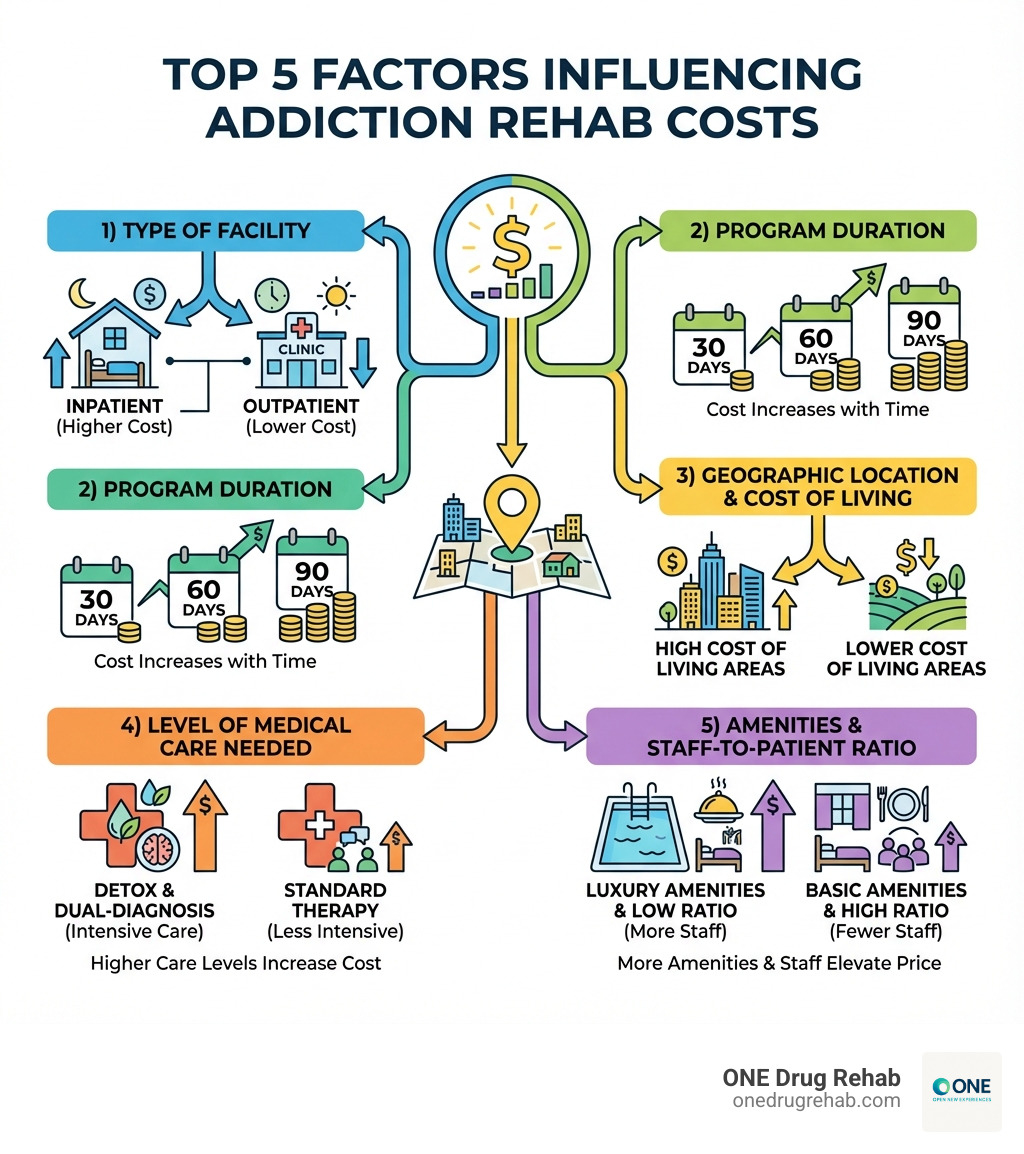
- Type of Center: This is one of the biggest drivers of cost. Inpatient or residential programs, where you live at the facility 24/7, are generally more expensive than outpatient programs, where you attend sessions and return home.
- Program Duration: Treatment programs typically come in 30, 60, or 90-day increments, or even longer. Logically, a longer stay means a higher overall cost.
- Location: Just like real estate, location matters! Facilities in areas with a higher cost of living (think major cities or desirable coastal regions) will naturally have higher prices than those in more rural or less expensive areas.
- Amenities: This refers to the “comforts” of the facility. Do they offer private rooms, gourmet meals, spa treatments, or holistic therapies like yoga and equine therapy? These luxury features will increase the price. More standard facilities might offer shared rooms and basic services.
- Level of Medical Care: If you require medically supervised detox at the start of treatment, this adds to the cost. Similarly, if you have co-occurring mental health disorders (dual diagnosis) that require specialized medical or psychiatric care, this can increase the overall expense.
- Therapies Offered: The type and intensity of therapeutic interventions also play a role. Programs offering a wide range of specialized therapies (e.g., CBT, DBT, EMDR, trauma therapy) or a higher staff-to-patient ratio might be more costly.
How a Calculator Helps You Plan for Recovery
Using a rehab cost calculator is more than just getting a number; it’s about gaining control and clarity over a challenging situation. We believe it’s an indispensable tool for anyone considering addiction treatment.
Here’s how a calculator helps you plan for recovery:
- Empowers Financial Planning: By providing a realistic cost estimate, the calculator allows you to budget effectively, explore financing options, and avoid financial surprises down the road.
- Reduces Uncertainty: The unknown can be paralyzing. Knowing the potential costs helps alleviate anxiety and allows you to focus on the healing process rather than financial stress.
- Compares Facilities Objectively: With estimated costs in hand, you can compare different treatment centers not just on their programs, but also on their affordability relative to your budget.
- Helps Families Prepare: Addiction impacts entire families. A calculator provides families with the information they need to financially prepare and support their loved one’s journey to sobriety.
- Analyzes Different Treatment Options: Perhaps an inpatient program is out of budget, but an intensive outpatient program (IOP) is feasible. The calculator can help you explore and compare the costs of various levels of care to find what works best.
For those looking to dig deeper into the financial aspects of recovery, we have More info about drug rehab cost available on our site. Understanding the costs is the first step towards making treatment accessible.
Factors That Determine the Price of Treatment
The journey to recovery is deeply personal, and so too is its cost. The price tag for addiction treatment isn’t one-size-fits-all; it’s a dynamic figure shaped by a multitude of factors, much like the cost of a home renovation. Let’s break down what truly influences the price of treatment.

At the highest level, the type of program you choose—inpatient versus outpatient—will set the baseline. Then, the length of your stay, the geographic location of the facility, the specific level of medical care required, and even the “creature comforts” or amenities offered, all contribute to the final bill.
For example, a 30-day inpatient program might cost anywhere from $5,000 to $20,000 or more, while a 60-day or 90-day program could easily range from $12,000 to $60,000. Luxury facilities can push these figures even higher, sometimes exceeding $80,000 for a 30-day stay. On the other hand, outpatient programs often fall between $1,400 and $10,000 for a general 30-day program, depending on intensity.
The geographic location plays a significant role. Just as a cup of coffee costs more in a busy city than in a quiet town, treatment centers in areas with a high cost of living, like California, will naturally have higher operating expenses, which are then reflected in their prices.
Moreover, the specific level of care, such as the need for a medically supervised detox or specialized treatment for co-occurring mental health disorders, will add to the overall cost. A higher staff-to-patient ratio, which often translates to more individualized attention, can also mean a higher price.
Inpatient vs. Outpatient Program Costs
When exploring treatment options, one of the first distinctions we encounter is between inpatient and outpatient programs. Understanding the cost implications of each is crucial for effective planning.
Inpatient Rehab Costs:
Inpatient, or residential, treatment is the most intensive level of care. It involves living at the facility 24/7, providing a structured, supportive environment away from triggers and temptations. This round-the-clock supervision and care inherently make it more expensive. Costs for inpatient programs can vary widely:
- A 30-day program might range from $5,000 to $25,000.
- For those requiring 60- or 90-day programs, the total average costs could range anywhere from $12,000 to $60,000.
- Well-known or luxury centers can even top $100,000 for 30, 60, or 90-day stays.
The higher cost covers not just the therapy and medical care, but also lodging, meals, recreational activities, and continuous support staff.
Outpatient Rehab Costs:
Outpatient programs offer more flexibility, allowing individuals to live at home and continue with work, school, or family responsibilities while attending treatment sessions. This flexibility often translates to lower costs. There are several types of outpatient care:
- Intensive Outpatient Programs (IOP): These programs offer several hours of therapy multiple days a week. They can cost between $500 to $650 a day, or around $3,100 to $10,000 for a 30-day program.
- Partial Hospitalization Programs (PHP): PHPs are a step down from inpatient care but more intensive than traditional outpatient, often involving 6 hours of programming per day, 5 days per week. These might cost $350 to $450 a day.
- Standard Outpatient Programs: These are less intensive, with fewer weekly sessions, and are generally the most affordable. Many programs cost between $1,450 to $11,000 for a three-month program.
The choice between inpatient and outpatient depends on the severity of the addiction, the individual’s support system, and financial considerations. For a more detailed comparison, you can read our guide on More info about rehab cost comparison.
The Role of Amenities and Location
We all appreciate a little comfort, especially during challenging times. In addiction treatment, the level of amenities offered by a facility can significantly influence its price point.
Luxury Rehabs:
These facilities cater to clients seeking a high-end experience, often featuring:
- Private rooms and suites
- Gourmet meals prepared by chefs
- Spa services, massage, and acupuncture
- Holistic therapies like yoga, meditation, and equine therapy
- Fitness centers and swimming pools
- Scenic locations, often beachfront or in serene natural settings
Naturally, these premium services come with a premium price tag. Luxury rehabs can cost tens of thousands of dollars per month, with some reaching $80,000 or more for a 30-day stay. They are designed for clients who prioritize comfort, privacy, and an extensive range of individualized therapies.
Standard Facilities:
These centers provide essential, effective treatment without the added frills. They typically offer:
- Shared rooms (sometimes semi-private)
- Nutritious, but not gourmet, meals
- Group and individual therapy sessions
- Basic recreational activities
While less opulent, these facilities offer robust treatment programs focused on recovery, often at a more accessible price.
How Location Affects Price:
The geographic location of a rehab center is another major cost driver.
- Urban vs. Rural Centers: Facilities located in major metropolitan areas or popular tourist destinations often have higher overheads (rent, staff salaries, utilities) which are passed on to the client. A center in a state with a higher cost of living, like California or New York, will almost always be more expensive than a comparable facility in a lower cost-of-living state.
- Accessibility: Centers that are easily accessible by major airports or transportation hubs might also factor this convenience into their pricing.
When using a rehab cost calculator, pay close attention to how these factors are incorporated, as they can lead to significant variations in your estimated cost.
Medical Needs: Detox and Specialized Therapies
The complexity of an individual’s medical and psychological needs is a critical factor in determining the overall cost of addiction treatment. Not everyone requires the same level of intervention, and these specialized services contribute to the expense.
Medically-Supervised Detox:
For many individuals, the first step in recovery is detox. Withdrawal from certain substances, such as alcohol, benzodiazepines, or opioids, can be dangerous and extremely uncomfortable, requiring 24/7 medical supervision.
- Medically-supervised detox ensures safety and comfort, managing withdrawal symptoms with medication.
- The cost of detox can run from $250 to $900 per day if paid out-of-pocket.
- Often, detox costs are integrated into the overall price of an inpatient program, but clarify if this is the case.
If a person needs more medical care during detox, the price will be higher. This is because substances with dangerous detox side effects require more careful monitoring, specialized staff, and potentially more medication.
Co-occurring Disorders and Specialized Therapies:
Addiction rarely travels alone. Many individuals struggle with co-occurring mental health disorders, such as depression, anxiety, PTSD, or bipolar disorder. Addressing these “dual diagnoses” requires specialized care, which can increase treatment costs.
- Specialized counseling: Therapies like Cognitive Behavioral Therapy (CBT), Dialectical Behavior Therapy (DBT), Eye Movement Desensitization and Reprocessing (EMDR), and trauma-informed therapy are often crucial for effective recovery, especially for those with complex needs.
- Individualized treatment plans: When treatment is custom to address specific traumas or mental health conditions, it often involves more one-on-one sessions with specialists, leading to higher costs than programs focused solely on addiction.
- Staff-to-patient ratio: Facilities with a higher ratio of therapists and medical professionals to patients can offer more personalized care, but this also contributes to higher operational costs.
When we consider the necessity of these services, the added expense is an investment in comprehensive, effective, and lasting recovery. A rehab cost calculator will typically ask about these needs to provide a more accurate estimate.
How to Pay for Rehab: A Guide to Your Financial Options
The thought of paying for rehab can be daunting, but we want to assure you that many options exist. Cost should never be a barrier to seeking life-saving treatment. Understanding your financial landscape is a powerful first step, and a rehab cost calculator can illuminate the path forward.
The landscape of paying for treatment has evolved significantly, especially with the Affordable Care Act (ACA). The ACA mandated that addiction treatment is an essential health benefit, meaning most insurance plans in the Health Insurance Marketplace must cover it. This was a monumental step in making recovery more accessible.
Beyond insurance, there are various financing options and ways to reduce out-of-pocket expenses. We’ll explore these avenues, helping you steer the financial side of recovery with confidence.
Using Insurance to Cover Your Rehab Cost
For many, health insurance is the primary method of covering addiction treatment costs. However, simply having insurance doesn’t guarantee full coverage. It’s like having a map but needing to understand the legend.
Verifying Your Benefits:
This is the most crucial step. Before committing to any program, we strongly advise you to call your insurance provider or the admissions team at the treatment facility. They can help you understand:
- In-network vs. Out-of-network: In-network providers have a contract with your insurance company, typically resulting in lower out-of-pocket costs for you. Out-of-network services generally have less or no coverage.
- Deductibles: This is the amount you must pay out of pocket before your insurance begins to cover costs.
- Copayments: A fixed amount you pay for a covered healthcare service after you’ve paid your deductible.
- Out-of-pocket maximums: The most you’ll have to pay for covered services in a plan year. Once you reach this limit, your insurance plan pays 100% of the cost of covered benefits.
Types of Insurance:
- Private Insurance: Many employer-sponsored plans or plans purchased through the ACA marketplace offer robust coverage for addiction treatment.
- Medicare/Medicaid: These government programs can provide significant coverage for those who qualify, often covering a substantial portion of treatment costs.
- TRICARE: For military personnel and their families, TRICARE offers comprehensive addiction treatment benefits.
Insurance coverage varies significantly between plans. A thorough verification of your specific benefits is essential to avoid unexpected bills. You can explore More info about rehab insurance verification to guide you through the process. Also, for general information on what addiction treatment insurance typically covers, we have resources on does insurance cover.
What If I Don’t Have Insurance?
It’s a common misconception that without insurance, addiction treatment is impossible to afford. We’re here to tell you that this is simply not true. While it might require a bit more legwork, numerous pathways to affordable care exist.
- Sliding Scale Fees: Many treatment centers, particularly non-profit or community-based programs, offer sliding scale fees. This means the cost of treatment is adjusted based on your income and financial situation. For example, a $5,000 outpatient program could be reduced to $0-$1,500 for someone whose income falls below the federal poverty level. Eligibility is often determined by proof of income and family size. You can learn more about Affordable Addiction Treatment: Understanding Sliding Scale Fees to see if this option might work for you.
- State-Funded Programs: Most states offer publicly funded addiction treatment services. These programs are often free or very low-cost for qualifying individuals, though they may have waitlists.
- Non-Profit Organizations: Organizations like The Salvation Army provide free rehab services for those in need. Many other local non-profits also offer subsidized treatment or connect individuals with resources.
- Grants and Scholarships: Some treatment centers and advocacy groups offer grants or scholarships to help cover treatment costs for individuals who demonstrate financial need. It’s always worth asking facilities if they have such programs.
- Payment Plans: Many rehab facilities understand the financial strain of treatment and are willing to work with you to establish an individualized payment plan, allowing you to pay in installments over time.
- Personal Loans or Credit Cards: While not ideal, for some, securing a personal loan or using a credit card might be a viable option to access immediate, life-saving treatment, especially if the long-term costs of untreated addiction outweigh the interest.
Addiction treatment is an investment, and there are resources available to help you make that investment. Don’t let the lack of insurance deter you from seeking help. We provide extensive information on More info about addiction treatment without insurance.
Calculating the Real ROI: The Cost of Addiction vs. Treatment
When we talk about the “cost” of addiction, we’re not just talking about the price of substances. We’re talking about a devastating ripple effect that impacts finances, health, relationships, and society at large. Viewing rehab as an investment, rather than just an expense, helps us understand its true value.
Let’s look at the numbers. The cost of substance abuse to the US is staggering—more than $600 billion each year, according to the National Institute on Drug Abuse. This includes healthcare expenses, lost productivity, and crime-related costs. For an individual, the financial burden can be equally crushing.
Consider this comparison:
| Cost Factor | Untreated Addiction (Annual Estimate) | One-Time Treatment Cost (Example) |
|---|---|---|
| Substance Cost | $5,000 – $50,000+ (depending on substance) | $0 (post-treatment) |
| Healthcare Costs | $3,000 – $15,000 (ER visits, chronic issues) | Included in program, then reduced |
| Lost Income | $10,000 – $50,000+ (job loss, missed work) | Potential for stable employment |
| Legal Fees | $1,000 – $20,000+ (DUIs, arrests) | Drastically reduced or eliminated |
| Total Annual Cost | $19,000 – $135,000+ | $5,000 – $60,000 (one-time) |
As the table illustrates, the ongoing financial drain of addiction far outweighs the one-time cost of getting help. Treatment is an investment that pays dividends in the form of restored health, renewed relationships, and a brighter financial future. It’s not just about stopping the spending; it’s about starting to live again.