

Affordable Care Act: Your 3-Step Path to Recovery
Why the Affordable Care Act Changed Everything for Addiction Treatment
The Affordable Care Act (ACA), signed into law in 2010, transformed how Americans access healthcare—especially addiction treatment. Before the ACA, individuals with substance use disorders often faced denied coverage, high premiums, or complete exclusion from insurance plans.
Key ACA Benefits for Addiction Treatment:
- Essential Health Benefits: All ACA plans must cover mental health and substance use disorder services.
- No Pre-existing Condition Exclusions: Addiction history cannot be used to deny coverage or charge higher premiums.
- Premium Tax Credits: Subsidies are available for households earning 100-400% of the federal poverty level.
- Medicaid Expansion: Coverage was extended to adults earning up to 138% of the federal poverty level in participating states.
- Preventive Services: Substance abuse screenings are covered at no cost.
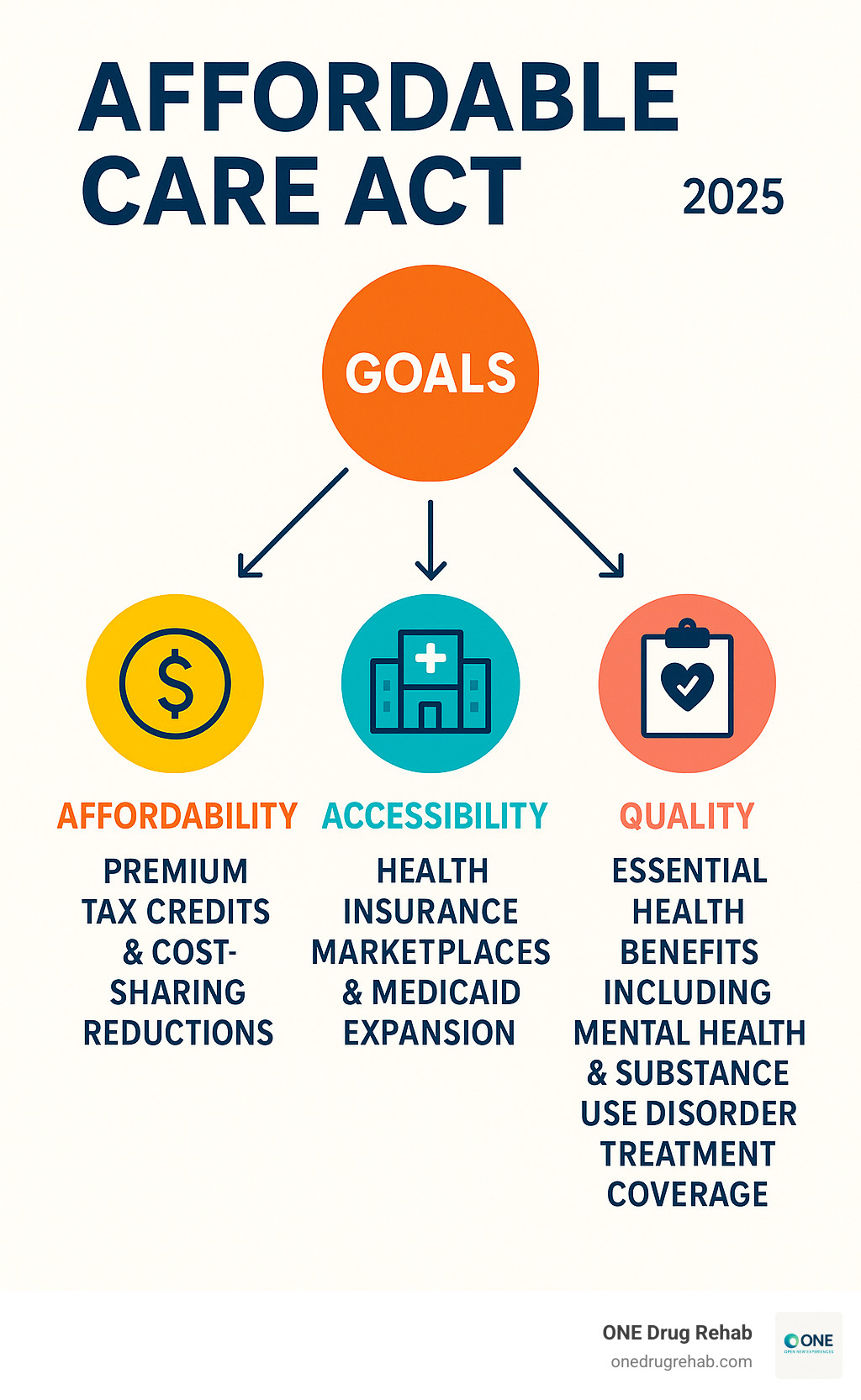
The law’s core goals—affordability, access, and quality—made previously impossible treatment options available to families dealing with addiction. This expansion has been crucial for addiction treatment, where costs can quickly become overwhelming without proper insurance.
More than 21 million Americans selected coverage through ACA Marketplaces during the 2024 Open Enrollment Period, many gaining access to comprehensive addiction and mental health services for the first time.
Related content about affordable care act:
What is the Affordable Care Act and How Does It Work?

The Patient Protection and Affordable Care Act (PPACA), often called “Obamacare,” was a landmark law signed in 2010. It significantly changed American healthcare and is a game-changer for those seeking addiction treatment.
Before the ACA, millions lacked insurance, and many with coverage found it insufficient, especially with pre-existing conditions. The ACA addressed these issues by making insurance more affordable and accessible through financial subsidies and online marketplaces. It also allowed states to expand their Medicaid programs to cover more low-income adults.
The ACA established important rules, such as banning lifetime or annual dollar limits on essential health benefits. This prevents insurance from stopping payment for vital care after a certain amount. Critically, the ACA made it illegal for insurers to deny coverage or charge more due to health status, including a history of addiction. This was a monumental shift for recovery.
The law also promoted preventive services at no extra cost and encouraged competition among insurers. For the full legal text, you can Read the full text of the Affordable Care Act.
The Health Insurance Marketplace: Your Gateway to Coverage
The ACA created the Health Insurance Marketplace (HealthCare.gov), an online platform for comparing and purchasing health insurance plans. This simplified the process, allowing users to compare plan coverage, costs, and eligibility for financial aid. While HealthCare.gov is the federal portal, some states run their own marketplaces, but all serve the same purpose.
Marketplace plans are categorized into “metal tiers” (Bronze, Silver, Gold, Platinum) that indicate how you and your plan share costs. Bronze plans have lower monthly payments but higher out-of-pocket costs, while Platinum plans are the opposite. This helps you match a plan to your budget and health needs.
The main time to enroll is during the annual Open Enrollment Period, typically starting November 1st. Missing this window can leave you without coverage for the year. However, major life changes—like marriage, having a baby, or losing other health coverage—may qualify you for a Special Enrollment Period (SEP). This provides a chance to enroll outside the standard period, which is crucial if you suddenly need addiction treatment.
You can always head straight to HealthCare.gov to Find affordable health care and compare plans.
How the ACA Makes Coverage More Affordable
The ACA improves affordability through two main tools: subsidies and Medicaid expansion.
First, subsidies, also known as premium tax credits, are government assistance that lowers your monthly insurance payment. Eligibility is based on household income, generally between 100% and 400% of the federal poverty level. This is not a loan; it’s direct financial help. Some people, typically with incomes up to 250% of the FPL who choose a Silver plan, also qualify for cost-sharing reductions, which lower out-of-pocket costs like deductibles and co-pays.
Second, the Affordable Care Act allowed states to significantly expand Medicaid. This joint federal and state program provides health coverage to millions of low-income Americans. The ACA gave states the option to extend Medicaid to nearly all adults with incomes up to 138% of the federal poverty level. As of November 2024, 41 states and D.C. have expanded their programs, covering millions more people.
The Inflation Reduction Act of 2022 extended improved subsidies through 2025, keeping premiums lower for millions. The potential expiration of these subsidies after 2025 could lead to higher costs, making this a key issue to watch. These financial protections are vital for accessing addiction treatment, which can be prohibitively expensive without them.
How the ACA Revolutionized Addiction and Mental Health Treatment
Before the Affordable Care Act, seeking help for addiction often meant facing insurance denials or unaffordable premiums. Insurers treated addiction as a moral failing, not a medical condition, and could refuse coverage, charge more, or impose long waiting periods for treatment. This created a cruel cycle where those most in need of care couldn’t get it.
The ACA flipped this script, recognizing addiction as a chronic disease deserving the same coverage as conditions like diabetes or heart disease. This was a fundamental shift in how the healthcare system views addiction and recovery.

The law’s impact centers on two game-changing provisions. First, mental health and substance use disorder services became Essential Health Benefits, meaning they are required coverage. Second, the law created bulletproof protections for people with pre-existing conditions, including addiction history.
The ACA also strengthened mental health parity rules. This means an insurance plan cannot impose stricter limits on mental health or addiction treatment than it does on medical or surgical care. The law also emphasized prevention, and many ACA plans now cover substance abuse screenings at no cost, helping to identify and address problems early.
Understanding Your Essential Health Benefits for the Affordable Care Act
The ACA’s Essential Health Benefits (EHBs) mandate that all Marketplace plans cover ten key service categories, eliminating bare-bones plans that offered inadequate coverage. Crucially for addiction recovery, one of these EHBs is mental health and substance use disorder services. This ensures comprehensive coverage.
This coverage includes:
- Inpatient treatment in residential facilities.
- Outpatient care like therapy and intensive outpatient programs.
- Medication-assisted treatment (MAT), which combines FDA-approved medications with therapy.
The EHBs work in concert. Your prescription drug coverage helps pay for MAT, while your rehabilitative services cover therapy to rebuild your life. This comprehensive package supports your entire recovery journey, allowing you to explore different Types of Addiction Treatment without worrying if they are covered.
How the Affordable Care Act Protects Those with Pre-Existing Conditions
Before the Affordable Care Act, a pre-existing condition like a substance use disorder was often a reason for insurance companies to deny coverage, charge exorbitant premiums, or exclude addiction-related care. This discrimination was based on stigma rather than medical science.
The ACA demolished these barriers with its guaranteed issue provision. Insurers can no longer deny you coverage or charge higher premiums based on your health status, including a history of addiction. Your past doesn’t dictate your future access to care.
This protection acknowledges addiction as a chronic disease. The ACA ensures that a relapse doesn’t result in losing insurance or facing financial penalties, so you can seek treatment knowing your coverage will be there. The law also banned lifetime coverage caps and made it harder for insurers to cancel policies, creating stability crucial for long-term recovery. This change benefits not just individuals but also their families. For more on this, check out Rehab for Families.
The Pros, Cons, and Ongoing Evolution of the ACA
The Affordable Care Act has been one of the most debated pieces of legislation in recent U.S. history. Like any major reform, it has both champions and critics.

Here are the main arguments for and against the ACA:
| Pros of the ACA | Cons of the ACA |
|---|---|
| Expanded Access to Insurance: Millions gained coverage, especially through Medicaid expansion and Marketplace subsidies. | Individual Mandate Controversy: Initially required most Americans to have coverage or pay a penalty (penalty later removed). |
| Consumer Protections: No denial for pre-existing conditions, no lifetime limits, young adults stay on parents’ plans until 26. | Rising Premiums for Some: While subsidies help, unsubsidized premiums increased for certain groups. |
| Essential Health Benefits: Ensures comprehensive coverage, including crucial mental health and substance use disorder services. | Limited Choice in Some Areas: Fewer insurers participating in certain Marketplace regions. |
| Focus on Prevention: Many preventive services, including screenings, are covered at no cost. | Employer Burden: Mandates for larger employers to offer coverage created compliance costs. |
| Improved Public Health: Aims to reduce uncompensated care, improve health outcomes, and foster a healthier population. | Economic Impact Concerns: Debates over its effect on job growth and healthcare spending. |
Arguments for the ACA focus on its success in reducing the uninsured rate. Proponents highlight critical protections for people with pre-existing conditions, mental health parity, and financial assistance that made coverage affordable for millions, promoting health equity.
Arguments against the ACA often cite government overreach, program costs, and economic impact. Critics argued the individual mandate infringed on personal liberty and that the law led to higher premiums and fewer plan choices for some, while creating burdens for employers.
Major Updates and the Future of the Law
Since its 2010 enactment, the Affordable Care Act has constantly evolved through legislative updates and legal challenges. A major change came with the 2017 Tax Cuts and Jobs Act, which eliminated the financial penalty for the individual mandate, removing a key enforcement tool of the original law.
More recently, the American Rescue Plan Act (ARPA) of 2021 and the Inflation Reduction Act (IRA) of 2022 expanded premium tax credits and increased financial assistance, making Marketplace plans more affordable. These improved subsidies were extended through 2025, preventing a “subsidy cliff” that would have caused sharp premium hikes. However, their potential expiration at the end of 2025 is a major challenge facing the ACA’s future.
Another area of ongoing discussion is Medicaid. While the ACA allowed states to Expand the Medicaid program, not all have adopted this expansion. Future legislative proposals could aim to further incentivize expansion or introduce new restrictions, such as work requirements.
The future of the Affordable Care Act remains subject to political and judicial shifts. While its core protections are established, the level of financial aid and its scope could change. It’s important to stay informed and advocate for policies that ensure continued access to affordable care, especially for addiction treatment.
Frequently Asked Questions about the ACA and Addiction Treatment
Navigating insurance for addiction treatment can be complex. Here are answers to common questions about how the Affordable Care Act impacts your recovery path.
How do I know if a specific rehab center is covered by my ACA plan?
Knowing if a rehab center is “in-network” is crucial for managing costs. Here’s how to find out:
- Check Your Insurer’s Website: Most insurance companies have an online provider directory. Search for “substance use treatment center” and specify your plan, as networks can vary.
- Call Your Insurance Company: Use the customer service number on your insurance card to call and verify if a specific rehab center is in-network. They can also explain your out-of-pocket costs.
- Contact the Rehab Center: Many rehab centers have staff who can verify your insurance coverage for you and give you an estimate of your costs.
Understanding the difference between in-network and out-of-network is key. In-network providers have a contract with your insurer, leading to lower costs for you. Out-of-network providers do not, which usually means you’ll pay significantly more. Always verify coverage directly, as provider networks can change. We encourage you to use our tools to Compare Rehab Centers and then confirm your coverage.
What if I miss Open Enrollment but need addiction treatment now?
Missing Open Enrollment doesn’t mean you’re out of options, especially if you need urgent treatment.
- Special Enrollment Period (SEP): You may qualify for an SEP if you experience a “qualifying life event,” such as losing other health coverage, getting married, having a baby, or moving. SEPs typically last for 60 days after the event, so it’s crucial to act quickly.
- Medicaid and CHIP: These programs offer year-round enrollment. If you meet your state’s income requirements, you can apply at any time. This is a vital safety net for low-income individuals needing immediate care.
- Short-Term Solutions (with caution): Short-term plans are not ACA-compliant. They are not required to cover Essential Health Benefits like addiction treatment and can deny coverage for pre-existing conditions. They are generally not a suitable option.
If you’re in this situation, reach out for help. Many rehab centers can help you understand your options. You can also explore options for Rehab Near Me and discuss enrollment possibilities with them.
Are prescription drugs for my treatment, like Suboxone, covered?
Yes. Prescription drugs are one of the 10 Essential Health Benefits (EHBs) that all ACA-compliant plans must cover. This is crucial for addiction treatment, as it includes coverage for medication-assisted treatment (MAT) drugs like Suboxone, naltrexone, or acamprosate.
Here’s what you need to know:
- Plan Formulary: Each insurance plan has a “formulary,” a list of covered drugs, often organized in tiers with different co-pays. While plans must cover a range of drugs, they don’t have to cover every single brand name. It’s a good idea to check the plan’s formulary before enrolling if you know you’ll need specific medications.
- Prior Authorization: For some medications, your plan might require “prior authorization.” This means your doctor needs to get approval from your insurance company before you can fill the prescription. This is a common practice handled by your physician’s office.
If you’re concerned about a specific medication, we recommend checking the plan’s formulary directly or calling the insurance company before you enroll to understand coverage and any potential costs.
Conclusion: Your Path to Recovery is Covered
The journey to recovery is challenging, but the Affordable Care Act has removed many of the financial barriers that once stood in the way. The ACA has transformed healthcare access, making comprehensive addiction treatment a covered reality for millions.
Before the ACA, a history of addiction could lead to insurance denial. Today, that discrimination is illegal. Addiction treatment is now a guaranteed essential health benefit in all ACA-compliant plans. The law’s safety net is strong, with protections for pre-existing conditions and the inclusion of mental health and substance use services as EHBs, ensuring addiction is treated as the chronic disease it is.
The Health Insurance Marketplace, with its subsidies and transparent plan comparisons, empowers you to find affordable coverage. For those with lower incomes, Medicaid expansion provides a critical lifeline to care.
While navigating insurance and politics can seem daunting, remember this: these benefits are available now to help you access life-changing treatment. Your path to recovery is a covered benefit under the law. The financial fears that might be holding you back don’t have to control your future anymore. The Affordable Care Act has opened doors to healing that were previously closed.
Don’t let worry about costs keep you from taking that crucial next step. Use the resources available through the Marketplace, understand your rights, and remember that help is within reach. If you’re ready to explore your treatment options, ONE Drug Rehab is here to guide you. Even if traditional insurance seems out of reach, you can still Find Rehab Without Insurance.
We believe in your journey to recovery, and the Affordable Care Act has made it a covered reality waiting for you to accept it.