

Understanding the Financial Reality of Recovery
The cost of rehab varies, but understanding the expenses is a crucial first step. The financial aspect of recovery shouldn’t be a barrier to getting help for yourself or a loved one.
Quick Answer: What Does Rehab Cost?
- Medical Detox: $250-$800 per day ($1,000-$4,000 for 5-7 days)
- Outpatient Programs: $1,000-$10,000 for 30 days
- Intensive Outpatient (IOP): $3,500-$11,000
- Inpatient Rehab (30 days): $6,000-$20,000
- Inpatient Rehab (60-90 days): $12,000-$60,000
- Luxury Facilities: $25,000-$80,000+
Many people delay seeking help due to financial concerns. However, research consistently shows that the cost of untreated addiction almost always exceeds the cost of treatment itself.
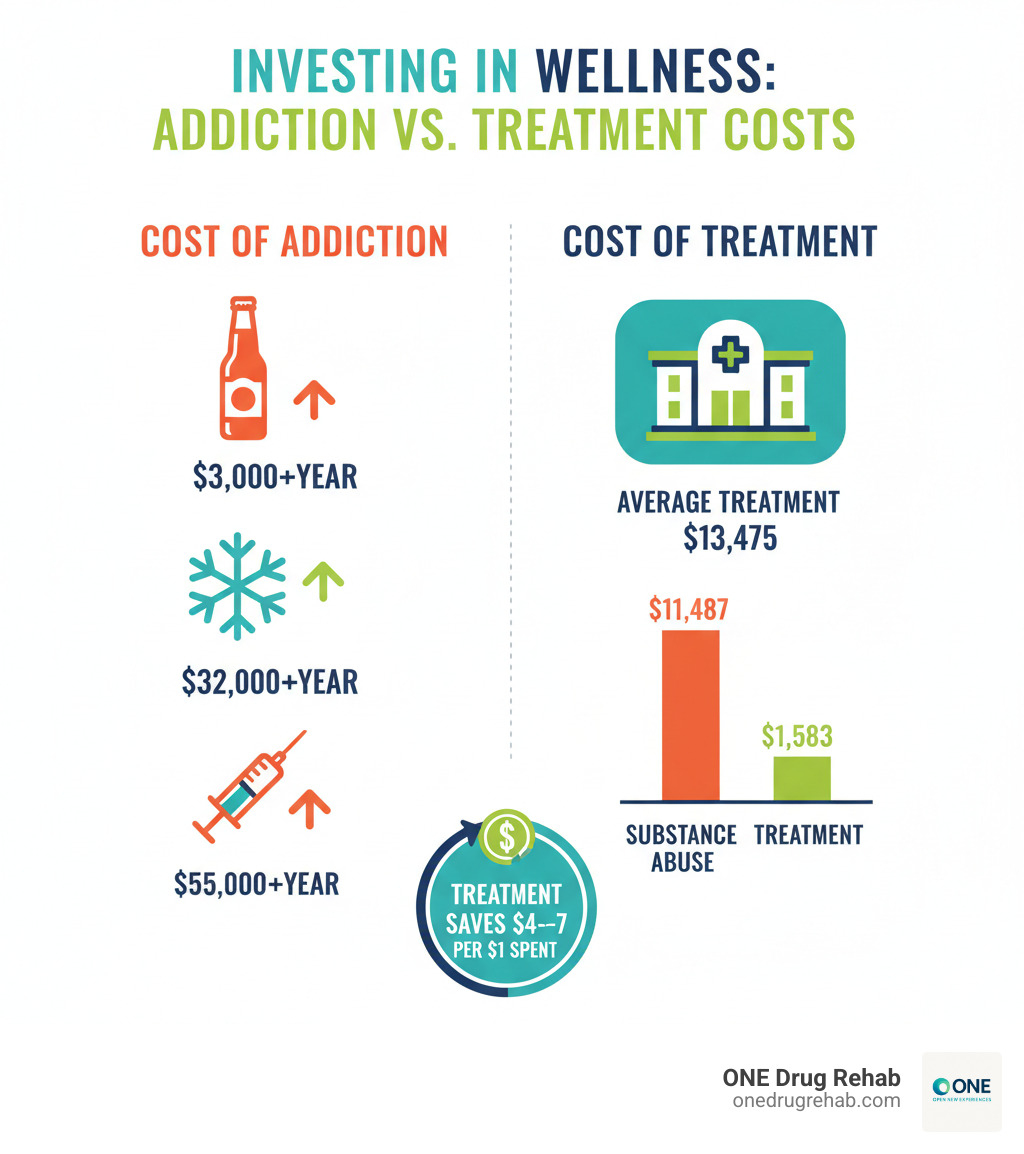
For example, a daily 12-pack of beer costs over $3,000 annually, not including potential legal fees, lost wages, or medical bills. In contrast, every dollar spent on substance abuse treatment saves society $4-$7 in crime and healthcare costs.
This guide breaks down what rehab costs, what influences those prices, and how to pay for it. We’ll cover insurance, free programs, payment plans, and more to help you find quality treatment that fits your situation. Recovery should not be financially out of reach.
A Breakdown of Rehab Program Costs
The cost of rehab isn’t a single number because addiction treatment is custom to individual needs. The right program depends on the level of medical support required and whether a person can continue working. Let’s break down the main program types and their typical costs.
Medical Detoxification
Medical detoxification (detox) is the crucial first step to safely manage withdrawal before treatment begins. Supervised detox is vital, as withdrawal from substances like alcohol or benzodiazepines can be life-threatening.
- Outpatient detox provides medical support while you live at home, costing $250-$800 daily, or $1,000-$1,500 for a full program. It’s suitable for less severe cases with stable home support.
- Inpatient detox offers 24/7 medical care in a facility, costing $300-$800 per day. A typical 5- to 7-day program ranges from $1,500 to $4,000. Many residential programs bundle this cost, so be sure to ask.
The goal of detox is to achieve physical stability, preparing you for therapy.
Inpatient & Residential Rehab
Inpatient rehab involves living at a facility for 24/7 care, providing a structured environment away from daily triggers. This immersive approach includes housing, meals, and therapy.
- A 30-day inpatient program typically costs between $6,000 and $20,000.
- Longer 60- or 90-day programs, which allow more time to develop coping skills, range from $12,000 to $60,000.
- Luxury programs can exceed $25,000 for 30 days, offering amenities like private rooms, gourmet meals, and spa services.
While a significant investment, the immersive support of inpatient care is often critical for success. To learn more about how effective these programs can be, check out more info about rehab success rates.
Outpatient Rehab Programs
Outpatient treatment allows you to live at home while attending therapy, offering flexibility for work or family commitments. It’s also a common step-down from inpatient care. The cost of rehab varies by intensity:
- Standard Outpatient Programs: A few hours of therapy weekly. A 30-day program can cost $1,000 to $10,000.
- Intensive Outpatient Programs (IOP): Nine or more hours of therapy weekly, costing between $3,500 and $11,000 for a full program.
- Partial Hospitalization Programs (PHP): The most intensive option, with 20-30 hours of treatment weekly. Costs range from $7,000 to $20,000.
Individual sessions can range from $50-$200, while group sessions are typically $20-$100. These options are considerably less expensive than residential care.
Medication-Assisted Treatment (MAT)
For opioid and alcohol addiction, Medication-Assisted Treatment (MAT) combines FDA-approved medications with counseling. The medications help manage cravings and withdrawal, allowing therapy to address the psychological aspects of addiction. This is a proven medical approach, not “replacing one drug with another.”
The cost depends on the medication. A year of methadone maintenance is about $4,700, far less than the $24,000 cost of incarceration for a year. Some outpatient MAT programs that integrate therapy and treat co-occurring mental health conditions cost around $7,000 total. For many, MAT is the key to long-term sobriety.
What Factors Influence the Overall Cost of Rehab?
Beyond the basic program, several variables influence the final cost of rehab. Understanding these factors helps you find a program that fits your needs and budget.

Program Type and Duration
The program type is a primary cost driver. Inpatient programs are more expensive as they include room, board, and 24/7 supervision, while outpatient programs have lower overhead. The length of stay is also critical; a 90-day program costs more than a 30-day one, but longer durations often improve long-term outcomes. The intensity of services, such as the frequency of individual therapy or specialized treatments, also affects the price. A common cost-effective strategy is a step-down approach, moving from inpatient to less intensive outpatient care over time.
Location and Amenities
A facility’s location significantly impacts cost due to variations in the cost of living. Centers in major cities or desirable coastal areas will charge more than those in rural locations. For example, residential rehab in California averages around $56,654 for 30 days. Amenities also drive up the price. Luxury facilities offer private rooms, gourmet meals, pools, and holistic therapies like yoga or equine therapy, with costs from $25,000 to $80,000+ per month. Standard facilities provide excellent clinical care in more modest settings with shared rooms and basic amenities, keeping costs lower. The core therapeutic methods are often the same. When choosing, prioritize quality of care and accreditation over luxury. You can find More info about accreditation standards on our site.
Specialized Care and Additional Costs
Specialized services can add to the overall cost of rehab.
- Dual diagnosis treatment for co-occurring mental health disorders (e.g., depression, anxiety, PTSD) is essential for many but requires more clinical resources, increasing the price.
- Complex medical needs, such as chronic health conditions or pregnancy, require extra monitoring and expertise, adding to the cost.
- Additional fees may include one-time admission fees ($3,000-$4,000) for assessments and intake.
- Pharmacotherapy for mental health symptoms or other conditions can be an added expense.
- Aftercare planning is a crucial investment in long-term sobriety. This can include ongoing therapy or sober living homes ($1,500-$2,000/month).
To understand the economic assessments of treatment, explore the research on Economic costs of treatment research.
The True Cost of Addiction vs. The Investment in Rehab
While the price of rehab can seem high, it’s crucial to view it as an investment. In nearly every case, the cost of rehab is significantly less than the ongoing financial and personal cost of active addiction.
The Financial Drain of Substance Abuse
Active addiction carries a staggering financial toll. The direct cost of substances is just the beginning. A daily cocaine habit can cost over $32,000 annually, while a heroin habit can exceed $55,000. Beyond this, consider the hidden costs:
- Lost Income: Addiction often leads to poor work performance, missed days, and job loss. Failing a workplace drug test can result in immediate termination. Learn more about workplace drug testing policies.
- Legal Fees: A single DUI can cost thousands in fines and legal representation. Other drug-related arrests bring expenses for bail, lawyers, and court fees.
- Healthcare Expenses: Substance abuse leads to emergency room visits, chronic health problems, and costly medical procedures.
The average annual cost of active substance abuse is about $11,487 per person, compared to just $1,583 for treatment. The financial drain of addiction is relentless and far outweighs the cost of getting help.
The Long-Term Economic Benefits of Recovery
Investing in treatment provides a remarkable return. For every dollar spent, society saves $4 to $7 in crime-related costs. The healthcare savings are even greater, with a 12-to-1 return on investment due to fewer ER visits and hospital stays. Recovery also brings stability, leading to increased earning potential through steady employment. Furthermore, treatment is far more cost-effective than incarceration; a year of methadone treatment costs about $4,700, while a year in jail costs around $24,000. The economic benefits clearly show that treatment is a sound financial decision.
Beyond the Bottom Line: Reclaiming Your Life
The true value of recovery extends beyond finances. It’s about reclaiming your life. Benefits include:
- Improved Physical and Mental Health: Recovery allows your body to heal, energy to return, and sleep to improve. By addressing underlying issues, treatment helps manage depression and anxiety, leading to better mental well-being.
- Restored Relationships: Sobriety provides the opportunity to rebuild trust and reconnect with family and friends, creating a vital support system.
- Personal Growth: Recovery opens doors to new hobbies, meaningful purpose, and a chance to enjoy life again.
When you weigh the initial cost of rehab against the priceless return of your health, relationships, and future, the investment is clear. To learn more about what successful recovery looks like, explore more info about recovery success.
How to Pay for Rehab: Navigating Your Financial Options
Figuring out how to pay for the cost of rehab can feel overwhelming, but many options exist to make treatment affordable. Financial concerns should not prevent you from seeking recovery. Let’s explore the ways to cover the cost.

Using Health Insurance to Cover the Cost of Rehab
Health insurance is a primary way to cover rehab costs. The Affordable Care Act (ACA) mandates that most health plans cover mental health and substance use disorder services as essential health benefits.
- Private Insurance: Plans from an employer or the marketplace typically cover a portion of treatment. Your costs will depend on your plan’s deductible, co-pays, and whether you choose an in-network (lower cost) or out-of-network (higher cost) facility.
- Public Insurance: Medicaid offers coverage for low-income individuals, and you can search for Medicaid Approved Rehab Centers. Medicare covers treatment for people over 65 or with certain disabilities. For military members and their families, Tricare provides comprehensive coverage, which you can learn about in our Tricare Rehab Coverage guide.
To learn more about using insurance for the cost of rehab, visit our page: Does Insurance Cover Rehab?.
How to Verify Your Insurance Coverage
Verifying your insurance coverage is a crucial step to avoid surprise bills.
- Call Your Insurance Provider: Use the number on your insurance card. Have your policy number ready and ask about your specific benefits for substance use disorder treatment, including coverage for detox, inpatient, and outpatient care. Inquire about your deductible, co-pays, out-of-pocket maximum, and whether pre-authorization is needed. Ask for a list of in-network facilities.
- Contact the Rehab Facility: The admissions team can verify your benefits for their specific center. They are experienced in working with insurance companies and can help manage the pre-authorization process.
Understanding your coverage for in-network versus out-of-network providers is key, as in-network options will always be cheaper. This due diligence will help you maximize your benefits and reduce financial stress.
Paying for the Cost of Rehab Without Insurance
If you don’t have insurance, there are still many ways to afford the cost of rehab.
- State-Funded Programs: Every state has publicly funded facilities that provide addiction services at little or no cost. They deliver quality care, though they may have waiting lists.
- Non-Profit Organizations: Groups like The Salvation Army and other community or faith-based organizations offer free or low-cost programs.
- Sliding-Scale Fees: Many facilities adjust their costs based on your income. You’ll need to provide proof of income to qualify.
- Payment Plans: Some centers allow you to pay for treatment over several months or years, making the upfront cost more manageable.
- Medical Loans & Grants: Specialized loans can cover healthcare costs, while government grants from agencies like SAMHSA can reduce or eliminate expenses. Explore resources on the SAMHSA website.
For a complete overview of these options, see our Affordable Treatment Centers Complete Guide.
Frequently Asked Questions about Rehab Expenses
When it comes to understanding the cost of rehab, we hear the same questions over and over again. That’s completely normal – these are big decisions, and you deserve clear, honest answers. Let’s walk through the most common concerns people have when they’re researching treatment options.
What is the average cost of a 30-day inpatient rehab program?
The average cost for a standard 30-day inpatient program ranges from $6,000 to $20,000. This wide range is due to several factors. Basic facilities offering essential clinical care fall on the lower end. More established centers with additional services are closer to $20,000. Luxury rehabs can cost $25,000 to $80,000 or more, with the price reflecting amenities like private rooms, gourmet meals, and desirable locations. The final cost of rehab also depends on the level of medical care and specialized treatment required. A higher price doesn’t guarantee better outcomes; finding the right fit is what’s most important.
Are there free rehab options available?
Yes, free rehab options are available. The cost of rehab should not be a barrier to treatment.
- State-funded treatment centers receive government funding to provide care at no cost to those who can’t afford it. While the care is high-quality, there may be waiting lists.
- Non-profit organizations, such as The Salvation Army, and other community or faith-based groups offer free or very low-cost programs.
- Free support groups like Alcoholics Anonymous (AA) and Narcotics Anonymous (NA) are not formal treatment but provide a powerful, no-cost support system for maintaining sobriety.
While free programs may have fewer amenities and limited availability, they provide an essential foundation for recovery if finances are a concern.
Is luxury rehab worth the extra cost?
Whether the extra cost of rehab for a luxury facility is worth it is a personal decision. The core clinical therapies (like CBT and group counseling) are the same in both luxury and standard centers. The difference lies in the environment and amenities. Luxury rehabs offer private rooms, scenic locations, gourmet meals, fitness centers, pools, and holistic therapies. They also tend to have a higher staff-to-client ratio, providing more individual attention. For some, this comfort reduces stress and improves engagement in treatment. For others, the simpler, focused environment of a standard facility is more effective. Luxury rehab provides a more comfortable experience, but it doesn’t guarantee recovery. The quality of the clinical program and your personal commitment are the most important factors for success, and these can be found at any price point.
Conclusion
We know the cost of rehab can feel overwhelming, but we want you to see it as an investment, not an expense—an investment in your life, health, and future. As this guide has shown, the cost of active addiction almost always outweighs the cost of treatment, and financial help is available. From insurance and state-funded programs to payment plans, there are options to make treatment affordable.
Recovery is possible. Thousands of people find a new path forward through treatment every day. At ONEDrugRehab.com, our goal is to provide straightforward information so you can make the best decision. We believe everyone deserves access to quality care.
The hardest part is taking the first step, but that step can change everything.
If you’re ready to explore your options, we’re here to help. Find a treatment provider that fits your needs and budget and start your journey toward recovery today. A life free from addiction is waiting for you.