

Why a Safe, Stable Home is the Foundation of Recovery
Addiction recovery housing is a critical bridge between treatment and independent living. It provides a safe, substance-free environment where individuals can build the skills and support networks needed for lasting sobriety.
Quick Overview of Addiction Recovery Housing:
- What it is: Group living environments designed specifically for people in recovery from substance use disorders
- Primary purpose: Provides stability, peer support, and accountability during the vulnerable transition period after treatment
- Types available: Ranges from peer-run sober living homes to staff-supported residences with clinical services
- Typical cost: Similar to renting a modest apartment ($600-$2,500/month depending on location and services)
- Who it helps: Anyone committed to maintaining sobriety while rebuilding their life
- Length of stay: Varies by individual needs, though 3-6 months shows strong effectiveness
Recovery is a journey, and while 70-75% of people eventually achieve sustained remission, the right environment is critical for lasting change. With drugs and alcohol contributing to hundreds of fatal overdoses daily in the U.S., the need for support is clear. Despite these statistics, recovery is possible with the right resources.
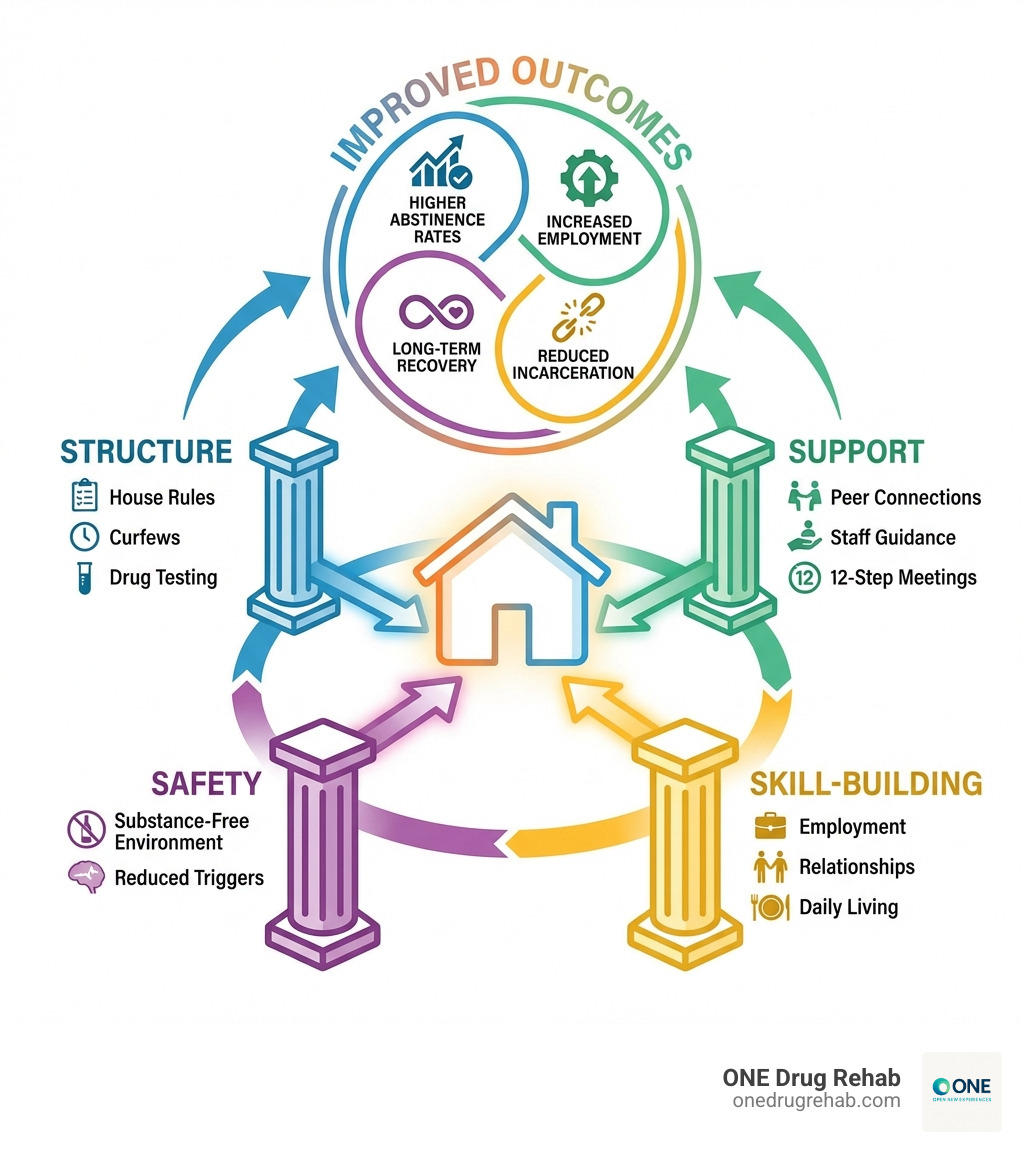
Recovery housing fills this need. With approximately 10,000 houses nationwide, it’s a widely available support option, bridging the gap between residential treatment and independent living. Effective recovery housing offers more than a roof; it provides peer support, accountability via rules and testing, and a safe space to practice new skills away from old triggers.
Understanding your recovery housing options is essential, whether you’re leaving treatment or seeking a supportive, sober community to avoid isolation.
Terms related to Addiction recovery housing:
Understanding the Landscape: What is Addiction Recovery Housing?
Addiction recovery housing provides a community designed to nurture sobriety and personal growth. It’s a safe, healthy, substance-free living environment for individuals transitioning from formal treatment or seeking to solidify their recovery journey.

At its core, recovery housing acts as a supportive bridge, helping individuals practice vital recovery skills in a real-world setting. This transitional period is crucial, as the challenges of daily life can trigger relapse without adequate support. These residences offer varying levels of structure, from peer-led models to those with professional staff.
Terms like “sober living homes,” “halfway houses,” and “therapeutic communities” represent distinct models within addiction recovery housing. The table below compares these common options to help you find the best fit.
| Feature | Sober Living Homes (e.g., NARR Level I/II) | Halfway Houses | Oxford Houses (NARR Level I) | Therapeutic Communities (e.g., NARR Level IV) |
|---|---|---|---|---|
| Structure | Peer-driven or monitored; house rules, curfews, drug testing | More structured than sober living; often government-funded/regulated | Fully peer-run, self-governed, democratic | Highly structured, often with clinical services and daily programming |
| Services | Peer support, connection to external services (treatment, meetings) | Fewer services than residential rehab; may connect to some services | Mutual support, shared decision-making | Integrated clinical treatment, counseling, education, vocational training |
| Typical Residents | Individuals post-detox/rehab, seeking continued support | Individuals transitioning from incarceration or structured treatment | Individuals committed to abstinence, self-sufficiency | Individuals requiring intensive, long-term residential treatment |
| Funding | Typically private pay, some financial assistance options | Often government-funded, may require resident contributions | Self-supported by resident fees, no external staff | Often covered by insurance, government funding, or private pay |
| Length of Stay | Flexible, often months to a year or more | Often time-limited (e.g., 6-12 months) | Open-ended, as long as sobriety is maintained and rules are followed | Typically longer-term (e.g., 6-18 months) |
| Philosophy | Social model of recovery, peer accountability, gradual independence | Focus on reintegration into society, may have parole/probation links | 12-step philosophy, self-governance, mutual responsibility | Holistic approach, resocialization, personal growth, clinical intervention |
Sober Living at ONE Drug Rehab
Sober living homes are a common form of addiction recovery housing. These group homes, often located in quiet neighborhoods, provide a peaceful environment for early recovery. They emphasize peer support, with residents living together and sharing responsibilities. Strict adherence to house rules—including curfews, chores, and regular drug testing—is mandatory to ensure a substance-free environment. The main purpose is to offer a transition phase after inpatient treatment, allowing individuals to practice coping skills and increase independence within a supportive community, avoiding isolation and gaining accountability.
Staff-Supported Recovery Residences
In contrast to peer-led homes, staff-supported recovery residences offer a more structured environment with professional oversight. Trained staff provide guidance, enforce rules, and coordinate access to services like case management, therapy referrals, and vocational support. These residences are ideal for individuals needing a higher level of supervision. The focus is on both abstinence and proactive skill-building for relapse prevention.
The National Alliance of Recovery Residences (NARR) classifies these homes into levels. Level I is peer-run (like Oxford Houses), while Levels II, III, and IV have increasing staff support and structure. A Level IV residence, for example, resembles a therapeutic community, integrating a full suite of clinical services and professional staff into a highly structured program, offering a comprehensive space to heal.
The Lifeline of Support: Key Benefits of Addiction Recovery Housing
Addiction recovery housing offers a powerful blend of accountability, structure, and community that acts as a lifeline for individuals navigating sobriety. It’s a place to actively rebuild your life in a supportive setting.

The primary benefits include accountability through shared rules and drug testing, which helps develop internal discipline. The structure of daily chores and mandatory meetings helps re-establish healthy routines lost during addiction. Residents also engage in vital skill development, learning not just to abstain but how to live sober by managing triggers, communicating healthily, and handling practical life tasks. This focus on relapse prevention and building recovery capital—the personal and social resources that support recovery—facilitates successful social integration and creates a powerful sense of community.
Evidence-Backed Improvements in Sobriety and Well-being
The effectiveness of addiction recovery housing is supported by a growing body of research. Studies consistently show significant improvements for residents.
For example, research on Oxford House residents compared to those in standard continuing care found they were twice as likely to be abstinent (65% vs. 31%), earned double the monthly income ($989 vs. $440), and had one-third the incarceration rates (3% vs. 9%). Another study found Oxford House participants had higher continuous alcohol abstinence rates (66%) than those in therapeutic communities (40%) or continuing care (49%).
A key takeaway is that length of sobriety is positively correlated with duration of stay. The longer an individual remains in a supportive setting, the better their chances of sustained recovery. The model is also cost-effective, with one analysis showing a net benefit of +$29,000 per Oxford House resident compared to continuing care. The impact can be life-saving; one study of formerly incarcerated women showed zero deaths in Oxford House compared to four deaths in continuing care over two years. These statistics show that recovery housing is a powerful intervention that promotes long-term sobriety and well-being.
The Role of a Supportive Environment
For someone in recovery, the “village” is often found within an addiction recovery housing community. By avoiding isolation, residents are immersed in a community where shared experiences create a bond of friendship and support. This sense of belonging is a powerful antidote to the alienation of addiction. In this communal setting, residents get invaluable opportunities for practicing recovery skills in a safe, real-world context, from managing stress to enjoying sober leisure activities. Most importantly, residents are actively building new, healthy social networks with peers committed to sobriety, creating a collective strength that empowers individuals to sustain recovery long-term.
Navigating the Practicalities: Costs, Rules, and Eligibility
Considering addiction recovery housing involves practical questions about cost, rules, and eligibility. Understanding these logistics is key to a smooth transition.
What are the costs and funding options?
The cost of a sober living home is often comparable to renting a modest apartment, typically ranging from $600 to $2,500 per month. This can vary based on location, amenities, and services. A key benefit is that monthly rent often covers utilities, simplifying budgeting. Unlike traditional rentals, a large deposit is often not required, making them more accessible. Sober living is also generally cheaper than residential rehab because it provides fewer direct clinical services.
While self-pay is common, financial assistance is often available. The Recovery Housing Program (RHP), for example, provides funding to states to support transitional housing. Always ask potential homes about what’s included in the rent, any additional fees, and if they offer financial assistance. Some health insurance plans may cover costs, especially if the home is part of a licensed treatment program, so it’s wise to call your provider to verify coverage.
What are the eligibility requirements and rules for addiction recovery housing?
Eligibility for addiction recovery housing begins with a commitment to maintaining sobriety. Most homes require residents to have completed detox and, often, an initial treatment program to ensure they are medically stable. Once accepted, residents must follow a clear set of rules designed to keep the environment safe for everyone. These are non-negotiable and typically include:
- Zero-tolerance for substance use: Regular, random drug and alcohol testing is standard. A positive test usually results in disciplinary action, which could include expulsion.
- Mandatory meetings: Attendance at 12-step meetings (like AA or NA) or other support groups is often required.
- Chores: Residents share responsibilities for home upkeep, fostering community and accountability.
- Curfews: These are common to ensure safety and structure.
- Guest policies: Rules on visitors protect the privacy and sobriety of all residents.
- Productive activity: Residents are usually required to be employed, in school, or volunteering.
These rules create an environment where recovery can thrive by fostering accountability and helping residents develop healthy habits.
How is relapse handled in addiction recovery housing?
Relapse is a challenging part of the recovery journey. In addiction recovery housing, policies are designed to be supportive while maintaining a safe, sober environment for the community. A relapse is often seen as a sign that more support is needed, not as a failure.
While policies vary, the general approach includes:
- Supportive response: The focus is on understanding the cause of the relapse and offering support, not shame.
- Re-engagement: Homes help residents re-engage with their recovery plan, which may involve more therapy or meetings.
- Relapse prevention planning: Staff or peers work with the individual to refine their relapse prevention plan.
- Connection to higher levels of care: If the current environment is insufficient, the house will help the individual connect with a higher level of care, such as an inpatient program.
- Temporary or permanent removal: To protect the community, a resident may be temporarily removed to a detox facility. In cases where safety is jeopardized, permanent expulsion may be necessary.
It’s crucial to ask about a home’s specific relapse policy before moving in to ensure it aligns with your recovery philosophy.
Finding the Right Fit: Your Guide to Choosing a Residence
Choosing the right addiction recovery housing is a personal decision that requires a good fit for the long haul. What works for one person may not be ideal for another. The goal is to make an informed choice that supports your unique recovery journey.
How to Find the Most Suitable Option
Finding the right residence involves self-assessment, research, and vetting. Ask yourself and potential homes these key questions:
- Location: Do you need to be close to family and work, or would a new environment away from triggers be better?
- Cost: What is the monthly fee, and what does it cover (utilities, food, etc.)? Are there hidden fees?
- Rules and Structure: How strict are the rules? Is it a peer-run or staff-supported model?
- Staff Credentials: For staff-supported models, what are the qualifications of the staff?
- Medication-Assisted Treatment (MAT) Policy: SAMHSA recommends that recovery housing not restrict prescribed medications, including MAT. Ask directly about their policy.
- Certification: Is the home certified by a reputable organization like the National Alliance of Recovery Residences (NARR)? Certification helps ensure quality and safety, as unregulated homes can be exploitative.
- Co-occurring Disorders: Does the home support residents with co-occurring mental health conditions?
- Vetting: If possible, tour the facility and talk to current residents. Ask about their relapse and conflict resolution policies.
Start by asking for referrals from your treatment team, therapist, or support group. Online directories like ONEDrugRehab.com are also valuable resources for finding and filtering options.
Addressing the Needs of Specific Populations
Effective addiction recovery housing adapts to serve diverse needs. Different populations face unique challenges, and the best residences recognize and address them.
- Housing for women: These homes may offer gender-responsive programming, trauma support, and childcare, which studies show leads to better outcomes like regaining child custody.
- Support for formerly incarcerated individuals: Stable housing is critical for reintegration. Recovery housing reduces recidivism by providing a structured environment that helps individuals find work and rebuild connections.
- Co-occurring disorders support: Effective models integrate mental health services, promote medication adherence, and use trauma-informed approaches to treat the whole person.
- Addressing homelessness and addiction concurrently: Supportive housing is a vital solution for individuals experiencing both homelessness and SUD. It provides the stability needed to achieve sobriety, often with services like job training and case management.
Challenges and Ethical Considerations
While beneficial, the addiction recovery housing landscape has challenges. A key issue is the importance of regulation. The rapid growth in homes (around 10,000 in the U.S.) without consistent oversight can lead to exploitation and unsafe conditions. Organizations like the National Alliance of Recovery Residences (NARR) work to establish and enforce national quality standards.
Resident rights to a safe, fair, and private environment must be protected with transparent policies. Ethical standards are also critical. Patient brokering—paying for referrals—is an illegal and dangerous practice that prioritizes profit over well-being. Such programs should be avoided and reported. Ensuring quality and safety means maintaining a substance-free environment, providing adequate support, and handling relapses with care. Future policy must address the affordable housing shortage to help scale up these effective interventions.
Frequently Asked Questions about Recovery Residences
Choosing addiction recovery housing is a big decision. Here are answers to some common questions.
How long do people typically stay in a sober living home?
The length of stay is flexible and depends on individual needs. There is no fixed limit. Many homes recommend a minimum of 90 days to establish new habits. Research suggests a stay of three to six months is particularly effective, and data shows that longer stays often lead to better long-term outcomes. The right duration is whatever helps you feel confident and supported in your transition to independent living.
Can I take medication for addiction treatment (MAT) in recovery housing?
This depends on the home, but the landscape is changing. While some homes historically had policies against Medication-Assisted Treatment (MAT), its effectiveness is now widely recognized. The Substance Abuse and Mental Health Services Administration (SAMHSA) recommends that recovery housing operators not have any barriers for residents to use prescribed medications, including MAT. We support evidence-based approaches like MAT. It is essential to ask providers directly about their specific MAT policy to find a home that supports your recovery plan.
What’s the difference between different types of recovery residences?
The terms for addiction recovery housing describe a spectrum of options with different levels of structure, staffing, and services.
- Sober Living Homes: These are often peer-run with a focus on mutual support and adherence to house rules, offering more independence than a treatment facility.
- Halfway Houses: Historically, these were often government-funded and linked to the justice system, providing a structured transition back into society.
- Oxford Houses: This is a specific model of peer-run, self-governed, and democratically operated homes based on a 12-step philosophy.
- Therapeutic Communities (TCs): These are the most structured and clinically intensive option, offering a long-term residential environment with a full range of professional staff and services.
The National Alliance of Recovery Residences (NARR) categorizes these from Level I (peer-run) to Level IV (clinically integrated), helping you match your needs to the right level of support.
Taking the Next Step on Your Recovery Journey
As we’ve explored, addiction recovery housing is far more than just a place to live; it’s a dynamic, supportive environment that can profoundly impact your ability to achieve and sustain long-term sobriety. It’s a powerful tool, providing the crucial bridge between formal treatment and independent living, fostering accountability, community, and the development of essential life skills.
We believe that a safe, stable, and substance-free environment is absolutely crucial for success in recovery. It allows you to practice new ways of living, build healthy relationships, and steer life’s challenges without the constant threat of relapse. Finding the right fit empowers your journey, providing the foundation upon which a fulfilling and sober life can be built.
At ONEDrugRehab.com, our mission is to provide you with the resources and information you need to make informed decisions about your recovery path. We are a third-party, non-affiliated resource, dedicated to helping you understand your options without endorsing specific providers. Your journey to a healthier, happier life is important, and we’re here to help you understand the landscape of recovery support.
Ready to explore your options and continue building your foundation for lasting recovery?
Explore sober living options and continue your path to recovery.