

When Healers Need Healing: Understanding Your Recovery Options
Rehab for medical professionals offers specialized treatment programs designed to address the unique challenges healthcare workers face with substance use disorders. These programs provide confidential care, peer support, and pathways to maintain or restore professional licenses while achieving lasting recovery.
Key Treatment Options for Medical Professionals:
- Specialized Inpatient Programs – 45-90 day residential treatment with peer-only groups and professional-specific therapy
- Physician Health Programs (PHPs) – State-based monitoring and case management with 75-90% success rates at 5 years
- Outpatient Treatment – Flexible scheduling for stable professionals with strong support systems
- Licensed Professional Tracks – Programs addressing licensing concerns, return-to-work planning, and career restoration
- Dual Diagnosis Care – Integrated treatment for co-occurring mental health conditions like anxiety, depression, or PTSD
Behind every stethoscope and prescription pad is a human being facing extraordinary pressures. The same professionals who dedicate their lives to healing others often struggle to seek help for themselves. One physician described using “Tylenols with codeine while in the operating room” to manage withdrawal symptoms – a stark reminder that addiction doesn’t discriminate, even among those who understand it best.
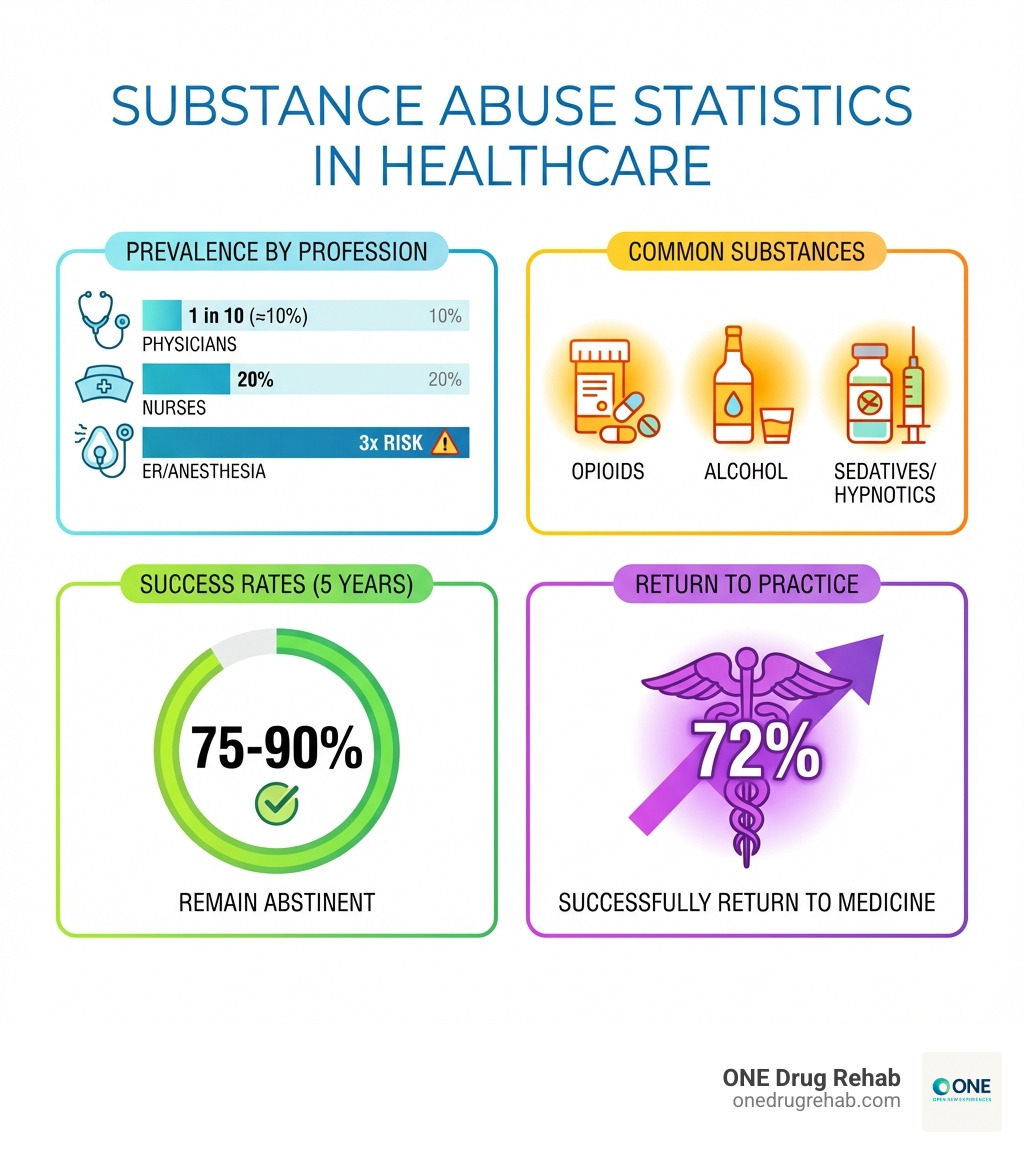
The statistics tell a sobering story. Approximately 1 in 10 physicians will develop a substance use disorder during their career – mirroring rates in the general population. For nurses, the numbers are even higher, with 20% struggling with addiction to drugs or alcohol. Emergency physicians and anesthesiologists face three times the risk of developing substance use disorders compared to other specialties.
But here’s the encouraging truth: medical professionals who receive appropriate treatment have remarkably high recovery rates. Studies show that 75-90% remain abstinent five years after treatment, and 72% successfully return to practicing medicine. The key difference? Specialized programs that understand the unique pressures, access to substances, and professional stakes that healthcare workers face.
This guide walks you through everything you need to know about finding and accessing treatment designed specifically for medical professionals – from recognizing the warning signs to navigating licensing concerns and returning to practice with confidence.
The Hidden Epidemic: Why Medical Professionals Are Uniquely Vulnerable
When we think of medical professionals, we often picture figures of unwavering strength, knowledge, and compassion. Yet, beneath the surface of their demanding roles, a hidden epidemic of substance use disorder (SUD) silently affects a significant portion of our healthcare providers. The nature of their work—long hours, intense pressure, and the profound responsibility of saving lives—creates a unique vulnerability to addiction. It’s a cruel irony that those who heal us can sometimes struggle the most to heal themselves.

Medical professionals, from doctors and nurses to pharmacists and therapists, face an array of challenges that can make them more susceptible to addiction than the general population. This isn’t a moral failing; it’s a complex interplay of environmental stressors, professional culture, and unparalleled access to potent substances. We often see them as invincible, but the truth is, their demanding careers can lead to burnout, chronic fatigue, and a culture of self-medication that paves a dangerous path. The “professional invincibility” mindset can also make them reluctant to seek help, fearing the stigma and potential career repercussions.
It’s also important to remember that addiction often doesn’t travel alone. Many medical professionals struggling with SUD also experience co-occurring mental health conditions like anxiety, depression, or PTSD. In fact, roughly 50% of people with addiction also have other mental illnesses. Addressing these intertwined issues is crucial for effective treatment, which is why integrated care for dual diagnosis is so vital.
The Weight of the White Coat: Stress, Trauma, and Burnout
The job-related stress in healthcare is unlike almost any other profession. Medical professionals routinely confront life-and-death situations, immense emotional tolls, and exposure to profound human trauma. Long shifts, often exceeding 12 hours, combined with chronic manpower shortages, lead to relentless schedules and insufficient rest. This constant state of high-stakes pressure can quickly lead to burnout, characterized by emotional exhaustion, depersonalization, and a reduced sense of personal accomplishment.
Consider the prevalence of PTSD among healthcare workers, which is significantly higher than in the general population. This sustained exposure to traumatic events can lead individuals to seek solace in substances as a coping mechanism. The very act of caring for others, while deeply rewarding, can also deplete one’s emotional reserves, making self-care difficult and increasing the temptation to self-medicate for relief.
The Double-Edged Sword: Knowledge and Access
Perhaps one of the most significant factors contributing to addiction among medical professionals is their unique combination of detailed knowledge about drugs and unparalleled access to them. They understand the effects of various medications, including how to use them to alleviate stress, pain, or fatigue. This knowledge, coupled with easy access to controlled substances—especially highly addictive narcotics like oxycodone and fentanyl—creates a potent risk factor. One study found that 69% of physicians being monitored for substance-related impairment admitted to misusing prescription medications.
Certain specialties carry an even higher risk. Emergency room physicians and anesthesiologists, for example, are three times more likely to develop a SUD than other physicians. Their roles often involve direct, frequent access to potent opioids and sedatives, which can be a dangerous temptation when combined with the high-stress, nature of their work. The ability to divert medications or self-prescribe without immediate oversight can quickly spiral into a full-blown addiction, often hidden behind a facade of professional competence.
Recognizing the Signs and Understanding the Stakes
Identifying addiction in medical professionals can be particularly challenging. They are often adept at masking their struggles, maintaining a veneer of functionality due to their extensive medical knowledge and a deep-seated fear of professional repercussions. However, recognizing the signs is the first crucial step toward intervention and healing, not just for the individual but for the safety of their patients.

The stakes for medical professionals struggling with addiction are incredibly high, impacting not only their personal lives but also their careers, reputations, and, most critically, the well-being of their patients. We must understand that their unique position means the consequences of unaddressed addiction ripple far beyond the individual.
Telltale Signs of Addiction in Doctors and Nurses
The signs of addiction in doctors and nurses can manifest subtly at first, often disguised as typical work stress or personal issues. However, over time, these indicators become more pronounced. We often look for behavioral changes such as increased irritability, agitation, or sudden mood swings. A professional might start isolating themselves from colleagues, becoming defensive when questioned, or exhibiting frequent absenteeism or lateness. Some might even develop a preference for night shifts, which can offer more opportunities for substance use with less supervision.
Physical signs can also emerge, though often carefully concealed. These might include the smell of alcohol, glassy eyes, tremors, slurred speech, or a decline in personal hygiene and appearance. More specific professional indicators could involve sloppy charting, inappropriate dosages, or excessive orders for certain drugs. Cognitive decline, such as poor judgment, difficulty concentrating, or impaired memory, can severely impact their ability to provide competent care. Medical professionals are often “functional addicts” for extended periods, skillfully maintaining their duties while their addiction progresses, making early detection even more challenging.
The High Cost of Impairment: Risks to Patients and Careers
The consequences of addiction for medical professionals are severe and far-reaching. Foremost among these is the risk to patient safety. An impaired provider can make critical errors, leading to medical negligence, malpractice lawsuits, and, tragically, patient harm or even death. The optimal cognition required for physicians, nurses, and other healthcare providers is compromised by substance use, making them a danger to those they’ve sworn to protect.
Beyond patient harm, the professional repercussions are devastating. An addiction can jeopardize a medical license, leading to suspension or revocation, effectively ending a career. Disciplinary actions from state boards are common, and legal issues can pile up. The impact extends to their personal lives, causing significant strain on family relationships, and in some cases, contributing to a higher mortality rate for physicians with untreated SUDs. The fear of these consequences is often what drives medical professionals to hide their addiction, creating a vicious cycle that delays much-needed help.
Specialized Rehab for Medical Professionals: A Path to Recovery and Career Restoration
Given the unique challenges and high stakes involved, it’s clear that standard addiction treatment programs may not always be sufficient for healthcare professionals. This is where specialized rehab for medical professionals comes into its own. These programs are carefully designed to address the specific needs of doctors, nurses, and other licensed providers, offering a path not just to sobriety, but to career restoration and a renewed sense of purpose.
These specialized environments understand the paramount importance of confidentiality, providing a safe space where professionals can heal without fear of their struggles becoming public knowledge or impacting their professional standing. They foster peer support, recognizing that healing alongside others who understand the unique pressures of the medical field can be incredibly validating and effective. Moreover, these programs are equipped to address the deep-seated professional shame that many healthcare workers carry, helping them to steer the complexities of their identity beyond their profession. Our comprehensive Inpatient Rehab for Professionals Guide offers an in-depth look at these custom programs.
Why Standard Treatment Fails and the Need for Specialized Rehab for Medical Professionals
Traditional addiction treatment, while effective for many, often lacks the specific context required for medical professionals. General programs may not fully grasp the intense pressure, the unique thought processes, or the professional identity that can act as both a shield and a barrier to recovery for healthcare workers. For instance, the very traits that make a great doctor—problem-solving, perfectionism, and caretaking—can paradoxically become obstacles in recovery, leading to denial or a belief in self-sufficiency that prevents them from accepting help.
The need for peer understanding is also critical. In a specialized setting, individuals find solace and solidarity among others who truly understand their struggles, from the demands of their specialty to the fear of losing their license. These programs are also uniquely positioned to address the complex legal and ethical issues surrounding licensing, reputation, and returning to practice. They often act as liaisons with state boards and professional organizations, guiding individuals through the process of maintaining or reinstating their credentials. For more insights into these custom approaches, you might explore a Licensed Professionals Program for Substance Abuse Treatment.
The Role of Specialized Case Management and Monitoring
A cornerstone of effective rehab for medical professionals is the integrated role of specialized case management and rigorous monitoring. Physician Health Programs (PHPs), for example, are state-based organizations that primarily act as case managers, overseeing a doctor’s recovery journey rather than providing direct treatment. These PHPs are designed to be supportive and non-disciplinary, offering a “safe harbor” for medical professionals to seek help without immediately facing punitive actions.
PHPs facilitate comprehensive monitoring contracts that typically require total abstinence, regular participation in 12-step programs, and frequent, often random, drug screenings. They also coordinate with treatment providers, employers, and licensing boards, ensuring a structured and accountable path to recovery. This robust monitoring, coupled with clear incentives for compliance and consequences for non-compliance, is a significant factor in the remarkable success rates seen in these programs. The behavioral triage aspect of PHPs means that only those who need it are involved, and they actively choose to participate, fostering a higher level of commitment. This structured oversight is so vital that we dig into it further in our specific guide to a Professionals Program at ONE Drug Rehab.
Key Components of a Successful Treatment and Return-to-Work Plan
A successful treatment journey for medical professionals is about more than just abstinence; it’s about rebuilding a life and a career. This requires a comprehensive, individualized approach that extends beyond the initial phase of treatment. We emphasize a continuum of care, ensuring that every step, from detoxification to reintegration into professional life, is carefully planned and supported.
The key components of a successful treatment and return-to-work plan for healthcare professionals are multi-faceted, integrating evidence-based therapies, robust aftercare planning, and specialized support systems. This holistic approach addresses the addiction itself, any co-occurring mental health issues, and the unique professional challenges they face.
From Detox to Aftercare: A Comprehensive Approach
The journey typically begins with medically supervised detoxification, if necessary, to safely manage withdrawal symptoms. This critical first step ensures physical stability before deeper therapeutic work can begin. Following detox, many professionals transition to inpatient rehab for professionals, where they receive structured, intensive care in a confidential environment.
Treatment interventions often include a blend of evidence-based therapies like Cognitive Behavioral Therapy (CBT), Dialectical Behavior Therapy (DBT), Cognitive Processing Therapy (CPT), Eye Movement Desensitization and Reprocessing (EMDR), and Mindfulness-Based Stress Reduction (MBSR). Individual and group therapy benefits are invaluable, offering a space for processing trauma, developing coping skills, and building a supportive community. Many programs also incorporate holistic therapies such as yoga, meditation, and recreational activities to promote overall well-being. Medication-Assisted Treatment (MAT) may be used where appropriate, particularly for opioid or alcohol use disorders. Aftercare planning, including ongoing therapy, participation in 12-step programs like Caduceus groups (specific to healthcare professionals), and recovery support services, is crucial for long-term sobriety and relapse prevention.
Navigating Licensure, Reputation, and Returning to Practice
One of the most anxiety-inducing aspects for medical professionals seeking treatment is the impact on their licensure and professional reputation. Specialized rehab for medical professionals excel in navigating these complex waters. They often provide liaison services with state licensing boards and professional organizations, ensuring proper communication and advocacy on behalf of the recovering professional.
Fitness-to-practice evaluations are a standard part of the process, assessing an individual’s readiness and capacity to return to their duties safely. Re-entry planning is meticulous, often involving structured return-to-work protocols, including worksite monitoring, restricted access to certain medications, or modified work hours. Managing disclosure—deciding who needs to know and how to tell them—is a sensitive but critical aspect of this phase. Many professionals enter into detailed continued care contracts with PHPs or monitoring agencies, which provide ongoing support, accountability, and a clear pathway to fully unrestricted practice, often spanning several years. This dedicated focus on career restoration is what truly sets these programs apart.
Frequently Asked Questions about Rehab for Medical Professionals
We understand that you likely have many questions about seeking help. It’s a significant decision, and being well-informed can ease anxieties and empower you to take the best steps for your health and career.
What is the success rate of addiction treatment for medical professionals?
The success rates for addiction treatment among medical professionals are remarkably high, often surpassing those of the general population. This is largely attributed to the specialized nature of these programs, the rigorous monitoring components, and the high motivation of professionals to preserve their careers. Studies indicate that physicians who receive treatment and participate in ongoing monitoring have a low rate of relapse; one study found that 71% were still sober, licensed, and employed after 5 years. Even more encouraging, other research suggests that 75% to 90% of physicians enrolled in Physician Health Programs (PHPs) still abstain from alcohol and other substances five years after treatment. This strong success is a testament to the effectiveness of custom care and sustained accountability. For more detailed insights, you can explore our article on Addiction Recovery Success Rates.
How is confidentiality protected during treatment?
Confidentiality is of paramount importance in rehab for medical professionals. These programs understand the unique stigma and professional risks associated with seeking addiction treatment in the healthcare field. Therefore, they implement strict privacy policies and often provide private, discreet settings. Many programs offer peer-only groups, ensuring that professionals can share openly and honestly with others who understand their world, without fear of encountering colleagues or patients. Anonymity is a key focus, often extending to residential arrangements where professionals live with peers in recovery, further reducing the chance of accidental encounters with professional contacts. The goal is to create a safe, secure space where healing can occur without jeopardizing one’s career or reputation.
Will I lose my medical license if I seek help for addiction?
This is perhaps the biggest fear for many medical professionals, and it’s a valid concern. However, we want to emphasize that seeking help for addiction is generally seen as a protective measure, not a punitive one. Many Physician Health Programs (PHPs) and specialized professional programs operate as “safe harbors,” allowing individuals to enter treatment voluntarily without immediate reporting to licensing boards, provided they comply with the program’s requirements. The goal of these programs is career restoration, not termination.
While there may be temporary restrictions on practice during treatment or a period of monitored return, the vast majority of medical professionals who engage in specialized treatment and comply with monitoring requirements successfully return to practicing medicine. One observational study that followed more than 900 physicians from PHPs in 16 different states for 5 years found that 72% of physicians went back to work. In fact, voluntarily seeking help is often viewed much more favorably by licensing boards than being reported due to impaired practice. Taking the initiative to seek help demonstrates responsibility and a commitment to patient safety.
Finding Help and Taking the First Step
The decision to seek help for addiction is one of the most courageous steps a medical professional can take. We understand that overcoming the barriers of stigma, fear of professional repercussions, and the ingrained belief in self-sufficiency can be incredibly difficult. However, your health, your career, and the safety of your patients depend on it. Asking for help is a sign of strength, not weakness.
How to Access Specialized Treatment Options
Accessing specialized treatment options for medical professionals begins with information and outreach. We recommend using a comprehensive online directory like ONEDrugRehab.com, which provides a neutral, third-party resource for researching treatment options without endorsing specific providers. You can filter by location, insurance, and the specific types of professional programs available.
Once you identify potential facilities, directly contacting them is the next step. Most specialized programs have dedicated admissions navigators who understand the unique needs of healthcare professionals. They can answer your questions, discuss their specific programs, and guide you through the process. It’s also crucial to verify your insurance coverage; you can use resources like our guide on How to Afford Rehab and our Rehab Insurance Verification tool to understand your benefits and potential out-of-pocket costs. The Affordable Care Act (ACA) mandates that most health insurance plans cover substance use disorder treatment as an essential health benefit.
Finding the Right Rehab for Medical Professionals
Choosing the right rehab for medical professionals is a deeply personal decision, and we encourage you to ask thorough questions to ensure the program meets your unique needs. Here’s a list of questions we recommend asking any facility you consider:
- Does the program have accreditation and specific licensing for treating professionals?
- What is the expertise of the staff in treating healthcare professionals? Are there doctors, nurses, or other licensed professionals on the treatment team?
- Do they offer professional-specific tracks or groups, such as Caduceus meetings?
- How do they ensure confidentiality and privacy? What are their protocols for preventing encounters with colleagues or patients?
- What is their experience working with state licensing boards and Physician Health Programs (PHPs)?
- Do they provide support for family involvement, and how?
- What does their aftercare support look like, including monitoring and long-term recovery planning?
- What is their philosophy on return-to-work planning and career restoration?
Using a directory like ONEDrugRehab.com can help you compare different options and find facilities that prioritize these critical elements.
National Helplines and Resources
If you or a colleague needs immediate assistance, please don’t hesitate to reach out to national resources:
- The SAMHSA National Helpline provides confidential free help, from public health agencies, to find substance use treatment and information, 24/7.
- For mental health crises, the 988 Suicide & Crisis Lifeline offers free and confidential support for people in distress, 24/7.
- You can also use FindTreatment.gov, a confidential and anonymous resource from SAMHSA for locating treatment facilities.
Taking the first step towards recovery is a profound act of self-care and professional responsibility. Recovery is not only possible but highly probable with the right support and specialized care. We are here to help you steer this journey. Explore our comprehensive guide for professionals seeking inpatient rehab to learn more about how you can start on your path to healing hands and a healthy life.