
Understanding Self-Help Addiction: Your Path to Recovery Starts Here
Self help addiction recovery is a journey millions of Americans face. If you’re seeking self-help strategies to overcome addiction, here are the key approaches:
Quick Answer: Top Self-Help Strategies for Addiction
- SMART Recovery – Evidence-based, 4-point program focused on self-empowerment and CBT.
- 12-Step Programs – Traditional approach (AA/NA) with a spiritual foundation and peer support.
- Mobile Apps – Tools like SoberTool and WEconnect for daily support.
- Online Resources – Virtual meetings, CBT worksheets, and self-directed courses.
- Peer Support Groups – Community connection to reduce isolation and maintain motivation.
- Self-Help Techniques – Urge surfing, trigger management, and journaling.
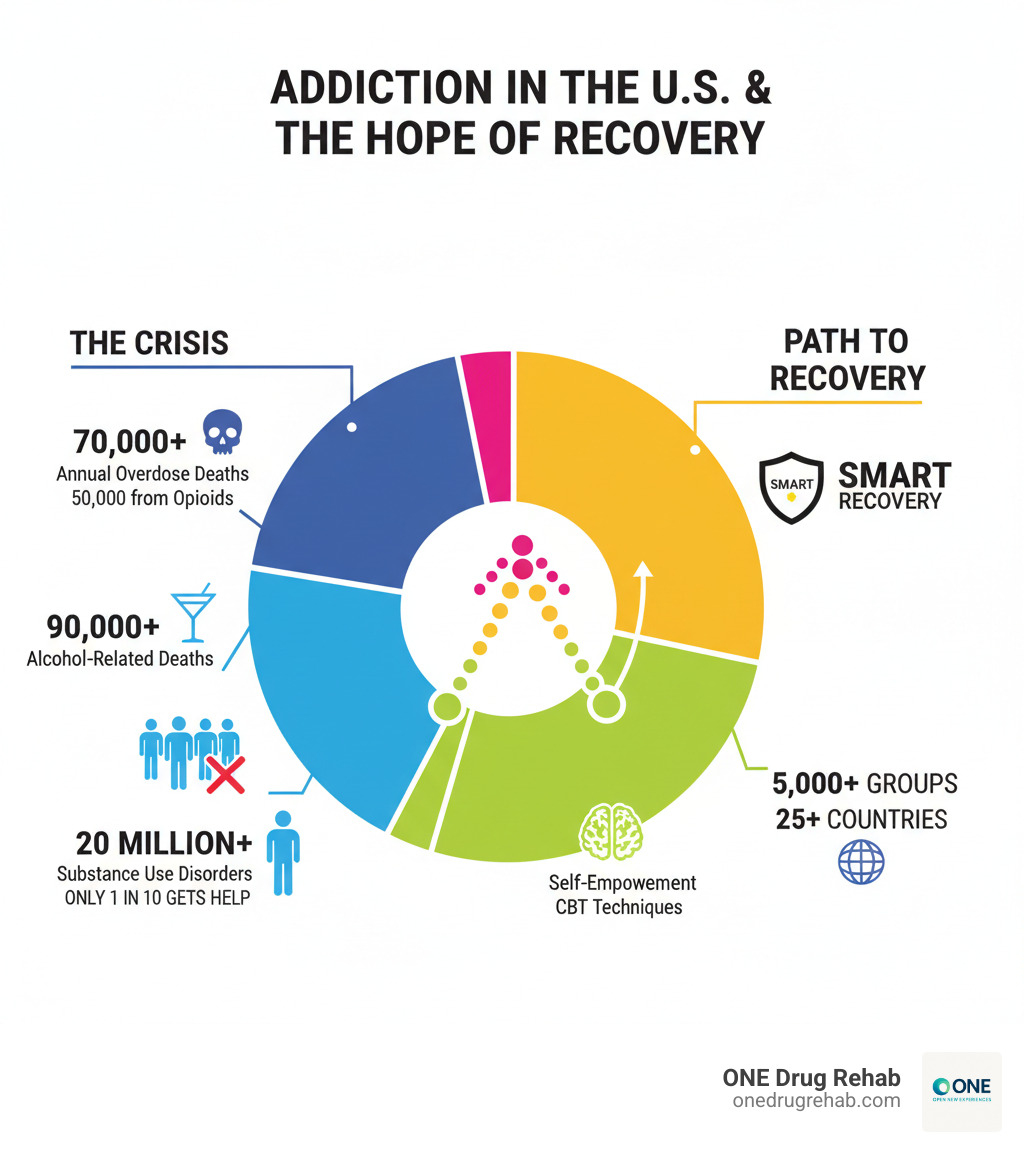
The statistics are staggering: drug overdoses kill more than 70,000 people annually in the United States, and alcohol disorders take another 90,000 lives. Yet, only one in ten of the 20 million people with substance use disorders receive specialized treatment. This gap creates a critical need for accessible self-help resources.
Addiction is not a character flaw. Modern science shows that addiction creates changes in the brain, causing powerful cravings and compulsions. Recovery is possible, regardless of how many times you’ve tried before.
Self help addiction approaches offer several pathways to recovery. Some are rooted in tradition, like Alcoholics Anonymous, while others, like SMART Recovery, use evidence-based practices that evolve with scientific research. The goal of all these methods is self-empowerment and building a meaningful life beyond addiction.
This guide will walk you through the different self-help options, explain how they work, and help you find the resources to take your next step.
The Spectrum of Self-Help: From 12-Steps to Self-Empowerment
There is no one-size-fits-all approach to overcoming addiction. The landscape of self help addiction recovery includes traditional, spiritually-focused programs and modern, science-based methods. Understanding these different paths can help you find what resonates with your personal beliefs and needs.
Recovery support exists on a spectrum. On one end are programs rooted in spiritual principles, and on the other are secular approaches grounded in psychological research. Both have helped countless people; the key is finding which approach speaks to you.
Here’s how two of the most prominent self-help models compare:
| Feature | SMART Recovery | 12-Step Programs (AA/NA) |
|---|---|---|
| Foundation | Secular, science-based approach using CBT and REBT | Spiritual foundation with concept of Higher Power |
| Philosophy | Self-empowerment and personal choice | Admitting powerlessness, surrender to Higher Power |
| Identity | No labels—focuses on behaviors | Uses identity labels like “addict” or “alcoholic” |
| Meeting Format | Discussion-based, problem-solving with specific tools | Sharing personal stories, working through 12 Steps |
| Scientific Basis | Evolves with latest addiction research | Based on principles established in 1935 |
| Sponsorship | Facilitator-led groups, peer support | One-on-one sponsor relationship |
| Approach | Learn skills to manage thoughts and behaviors | Follow structured steps, spiritual growth |
Both approaches have strengths, and what matters is finding the path that helps you build a life beyond addiction. Some people thrive with the spiritual framework of 12-Step programs, while others prefer the practical, skill-building focus of evidence-based approaches. Many find that combining elements from different methods works best.
What is SMART Recovery and How Does it Differ?
SMART Recovery (Self-Management and Recovery Training) offers a different approach to overcoming addiction. It is a secular approach, meaning there is no spiritual or religious framework. This is a practical alternative for those who do not connect with spirituality.
SMART is powerful because it evolves with science. The program is built on proven psychological methods like Cognitive Behavioral Therapy (CBT), Rational Emotive Behavior Therapy (REBT), and Motivational Interviewing. These scientifically validated approaches help you understand and change the thought patterns driving addictive behaviors. The program has earned recognition from the National Institute on Drug Abuse (NIDA) and the American Society of Addiction Medicine (ASAM).
SMART emphasizes choice. Instead of viewing yourself as powerless, you learn skills to manage urges, cope with triggers, and make healthier decisions. This focus on self-empowerment can be highly motivating.
Another difference is that SMART Recovery avoids labels like “addict” or “alcoholic,” focusing instead on behaviors and the skills needed to change them. This can reduce the stigma associated with addiction.
SMART Recovery also addresses all addictive behaviors, including gambling, eating disorders, and other compulsions, recognizing that the underlying psychological mechanisms are often similar. You might find support for substance use alongside someone addressing a different compulsive behavior. If you’re interested in this approach, organizations like Alano Club 2 may offer SMART Recovery meetings.
The Role of Traditional 12-Step Programs
Alcoholics Anonymous (AA) and Narcotics Anonymous (NA) have helped people find sobriety since 1935. The spiritual foundation is central to their approach. The first step involves admitting powerlessness over addiction and seeking help from a “Higher Power as they understand it.” This spiritual framework is not tied to a specific religion.
The concept of sponsorship provides one-on-one guidance from someone with more experience in recovery. This relationship offers personal support, accountability, and friendship.
Community support is the heartbeat of 12-Step programs. Meetings provide a safe, anonymous space to share struggles and victories without judgment. The shared understanding among members is profoundly healing. Organizations like Louisville Alcoholics Anonymous and Narcotics Anonymous offer these communities nationwide.
The program also emphasizes making amends for past wrongs, which helps heal relationships and relieve guilt. The final step encourages members to carry the message to others, reinforcing their own recovery through service.
While the spiritual aspect is central, if it doesn’t resonate with you, other self help addiction approaches like SMART Recovery offer different pathways. The most important thing is finding what works for you.
The SMART Recovery Framework: A Science-Based Approach
SMART Recovery is a comprehensive, science-backed framework designed to help you take control of your recovery. It is different because it is committed to evidence-informed practices, using tools and techniques that have been studied and validated by researchers.
At its core, SMART Recovery draws from powerful therapeutic approaches: Cognitive Behavioral Therapy (CBT) helps change thought patterns behind addiction; Rational Emotive Behavior Therapy (REBT) teaches how to challenge irrational beliefs; and Motivational Interviewing (MI) helps build internal motivation for change.
SMART Recovery is inclusive, addressing all types of addictive behaviors—not just alcohol or drugs. Whether you struggle with substances, gambling, eating disorders, or other compulsions, the tools apply because the underlying psychological mechanisms are often similar.
The credibility of SMART Recovery is recognized by major health organizations, including the American Academy of Family Physicians, the National Institute on Drug Abuse (NIDA), and the American Society of Addiction Medicine (ASAM). This professional backing provides confidence in its methods.
The 4-Point Program Explained
The heart of SMART Recovery is its practical 4-Point Program, which acts as a recovery toolkit.
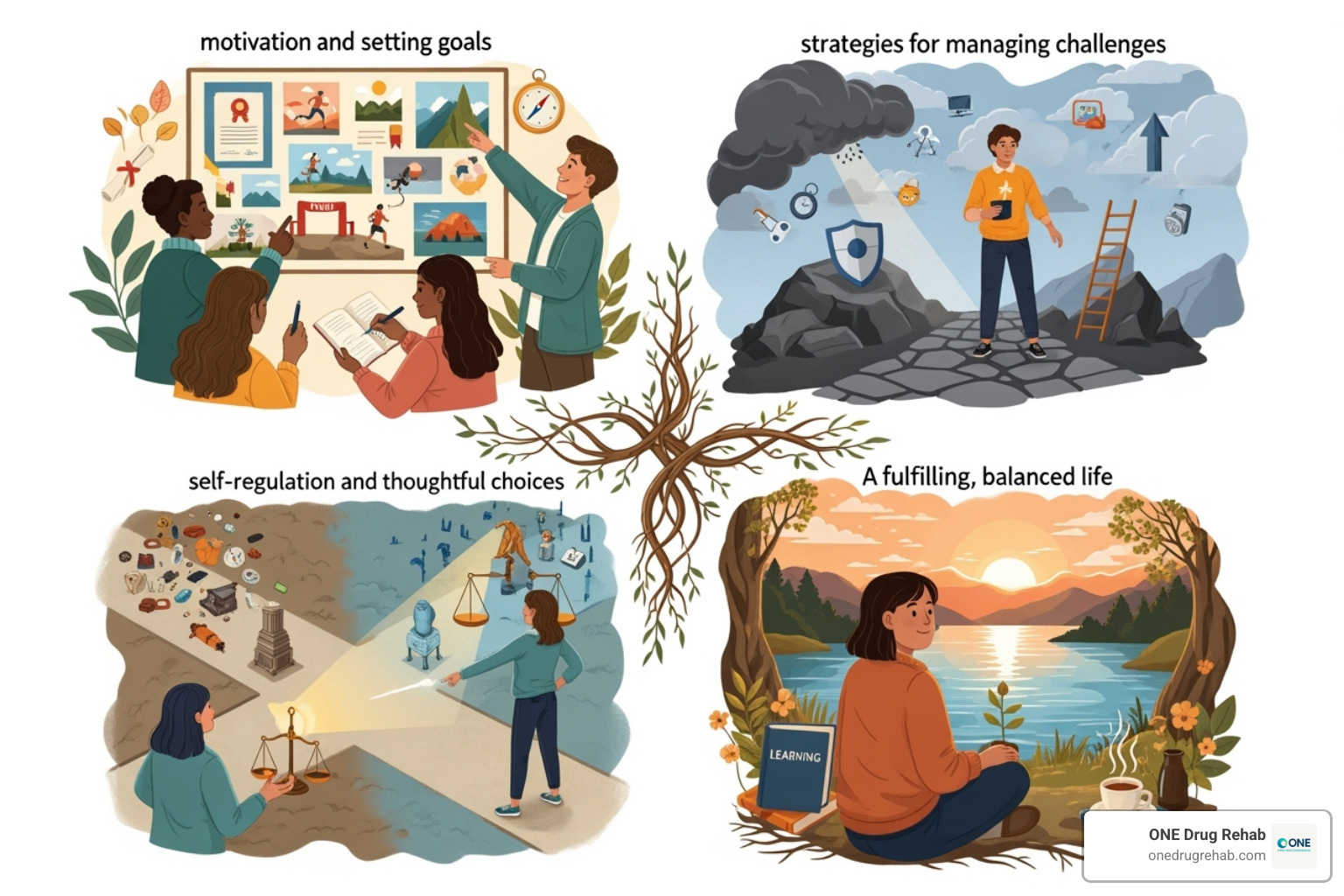
Point 1: Building and Maintaining Motivation is where the journey begins. This point helps you clarify why you want to recover by exploring the costs of your addictive behavior versus the benefits of a new life. Setting goals that align with your values creates a powerful internal compass.
Point 2: Coping with Urges provides practical tools against cravings. Urges are a normal part of recovery, and this point teaches techniques like “urge surfing” (riding out a craving until it subsides) and strategic distraction. The goal is to handle urges effectively when they arise.
Point 3: Managing Thoughts, Feelings, and Behaviors is where CBT and REBT principles are applied. This point teaches you to catch, examine, and replace automatic negative thoughts (“I can’t handle this without using”) with more rational alternatives. Changing how you think changes how you feel and act.
Point 4: Living a Balanced Life reminds us that recovery is about building a life with joy, connection, and purpose. This point encourages finding healthy activities, meaningful relationships, and interests that bring genuine satisfaction, which helps addiction lose its grip.
The Role of Evidence-Based Practices in Self-Help Addiction
What sets SMART Recovery apart in self help addiction support is its evolution based on scientific evidence. Just as you would want current, proven medical treatment, recovery deserves the same standard. That’s why SMART Recovery builds its framework on scientifically validated methods.
Research backing cognitive-behavioral approaches is substantial. Studies, including a meta-analysis on Cognitive-Behavioral Treatment with Adult Alcohol and Illicit Drug Users, have shown significant effectiveness in treating addiction.
The SMART Recovery program adapts as new findings emerge from neuroscience, psychology, and addiction medicine. When researchers uncover better strategies, that knowledge is integrated into the program’s tools. This commitment to improvement means you are getting today’s best practices.
The recognition from organizations like NIDA and ASAM validates that this evidence-based foundation gives people the best possible chance at long-term recovery. While the science is sophisticated, the tools are practical and accessible for real people facing real challenges.
Your Toolkit for Recovery: Practical Self-Help Strategies
In self help addiction recovery, having the right tools makes all the difference. These strategies, many from therapies like CBT and REBT, are a personal toolkit to help you handle tough moments and build a life you want to live.
- Urge surfing: Instead of fighting cravings, you learn to ride them out like a wave, acknowledging the urge without judgment until it naturally passes.
- Cost-Benefit Analysis (CBA): This tool helps you get honest about the pros and cons of your addictive behavior versus making a change. The SMART Recovery Cost Benefit Analysis app can facilitate this process.
- Change Plan Worksheet: This breaks down large goals into specific, measurable, and manageable steps with realistic timelines.
- DISARM (Destructive Self-Talk Awareness and Refusal Method): This technique helps you identify, challenge, and replace the negative inner voice that undermines your recovery efforts.
- Hierarchy of Values: This exercise helps you identify what truly matters to you (e.g., family, health, freedom). Aligning your actions with your values makes recovery more meaningful.
- Managing triggers: This involves identifying the people, places, or emotions that prompt urges and developing a plan to avoid or cope with them.
Managing Thoughts, Feelings, and Behaviors
The core of self help addiction recovery is learning to manage your inner world. CBT techniques offer practical ways to do this.
First, you learn to identify irrational beliefs that fuel addictive behavior, such as “I can’t handle stress without drinking.” Recognizing these thoughts is the first step to changing them.
Next, you challenge negative self-talk. By questioning your inner critic, you can practice talking to yourself with more compassion and accuracy.
Then, you work on developing healthier coping mechanisms. Instead of turning to addictive behaviors, you build a toolbox of constructive alternatives like exercise, calling a friend, meditation, or journaling. Resources like Psychology Tools offer free CBT worksheets you can use on your own.

Mobile Apps and Online Resources for Your Journey
Your phone can be a powerful recovery tool, with a growing number of apps and online platforms providing 24/7 support.
- MindShift™ CBT App: Uses CBT strategies to help manage anxiety, which often co-occurs with addiction. (iOS/Android)
- Saying When App: From the Centre for Addiction and Mental Health, this app is designed for those who want to quit or cut back on drinking. (iOS/Android)
- SoberTool: Tracks your clean days, sends motivational messages, and calculates the money you’ve saved by staying sober.
- WEconnect: Sends daily reminders to stay on track with your recovery plan and includes an SOS feature for immediate support.
- SMART Recovery App: Provides easy access to meeting information, tools, and resources from the SMART Recovery community.
- Breaking Free Online: A confidential, self-paced online program to help you reduce or stop substance use.
- Wellness Together Canada: Funded by Health Canada, this platform offers free resources, tools, apps, and connections to trained volunteers and mental health professionals.
These digital tools supplement human connection and professional treatment, offering support, progress tracking, and educational content anytime, day or night.
Building Your Support System: Finding Community and Resources
Recovery is not a journey to be taken alone. Self help addiction recovery means taking charge of your journey while letting others walk alongside you. Connecting with people who understand your experience is powerful. It lifts shame, provides mutual support, and reminds you that you are not alone in this challenge.
This community is where you can share struggles without judgment and celebrate victories, big or small. Knowing someone else gets it can make all the difference on a tough day.
How to Find a SMART Recovery Meeting
SMART Recovery is highly accessible, with over 5,000 groups meeting weekly in 25+ countries.
Finding a meeting is simple. The Find a SMART Meeting directory has updated information on local and online meetings. You can search by location, type, and time to find what fits your needs.
- Virtual meetings offer support regardless of your location or mobility, providing the same tools and environment as in-person gatherings from the privacy of your home.
- In-person meetings provide valuable face-to-face connection. These 60- to 90-minute sessions are led by trained facilitators who guide discussions around the 4-Point Program.
- 24/7 chat rooms are always available for support outside of scheduled meeting times, ensuring you can connect with the community whenever you need it.
SMART Recovery meets you where you are, offering a stigma-free space to focus on building the life you want.

Resources for Family and Friends
Loving someone with an addiction can be frustrating and heartbreaking. You want to help, but it’s not always clear how. You can’t fix their addiction, but you can learn to support them effectively while protecting your own well-being.
The SMART Recovery Family & Friends program is designed for this purpose. It provides tools to understand addiction, communicate better, and take care of yourself.
- Understanding addiction as a brain disease, not a character flaw, helps you respond with compassion and set healthy boundaries instead of enabling.
- Learning clear communication strategies allows you to express concerns without triggering defensiveness and to have difficult conversations with love and firmness.
- Setting healthy boundaries is crucial. It’s not about punishment but about protecting your own mental health, which creates healthier relationships in the long run.
Organizations like The Gratitude Club also offer valuable peer support for families. Hearing from others in your situation can make a significant difference.
Taking care of yourself isn’t selfish—it’s necessary. When you are stronger, you are better equipped to be a positive presence in your loved one’s life. You matter too.
Conclusion
The path to overcoming self help addiction is as unique as you are. We’ve explored different approaches, from the evidence-based framework of SMART Recovery to the traditions of 12-Step programs. There is no single “right” way to recover.
What matters is finding an approach that aligns with your beliefs, provides practical strategies, and connects you with a supportive community. This could be a secular, science-based program, a spiritually-grounded fellowship, or a combination of methods.
Recovery is a journey, not a destination. It’s an ongoing process with moments of triumph and struggle. What’s important is that you keep moving forward, using your tools and leaning on your support system.
ONE Drug Rehab is a third-party, non-affiliated directory committed to being a resource you can trust. We provide unbiased information about different treatment approaches and facilities to help you make the best decision for yourself.
Whether you choose self-help groups, professional treatment, or mobile apps, know that help is available. You don’t have to do this alone. The resources are there, and you have the power to build a life beyond addiction.
Your future is worth fighting for. Take the next step today.
Explore different types of addiction treatment