

What You Need to Know About Outpatient Detox Programs
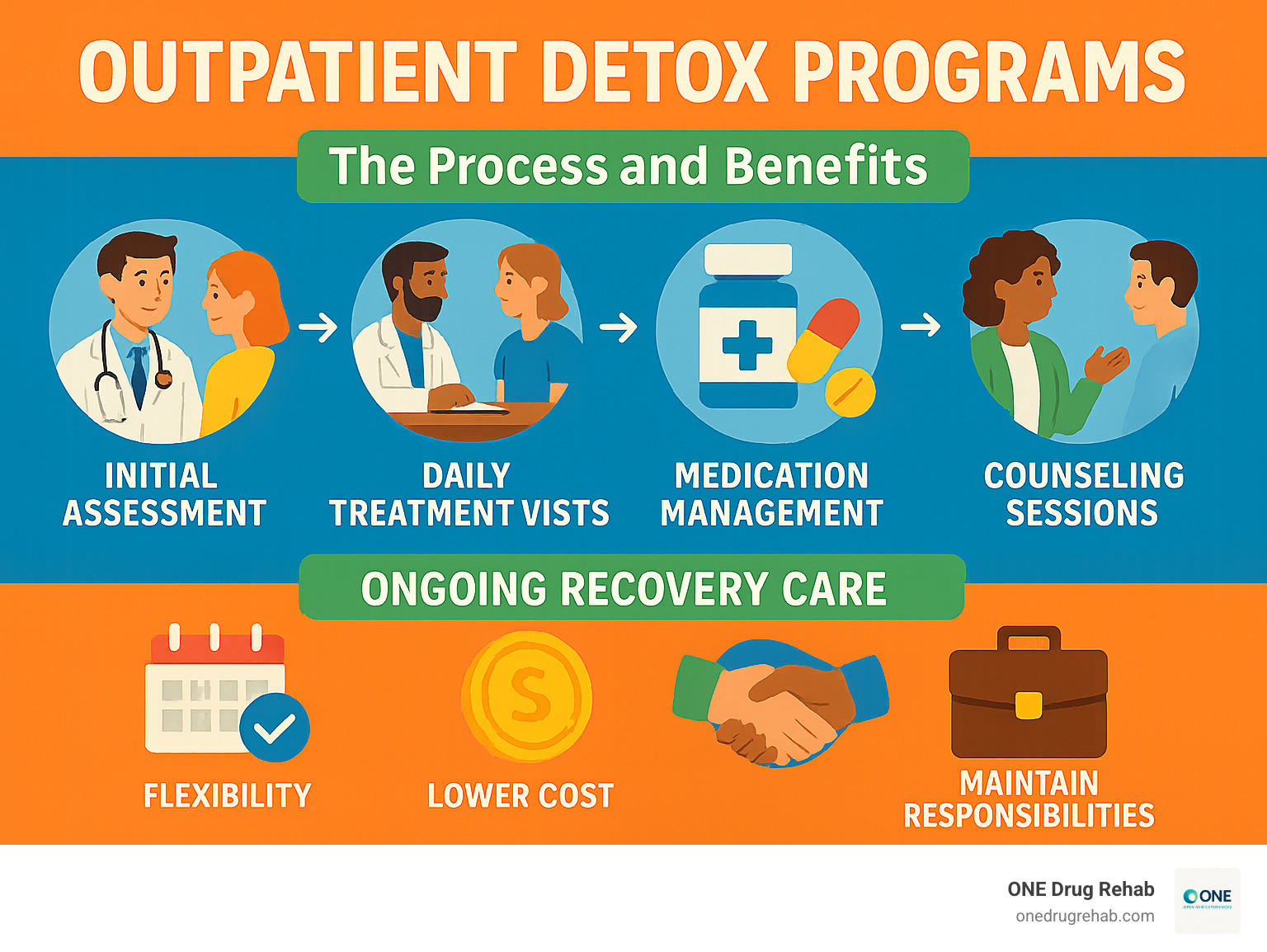
Outpatient detox programs provide a flexible way to safely withdraw from substances while living at home. You attend daily appointments at a clinic for medical care and counseling but return home each evening, allowing you to maintain work and family life.
Key features of outpatient detox:
- Medical supervision without 24/7 hospitalization
- Daily check-ins with healthcare professionals
- Medication management to ease withdrawal symptoms
- Counseling support throughout the process
- Cost-effective compared to residential treatment
- Flexible scheduling to maintain daily responsibilities
Research shows that for patients with mild-to-moderate withdrawal, outpatient detox is as safe and effective as inpatient detoxification but is much less expensive and less time consuming. The process typically lasts 5-14 days, during which you receive medication and monitoring.
However, outpatient detox isn’t right for everyone. It’s not suitable for those with severe withdrawal risks (like delirium tremens), serious medical conditions, or unstable living situations. Success requires a strong support system at home and motivation to change, as “treatment works” and most patients can achieve recovery.
Common outpatient detox programs vocab:
Understanding Outpatient Detox Care
When someone breaks free from substance dependence, the first step is detoxification—the process of clearing the body of drugs or alcohol and managing withdrawal symptoms. While many picture an inpatient stay, outpatient detox programs are a valuable alternative.
The primary goals of detox and substance abuse treatment include:
- Achieving a substance-free state by managing acute withdrawal.
- Improving overall life functioning, including physical and mental health, relationships, and stability.
- Preventing relapse by equipping individuals with tools for long-term sobriety.
Outpatient detox helps achieve these goals by providing medical stabilization in a less restrictive environment, preparing individuals for ongoing behavioral and psychological treatment.

| Feature | Outpatient Detox |
|---|---|
| Location | Patient lives at home, attends daily sessions at a clinic. |
| Intensity | Daily medical check-ins, medication management, and counseling. Less intensive than inpatient, no 24/7 supervision. |
| Cost | Generally much less expensive due to no overnight stays or full-time residential care. |
| Flexibility | High flexibility, allowing patients to maintain work, school, and family responsibilities. |
| Ideal Candidate | Individuals with mild-to-moderate withdrawal symptoms, strong social support, stable home environment, and high motivation. |
What is an outpatient detox program?
An outpatient detox program is a structured treatment for individuals who need medical help to withdraw from substances but don’t require 24-hour supervision. Patients live at home and visit a clinic for scheduled check-ins, medication, and counseling. This model minimizes disruption to daily life, allowing people to maintain jobs and family commitments while receiving care. The ability to stay connected to everyday life is a significant advantage. You can find More info about outpatient alcohol rehab programs on our site.
How does outpatient detox work?
The process begins with a comprehensive evaluation of your medical and substance use history to create a personalized treatment plan. Daily, you’ll have regular medical supervision, including monitoring of vital signs and withdrawal symptoms. Medications are prescribed to ease symptoms and reduce cravings, making the process safer and more comfortable.
These programs also integrate individual and group counseling for emotional support. Flexible scheduling (morning, afternoon, or evening sessions) is a key feature, allowing you to fit treatment into your life. For more details on flexible options, explore More info about outpatient treatment options.
The Pros, Cons, and Costs of Outpatient Detox Programs
Understanding the benefits and challenges of outpatient detox programs helps you choose the right path. Like any treatment, it has clear advantages and important risks to consider.

Advantages of Outpatient Detox
- Lower Cost: Outpatient detox is “much less expensive and less time consuming” than residential treatment because you aren’t paying for lodging or 24-hour staffing. This makes care more accessible. For a detailed breakdown, see our More info about rehab cost comparison.
- Maintain Employment: Flexible scheduling allows you to keep your job and earn an income during treatment.
- Keep Family Commitments: You can remain at home, which strengthens your support system and motivation.
- Practice Real-World Coping Skills: You immediately apply what you learn in therapy to your daily life, addressing triggers as they arise.
- Greater Freedom: Having control over your recovery journey can be empowering and motivating for many individuals.
Disadvantages and Risks
- Access to Substances: The biggest challenge is the continued access to drugs or alcohol, which can be a powerful temptation during early recovery.
- Exposure to Triggers: You will face real-world triggers like stress from work or relationships that don’t exist in a protected inpatient setting.
- Less Intensive Medical Supervision: While daily check-ins are standard, you won’t have 24/7 medical support for unexpected complications. This makes it unsuitable for those at risk of severe withdrawal.
- Higher Relapse Risk: The combination of cravings and access can lead to a higher relapse risk for some, particularly with opioids.
- Not for Severe Cases: Outpatient detox is inappropriate if you have a history of complicated withdrawal, serious medical conditions, unstable housing, or suicidal thoughts.
- Requires Strong Motivation: Success depends on your self-discipline to attend sessions and resist temptation. If you need more intensive care, explore More info about addiction treatment without insurance to find affordable options.
Is Outpatient Detox Right for You? Assessing Candidacy
Deciding if an outpatient detox program is the right choice requires an honest self-assessment and a thorough medical evaluation of your substance use history, health, and living situation.
Who is a good candidate for outpatient detox programs?
Outpatient detox is most appropriate for individuals with mild-to-moderate withdrawal symptoms (e.g., anxiety, insomnia, nausea). Research shows that fewer than 10 percent of patients with alcohol withdrawal need inpatient care, making outpatient a viable option for many. Good candidates typically have:
- A strong support system: Family or friends who are committed to sobriety and can provide encouragement and accountability.
- A stable and safe home environment: A living situation free from substance use and major stressors.
- High motivation: A strong commitment to attending all sessions and following medical advice.
- No severe co-occurring disorders: While many have co-occurring conditions, severe psychiatric issues like psychosis or suicidal ideation require a higher level of care. Learn more about More info about co-occurring disorder treatment.
Who is NOT a good candidate?
Outpatient detox is not safe for certain individuals. You are likely not a good candidate if you have:
- A risk of severe withdrawal: This includes delirium tremens (DTs) or seizures.
- A history of complicated withdrawal: Previous severe withdrawal symptoms indicate a need for inpatient care.
- Serious co-occurring medical conditions: Issues like pancreatitis or cirrhosis require close medical monitoring.
- An unstable housing situation: A safe, substance-free home is essential.
- Suicidal or homicidal thoughts: This requires immediate inpatient care. The 988 Suicide & Crisis Lifeline and the National Helpline offer 24/7 support.
- A lack of social support: A reliable support system is critical for safety and accountability.
The Crucial Role of Social and Family Support
For outpatient detox programs, social and family support is essential. A strong support system acts as a safety net and accountability partner. Support can be facilitated through:
- A Designated Support Person (SSP): Many programs require a designated person to be involved in the treatment plan.
- Practical and Emotional Support: This includes transportation to appointments and emotional encouragement.
- A Sober Environment: Family can help by removing substances from the home to limit triggers.
- Family Therapy: Some programs offer family therapy to heal relationships and educate loved ones on supporting recovery. Find resources on More info about rehab for families.
A Day in the Life: What to Expect from Treatment
A typical day in an outpatient detox program is structured yet flexible, combining clinical oversight with personal responsibility.
The Initial Assessment and Daily Process
Your journey begins with a comprehensive evaluation of your medical and substance use history to create a personalized treatment plan. This initial assessment is crucial for identifying any co-existing health disorders.
Once your plan is in place, your daily routine will involve scheduled visits to the clinic for:
- Medical check-ins: Monitoring of vital signs and withdrawal symptoms.
- Medication management: Medications are administered or adjusted to ensure your safety and comfort.
- Counseling sessions: Individual and group therapy provide emotional support and teach coping strategies.
The goal is to stabilize you physically and mentally, preparing you for long-term recovery. For a broader perspective, see A guide to substance abuse services from SAMHSA.
Common Medications and Therapies Used
Medication is a cornerstone of outpatient detox programs, managing withdrawal symptoms based on the substance:
- Alcohol Detox: Benzodiazepines are often used to prevent seizures and reduce anxiety. Other medications like disulfiram may be used to discourage drinking.
- Opioid Detox: Medications like Buprenorphine (Suboxone) relieve withdrawal and cravings. The goal is often to transition to Naltrexone (Vivitrol) for long-term support.
- Benzodiazepine Detox: A gradual tapering schedule, sometimes with the help of other medications, is used to prevent severe withdrawal.
- Symptom-Specific Medications: Other drugs may be used to treat nausea, insomnia, or muscle cramps.
Therapies are also integrated to support recovery:
- Individual counseling: One-on-one sessions to address personal challenges and triggers.
- Group therapy: Peer support and shared experiences in a group setting.
- Relapse prevention education: Learning to identify high-risk situations and manage cravings.
Beyond Detox: The Path to Long-Term Recovery
Completing an outpatient detox program is a significant achievement, but it’s the beginning of your recovery journey, not the end. Detox addresses the physical dependence, but lasting sobriety requires ongoing treatment for the underlying psychological and behavioral patterns of addiction.
How Detox Prepares You for Ongoing Rehab
Detox creates a stable foundation for deeper recovery work. Once withdrawal symptoms are managed, you gain:
- Physical Stabilization: As your body heals, you have more energy to engage in treatment.
- Mental Clarity: With the fog of substance use lifted, you can focus in therapy and learn new skills.
- Psychological Boost: Successfully completing detox builds confidence for the journey ahead.
This prepares you for the next phase, such as a 30 day outpatient rehab program.
Treatment Setting and Long-Term Success Rates
Research shows similar long-term abstinence rates for both inpatient and outpatient detox. The Overview of Detoxification from the National Library of Medicine notes that outcomes depend more on patient characteristics—like motivation and support—than the detox setting.
The key is completing a full treatment plan. Sustained recovery comes from continued therapy and support. Learn more about addiction recovery success rates.
Transitioning to the Next Level of Care
After detox, your team will help you plan the next steps to reduce relapse risk. Common options include:
- Intensive Outpatient Programs (IOP): Several hours of treatment, 3-5 days a week, while living at home.
- Partial Hospitalization Programs (PHP): More intensive, full-day treatment schedules.
- Individual Therapy: Continued one-on-one counseling to work through personal challenges.
- Support Groups: Groups like AA or NA provide free, ongoing community support.
- Sober Living: These homes offer a substance-free environment with accountability. Explore options like IOP sober living.
The goal is a seamless transition to a care plan that fits your needs and promotes long-term success.
Frequently Asked Questions about Outpatient Detox
We’ve gathered answers to the most common questions about outpatient detox programs to help you feel more confident about your next steps.
How long does outpatient detox usually last?
The duration of outpatient detox programs varies based on the substance, length of use, and your individual response. Typically, programs last 5-14 days. Alcohol detox may take 3-7 days, while opioids and benzodiazepines can require two weeks or more, especially if a gradual tapering schedule is needed. Your medical team will monitor your progress and adjust the timeline to ensure you are safe and comfortable.
Is outpatient detox safe?
Yes, outpatient detox is safe for appropriate candidates. Safety depends on a thorough initial assessment and ongoing medical supervision. Medical professionals will evaluate your risk for severe withdrawal. If you are at risk for life-threatening complications like delirium tremens or seizures, or have serious co-occurring medical or mental health conditions, inpatient care is necessary. Honesty about your history is crucial for determining the safest level of care for you.
Can I work while attending an outpatient detox program?
Yes, this is a primary benefit of outpatient treatment. Most outpatient detox programs offer flexible hours (mornings, evenings, weekends) to accommodate work, school, or family responsibilities. The key requirement is attending all scheduled sessions to ensure your safety and the treatment’s effectiveness. Discuss your schedule with the provider to find a program that fits your needs.
Conclusion
Outpatient detox programs offer a practical, effective solution for many people ready to break free from substance dependence. Their flexibility and affordability provide access to professional medical care while allowing you to maintain your job, family life, and independence. You can begin healing while staying connected to the life you’re working to rebuild.
However, detox is your starting line, not your finish line. The physical stability and mental clarity you gain are the foundation for the deeper work of recovery. Long-term success depends less on where you detox and more on your commitment to a comprehensive, ongoing treatment plan that includes therapy and support groups.
Choosing the right program is crucial. ONEDrugRehab.com was created to provide honest, unbiased information to help you make the best decision for your unique situation. We don’t endorse specific facilities; we help you find what truly fits your needs.
If you’re ready to take that brave first step, we’re here to support you. Use our resources to explore your options, ask the right questions, and Find the right treatment path for you. Your recovery journey starts now.