

The Path to Healing After Service
Veteran rehab programs provide specialized addiction and mental health treatment designed specifically for those who served in the military. These programs address unique challenges like PTSD, military sexual trauma, chronic pain, and the difficulty of transitioning to civilian life—issues that standard rehab programs often aren’t equipped to handle.
Quick Access to Veteran Rehab Programs:
- VA Programs: Call your local VA medical center or dial 1-877-222-8387 for enrollment assistance
- Crisis Support: Veterans Crisis Line – Call 988 and press 1, text 838255, or start a confidential chat
- Community Care: If VA services aren’t available nearby, you may qualify for community-based treatment through VA-approved providers
- Without VA Benefits: Combat veterans can access free counseling at 300+ Vet Centers nationwide, regardless of benefit status
- Private Programs: Many specialized veteran rehab centers accept TRICARE, private insurance, or offer scholarships
Serving in the military often means facing situations that fundamentally change you. Whether it’s combat trauma, witnessing loss, sexual assault during service, or the constant stress of deployment, these experiences can follow you home. Many veterans struggle with substance use as a way to cope with memories, pain, or the jarring shift to civilian life.
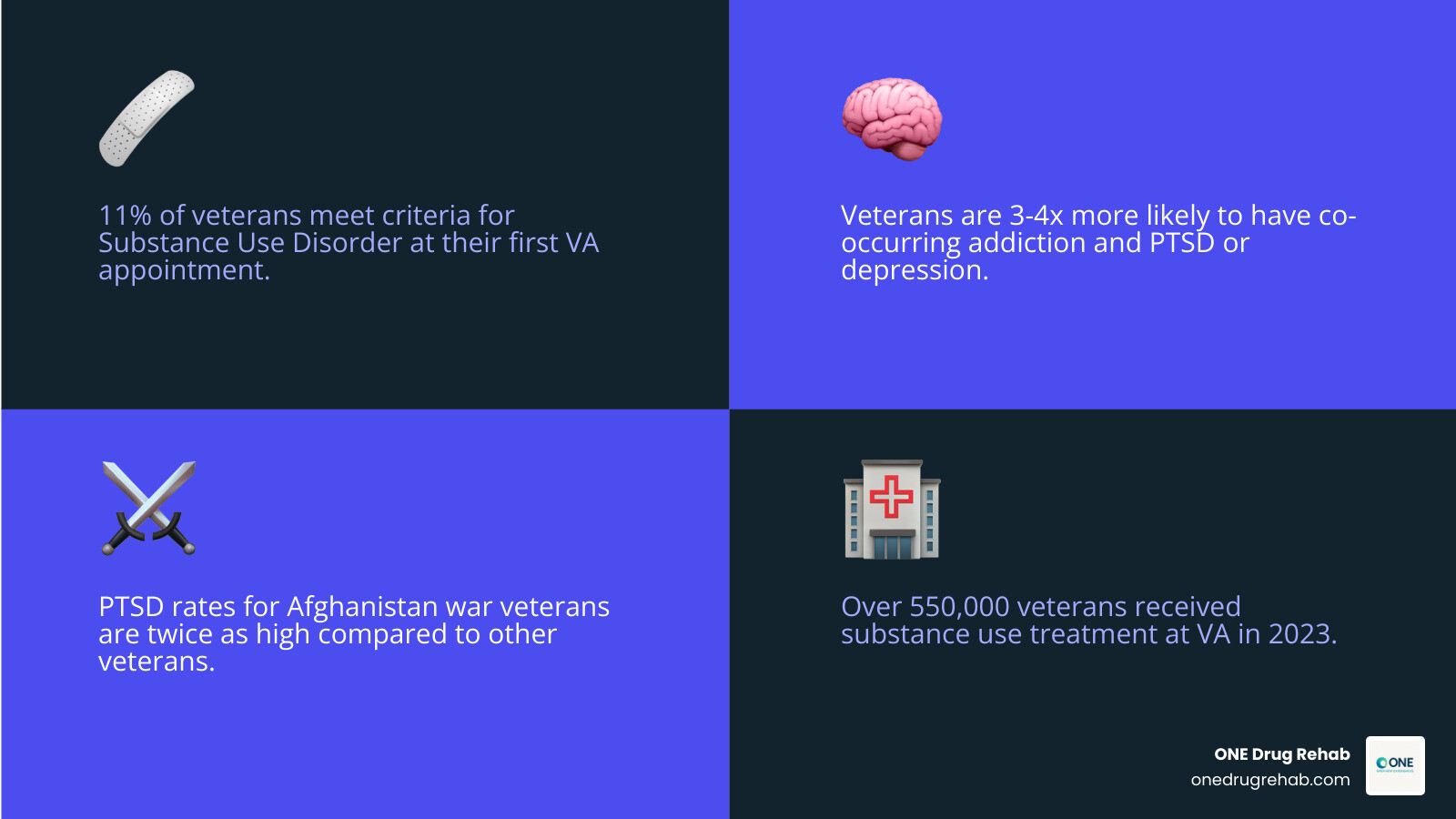
The statistics tell a sobering story. Around 11% of veterans meet criteria for substance use disorder at their first VA appointment. Veterans are 3-4 times more likely to have both addiction and PTSD or depression simultaneously. For those who served in Afghanistan, PTSD rates are twice as high compared to other veterans.
But here’s the important part: you don’t have to face this alone. Specialized veteran rehab programs understand military culture, treat co-occurring mental health conditions alongside addiction, and connect you with peers who truly understand what you’ve been through. Whether you need help with alcohol, prescription drugs, street drugs, or behavioral addictions, treatment designed for veterans can make the difference between struggling and thriving.
This guide will walk you through everything you need to know about accessing veteran rehab programs—from VA services to private treatment centers, from crisis support to long-term recovery planning.
Understanding the Unique Needs of Veterans in Rehab

When we talk about Veteran rehab programs, it’s crucial to understand that veterans often carry experiences and perspectives shaped by their military service that are profoundly different from the general civilian population. This unique background means that a one-size-fits-all approach to rehabilitation simply won’t cut it.
Military culture, for instance, often fosters a “work hard, play hard” mentality. While this builds camaraderie and resilience during service, it can also normalize unhealthy coping mechanisms, such as excessive alcohol consumption, which may persist into civilian life. This environment can make it challenging for veterans to recognize when their drinking or drug use has crossed a line.
Perhaps one of the biggest problems is the stigma surrounding mental health and addiction within the military. The “macho subculture” often discourages expressing vulnerability or seeking help, leading many veterans to suffer in silence for fear of being perceived as weak or unfit. This reluctance to seek support can exacerbate mental health and addiction issues, making recovery even more difficult.
Beyond the internal struggles, many veterans face significant difficulties with civilian reintegration. The structured, mission-driven life of the military contrasts sharply with the often ambiguous and individualistic nature of civilian society. This transition can lead to feelings of loneliness and isolation, a loss of purpose, and challenges in finding new social networks. Additionally, chronic pain from service injuries can become a significant factor, often leading to reliance on prescription medications, which can then escalate into dependence or addiction. These combined factors create a complex web of needs that specialized veteran rehab programs are designed to solve.
Why Standard Rehab Isn’t Always Enough
The unique challenges faced by veterans often manifest as co-occurring disorders, meaning they struggle with both substance use and mental health conditions simultaneously. Post-Traumatic Stress Disorder (PTSD), Traumatic Brain Injury (TBI), and Military Sexual Trauma (MST) are particularly prevalent among service members and veterans. For example, PTSD affects 7.4% of British veterans, compared to 4% of the civilian population, and similar trends are seen globally.
Standard rehab programs might address addiction effectively, but they may lack the specialized expertise to treat the complex trauma often intertwined with a veteran’s substance use. Our veterans need trauma-informed care—treatment that understands how past experiences influence current behavior and mental states, and that helps them heal without re-traumatizing them. This often involves specific therapeutic approaches and a deep understanding of military culture. The power of peer support from fellow veterans who have shared similar experiences cannot be overstated, providing a unique sense of understanding and validation often absent in general rehab settings.
Common Issues Addressed in Veteran-Specific Treatment
Veteran rehab programs are equipped to address a wide range of issues, recognizing that addiction often serves as a coping mechanism for underlying pain.
- Alcohol abuse: This is a pervasive issue, with 67% of men and 49% of women in the UK military classified as problem drinkers, a stark contrast to the general population. This “work hard, play hard” culture often leads to excessive consumption.
- Prescription drug dependence: Injuries sustained during service can lead to chronic pain, and the subsequent prescription of strong painkillers can, unfortunately, result in dependence. In 2009 alone, military doctors wrote around 3.8 million prescriptions for pain relievers.
- Street drug use: While the military has a zero-tolerance drug policy, some veterans may turn to street drugs as a way to self-medicate or as a continuation of use that they learned to hide during their service. Drug dependence affects 5.2% of veterans, compared to 3.5% of civilians.
- Behavioral addictions: Sometimes, veterans may develop behavioral addictions like gambling or compulsive spending, seeking to replace the adrenaline rush of combat or to cope with negative emotions.
- Depression and anxiety: These mental health conditions frequently co-occur with substance use disorders. In fact, veterans who develop a substance use disorder are 3-4 times more likely to be concurrently diagnosed with PTSD or depression. Effective Veteran rehab programs provide integrated treatment for these co-occurring disorders.
Navigating Veteran Rehab Programs and Support Resources

Accessing the right support can feel like navigating a maze, but we’re here to help you find your way. Veteran rehab programs often take a comprehensive approach, integrating medical, social, and vocational therapies to ensure a holistic recovery. At the heart of this integrated care is the role of a case manager.
A case manager acts as your personal guide and advocate throughout the rehabilitation process. They work closely with you and your family, respecting your privacy while helping to identify your needs, develop a support network, coordinate services, and track your progress. Their goal is to help you build an individualized rehabilitation plan that identifies your goals, outlines necessary services and benefits, connects you with service providers, and sets a realistic timeframe for your recovery. This plan isn’t set in stone; it’s a living document that you, as the most important part of your recovery, provide feedback on.
Accessing Services for Substance Use and Mental Health
Eligibility for Veteran rehab programs through the VA generally requires enrollment in the VA health care system. If you’re new to VA, the first step is to apply for VA health care benefits. Most veterans must be enrolled to qualify for admission to VA’s residential rehabilitation programs.
If you already have a VA primary care provider, discussing your substance use concerns with them is a great starting point. If you don’t have a VA provider, you can find a Substance Use Disorder (SUD) program near you, call the general information hotline at 800-827-1000, or contact your local VA medical center for assistance. Veterans who served in OEF/OIF/OND should ask for the OEF/OIF/OND coordinator at their local VA medical center for custom support.
For immediate help, the Veterans Crisis Line is available 24/7, 365 days a year. You can reach responders by calling 988 and selecting 1, starting a confidential chat, or texting 838255. If you’re in immediate danger, call 911 or go to your nearest emergency room or VA medical center.
What if you don’t have VA health care benefits? Don’t worry, there are still options. If you served in a combat zone, you can get free private counseling, alcohol and drug assessments, and other support at one of the 300 community Vet Centers. These centers are a fantastic resource, regardless of your VA enrollment status. If you are homeless or at risk of homelessness, the VA also offers specific programs and resources, including the National Call Center for Homeless Veterans at 877-424-3838.
What to Expect from Veteran Rehab Programs
When you enter a Veteran rehab program, you can expect a custom and comprehensive approach to your recovery. These programs are designed to meet you where you are and guide you toward a healthier future.
Here’s a list of services you might encounter:
- Medically managed detox: This crucial first step helps you safely and comfortably get drugs and alcohol out of your system, often with medication to manage withdrawal symptoms.
- Inpatient/Residential care: For some, a structured, around-the-clock setting is best. You’ll live at the treatment facility, receiving intensive care, therapy, and support. The VA offers residential rehabilitation programs that place veterans in a comfortable environment with on-site access to comprehensive services for substance use, mental health, physical health, and social needs.
- Outpatient counseling: If you don’t require 24/7 supervision, outpatient programs allow you to attend sessions while living at home. This can range from standard by-appointment counseling to intensive outpatient programs (IOP) or partial hospitalization programs (PHP) where you attend for several hours a day, several days a week.
- Family counseling: Addiction affects the whole family. Many programs offer counseling to help families heal, communicate better, and support the veteran’s recovery.
- Relapse prevention: Learning strategies and developing tools to prevent relapse is a key component of any effective program.
- Specialized treatment for PTSD and co-occurring conditions: The VA and many private programs offer integrated treatment for issues like PTSD, depression, and anxiety, recognizing their close link to substance use. You can learn more about treatment programs for substance use and PTSD through VA’s mental health resources.
- Vocational support: Re-establishing yourself in civilian life often means finding meaningful employment. Programs can include vocational rehabilitation to help you identify new career paths, develop skills, and find job placement. This might involve training, education, or even assistance with starting a business.
Options for Care: Community and Private Programs
While the VA provides extensive services, it’s important to know that many other options exist for Veteran rehab programs.
- Community-based programs: These are often local non-profit organizations or government-funded centers that offer addiction and mental health services. They can be a great option for those seeking support close to home or who may not qualify for VA benefits.
- Non-profit veteran support organizations: Many organizations, like the Wounded Warrior Project, offer programs and support for veterans. The Warrior Care Network, for example, is a partnership between Wounded Warrior Project and academic medical centers that provides accelerated mental health treatment.
- Accredited private rehab centers: Numerous private facilities specialize in veteran care, offering custom programs that understand military culture and trauma. These centers often have highly qualified staff and a range of therapeutic modalities. When looking for a private option, we encourage you to find a treatment provider that understands veterans’ needs.
- Options for those without insurance: Don’t let a lack of insurance deter you. Many facilities offer sliding scale fees, payment plans, or scholarships. Additionally, state and local government programs, as well as non-profit organizations, may provide free or low-cost rehab services. We have resources available to help you find rehab without insurance.
Specialized Therapies and Levels of Care
Effective Veteran rehab programs recognize that healing from addiction and trauma requires more than just abstinence. It demands a deep dive into the underlying issues, often utilizing specialized therapies. One of the most critical aspects of veteran-specific treatment is dual diagnosis treatment. This approach simultaneously addresses both substance use disorders and co-occurring mental health conditions like PTSD, anxiety, or depression, understanding that they are often intertwined and must be treated together for lasting recovery.
Evidence-based practices (EBPs) form the backbone of these specialized therapies. These are treatments that have been rigorously tested and proven effective through scientific research. Common EBPs used in veteran rehab include:
- Cognitive Behavioral Therapy (CBT): Helps veterans identify and change negative thought patterns and behaviors that contribute to substance use and mental health struggles.
- Eye Movement Desensitization and Reprocessing (EMDR): A powerful therapy particularly effective for processing traumatic memories, such as those related to PTSD and MST.
- Prolonged Exposure (PE): Gradually helps veterans confront trauma-related memories, feelings, and situations, reducing their power to cause distress.
- Dialectical Behavioral Therapy (DBT): Focuses on teaching skills for managing emotions, improving relationships, and coping with stress.
- Motivational Interviewing (MI): Helps veterans explore and resolve their ambivalence about treatment and recovery, strengthening their motivation for change.
Beyond traditional talk therapy, many programs incorporate complementary alternative therapies such as equine and pet-assisted therapy, expressive arts, organic gardening, and various outdoor activities. These can provide unique avenues for healing, stress reduction, and self-findy.
A Look at Different Treatment Settings
The journey to recovery isn’t a single path; it often involves different levels of care, each designed to meet specific needs.
- Medical detox: This is the supervised process of safely withdrawing from substances. It’s often the first step, providing medical support to manage potentially dangerous withdrawal symptoms.
- Inpatient rehab: During inpatient rehab, you’ll live at the treatment facility, receiving 24/7 care and a highly structured environment. This setting is ideal for those needing intensive support, medical monitoring, and a break from external triggers.
- Outpatient rehab: This allows you to live at home while attending scheduled therapy sessions and groups. It’s a great option for those with strong support systems and less severe addiction.
- Intensive Outpatient Programs (IOP): Offer more frequent and intensive therapy than standard outpatient care, typically several hours a day, several days a week.
- Partial Hospitalization Programs (PHP): Provide a level of care similar to inpatient treatment during the day, but allow you to return home at night. It’s a step down from inpatient or a step up from IOP.
- Sober living homes: These provide a safe, supportive, and drug-free environment for veterans transitioning from more intensive treatment back into independent living. They offer structure, peer support, and accountability.
- Aftercare planning: This is a critical component of long-term recovery. As you near the completion of treatment, your counselor will help you develop an aftercare program that makes sense for supporting your sobriety. This might include ongoing counseling, 12-Step programming, support groups, and community resources.
Finding Private Veteran Rehab Programs
For some veterans, private Veteran rehab programs offer specialized care that aligns with their needs and preferences. When considering private options, understanding how to finance treatment is key.
- Using insurance for treatment: Many private facilities accept various insurance plans. TRICARE, Medicare, and Medicaid often cover some or all of rehab treatment, though coverage can vary by plan. For active duty service members, retirees, and their families, understanding your Tricare Rehab Coverage is essential. It’s always best to work closely with your treatment provider to understand your out-of-pocket costs and verify your benefits directly with your insurance provider.
- Private pay options: If insurance coverage is limited or unavailable, many centers offer private pay options. Don’t hesitate to inquire about payment plans, sliding scale fees, or financial assistance programs.
- Verifying benefits: Before committing to a program, always verify your insurance benefits directly with your provider. They can inform you about your coverage for addiction treatment, deductibles, co-pays, and any pre-authorization requirements.
- Finding approved providers: If you’re using VA Community Care, you’ll need to search for an approved provider within their network. This involves making an appointment at the VA first to determine eligibility, receiving authorization, and then scheduling your appointment with the community provider.
Financial and Family Support During Rehabilitation
We understand that entering a Veteran rehab program can bring concerns about financial stability and family well-being. Thankfully, there are programs designed to alleviate these worries.
For veterans participating in rehabilitation services with health problems primarily resulting from service, you may qualify for the Income Replacement Benefit. This crucial income support ensures your total income will be at least 90% of your gross pre-release military salary, helping you pay bills and focus on your recovery without undue financial stress. When considering how to afford rehab, exploring all available benefit options is paramount.
What if your health prevents you from participating in vocational rehabilitation? We’ve got you covered. In some cases, a veteran’s spouse may be able to receive vocational assistance. This means your spouse could get support for training or skills development to help them re-establish in the civilian workforce, providing financial stability for your family. This unique insight highlights the comprehensive family-centered approach of some veteran support systems.
Family counseling and support are also vital components of rehabilitation. Addiction and trauma affect everyone in the household, and programs that include family therapy can help loved ones understand the recovery process, improve communication, and heal together.
In addition to VA benefits, other government programs can offer financial assistance. Medicaid Approved Rehab Centers can provide care for eligible veterans and their families, ensuring that financial barriers don’t stand in the way of necessary treatment. It’s always worth exploring all avenues to secure the support you need.
Frequently Asked Questions about Veteran Rehab
We know you have questions, and we’re here to provide clear, straightforward answers.
How do I get help if I’m in crisis right now?
If you are in crisis or having thoughts of suicide, please reach out immediately. You are not alone, and help is available 24/7.
- Veterans Crisis Line: Call 988 and press 1. This connects you with a crisis counselor who understands veteran experiences.
- Text: You can also text 838255 to connect with a crisis counselor.
- Confidential Chat: Start a confidential chat online through the Veterans Crisis Line website.
- Emergency Services: If you are in immediate danger, call 911.
- Nearest Support Center: Go to your nearest emergency room or VA medical center.
Can my family get support while I’m in treatment?
Absolutely. We believe that family is a critical part of the healing process, and many Veteran rehab programs extend support to your loved ones.
- Family Counseling: Many rehab programs offer family therapy sessions to help family members understand addiction, improve communication, and heal from the impact of substance use.
- Spousal Vocational Assistance: As mentioned earlier, if your health prevents your participation in vocational rehabilitation, your spouse may be eligible for vocational assistance to help them gain employment skills.
- Private Center Family Programs: Some private rehab centers have specialized programs for family members, including educational workshops and support groups.
- Caregiver Support Resources: The VA offers comprehensive Caregiver Support programs, including resources, training, and financial assistance for those caring for veterans. You can learn more about these services through the VA Caregiver Support Program.
What if I don’t have health benefits or an honorable discharge?
Even without traditional VA health care benefits or an honorable discharge, you still have options for getting help. We believe everyone deserves a chance at recovery.
- Community-Based Programs: Many local community organizations and non-profits offer addiction and mental health services that are not tied to VA eligibility. These often have sliding scale fees or free services.
- Applying for a Discharge Upgrade: If your discharge was “other than honorable,” you may be able to apply for a discharge upgrade. A more favorable discharge could make you eligible for VA benefits. Legal aid services for veterans can often assist with this process.
- Non-Profit Organizations: Numerous non-profit organizations specifically serve veterans and may offer direct treatment, financial assistance, or referrals to free or low-cost services.
- Finding Rehab Without Insurance: We provide resources to help you find rehab without insurance, guiding you through options like state-funded programs, scholarships, and payment plans.
Conclusion: Taking the First Step on Your Recovery Journey
Our veterans have made incredible sacrifices for our freedom and security, and we owe them our unwavering support. The journey through Veteran rehab programs is not just about overcoming addiction or managing mental health conditions; it’s about re-establishing a life filled with purpose, connection, and well-being. It’s about finding your way home, both literally and figuratively.
We’ve covered the unique challenges veterans face, the comprehensive support systems available through the VA and private organizations, the specialized therapies designed for trauma, and the financial and family assistance that can ease the burden. The most important takeaway is this: you are not alone. There are dedicated professionals, understanding peers, and robust programs ready to walk alongside you.
If you or a loved one is struggling, please don’t wait. Taking that first step can be the hardest, but it’s also the most courageous. At ONEDrugRehab.com, our mission is to be a third-party, non-affiliated resource, providing general information about drug rehab facilities. We’re here to help you research treatment options without endorsing specific providers, empowering you to make informed decisions for your recovery.
Take control of your future, accept the hope of healing, and find a treatment provider that understands veterans’ needs. Your path to recovery starts now.