

Understanding Rehab Success Rates: Beyond Simple Statistics
What is the success rate of rehab? Research shows that 40-60% of individuals maintain sobriety one year after completing treatment, according to the National Institute on Drug Abuse. However, success in addiction recovery extends far beyond these numbers and varies significantly based on individual circumstances, treatment quality, and ongoing support.
Quick Answer: Rehab Success Rates
- General Success Rate: 40-60% maintain sobriety at one year
- Treatment Completion: Only 43-49% complete their programs
- Long-term Recovery: 75% of people who receive treatment eventually recover (CDC/NIDA)
- Canadian Data: 51.2% achieve stable recovery without relapse
- Important Note: Success includes improved quality of life, not just abstinence
When someone asks about rehab success rates, they’re usually looking for hope – hope that treatment works, that recovery is possible, and that their investment of time, money, and emotional energy will pay off. The reality is more nuanced than a single percentage can capture.
Addiction is a chronic disease, much like diabetes or hypertension. Just as we wouldn’t judge diabetes treatment by whether someone never needs medication again, we shouldn’t measure addiction recovery solely by permanent abstinence. The most meaningful question isn’t whether rehab “works” in some absolute sense, but rather how it can work for you or your loved one.
The journey to recovery looks different for everyone. Some people find success in their first treatment attempt, while research shows the average person makes 2-5 serious recovery attempts before achieving long-term sobriety. This doesn’t represent failure – it represents the reality of treating a complex brain disease.
Setting realistic expectations is crucial. Success might mean maintaining complete sobriety, but it could also mean reducing harmful use, rebuilding relationships, finding stable employment, or simply refinding hope. Understanding these different definitions of success helps families and individuals make informed decisions about treatment options.
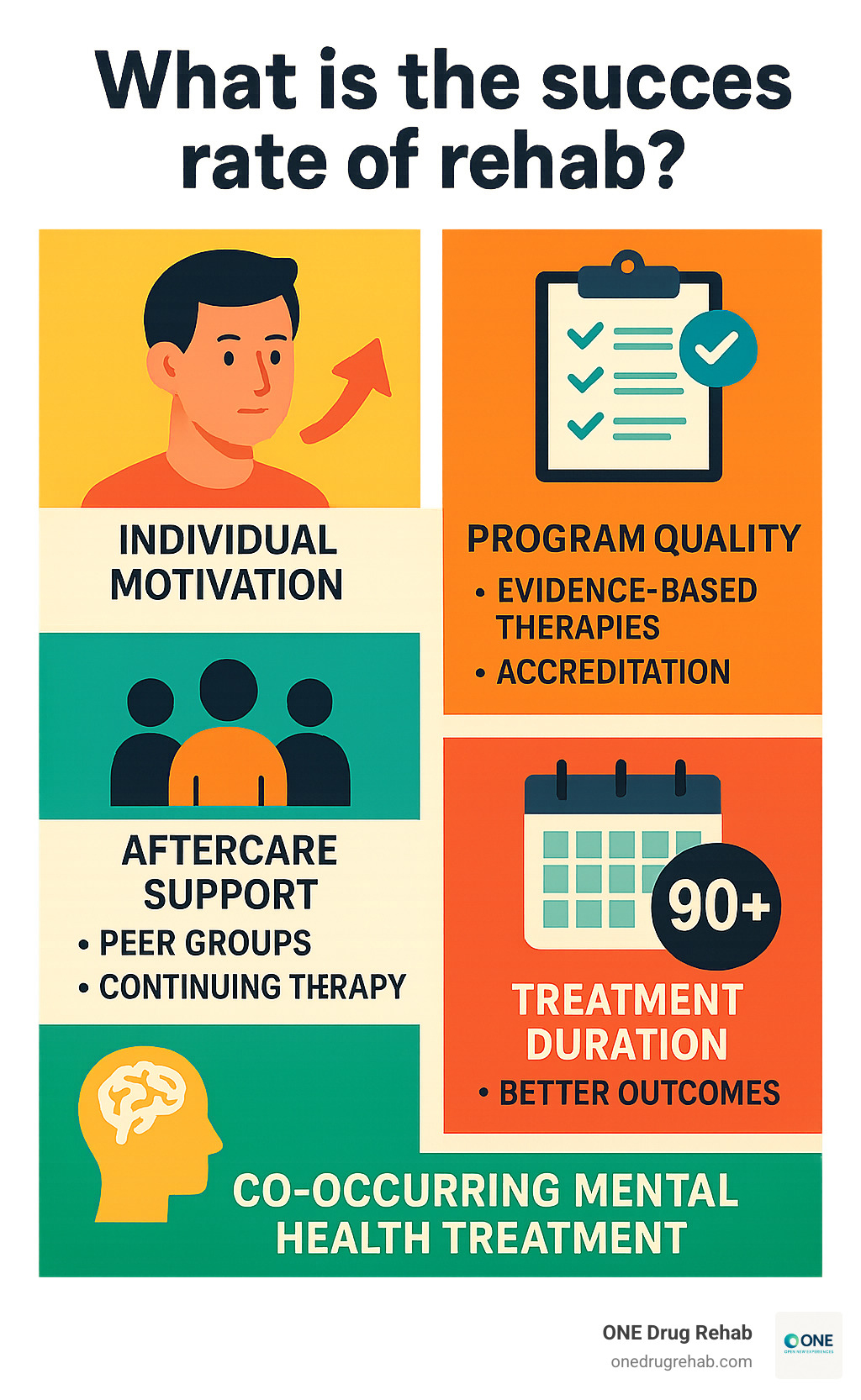
Simple guide to what is the success rate of rehab:
Redefining “Success”: What Does a Positive Rehab Outcome Really Mean?

When we talk about the success of rehab, it’s easy to fall into the trap of thinking it’s a simple, black-and-white metric. Did the person stop using drugs or alcohol completely, forever? While abstinence is often a primary goal, it’s not the only measure of a positive rehab outcome. In fact, defining success in rehab is a culmination of many different factors and can vary from person to person.
For us, success goes far beyond just getting clean. It encompasses a holistic improvement in an individual’s life. This can include:
- Reduced amount and frequency of substance use: Even if full abstinence isn’t immediately achieved, a significant reduction in use is a vital step forward.
- Improved quality of life: This is perhaps the most important indicator. Are they happier? More engaged? Do they have a positive outlook on life? Rehabs UK has found that individuals often have better mental health and a more positive outlook after staying in rehab.
- Better mental and physical health: Addressing co-occurring mental health issues and physical well-being is paramount. For instance, a study from the Canadian Centre on Substance Use and Addiction (CCSA) showed that 74.6% of people entering their program presented underlying mental health issues, and a remarkable 99% of those showed improvement after completing the program.
- Mended relationships: Rebuilding trust and connections with family and loved ones.
- Increased employment and social functioning: Becoming a productive member of society, maintaining a steady job, or pursuing education.
- Reduced criminal activity: A decrease in legal troubles and a return to law-abiding behavior.
A study of the Canadian Centre on Substance Use and Addiction (CCSA) on what life in recovery looks like showed that 51.2% of people achieved stable recovery without experiencing a single relapse. This highlights that for many, a sustained, stable recovery is indeed possible.
Beyond Sobriety: Measuring Holistic Improvement
Success in rehab is not measured by how quickly someone gets clean, how long they stay, or how much money they spend. It’s about fundamental shifts that support a healthier, more fulfilling life.
- Psychological functioning: Improvements in mood, thought patterns, and emotional regulation. Administering clinical assessments at the beginning and end of treatment can measure these changes.
- Self-esteem: A renewed sense of self-worth and confidence.
- Coping skills: Developing healthy mechanisms to deal with stress, triggers, and life’s challenges without resorting to substance use.
- Personal growth: Maturing, taking responsibility, and developing new interests and passions.
The Office of National Drug Control Policy provides a good overview of what effective addiction treatment should achieve, emphasizing these broader improvements beyond mere abstinence. We believe that identifying and understanding the underlying core issues that lead to addiction is crucial for authentic recovery.
For more insights into what success truly entails, explore our page on Addiction Recovery Success Rates.
Why Completion Rates Don’t Tell the Whole Story
While completion rates are often cited, they don’t fully capture the picture of success. Less than 43% of individuals who enter treatment for drug and alcohol use complete it. According to the Substance Abuse and Mental Health Services Administration (SAMHSA), around 45% of participants successfully complete treatment, with variations across program types (e.g., outpatient medication-assisted opioid therapy: 12%; intensive outpatient treatment: 37%; long-term residential treatment: 45%).
Retention rates, which measure the percentage of people who complete their program, are a useful indicator. The longer someone stays in treatment, the better their chances of sustained sobriety. However, a person might leave a program early for various reasons, some unrelated to the program’s effectiveness or their commitment to recovery. Similarly, completing a program doesn’t guarantee lifelong sobriety.
Therefore, while completion rates offer a glimpse, we emphasize looking at the quality of care received and the individual’s progress across all life domains.
What is the Success Rate of Rehab? A Look at the Numbers

When we dig into the numbers for what is the success rate of rehab, it’s important to understand that statistics can paint a complex picture. While there’s no single, universally agreed-upon “success rate” that applies to everyone, various studies offer valuable insights.
A study by the CDC and the National Institute on Drug Abuse revealed that 75% of people who experience addiction, and receive treatment for it, eventually recover. This statistic offers a powerful message of hope: recovery is not just possible, but highly probable for those who seek and engage in treatment.
In Canada, as mentioned earlier, a CCSA study showed that 51.2% of people achieved stable recovery without experiencing a single relapse. This indicates a significant portion of individuals can find lasting sobriety. However, it’s also worth noting that in the UK, out of all the people in therapy for addiction in 2021-2022, only 49% completed their treatment successfully. This highlights regional differences and the challenge of treatment retention.
Relapse Rates: A Realistic Perspective
Relapse is a common concern, and address it realistically. The National Institute on Drug Abuse reports that relapse rates for drug and alcohol use resemble those of other chronic diseases, including hypertension and diabetes, with an estimated 40-60% of individuals relapsing while in recovery.
This isn’t a sign of failure, but rather a characteristic of addiction as a chronic illness. Just as someone with diabetes might have a blood sugar spike, a person in recovery might experience a relapse. It means it’s time to try a new treatment or adjust the current approach, not that the hard work was for nothing. Research shows that people who are treated for substance use disorders are just as likely to relapse as those treated for diabetes, high blood pressure, and asthma. We believe this perspective helps reduce shame and encourages continued engagement with treatment.
Success Rates by Substance
The effectiveness of rehab can also vary depending on the substance of abuse and the specific treatment modalities used. Here’s a general overview:
| Substance Type | General Success Indicators (Post-Treatment) | Key Treatment Modalities & Specific Stats |
|---|---|---|
| Alcohol | Many maintain sobriety or significantly reduce consumption. | – One year after treatment: 25% maintain an alcohol-free life; remainder reduce alcohol by 87% (average 3 days sober per week). – AA (12-step): One study found 67% of those attending 27 weeks of AA were sober 16 years later, compared to 34% not attending AA. – The Lancet (12-step): Estimates only 5-8% of people who attend AA successfully maintain abstinence, highlighting varied views on 12-step efficacy. |
| Opioids | High success with Medication-Assisted Treatment (MAT). | – MAT: Up to 90% of people who receive MAT are less likely to use drugs after two years than those who don’t. – MAT: 90% reduction in heroin use. – MAT: Reduces deaths from addiction by 50% or more. – Completion rates: Up to 65% for inpatient care, 35% for outpatient. |
| Cocaine | Behavioral therapies are key. | – No FDA-approved drugs; disulfiram has shown promise. – Behavioral therapies: Contingency management is particularly effective. – Five-year follow-up: 42% used cocaine in the year prior, 25% weekly. Long-term residential treatment (90+ days) showed better outcomes. |
| Methamphetamine | Detox alone is ineffective; behavioral therapies are vital. | – Detox alone: No difference in meth use between detox participants and non-participants. – Residential rehab: 33% sober after 3 months, 14% after 1 year. – Matrix Model: 60% of participants were sober after six months. |
For a more in-depth look at success rates across different substances, check out our guide on the Success Rate of Rehab for Drugs.
Key Factors That Influence Addiction Treatment Outcomes

Understanding what is the success rate of rehab means looking beyond statistics and considering the many interconnected factors that influence a person’s journey. There’s no one-size-fits-all solution in addiction treatment. The interplay between individual characteristics, program quality, and the environment plays a crucial role.
Individual Factors: What is the success rate of rehab based on personal history?
A person’s unique background and circumstances significantly impact their treatment outcomes.
- Motivation to change: This is perhaps the most critical factor. If someone isn’t ready to change, even the best program might not yield lasting results. As the saying goes, “If you don’t want to change, you won’t.” However, effective treatment can help foster this motivation.
- Co-occurring mental health conditions: Many individuals struggling with addiction also have underlying mental health issues like anxiety or depression. A study showed that 74.6% of people entering a program presented underlying mental health issues, and 99% of those showed improvement after completing the program. Treating both concurrently (dual diagnosis) is absolutely necessary, as these conditions often fuel each other.
- Number of previous recovery attempts: Research suggests the journey to stable recovery often involves multiple attempts. A national study found the median number of serious recovery attempts made among adults who have resolved a problem with alcohol or other drugs in the United States was 2, with a mean of 5.35. Interestingly, a greater number of attempts was associated with higher current psychological distress, even after controlling for time in recovery. This highlights the emotional toll repeated attempts can take. Some groups, like non-Hispanic Black individuals and those who were not married, reported a greater number of recovery attempts.
- Length and severity of addiction: Generally, longer and more severe addictions may require more intensive and prolonged treatment.
- Support system at home: A supportive and understanding home environment can significantly bolster recovery efforts. Conversely, a lack of support or exposure to negative influences can make recovery more challenging.
To explore this further, especially concerning specific substances, you might find our article on What Percentage of Heroin Addicts Recover insightful.
Program Factors: What is the success rate of rehab for different treatment types?
The quality and type of rehab program chosen are paramount. Effective treatment programs incorporate a range of evidence-based practices and adapt to individual needs.
- Length of stay: This is a consistent predictor of success.
- Medication-assisted treatment (MAT) doesn’t improve patients’ results if administered for less than 90 days. Relapse rates are lower among those who get MAT for three years or more.
- The National Institute on Drug Abuse reports that ninety days of therapy is necessary for most addicts for treatment to be effective.
- One study found that the longer one stayed in treatment, the better the results. Substance abstinence rates were five times higher among those who stayed in treatment for longer than the minimum required time (28 days for inpatient and 90 days for prolonged stays).
- Evidence-based therapies: Look for programs that use therapies proven effective through research.
- Cognitive Behavioral Therapy (CBT): Highly effective, 50-75% effective in helping individuals overcome depression and anxiety within 5 to 15 sessions. It helps individuals identify and change negative thought patterns and behaviors.
- Dialectical Behavioral Therapy (DBT): Effective in reducing self-injurious behavior and suicide attempts. After 6 months of DBT treatment, 46% of people showed healthier behavior patterns, and after a year, 51% showed improved behavior patterns and lifestyles.
- Contingency Management: Rewards patients for positive behaviors, like staying sober.
- Inpatient vs. Outpatient programs: Both can be effective, depending on the individual’s needs.
- Inpatient programs typically have higher completion rates (up to 65%) compared to outpatient (35%).
- However, intensive outpatient programs (IOPs) can be as effective as inpatient treatment programs for alcohol and drug use disorders, offering flexibility for those with work or family commitments.
- Dual diagnosis treatment: As mentioned, treating co-occurring mental health conditions simultaneously with addiction is critical. This integrated approach addresses the root causes and prevents self-medication.
- Staff-to-patient ratio: High staff-to-patient ratios ensure clients receive more personalized time and attention, which is crucial for effective treatment. Low ratios can compromise patient care.
To learn more about the different approaches, visit our page on Types of Addiction Treatment.
How to Identify an Effective Rehab Facility
Choosing the right rehab facility is a critical step. We recommend looking for places that are effective and suit your needs.
- Accreditation and licensing: Ensure the facility is accredited by reputable organizations (e.g., CARF, The Joint Commission) and licensed by the state. This signifies adherence to high standards of care. You can find more information on Rehab Accreditation Standards.
- Medically trained staff: A multidisciplinary team, including physicians, nurses, psychiatrists, therapists, and addiction counselors, ensures comprehensive care.
- Customized treatment plans: A good rehab will assess individual needs and tailor a treatment plan, rather than using a “one-size-fits-all” approach.
- A full continuum of care: This means the facility offers or coordinates multiple stages of treatment, typically starting with medical detox (which alone is ineffective for long-term recovery), progressing through residential or intensive outpatient care, and ending with long-term aftercare. Over 20 years of research studies confirm this staged approach improves outcomes.
- Questions to ask: When researching, don’t hesitate to ask about:
- The qualifications of their staff.
- The specific therapies offered and their evidence base.
- Their approach to dual diagnosis.
- Their aftercare planning and alumni programs.
- Their success rates (understanding the nuances of how they define it).
- Reviews and testimonials from former clients. You can check out Rehab Facility Reviews to get started.
Life After Rehab: The Crucial Role of Aftercare and Ongoing Support
Completing a rehab program is a monumental achievement, but it’s just the beginning. Recovery is a lifelong journey, not a destination. What does a successful recovery look like after completing a rehab program? It means building a new life, free from the grip of addiction, and continuously working to maintain that freedom. This involves sustained effort, developing healthy habits, finding new hobbies, and, crucially, a strong support network.
Building Your Support System
One of the most vital components of long-term recovery is a robust support system. This can include family, friends, and peers who understand the challenges of addiction.
- Peer support groups: Attending groups like Alcoholics Anonymous, Narcotics Anonymous, or SMART Recovery provides a community of individuals facing similar struggles. Studies have shown that people who attend 12-step meetings can significantly increase their sober days and long-term sobriety. For example, one study found that people who attended 12-step meetings were able to spend 80% of their days sober 1 year after treatment, while 19% did not drink at all. Another study indicated that after sixteen years of sobriety, 67 percent of those who attended 27 weeks of AA were still sober, compared to only 34 percent of those who didn’t participate in AA.
- Family therapy: Involving family members in the recovery process can heal relationships and create a more supportive home environment.
- Sober living homes: These provide a structured, drug-free living environment for individuals transitioning out of inpatient rehab, offering accountability and peer support.
- Alumni programs: Many rehab facilities offer alumni programs that connect former clients, providing ongoing support, check-ins, and a sense of community.
Maintaining Long-Term Recovery
Maintaining sobriety requires ongoing vigilance and proactive strategies.
- Continuing therapy: Regular individual or group therapy sessions can help address new challenges, process emotions, and reinforce coping skills.
- Relapse prevention planning: Developing a personalized plan to identify triggers and strategies to manage cravings and high-risk situations.
- Managing triggers: Learning to recognize and avoid or cope with people, places, and emotions that might provoke a desire to use.
- Celebrating milestones: Acknowledging and celebrating periods of sobriety reinforces positive behavior and builds confidence.
- Embracing a sober lifestyle: Finding new, healthy ways to occupy time, pursuing passions, volunteering, and engaging in activities that bring joy and fulfillment.
Conclusion: Your Path to a Successful Recovery
We’ve explored what is the success rate of rehab from various angles, from broad statistics to the nuanced individual factors that contribute to lasting change. What becomes clear is that success is highly personal and multifaceted. It’s not just about abstinence, but about rebuilding a life of purpose, health, and connection.
Addiction is a chronic disease, and recovery is a lifelong journey that may include setbacks. But these setbacks are not failures; they are opportunities to adjust, learn, and grow. The overwhelming evidence shows that treatment works, and recovery is not just a dream but a tangible reality for millions.
At ONE Drug Rehab, we understand the complexities of this journey. Our goal is to empower you with information and resources, offering a third-party, non-affiliated platform where you can research treatment options without bias. We believe that with the right support, commitment, and personalized care, hope and recovery are possible for everyone.
Your path to a successful recovery begins with taking that first step, armed with knowledge and realistic expectations. Take the time to understand your options, ask the right questions, and find a program that truly aligns with your needs.
Ready to take control of your future? Compare Rehab Centers to start your journey today.