

Why Finding Affordable Treatment Centers Shouldn’t Be a Barrier to Recovery
Affordable treatment centers provide quality addiction recovery services without the financial burden that prevents many from getting help. While some private rehabs charge $20,000 to $60,000, effective recovery options exist for far less—sometimes even for free.
Quick Answer for Finding Affordable Treatment:
- Outpatient programs: $1,000-$10,000 (vs. $6,000-$60,000 for inpatient)
- State-funded centers: Free or sliding scale based on income
- Community programs: Often under $5,000 for 3-month programs
- Insurance coverage: ACA requires mental health and addiction coverage
- Payment options: Financing, grants, and scholarship programs available
The cost of addiction itself tells the story. A daily 12-pack of beer costs over $3,000 a year, not including legal fees or lost income. In contrast, year-long methadone treatment is about $4,700, and many three-month outpatient programs cost around $5,000.
You don’t need luxury amenities for life-saving treatment. The same evidence-based therapies and medical supervision available in expensive facilities are offered at affordable centers. The difference is in the perks, not the quality of care.
This guide will show you how to find quality, affordable addiction treatment that fits your budget and needs. Recovery shouldn’t depend on your bank account—and it doesn’t have to.
Understanding the Factors That Influence Treatment Cost
Understanding what drives treatment prices can help you find affordable treatment centers that fit your budget. Several key factors determine the cost, from the level of care you need to the amenities offered. The good news is that quality recovery doesn’t require the most expensive option. For a detailed breakdown of how different programs compare, check out our rehab cost comparison guide.

Inpatient vs. Outpatient Programs
The biggest cost difference comes down to whether you live at the treatment center or go home each night.
Residential care means staying at the facility 24/7 for structured, round-the-clock support, including a bed, meals, and constant medical supervision. This intensive setup naturally costs more. Most 30-day inpatient programs run $6,000 to $20,000, with longer stays costing more. This 24/7 support can be life-saving for those with severe addiction or co-occurring mental health issues. If this sounds right for you, explore more inpatient rehab options.
Outpatient programs allow you to live at home and maintain your work or school schedule while attending treatment sessions. Without room and board, costs drop significantly. Many three-month outpatient programs cost around $5,000 to $10,000. This flexibility is ideal for those with a stable home environment and strong support. To understand how this works, read about how outpatient rehab programs work.
Program Length and Services Offered
The duration of your treatment and the services included also affect the final bill.
While 30-day programs are a common starting point, research shows that longer 60 to 90-day programs often lead to better long-term success.
Medical detox is often the first step for physical dependence, providing supervised care during withdrawal. It may be included in an inpatient program’s price or cost $1,000 to $1,500 as a standalone outpatient service.
Specialized therapies like individual counseling, cognitive behavioral therapy, or trauma-focused treatment also impact cost. Programs that handle co-occurring disorders (addiction alongside mental health issues) require specially trained staff, which can increase the price.
Finally, consider the amenities level. Luxury amenities like private rooms or spa services increase costs but aren’t essential for recovery. Affordable treatment centers focus resources on proven therapies and qualified staff, which is where the real value lies.
Want to see all the different approaches available? Browse through the various types of addiction treatment to find what resonates with you.
Types of Affordable Addiction Treatment Programs
Affordable treatment centers come in many forms, so you don’t have to choose between getting help and staying financially stable. From community programs to flexible outpatient care, there is a structure that can fit your life and budget.
Exploring Affordable Treatment Options
Many effective programs operate on sliding scale fees, adjusting prices based on your income to make care accessible. Community-based and government-funded centers often provide the same evidence-based therapies as expensive facilities, just with fewer luxuries.
Local support groups like AA and NA are free and have helped millions achieve sobriety. They are an effective primary recovery tool or a complement to professional treatment.
Be aware that government-funded programs may have waitlists of 14 to 60 days. Don’t be discouraged; use this time to connect with free support groups and build your recovery foundation. For help finding these resources, check out our guide to affordable drug and alcohol rehab centers.
If you need immediate help and cost is a major concern, our page on free alcohol rehab centers can point you toward options that won’t cost you anything upfront.
Outpatient Options for Cost-Effective Care
Outpatient treatment is where affordability and flexibility shine. You can maintain your daily routine while getting the support you need.
Standard outpatient programs typically involve therapy sessions a few times per week, including individual, group, and family counseling.
Intensive Outpatient Programs (IOP) offer more structure with 9-20 hours of treatment per week, ideal for those who need more support but can’t commit to residential care. Our guide to intensive outpatient rehab programs near you can help you find local options.
Partial Hospitalization Programs (PHP) provide the most intensive outpatient care, with treatment during the day and returning home at night.
Telehealth services have made treatment more accessible and affordable by offering virtual counseling sessions that eliminate travel time and costs.
For those who qualify, outpatient detox can be a safe, less expensive alternative to inpatient withdrawal management. Learn more about outpatient detox programs to see if it’s right for you.
The key advantage of outpatient care is staying connected to your community while practicing recovery skills in your real-world environment from day one.
How to Pay for Affordable Treatment Centers
Figuring out how to pay for treatment can feel overwhelming, but you have more options than you might think. Most people find a way to make it work financially, even when it seems impossible at first. We’ve helped thousands steer these waters, and we have resources for your situation, including our guide on addiction treatment without insurance.

Using Insurance to Cover Costs
Your insurance likely covers more than you realize, making affordable treatment centers more accessible than ever.
The Affordable Care Act (ACA) requires insurance plans from the marketplace or employers to cover mental health and substance use treatment as essential benefits.
Medicaid often covers a wide range of treatment services for those who qualify based on income. It’s worth checking your eligibility, as many people who qualify don’t realize it.
Medicare also covers addiction treatment for those 65 and older or with certain disabilities.
If you have private insurance, your plan likely includes both inpatient and outpatient treatment options, though coverage varies.
Don’t guess about your coverage. Verify it easily with our rehab insurance verification tool to avoid financial surprises.
Financing and Other Payment Solutions
If you’re uninsured or insurance doesn’t cover everything, there are still plenty of options.
Healthcare financing is accessible through medical loans or healthcare credit cards, which often have no-interest promotional periods.
Many affordable treatment centers offer payment plans, allowing you to spread costs over time.
Grants and scholarships for addiction treatment are available from non-profits, religious groups, and government programs, though they may require some research to find.
Crowdfunding on platforms like GoFundMe can be successful, as your story may resonate with others who want to help.
Family support is also a key resource. Many families are willing to help financially when they understand treatment is an investment in recovery. Our rehab for families resource can help with these conversations.
Using personal savings is an investment in your future that often pales in comparison to the ongoing financial drain of addiction.
The bottom line is that where there’s a will, there’s a way. Your recovery is worth fighting for financially.
Finding the Right Low-Cost Rehab for You
Finding the right affordable treatment center is about more than price; it’s about matching the care to your personal needs. Before you search, assess your situation: What substances are involved? Do you have co-occurring mental health issues like anxiety or depression? Understanding your needs will help you find the best program.

Online directories, government resources, community health centers, and state-funded programs are excellent places to find quality, affordable options.
How to Compare Affordable Treatment Centers
Once you have a list of potential centers, it’s time to compare them carefully.
Accreditation from bodies like the Joint Commission or CARF ensures a center meets high standards for safety and quality. Our guide on rehab accreditation standards explains what these mean.
Staff credentials are also vital. Ensure doctors and therapists are licensed professionals with addiction treatment training. Reputable centers will be transparent about their staff’s qualifications.
Evidence-based practices are therapies backed by scientific research, such as cognitive behavioral therapy (CBT) and dialectical behavior therapy (DBT). Quality centers use these proven methods.
When looking at success rates and patient reviews, be curious but cautious. Reputable centers should be transparent about their outcomes. Reading rehab facility reviews offers insight, but recovery is highly personal.
Finally, compare what’s included in the program cost. Ensure core components like detox, therapy, and aftercare planning are covered.
The Importance of Addressing Co-Occurring Disorders
About 50% of people with substance use disorders have dual diagnoses, meaning they also have conditions like anxiety, depression, or PTSD.
Addiction rarely exists in a vacuum. Often, substance use is a way to cope with untreated anxiety, trauma, or depression. Recovery is much more challenging without addressing these underlying issues.
Integrated treatment addresses both addiction and mental health simultaneously. This dual-diagnosis approach recognizes the issues are interconnected and require coordinated care.
When evaluating affordable treatment centers, ask about their capacity for co-occurring disorder treatment. Do they have staff trained to provide both addiction counseling and mental health therapy? Many affordable programs understand this connection and offer integrated services, which pays dividends in long-term recovery.
The Long-Term Value of Investing in Treatment
The cost of continued addiction is almost always higher than the cost of getting clean. While it’s hard to see the big picture during active addiction, affordable treatment centers are a sound financial investment that saves money in the long run.
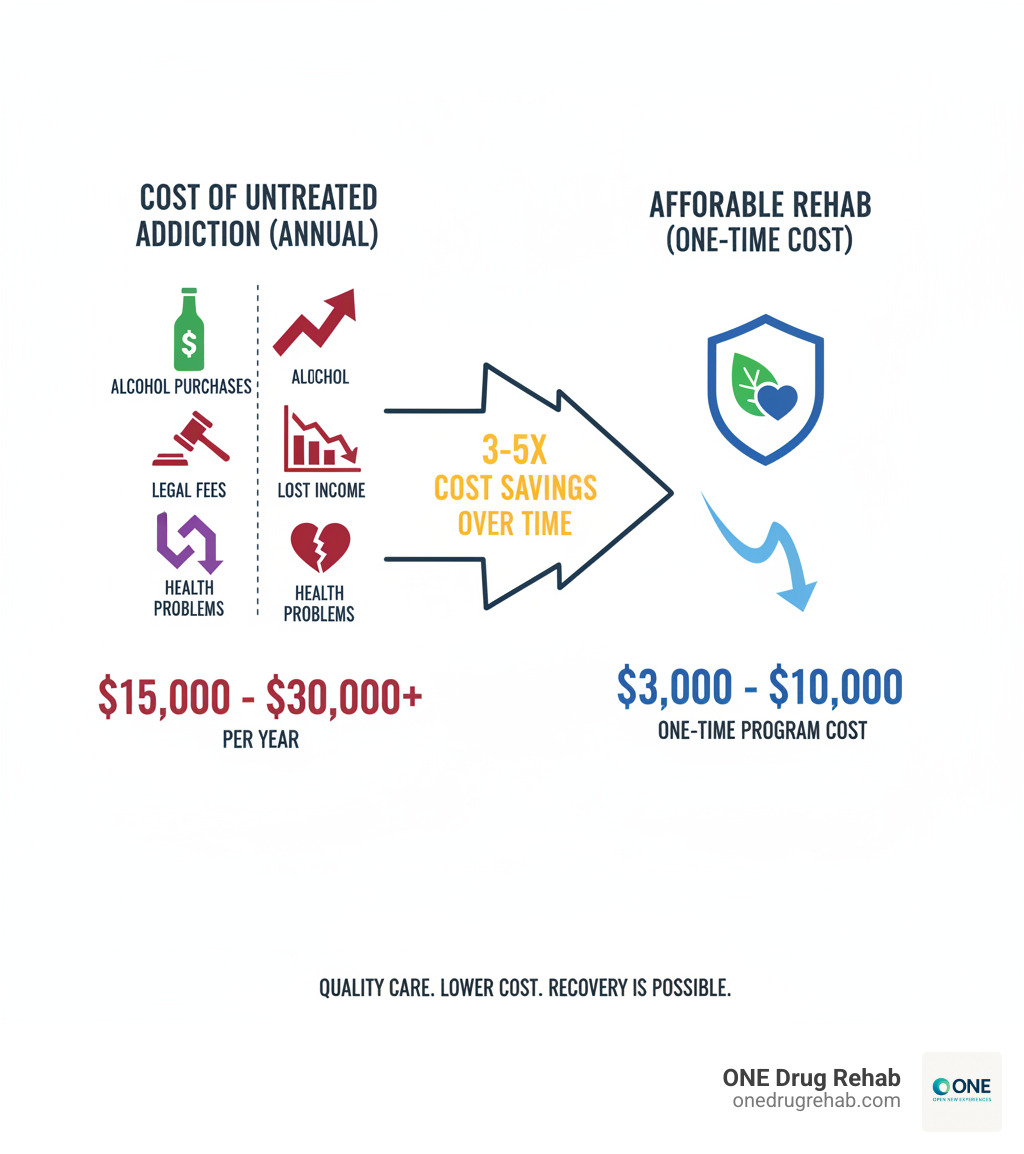
Consider that a daily drinking habit can cost over $3,000 a year on alcohol alone. The hidden costs of untreated addiction add up even faster. Legal troubles can cost over $10,000, while lost income from missed work or job loss can reach tens of thousands annually. Medical bills from ER visits and chronic health issues add thousands more.
In contrast, a $5,000 outpatient program can prevent decades of these escalating costs. Even a $20,000 inpatient program often pays for itself within the first year of sobriety through improved employment and avoided legal issues.
The return on investment goes far beyond money. People in recovery often share success stories of getting their lives back—rebuilding relationships, feeling proud of their work, and even starting new careers or businesses.
The health benefits are remarkable, as your body begins to heal almost immediately. This leads to fewer doctor visits and a lower risk of serious conditions like liver or heart disease.
Career stability often returns quickly. Employers value reliable workers, and many people in recovery find they earn more within a year or two of treatment than they ever did while using.
Getting treatment can help you avoid the long-term consequences of legal problems, like a DUI on your record that affects insurance rates and job prospects for years.
Perhaps most valuable are the repaired relationships. Addiction isolates people, but treatment helps rebuild those connections with loved ones, which is crucial for a meaningful life in recovery.
A treatment program that prevents tens of thousands in annual addiction-related costs isn’t an expense—it’s one of the smartest investments you can make.
To get a better sense of how effective treatment can be, look at our information on addiction recovery success rates. The numbers are more encouraging than many realize.
Frequently Asked Questions about Affordable Treatment
It’s natural to have questions when considering affordable treatment centers. Here are honest answers to some of the most common concerns.
Does “affordable” mean lower quality care?
This is a common worry, but affordable doesn’t mean inferior in addiction treatment. These centers focus resources on what matters: evidence-based care, qualified staff, and proven therapies. You’ll receive the core elements of effective recovery, just without luxury amenities like private rooms or spa services. The staff are often just as qualified and passionate as those at expensive facilities.
Are free or low-cost rehab centers really effective?
Yes, they can be highly effective. Many are state or federally funded and use the same evidence-based practices as expensive private centers. The quality of therapy is what matters most for recovery. However, be prepared for potential waitlists (sometimes 14-60 days) and more basic facilities. The key is that you can still find life-changing support from caring, qualified counselors.
How can I get help immediately if I have no money?
If you need help immediately with no money, you have several free options.
- The SAMHSA National Helpline at 1-800-662-HELP (4357) is a 24/7 service that connects you to local resources, regardless of your ability to pay. You can also find information on the National Helpline website.
- If you’re in crisis, call or text 988 for the free and confidential Suicide & Crisis Lifeline.
- Community health clinics often provide addiction services on a sliding scale or for free.
- Local support groups like AA or NA offer immediate, free peer support.
- Emergency rooms can provide urgent medical care for withdrawal or overdose and connect you with follow-up resources.
You can also call our 24-hour rehab hotline anytime for help finding resources that fit your situation. Asking for help is a brave first step.
Conclusion
Your recovery journey doesn’t have to wait. As we’ve seen, affordable treatment centers offer the same life-changing, professional care as expensive facilities, focusing on therapy rather than luxury amenities.
The math is compelling: addiction drains thousands annually, while treatment is a one-time investment that pays dividends for life. A $5,000 outpatient program is a bargain compared to the ongoing cost of addiction.
From sliding scale fees and insurance coverage to effective outpatient programs, quality care is available at every price point. The key is finding an accredited facility with qualified staff and evidence-based treatments.
At ONEDrugRehab.com, our mission is to connect you with these opportunities. As a third-party, unbiased resource, we help you research and compare options without sales pitches, because we believe everyone deserves access to quality treatment.
The most expensive treatment is useless if you don’t take the first step, while an affordable program can change everything. Your journey can start today with a call to a local clinic, verifying your insurance, or attending a free support group. Recovery is possible—take that brave first step. For a comprehensive approach, consider exploring holistic treatment programs that integrate traditional therapy with wellness practices.
Your future self is counting on you.