

Why Understanding Rehab’s Benefits Can Change Your Life
Benefits of rehab go beyond stopping substance use; they offer a path to rebuild your health, relationships, and quality of life. Understanding these benefits is a crucial first step for anyone considering treatment for themselves or a loved one.
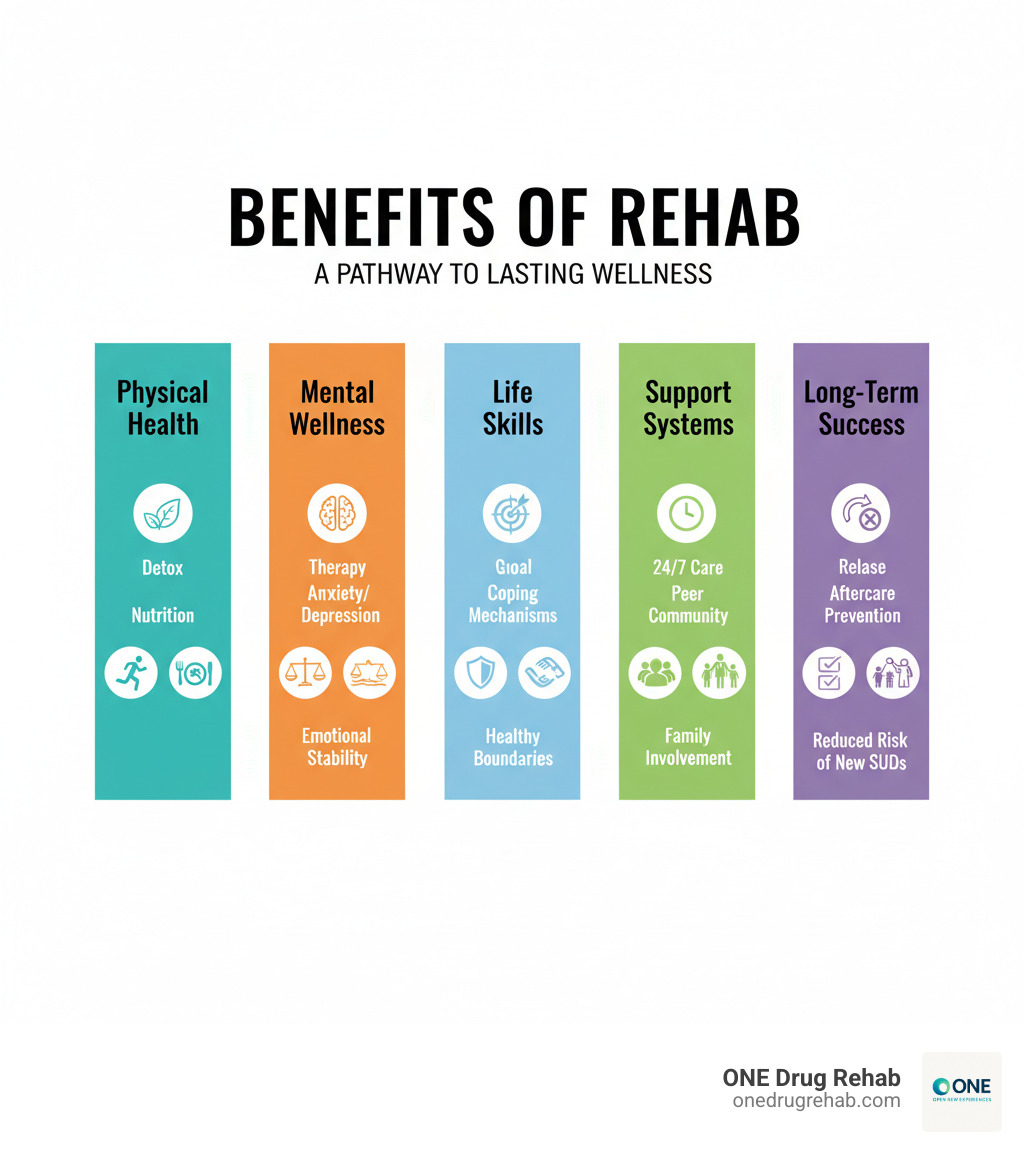
Quick Overview: The Core Benefits of Rehabilitation
Health & Wellness
- Safe medical detoxification with supervised withdrawal management
- Treatment of underlying physical and mental health conditions
- Improved nutrition, sleep, and overall physical health
Structure & Skills
- Daily routines that replace destructive habits
- Coping mechanisms for managing stress and cravings
- Goal-setting abilities for long-term success
Support & Community
- 24/7 access to medical and emotional support
- Connection with peers who understand your struggles
- Rebuilding damaged relationships with family and friends
Long-Term Success
- Significantly reduced relapse risk (less than half compared to those who don’t receive treatment)
- Aftercare planning and ongoing support networks
- Tools for maintaining sobriety and preventing future substance use disorders
Globally, an estimated 2.4 billion people live with conditions that could benefit from rehabilitation, yet over half in many regions go without care. The good news is that studies show completing treatment leads to improved occupational, psychological, and social functioning, along with decreased criminal activity.
Rehab isn’t just about surviving withdrawal—it’s about learning to thrive. It provides the support needed to address addiction’s root causes, develop healthy coping strategies, and build a foundation for recovery. Research shows that the sooner rehabilitation begins after a problem is recognized, the better the outcome.
The Core Benefits of Rehab for Personal Change
Addiction can leave you feeling disconnected from your life. The benefits of rehab go beyond stopping substance use; they introduce a new way of living with energy, purpose, and hope.

Rehab addresses both physical and mental health simultaneously. It’s not just about detoxing from substances—it’s about rebuilding your body, calming your mind, and learning to manage your life effectively. You’ll develop self-management strategies that promote healthy aging and a productive life that feels worth living again.
Understanding the Physical and Mental Benefits of Rehab
One of the most critical benefits of rehab is safe, medically-supervised detox. Abruptly stopping substance use can be dangerous and even deadly. For example, alcohol withdrawal can cause seizures, as Harvard Health explains, while opioid and methamphetamine withdrawal can lead to severe physical and psychological complications. Attempting detox alone is a medical risk.
In rehab, medical professionals provide 24/7 monitoring and can administer medication to manage withdrawal symptoms, making detox safer and more bearable.
Physical healing continues after detox. Rehab addresses underlying health conditions with nutritional guidance, exercise routines, and strategies to restore healthy sleep patterns. These elements are essential for both physical recovery and emotional stability.
The mental and emotional benefits are equally profound. Rehab provides therapy to reduce the anxiety and depression that often accompany addiction. You’ll learn self-care and self-awareness strategies to manage difficult emotions without substances. For those with co-occurring disorders, approaches like holistic depression treatment can address both conditions simultaneously, treating the whole person.
Building Life Skills and Healthy Habits for the Future
Addiction dismantles daily life, making basic routines and responsibilities feel unmanageable. Breaking this cycle means rebuilding structure from the ground up.
One of the most valuable benefits of rehab is the structure it provides. A predictable daily schedule of meals, therapy, and activities replaces chaotic patterns with positive habits. For someone whose life has been ruled by addiction, this routine is revolutionary.
Through therapy, you’ll build a toolkit of essential life skills. This includes developing effective coping mechanisms, identifying personal triggers, and learning to manage cravings. You’ll also learn to challenge and change the dysfunctional thinking patterns that fuel addiction. Goal setting helps you define objectives for sobriety, health, and relationships, building confidence as you achieve them. Crucially, you’ll learn to set healthy boundaries to protect your recovery and rebuild trust with loved ones.
These skills improve overall social functioning, helping you communicate effectively and steer social situations sober. As research shows, completing rehab leads to significant improvements in occupational, psychological, and social well-being. Many facilities offer holistic treatment programs that integrate these skills with wellness practices like yoga and mindfulness, helping you build a life you don’t want to escape from.
How Successful Rehab Programs Foster Lasting Change
Effective rehab programs provide person-centered care, recognizing you as a whole person, not just a diagnosis. They understand that no single approach works for everyone and tailor treatment to your unique circumstances, mental health, and medical history.

Successful programs use evidence-based therapies—like cognitive behavioral therapy (CBT) and dialectical behavior therapy (DBT)—adapting them to your specific needs rather than using a one-size-fits-all protocol.
Timing is crucial. Research shows that the sooner rehabilitation begins after a problem is recognized, the better the outcome. This doesn’t mean rushing, but rather not letting fear delay necessary help. The benefits of rehab are greatest when treatment starts early.
Continuity of care is another key element. Successful programs plan your transition back to daily life from day one, ensuring you have ongoing support and resources. Understanding the different types of addiction treatment can help you choose the best approach.
Inpatient vs. Outpatient: Choosing the Right Environment
Choosing between inpatient and outpatient treatment is a key decision. The right answer depends on your addiction’s severity, home environment, and personal responsibilities.
Inpatient (or residential) rehab involves living full-time at a facility with 24/7 medical supervision and a structured routine. This immersive environment is ideal for managing dangerous withdrawal symptoms and removing you from triggers. It is often recommended for severe addictions or for those with unsupportive home environments, as it offers higher detox completion rates.
Outpatient rehab offers more flexibility and affordability. You live at home and attend scheduled treatment sessions, allowing you to maintain work or family commitments. This option works well for those with less severe addictions and strong support systems, but it requires significant self-discipline. It can also serve as a step-down from inpatient care. You can find more details in a guide to outpatient rehab programs.
Here’s a quick comparison:
| Feature | Inpatient Rehab | Outpatient Rehab |
|---|---|---|
| Structure | Highly structured, 24/7 supervision | Flexible, allows living at home |
| Medical Supervision | Constant medical monitoring, especially during detox | Scheduled medical appointments, less constant |
| Cost | Generally higher, includes lodging | Generally lower, no lodging costs |
| Flexibility | Limited, full-time commitment | High, allows maintaining work/family responsibilities |
| Success Rates | Higher detox completion rates, better outcomes for severe SUDs | Effective for less severe addictions, requires strong self-discipline |
Many people start with inpatient care and then transition to outpatient services. You can explore more about how residential and outpatient programs compare to see which might fit your situation.
The Power of a Multidisciplinary Team and Family Support
Profound benefits of rehab come from a multidisciplinary team working on your behalf. Since addiction affects every aspect of life, a single professional isn’t enough. A comprehensive team may include doctors, nurses, therapists, counselors, social workers, and dietitians. A care manager coordinates this team to ensure your treatment is seamless and comprehensive.
This team collaborates regularly to discuss your progress, adjust your treatment plan, and prepare for discharge, ensuring all your needs are met.
Family involvement is another critical component. Quality programs involve loved ones through family counseling and educational sessions. This helps repair relationships, teaches family members how to provide healthy support, and addresses family dynamics that may contribute to substance use. Identifying a primary caregiver early on helps the team communicate effectively and ensures someone is prepared to support you after discharge. This professional and personal support network makes long-term recovery sustainable.
The Ripple Effect: Rehab’s Impact on Community and Society
The benefits of rehab extend beyond the individual, creating a positive ripple effect on families, communities, and society. When a person recovers, they don’t just reclaim their own life; they become a positive force for others.
When someone completes treatment, they are more likely to secure meaningful employment, reconnect with family, and contribute to their local economy. Research shows that people who attend treatment experience increased occupational, psychological, and social functioning, along with decreased criminal activity. This is transformative for everyone.
Communities with better access to rehab see tangible improvements like lower crime rates and safer neighborhoods. Families heal, and workplaces benefit from more productive and reliable employees.
Rehab also helps shift the societal view of addiction from a moral failing to what science shows it is: a treatable disease that changes brain function. This medical understanding reduces stigma, fosters empathy, and encourages more people to seek help without shame. It helps families understand their loved one is struggling with a chronic condition that requires professional treatment, just like diabetes or heart disease.
Exploring the Long-Term Benefits of Rehab for Sustained Recovery
One of the most significant benefits of rehab is learning not just to get sober, but to stay sober and build a fulfilling life.
Effective programs prepare you for long-term recovery. Relapse prevention is a cornerstone, teaching you to recognize triggers and manage cravings. This is supported by robust aftercare planning, which starts during treatment and may include ongoing individual therapy or a stay in a sober living environment. Peer support groups like Alcoholics Anonymous or SMART Recovery are also vital, offering a community of people who understand the journey and provide accountability, encouragement, and hope.
Research is encouraging: people who achieve recovery have less than half the risk of developing a new SUD compared to those who don’t. This shows that recovery builds genuine resilience and healthier coping skills.
Addiction is often a chronic condition, as discussed in research from Harvard Medical School. This means it may require ongoing management, much like other chronic illnesses. With the right tools and support, sustained recovery is absolutely achievable. For more insights, explore addiction recovery success rates.
Economic and Societal Return on Investment
The economic benefits of rehab are also significant. Substance abuse costs the U.S. over $600 billion annually in healthcare, lost productivity, and criminal justice expenses. According to NIDA research, addiction treatment has been shown to reduce these overall costs, offering a substantial return on investment.
Effective rehabilitation leads to measurable savings: healthcare costs drop due to fewer emergencies and complications; productivity increases as people return to work and contribute to the economy; and criminal activity decreases, lowering the burden on the justice system.
These benefits highlight a global reality. An estimated 2.4 billion people worldwide have conditions that could benefit from rehabilitation, yet in some countries, over 50% of those in need don’t receive services, according to WHO data on the global need for rehabilitation. Investing in accessible, quality rehabilitation isn’t just compassionate—it’s smart economics and a key strategy for global well-being.
Frequently Asked Questions about the Benefits of Rehab
Deciding to pursue treatment comes with many questions. Here are honest answers to some common concerns.
How does rehab help you stay drug-free after treatment?
Rehab provides tools for lifelong recovery, not just short-term abstinence. Key strategies include:
- Coping Skills: You’ll learn practical ways to manage stress, anxiety, and other emotions that previously led to substance use.
- Trigger Management: Therapy helps you identify personal triggers and develop strategies to handle them effectively.
- Aftercare Planning: Before you leave, a plan is created for your continued success. This includes connecting you with ongoing therapy and peer support groups (like AA or NA).
These support networks and relapse prevention strategies become your foundation for staying drug-free. For a deeper look, see how rehab works.
What are the key components of a successful rehabilitation program?
A successful program addresses your whole well-being. Key components include:
- Medically-Supervised Detox: To ensure a safe and comfortable withdrawal.
- Individualized Therapy: Using evidence-based methods like CBT and DBT custom to your needs.
- Group Counseling: To build connections with peers who understand your struggles.
- Family Involvement: To heal relationships and create a supportive home environment.
- Holistic Therapies: Such as yoga or meditation to support overall wellness.
- Comprehensive Aftercare Planning: To ensure a smooth transition and ongoing support after you leave.
Always look for accredited staff and facilities to ensure high-quality care. You can learn more about rehab accreditation standards.
Is rehab worth the cost?
While rehab is a financial commitment, the cost of untreated addiction is far greater. Consider the expenses of substances, healthcare emergencies, lost wages, and legal fees. Substance abuse costs the U.S. over $600 billion annually, a burden felt by individuals and families.
In contrast, the benefits of rehab provide a significant return on investment:
- Health Savings: Reduced emergency room visits and medical complications.
- Improved Employment: Increased productivity and financial stability.
- Reduced Legal Issues: Fewer fines, court costs, and career-damaging records.
The true value, however, is immeasurable. It’s the repaired relationships, restored self-worth, and the chance to build a healthy, productive life free from addiction. The question isn’t whether rehab is worth the cost, but what it’s costing you not to go. If you’re concerned about finances, explore how to afford rehab.
Conclusion: Your Journey to a Healthier Life Starts Here
As we’ve explored, the benefits of rehab are transformative, going far beyond just stopping substance use. Rehabilitation is about reclaiming your life. Physically, your body heals. Mentally, you gain clarity and coping skills. Socially, you rebuild trust and reconnect with your community. These are the tangible changes that lead to lasting recovery.
Perhaps most importantly, rehab offers hope for recovery. It teaches you that addiction is a treatable disease, not a character flaw, shifting the narrative from shame to healing. This personal victory creates a ripple effect: families heal, communities become safer, and society benefits. Your recovery is a gift to everyone.
Taking the first step is often the hardest part, and it’s normal to feel overwhelmed or afraid. But your willingness to consider your options is where change begins.
At ONEDrugRehab.com, our goal is to make that step easier. As a neutral, third-party resource, we provide clear, honest information to help you research options and make an informed decision without a sales pitch. We’re here to help you understand different treatments, costs, and how rehab works.
Your journey starts now, with the decision to seek help. You don’t have to do it alone. Let us help you find the right treatment program for you. Recovery is within reach.