
Why Conventional Addiction Treatment Isn’t Enough
Functional medicine addiction treatment offers a groundbreaking approach, moving beyond symptom management to address the biological, biochemical, and lifestyle factors that drive substance use disorders.
Quick Answer: What is Functional Medicine for Addiction?
- Root Cause Focus: Identifies and treats underlying imbalances (gut health, nutrition, genetics, trauma) rather than just managing symptoms.
- Personalized Treatment: Uses diagnostic testing to create customized protocols based on your unique biochemistry.
- Integrative Approach: Combines medication-assisted treatment with nutrition, supplements, lifestyle changes, and therapy.
- Whole-Person Care: Addresses physical, mental, emotional, and spiritual aspects of recovery.
- Goal: Restore optimal brain chemistry and body function to reduce cravings and prevent relapse.
The numbers are sobering: conventional addiction treatment fails 60-75% of the time, with over 60% of people relapsing within a year of completing rehab. In 2020, an estimated 40.3 million Americans had a substance use disorder, yet most lacked comprehensive care.
Traditional treatment focuses on willpower and counseling, but addiction is more than a psychological issue. It’s a complex biological disorder involving brain chemistry, genetics, gut health, nutritional deficiencies, and nervous system dysregulation.
Functional medicine asks a different question: “Why is your body and brain vulnerable to addiction?” This shift from symptom suppression to root cause resolution is changing addiction recovery. By combining medication-assisted treatment with targeted interventions for gut health, detoxification, nutrition, and trauma healing, functional medicine offers hope where conventional methods have fallen short.
Basic functional medicine addiction glossary:
A New Paradigm: Functional vs. Conventional Addiction Treatment
Addiction is a complex medical illness, not a moral failing. While modern science recognizes it as a chronic disorder with neurobiological roots, conventional treatment models often fall short. Relapse rates are high—a staggering 60% to 75% of individuals relapse within a year—highlighting a critical gap in care.
This is where functional medicine addiction treatment steps in. It is a patient-centered, science-based approach that focuses on identifying and addressing the root causes of disease, rather than just managing symptoms. It views the body as an interconnected system, a sharp contrast to conventional methods that are often symptom-focused and use generalized protocols.
Here’s a quick comparison:
| Feature | Conventional Addiction Treatment | Functional Medicine Addiction Treatment |
|---|---|---|
| Focus | Symptom management, behavioral modification | Root cause identification and resolution |
| Approach | Generalized protocols, often one-size-fits-all | Personalized plans based on individual biochemistry |
| Care Integration | Often separate mental and physical health care | Integrated mind-body care, holistic perspective |
| Underlying Factors | Primarily psychological, social, and behavioral | Biological, biochemical, genetic, environmental, lifestyle, psychological, and social |
| Treatment Duration | Often short-term, acute intervention | Long-term wellness, sustainable recovery |
Functional medicine takes a patient-centered approach, recognizing that each individual’s journey is unique. It moves beyond a “one-size-fits-all” mentality to craft personalized treatment plans. This comprehensive view aligns with a biopsychosocial-spiritual model, acknowledging the interplay of all factors in our health. For more information, explore our resources on Holistic Treatment Programs.
What is a functional medicine addiction approach?
A functional medicine addiction approach asks “why?” Why is this person vulnerable to addiction? Why are their cravings so intense? It’s a deep dive into systems biology, understanding how all the body’s systems—from digestion to hormones—are interconnected.
This approach champions personalized medicine. We investigate genetic factors, environmental inputs (like toxins or stress), and lifestyle factors (diet, sleep, exercise) that contribute to an individual’s vulnerability. The goal isn’t just to stop substance use, but to restore optimal body function, improve resilience, and foster long-term wellness.
Why conventional treatment often fails
The high failure rates in conventional treatment stem from the model’s limitations. Traditional approaches focus on managing symptoms and modifying behavior without adequately addressing the complex biological underpinnings, leading to a frustrating cycle of relapse.
This “one-size-fits-all” approach doesn’t account for individual biochemical variations, genetic predispositions, or environmental triggers. If the brain’s reward pathways are dysregulated, if essential nutrients are depleted, or if chronic stress has thrown the nervous system into overdrive, willpower alone is often not enough. This is especially true when co-occurring mental health disorders are not fully addressed.
As addiction psychiatrist Dr. Arwen Podesta and functional medicine GP Dr. Joe Mather discuss, the conventional approach often misses critical biochemical repair work. The shocking failure rates of 60 to 75% highlight the urgent need for a more comprehensive strategy, as emphasized in this source: Healing Addiction: A Groundbreaking Integrative Approach.
Uncovering the Roots: The Biochemical Drivers of Addiction
Addiction is a brain disease with deep biological and biochemical roots. Functional medicine recognizes that factors like neurotransmitter imbalances, systemic inflammation, genetic predispositions, and stress response dysregulation create a fertile ground for substance use disorders (SUDs).

Chronic stress can significantly impact our neurobiology, making us more susceptible to seeking external coping mechanisms. This is why a holistic approach to mental health is so crucial. You can learn more in our guide on Holistic Depression Treatment.
The Brain on Drugs: Neurotransmitter Imbalances
Addiction severely disrupts the brain’s delicate chemical balances.
-
Dopamine Reward Pathway: Known as the “feel-good” chemical, dopamine drives pleasure and motivation. Addictive substances hijack this system, causing massive dopamine surges—up to 10 times the normal amount—that overwhelm the brain’s reward system. This creates powerful cravings and compulsive behavior, as documented in research on dopamine’s role in addiction.
-
Serotonin and Mood: This “happiness hormone” regulates mood and emotional stability. Many with SUDs have serotonin deficiencies, contributing to anxiety and depression. Since about 95% of serotonin is produced in the gut, this highlights the profound gut-brain connection.
-
GABA and Anxiety: As the brain’s primary inhibitory neurotransmitter, GABA acts as a natural tranquilizer. Alcohol and benzodiazepines improve GABA’s effects, creating temporary calm. Over time, the brain becomes dependent, leading to severe anxiety during withdrawal.
-
Endorphin System: Opioids mimic endorphins, the body’s natural pain relievers, producing intense euphoria. Chronic use dysregulates this system, leading to increased pain sensitivity during withdrawal.
-
Glutamate Excitotoxicity: Chronic substance use can dysregulate glutamate, the main excitatory neurotransmitter, contributing to cravings and relapse.
Genetic & Epigenetic Factors
Genetics play a significant role in addiction, with heritability estimates from 40% to 70%. Some individuals are born with a higher predisposition. For example, variations in the DRD2 A1 dopamine receptor gene are associated with lower dopamine reception, making substances that boost dopamine more appealing. Research on genetic links to substance use details these connections.
Beyond genetics, epigenetics—how environment and lifestyle alter gene expression—is crucial. For instance, the MTHFR gene is vital for methylation, a process impacting neurotransmitter synthesis and detoxification. Compromised methylation can heighten addiction vulnerability.
The Role of Trauma and Chronic Stress
Life experiences, especially Adverse Childhood Experiences (ACEs), are strongly linked to developing SUDs later in life, as shown in research on ACEs and substance use.
Chronic stress activates the HPA axis, leading to liftd cortisol levels and a sustained “fight-or-flight” state. This depletes neurotransmitters like dopamine and serotonin, increasing the temptation to self-medicate. This creates a vicious cycle, as substances provide short-term relief but worsen the underlying issues. Addressing trauma is a critical component of functional medicine addiction treatment. For more on this, see our resources on Holistic Trauma Therapy.
The Core Pillars of Functional Medicine Addiction Treatment
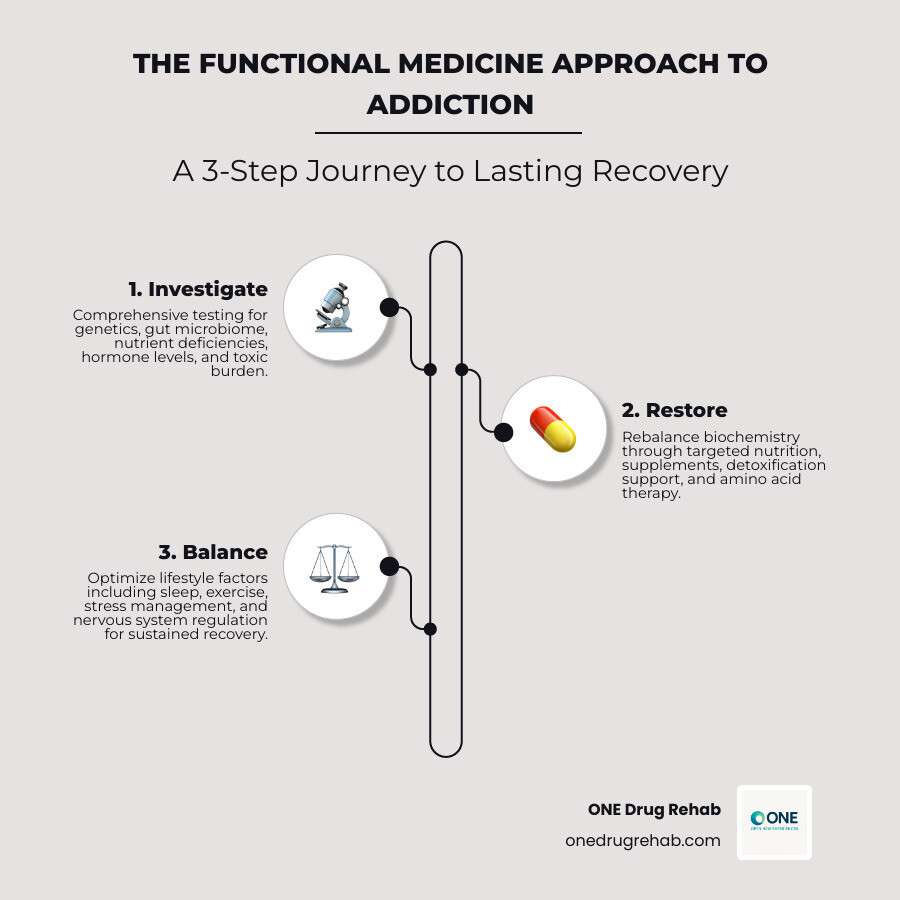
At the heart of functional medicine addiction recovery is a strategy built on restoring the body’s natural balance. We aim to address the gut microbiome, optimize detoxification, ensure proper nutrition, and support vital organs like the liver.

This holistic approach integrates with the principles of Holistic Drug Treatment, emphasizing interconnected health.
Pillar 1: Healing the Gut, Healing the Brain
Gut health is crucial for recovery due to the “gut-brain axis,” the constant communication between your gut and brain. The gut microbiome produces vital neurotransmitters, including about 95% of your serotonin and significant amounts of dopamine. Substance abuse often leads to gut imbalances and “leaky gut,” triggering inflammation that negatively impacts brain function and mood. Fixing your gut is a foundational step in functional medicine addiction treatment. Our approach involves:
- Probiotics & Prebiotics: To restore and nourish beneficial gut bacteria.
- Fermented Foods: Natural sources of probiotics like kimchi and yogurt.
- Digestive Enzymes: To support nutrient absorption.
Healing the gut can improve mood, reduce cravings, and improve brain function. The connection is detailed in research on gut-brain communication.
Pillar 2: Nutrition as Medicine
Substance abuse often leads to severe nutritional deficiencies. In functional medicine addiction treatment, we view nutrition as powerful medicine. Key recommendations include:
- Nutrient-Dense, Whole Foods: A primarily plant-based diet provides essential vitamins, minerals, and antioxidants for healing.
- Anti-Inflammatory Diet: To reduce systemic inflammation heightened by substance abuse.
- Blood Sugar Regulation: Stabilizing blood sugar with whole foods is crucial for managing cravings. High-sugar diets can mimic drug-like dopamine release, as noted in studies on the impact of a high-sugar diet.
- Healthy Fats & Protein: Omega-3s and amino acid precursors help build neurotransmitters like dopamine, improving mood and motivation.
- Hydration & Liver Support: Water, along with liver-supportive foods like leafy greens and beets, aids detoxification and overall function.
Pillar 3: Key supplements in functional medicine addiction recovery
While diet is foundational, targeted supplementation can accelerate healing. A micronutrient test can personalize recommendations, but certain supplements are frequently beneficial:
- B-Complex Vitamins: Substance abuse depletes B vitamins, which are vital for energy, nervous system health, and neurotransmitter synthesis.
- Magnesium: This mineral can reduce addiction intensity by modulating excitatory neurotransmitters. It also supports mood and sleep.
- Vitamin D: Often deficient, Vitamin D supports mood, digestion, and reduces inflammation.
- Omega-3 Fatty Acids: Vital for brain health, reducing inflammation, and balancing neurotransmitters. They may also help manage cravings.
- N-acetylcysteine (NAC): A potent antioxidant that supports detoxification and may act as an anti-relapse agent.
- 5-Hydroxytryptophan (5-HTP): A precursor to serotonin, 5-HTP can help with low serotonin levels that contribute to cravings. Research shows it is a clinically effective serotonin precursor, as detailed in research on 5-HTP as a serotonin precursor.
- GABA: Can help calm the nervous system and reduce anxiety.
- Milk Thistle: A powerful antioxidant that supports liver health, especially for those recovering from alcohol use.
- Amino Acid Therapy: Using specific amino acids like Tryptophan and Tyrosine can directly support neurotransmitter synthesis.
Rebuilding the Foundation: Lifestyle and Mind-Body Connection
Lasting recovery is profoundly influenced by how we live and connect with ourselves. In functional medicine addiction treatment, we rebuild health through lifestyle factors and nurturing the mind-body connection. This includes optimizing sleep, regular physical activity, and effective stress reduction. These practices are cornerstones for nervous system regulation and resilience. Our Holistic Fitness Programs offer insights into integrating movement for recovery.
The Critical Role of Sleep
Sleep is a powerful tool for recovery, yet people with addiction are up to ten times more likely to suffer from poor sleep, a critical impediment to healing. Sleep deprivation alters serotonin production and impairs the prefrontal cortex, which is responsible for impulse control and emotional regulation. This makes it harder to resist cravings. Prioritizing 7-9 hours of quality sleep is non-negotiable. We work on sleep hygiene practices, such as:
- Maintaining a consistent sleep schedule.
- Creating a calming bedtime routine.
- Optimizing the sleep environment (dark, quiet, cool).
- Avoiding caffeine and screens before bed.
Restoring healthy sleep allows the brain to repair and rebalance neurotransmitters, as research on sleep’s effect on serotonin underscores.
Exercise for Neurotransmitter Support
Regular exercise is a powerful tool in functional medicine addiction recovery, naturally boosting feel-good neurotransmitters like serotonin and dopamine. This helps improve mood, reduce anxiety, and decrease cravings. Exercise also reduces stress, promotes neuroplasticity (the growth of new brain cells), and improves sleep quality. Finding a consistent form of exercise that works for you, whether it’s yoga or a brisk walk, is key. The positive impact of exercise boosting serotonin is well-documented.
Regulating the Nervous System
Chronic stress and trauma can leave the nervous system stuck in a “fight-or-flight” response, making us susceptible to relapse. Functional medicine emphasizes practices that regulate the nervous system and promote calm.
- Mindfulness and Meditation: These practices cultivate present-moment awareness, helping to improve anxiety and depression symptoms while reducing cravings.
- Yoga: Integrating movement, breathwork, and meditation, yoga reduces stress and stimulates the vagus nerve, which helps calm the nervous system. Research on yoga’s effect on neurotransmitters supports its benefits.
- Deep Breathing Techniques: Simple exercises can quickly activate the parasympathetic nervous system, promoting relaxation.
- Sauna Therapy: Associated with reduced toxins, stress, and inflammation, sauna use has been shown to reduce cravings and improve emotional stability.
- NADA Protocol (Auricular Acupuncture): This protocol uses tiny needles in specific ear points to reduce cravings, anxiety, and withdrawal symptoms, enhancing success when combined with other therapies.
These practices are vital for developing new coping skills and achieving sustainable recovery from functional medicine addiction.
An Integrative Blueprint: Diagnostics and Collaborative Care
A cornerstone of functional medicine addiction treatment is its commitment to an integrative and collaborative care model. We don’t just guess; we test. This approach uses diagnostic tools to uncover unique biochemical imbalances and integrates these findings with conventional therapies like Medication-Assisted Treatment (MAT) for the most comprehensive care.
This collaborative spirit ensures a truly holistic approach. Our resources on Holistic Anxiety Treatment provide more context on integrated care for co-occurring challenges.
What gets measured gets managed: Diagnostic Testing
Functional medicine moves beyond standard lab work to investigate an individual’s unique biochemistry. These tests help create highly personalized treatment plans:
- Comprehensive Stool Test: Provides insights into gut health, identifying imbalances, inflammation, and pathogens that affect neurotransmitter production.
- Organic Acids Test (OAT): Offers a snapshot of metabolic function, nutrient deficiencies, neurotransmitter turnover, and detoxification capacity.
- Micronutrient Testing: Measures levels of essential vitamins and minerals often depleted by substance abuse, allowing for targeted repletion.
- Comprehensive Metabolic Panel (CMP): Provides essential information about liver and kidney function, blood sugar, and electrolyte balance.
- Hormone Testing: Identifies imbalances in cortisol, thyroid, and sex hormones that can impact mood and stress response.
- Heavy Metal Testing: Screens for toxic metals that can impair detoxification and disrupt neurological function.
Bridging the Gap: Integrating with Medication-Assisted Treatment (MAT)
Functional medicine thoughtfully integrates conventional treatments. Medication-Assisted Treatment (MAT) combines medications with counseling and is particularly effective for opioid and alcohol use disorders. Medications like Naltrexone and Buprenorphine can stabilize brain chemistry, reduce cravings, and block the euphoric effects of substances, lowering relapse risk.
In a functional medicine addiction framework, MAT is a crucial tool that creates a window of opportunity. As discussed by experts in this interview on healing addiction, MAT stabilizes brain chemistry while underlying biochemical repair occurs through nutrition and gut support. This integrative approach uses the best of both worlds to build a robust foundation for long-term sobriety.
Conclusion: A Personalized Path to Lasting Recovery
The journey through addiction is challenging, but the personalized approach of functional medicine addiction treatment offers immense hope. Conventional methods often fall short, with high relapse rates underscoring the need for a deeper, more holistic strategy.
Functional medicine shifts the focus from symptom management to root cause resolution. It acknowledges addiction as a complex interplay of biochemistry, genetics, and lifestyle. By investigating these drivers through diagnostic testing, we can uncover and address each individual’s unique vulnerabilities.
Our integrative blueprint rests on healing the gut, using nutrition as medicine, and applying targeted supplements. We also emphasize rebuilding health through lifestyle factors like sleep, exercise, and mind-body practices to regulate the nervous system.
By addressing the whole person—mind, body, and spirit—we empower individuals to not only overcome substance dependence but to achieve optimal health. This comprehensive strategy aims to reduce the high failure rates of conventional treatment by building resilience from within and fostering sustainable sobriety.
At ONEDrugRehab.com, we believe in empowering individuals with information about diverse and effective treatment options. If you or a loved one is seeking a path to lasting recovery that looks beyond the surface, we encourage you to explore the possibilities of a functional medicine approach. Find out more by exploring our guide to Find a holistic treatment program for addiction.