

Why Finding the Right Addiction Treatment Program Matters
Addiction treatment programs offer structured pathways to recovery through various levels of care, from medical detoxification to outpatient counseling, designed to address the physical, psychological, and social aspects of substance use disorder.
Quick Guide to Treatment Program Types:
- Inpatient/Residential Treatment – 24/7 care in a structured environment (30-90+ days)
- Partial Hospitalization (PHP) – Intensive daily treatment while living at home (4-6 hours/day)
- Intensive Outpatient (IOP) – Several sessions per week with flexibility (9-12 hours/week)
- Standard Outpatient – Weekly counseling sessions for ongoing support
- Medical Detox – Supervised withdrawal management as the first step
If you’re looking for help with addiction, you’re not alone. Substance use disorder affects millions of people and their families every year. The good news? Recovery is absolutely possible.
Addiction is a chronic brain disease, not a moral failing or lack of willpower. It changes how the brain works, affecting decision-making and self-control. This means treatment needs to address both the physical and psychological aspects of the disease.
The challenge is that finding the right treatment program can feel overwhelming. There are different types of programs, varying levels of care, and countless facilities to choose from. Each person’s path to recovery is unique, so what works for one person may not work for another.
This guide will walk you through the landscape of addiction treatment programs – what they are, how they work, and how to find one that fits your specific needs. Whether you’re seeking help for yourself or a loved one, understanding your options is the first step toward recovery.
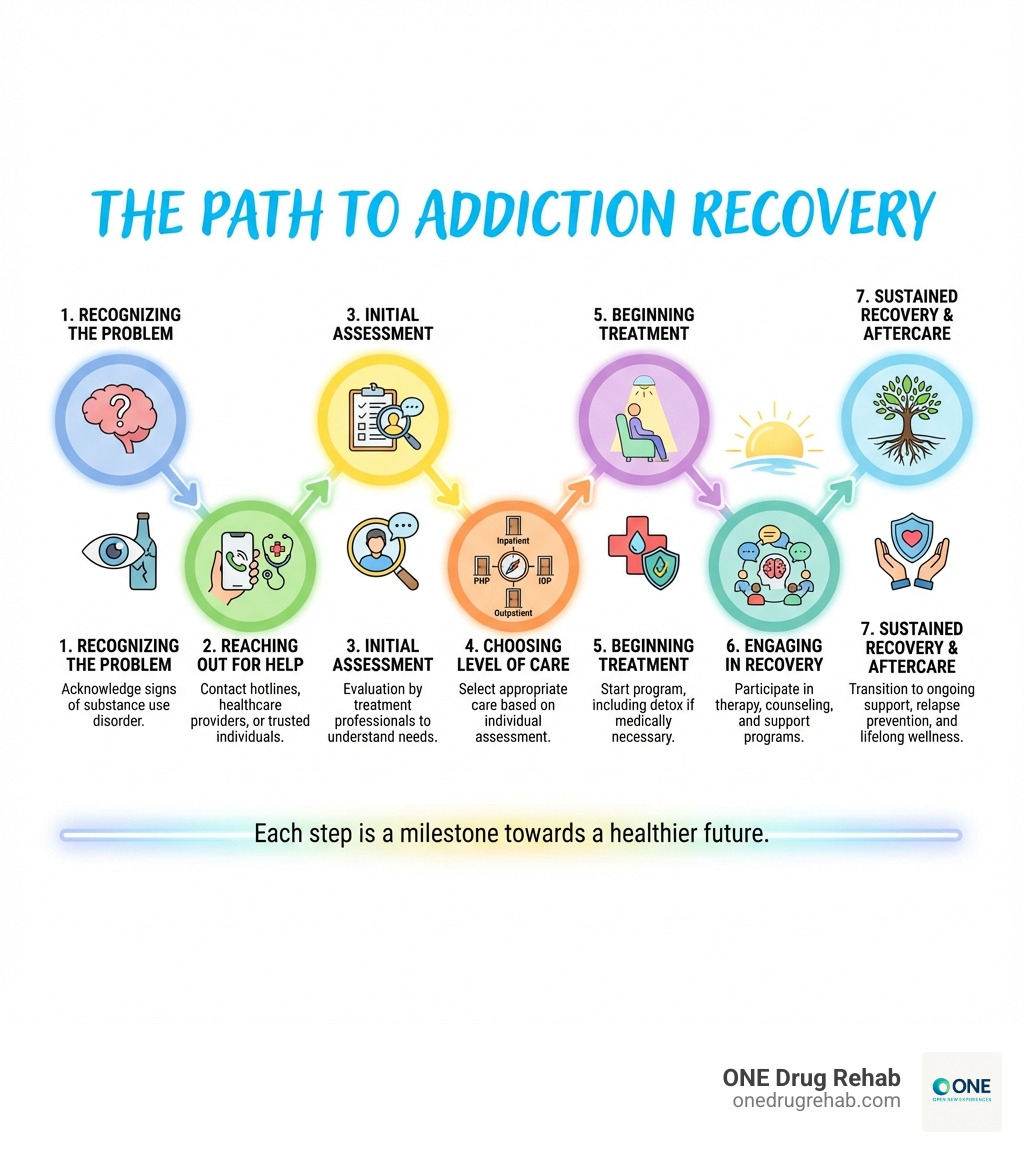
Understanding the Challenge: What is Addiction?
Addiction, clinically known as Substance Use Disorder (SUD), is a complex and chronic brain disease. Think of it less like a bad habit you can just “snap out of” and more like diabetes or asthma – a condition that requires ongoing management. It’s characterized by compulsive drug seeking and use, despite harmful consequences. This isn’t because someone lacks morals or willpower; it’s because the substance fundamentally changes the brain’s structure and function.
These changes impact decision-making, judgment, memory, and learning, making it incredibly difficult for individuals to stop using on their own. It’s a bit like trying to drive a car with a broken steering wheel – you know where you want to go, but your brain isn’t cooperating.
Often, SUD doesn’t travel alone. Many individuals experience co-occurring disorders, meaning they struggle with both a substance use disorder and a mental health condition like depression, anxiety, or PTSD. These conditions can feed into each other, making effective treatment even more crucial. For more in-depth information on how different approaches tackle this complex disease, we recommend exploring resources like NIDA’s information on treatment approaches for drug addiction.
What are the Signs and Symptoms of Addiction?
Recognizing the signs of addiction, whether in ourselves or a loved one, is the first step toward seeking help. These signs can manifest in various ways, affecting behavior, physical health, and psychological well-being.
Behavioral Changes:
- Neglecting responsibilities: Missing work, school, or family obligations.
- Social withdrawal: Pulling away from friends and family, isolating oneself.
- Loss of interest: No longer enjoying hobbies or activities that were once important.
- Secretiveness or dishonesty: Hiding substance use or lying about activities.
- Continued use despite negative consequences: Even after arrests, job loss, or strained relationships.
- Increased risk-taking: Engaging in dangerous behaviors while under the influence.
Physical Symptoms:
- Tolerance: Needing more of the substance to achieve the same effect.
- Withdrawal: Experiencing unpleasant physical and psychological symptoms when the substance is stopped or reduced (e.g., nausea, tremors, anxiety, sweating).
- Changes in appearance: Neglecting personal hygiene, unexplained weight loss or gain, dilated or constricted pupils.
- Unusual sleep patterns: Sleeping too much or too little.
Psychological Signs:
- Mood swings: Rapid and unexplained changes in mood.
- Increased irritability or aggression: Becoming easily agitated or angry.
- Paranoia or anxiety: Feeling suspicious or constantly worried.
- Denial: Refusing to acknowledge the problem or its impact.
If you notice several of these signs, it’s a strong indicator that professional help from addiction treatment programs may be needed.
How Addiction Affects the Brain and Body
At its core, addiction is a brain disease. When someone uses a substance, it floods the brain’s reward system with dopamine, a neurotransmitter associated with pleasure and motivation. This creates an intense “high” that the brain learns to associate with the substance. Over time, the brain’s chemistry changes. It starts to produce less natural dopamine, meaning the person needs the substance just to feel “normal” or to experience any pleasure at all.
The prefrontal cortex, responsible for decision-making, impulse control, and judgment, also gets impacted. This makes it harder to resist cravings, even when the person knows the consequences are severe. It’s like the brain’s “stop” signal gets muffled, while the “go” signal for substance use gets amplified.
Beyond the brain, long-term substance use can wreak havoc on the entire body. Depending on the substance, this can include:
- Organ damage: Liver damage (alcohol), lung damage (smoking, vaping), heart problems (stimulants), kidney failure.
- Weakened immune system: Making the body more susceptible to infections.
- Nutritional deficiencies: Poor diet often accompanies substance use.
- Mental health impact: Worsening existing mental health conditions or triggering new ones.
The good news is that the brain has an incredible capacity for healing. With the right addiction treatment programs, these brain changes can begin to reverse, and new, healthier pathways can be forged.
Navigating Your Options: Types of Addiction Treatment Programs
When it comes to finding help, there’s no single “best” path. Effective addiction treatment programs are highly individualized, offering a continuum of care that can be custom to a person’s specific needs, the severity of their addiction, and any co-occurring conditions. Think of it like a ladder, with different rungs representing varying levels of support and intensity. Our goal is to help you understand these options so you can choose the right rung for you.

Inpatient vs. Outpatient Treatment: What’s the Difference?
One of the first big decisions in choosing an addiction treatment program is whether to opt for inpatient or outpatient care. Both have their merits, and the best choice depends on a variety of factors.
| Feature | Inpatient/Residential Treatment | Outpatient Treatment |
|---|---|---|
| Environment | 24/7 supervised, structured, drug-free facility | Live at home, attend sessions at a facility |
| Intensity/Structure | High: Constant supervision, daily schedule of therapies/activities | Moderate to Low: Regular scheduled sessions, more personal freedom |
| Duration | Typically 30, 60, 90+ days, or longer for chronic cases | Varies widely, from several weeks to months or even years |
| Ideal Candidate | Severe addiction, unstable home environment, co-occurring disorders, need for medical detox, multiple relapses | Mild to moderate addiction, stable home/support, employment/school commitments, step-down care |
| Services Offered | Medical detox (often), individual/group therapy, medication management, life skills, holistic activities, aftercare planning | Individual/group therapy, medication management, education, relapse prevention, aftercare planning |
Core Program Types
Beyond the broad inpatient/outpatient distinction, addiction treatment programs are generally categorized into several core types, each offering a different level of intensity and support.
- Medical Detoxification: This is often the critical first step for many individuals. It involves medically supervised withdrawal from substances. Withdrawal can be uncomfortable and, for some substances like alcohol or benzodiazepines, even dangerous. Medical detox ensures safety and comfort, managing symptoms with medication as needed, and preparing the body for the therapeutic work ahead.
- Inpatient/Residential Programs: These programs offer the highest level of care, providing a safe, structured, and substance-free environment 24 hours a day. Residents live at the facility, engaging in a comprehensive schedule of individual and group therapy, educational sessions, and recreational activities. This immersive approach allows individuals to focus entirely on their recovery, away from triggers and distractions.
- Partial Hospitalization Programs (PHP): Often called “day treatment,” PHP provides intensive care during the day (typically 4-6 hours, 5 days a week), but participants return home or to a sober living environment in the evenings. It’s a step down from inpatient care but still offers significant structure and therapeutic intervention, ideal for those who need robust support but have a stable home environment.
- Intensive Outpatient Programs (IOP): IOPs offer a flexible yet structured approach, meeting several times a week for a few hours per session (e.g., 3-5 days a week, 3 hours per session). This allows individuals to continue with work, school, or family responsibilities while receiving consistent therapeutic support. It’s often a good fit for those transitioning from higher levels of care or with less severe addiction.
- Standard Outpatient Programs: These are the least intensive, typically involving one or two individual or group therapy sessions per week. Standard outpatient care is excellent for ongoing support, relapse prevention, and maintaining recovery after completing more intensive programs.
Specialized Programs for Unique Needs
The beauty of modern addiction treatment programs is their ability to cater to unique individual circumstances. No two people are exactly alike, and neither are their paths to recovery.
- Dual Diagnosis Treatment: Many people struggling with addiction also have co-occurring mental health disorders. Dual diagnosis programs are designed to treat both conditions simultaneously, recognizing that ignoring one will likely hinder recovery from the other. This integrated approach is crucial for long-term success.
- Gender-Specific Programs: Some individuals thrive in environments custom to their gender, as it can foster a sense of safety and openness to discuss gender-specific issues without perceived judgment. These programs might address unique social, cultural, or trauma-related experiences pertinent to men or women.
- Adolescent Treatment Programs: Young people face unique challenges, and their brains are still developing. Adolescent programs are specifically designed with age-appropriate therapies, educational components, and family involvement to address the distinct needs of teenagers and young adults.
- Holistic Therapies: Complementing traditional therapies, holistic approaches like yoga, meditation, mindfulness, art therapy, music therapy, and equine therapy aim to heal the whole person – mind, body, and spirit. These can improve well-being and provide healthy coping mechanisms.
- Luxury and Executive Rehab: These programs offer premium amenities, private rooms, gourmet dining, and often more individualized attention. They cater to professionals or those seeking a higher level of comfort and discretion, allowing them to maintain some work responsibilities while in treatment.
The Building Blocks of Recovery: Core Treatment Components
Regardless of the program type, effective addiction treatment programs share common foundational elements. They are built on evidence-based practices, meaning the methods used have been scientifically proven to be effective. A multidisciplinary care team, including doctors, therapists, counselors, and support staff, works collaboratively to provide comprehensive evaluation and care, addressing every aspect of an individual’s well-being.

The Role of Therapy in Addiction Treatment
Therapy is the cornerstone of recovery, helping individuals understand the root causes of their addiction, develop coping skills, and change destructive thought patterns and behaviors. It’s where the real “heavy lifting” of self-findy and change happens.
- Cognitive-Behavioral Therapy (CBT): This widely used therapy helps individuals identify and change negative thought patterns and behaviors that contribute to substance use. It teaches coping skills for managing cravings and high-risk situations.
- Dialectical Behavior Therapy (DBT): Often used for individuals with co-occurring mental health issues, DBT focuses on teaching skills in four key areas: mindfulness, distress tolerance, emotion regulation, and interpersonal effectiveness.
- Motivational Interviewing: This client-centered approach helps individuals explore and resolve their ambivalence about change, strengthening their intrinsic motivation to enter and commit to recovery.
- Individual Counseling: One-on-one sessions with a therapist provide a private space to explore personal issues, trauma, and specific triggers, developing a personalized recovery plan.
- Group Therapy: Sharing experiences with peers in a supportive group setting can reduce feelings of isolation, foster connection, and provide invaluable insights and encouragement. It’s often said that “we keep what we have by giving it away.”
What is Medication-Assisted Treatment (MAT)?
Medication-Assisted Treatment (MAT) combines FDA-approved medications with counseling and behavioral therapies. It’s a highly effective, evidence-based approach that addresses the physical aspects of addiction, making it easier for individuals to engage in therapy and focus on their recovery.
MAT medications can:
- Reduce cravings for substances.
- Manage uncomfortable withdrawal symptoms.
- Block the euphoric effects of certain drugs.
MAT is particularly effective for Opioid Use Disorder (OUD) and Alcohol Use Disorder (AUD). For example, medications like buprenorphine, naltrexone, and methadone are used to treat OUD, while naltrexone, acamprosate, and disulfiram are used for AUD. These medications are not a “substitute” for one addiction with another; rather, they normalize brain chemistry, relieve physiological cravings, and block the effects of opioids. For more detailed information on MAT and its benefits, SAMHSA provides excellent resources on medications used in MAT.
The Importance of Family Involvement
Addiction is a family disease; it impacts everyone. That’s why involving family members in the recovery process is often a crucial component of comprehensive addiction treatment programs.
- Family therapy: Sessions can help heal damaged relationships, improve communication, and address codependency patterns.
- Education for loved ones: Understanding addiction as a disease, not a choice, can reduce blame and foster empathy.
- Building a support system: Family can learn how to provide healthy support without enabling substance use.
- Healing relationships: Recovery is a journey for the entire family, allowing for forgiveness and rebuilding trust.
Innovations in Addiction Treatment
The field of addiction treatment is constantly evolving, embracing new technologies and research to improve outcomes.
- Telehealth services: Virtual therapy sessions and remote monitoring have made treatment more accessible, especially for those in rural areas or with mobility challenges.
- Virtual reality therapy: VR is being used to simulate high-risk situations, allowing individuals to practice coping skills in a safe, controlled environment.
- Psychedelic-assisted therapy research: Emerging research is exploring the potential of psychedelics like psilocybin and MDMA, when administered in a clinical setting with therapy, to treat conditions like PTSD and severe depression, which often co-occur with SUD.
- New medications: Ongoing research continues to develop novel pharmacological interventions to target different aspects of addiction.
- Low-barrier care models: These approaches focus on making treatment as accessible as possible, reducing problems like long waitlists or complex intake procedures, especially for vulnerable populations.
Your Roadmap to Recovery: Finding and Paying for Treatment
The decision to seek help is monumental. The next step is navigating the practicalities of finding and paying for the right addiction treatment program. It can feel like a maze, but we’re here to help you find the map.
How to Find the Right Addiction Treatment Center
Finding the “right” center means finding one that aligns with your specific needs, values, and financial situation. It’s not a one-size-fits-all scenario.
- Using a treatment locator: Tools like SAMHSA’s National Helpline and online treatment locators are invaluable starting points. You can find treatment services via SAMHSA’s locator directly.
- Asking for referrals: Your doctor, therapist, or local community mental health services can often provide trusted referrals.
- Questions to ask admissions: Don’t be shy! Inquire about their treatment philosophy, staff qualifications, accreditation, types of therapy offered, and aftercare planning.
- Considering location: Do you need a program close to home for family involvement, or would a change of scenery be beneficial?
What to Look for in Addiction Treatment Programs
Once you have a few options, it’s time to dig deeper. Not all addiction treatment programs are created equal. Here’s what to prioritize:
- Accreditation and licensing: Ensure the facility is licensed by the state and accredited by reputable organizations (e.g., The Joint Commission, CARF). This indicates a commitment to quality and safety.
- Staff qualifications: Look for programs staffed by licensed and credentialed professionals, including medical doctors, psychiatrists, therapists, and certified addiction counselors.
- Evidence-based methods: Confirm that the program uses therapies and treatments proven effective by scientific research, such as CBT, DBT, and MAT.
- Individualized care plans: A good program will conduct a thorough assessment and create a personalized treatment plan, rather than a generic one-size-fits-all approach.
- Aftercare planning: Recovery doesn’t end when a program does. A strong emphasis on aftercare and relapse prevention is critical.
Paying for Addiction Treatment Programs
Cost is often a significant concern, but don’t let it deter you from seeking help. There are many ways to make addiction treatment programs affordable.
- Health insurance coverage: Thanks to parity laws, most health insurance plans are now required to cover mental health and substance use disorder treatment comparable to medical care. Check your policy or contact the admissions department of a facility, as they can often help verify your benefits. The HHS provides helpful mental health and addiction insurance help.
- Private pay options: If you don’t have insurance or prefer not to use it, many facilities offer private pay options.
- Sliding scale fees: Some non-profit or community-based programs offer fees adjusted based on your income.
- State-funded programs: Many states offer publicly funded treatment options for residents who meet certain criteria.
- Financing: Some facilities offer payment plans or connect you with third-party financing options.
Beyond Treatment: Sustaining Lifelong Recovery
Completing an addiction treatment program is a huge accomplishment, but recovery is a journey, not a destination. It’s about building a new life, free from the grip of addiction, and learning how to steer challenges without resorting to substance use. Relapse prevention becomes a lifelong endeavor, supported by ongoing care and a strong network.
The Importance of Aftercare and Ongoing Support
The transition from a structured treatment environment back to daily life can be challenging. This is where aftercare and ongoing support become absolutely vital.
- Step-down care: Moving from inpatient to PHP, then IOP, and finally standard outpatient care allows for a gradual return to independence while maintaining therapeutic support.
- Sober living homes: These provide a safe, drug-free environment with peer support and accountability, bridging the gap between residential treatment and fully independent living.
- Alumni programs: Many treatment centers offer alumni networks, providing a community of individuals who have shared similar experiences and can offer ongoing encouragement.
- 12-Step groups (AA, NA): Anonymous fellowships like Alcoholics Anonymous (AA) and Narcotics Anonymous (NA) offer peer support, a spiritual framework, and a structured path to recovery.
- Non-12-Step groups (SMART Recovery): For those who prefer an alternative to the 12-Steps, programs like SMART Recovery offer science-based self-help tools for addiction recovery.
How to Support a Loved One in Recovery
Supporting someone in recovery is an act of love, but it also requires education and healthy boundaries.
- Setting boundaries: This is crucial for both your well-being and theirs. It means clearly defining what you will and will not do, and sticking to it.
- Practicing empathy: Understand that addiction is a disease. Listen without judgment and offer compassion.
- Avoiding enabling: Distinguish between helping and enabling. Enabling behaviors often protect the person from the consequences of their actions, inadvertently prolonging their substance use.
- Encouraging healthy habits: Support their engagement in new hobbies, exercise, healthy eating, and other positive lifestyle changes.
- Participating in family therapy: If offered, engaging in family therapy can help you learn how to best support your loved one and heal family dynamics.
Frequently Asked Questions about Addiction Treatment
We understand you likely have many questions about addiction treatment programs. Here are some common ones we hear:
How long does rehab last?
The duration of rehab varies greatly depending on individual needs, the severity of the addiction, and the type of program. While some programs offer 30-day options, many experts recommend longer stays—60, 90 days, or even extended care—for more sustainable recovery. Think of it this way: you wouldn’t expect to recover from a serious illness in a week, and addiction is no different. Longer engagement often leads to better outcomes.
Can addiction be cured?
Addiction is considered a chronic disease, much like diabetes or hypertension. This means it cannot be “cured” in the traditional sense, but it can be successfully managed. Lifelong recovery is absolutely possible, and many people live full, productive lives free from active addiction. The goal of addiction treatment programs is to achieve remission and equip individuals with the tools and support systems needed for ongoing management, preventing relapse and promoting long-term well-being.
What should I do in a crisis?
If you or someone you know is experiencing an emergency situation related to substance use, such as an overdose, it’s crucial to act immediately.
- Call 911 immediately: If someone is unresponsive, has difficulty breathing, or shows other signs of overdose, call emergency services right away. Stay with them until help arrives.
- Administer Narcan (naloxone) if available and trained: For opioid overdoses, Narcan can rapidly reverse the effects.
- For mental health or substance use crises (non-life-threatening): The 988 Suicide & Crisis Lifeline is available 24/7 via call or text. You can also reach out to the SAMHSA National Helpline at 1-800-662-HELP (4357) for treatment referrals and information.
Conclusion
Starting on the journey of recovery through addiction treatment programs is a courageous and life-changing decision. We’ve explored the nature of addiction, the diverse types of treatment available, the core components that make these programs effective, and practical advice on finding and funding the right support.
Recovery is a deeply personal journey, often with twists and turns, but it’s always possible. The first step, whether for yourself or a loved one, is often the hardest but also the most important. By understanding your options and taking that initial leap of faith, you open the door to a healthier, more fulfilling life.
At ONEDrugRehab.com, we believe in reducing the stigma associated with addiction by using person-first language and providing unbiased, third-party information. Our goal is to empower you to make informed decisions about your treatment options without endorsing specific providers. We’re here to help you steer the landscape of addiction treatment programs with clarity and confidence.
Don’t let the search overwhelm you. Take the next step by exploring your options and finding the support you deserve.
Start your search with our rehab facility reviews.