

The Rise of Digital Recovery: Your Pocket-Sized Support System
Apps for sobriety are changing how millions of people track their recovery, connect with support, and build new habits. If you’re looking for the right app to support your journey, here are the top options:
| Best For | App Name | Key Features | Cost |
|---|---|---|---|
| Overall Tracking & Motivation | I Am Sober | Daily pledges, milestone tracking, community support, CBT methods | Free / $9.99/mo premium |
| Community Support | Sober Grid / WEconnect | Virtual meetings, peer support, identity-specific groups | Free / $40/mo premium |
| Education & Skills | Reframe / reSET | Neuroscience-based program, craving tools, FDA-approved therapy | $24.99/mo / Prescription required |
| Sober Lifestyle | Loosid | Social networking, local events, sober dating | Free / $19.99/mo premium |
| New Habits | Finch | Gamified tracking, virtual pet, journal prompts | Free / $9.99/mo premium |
Struggling with addiction is a common battle. In 2015, approximately 20.8 million Americans (1 in 12) had a substance use disorder.
The smartphone in your pocket can be a powerful recovery tool. Apps for sobriety offer 24/7 support, tracking, and community. They help you build streaks, celebrate milestones, and manage cravings from home.
These apps combine evidence-based research with technology. For example, the reSET app showed that 40.3% of users maintained abstinence compared to just 17.6% who didn’t use it—more than double the success rate.
Digital recovery tools help overcome barriers like cost or fear of judgment. They offer anonymity and connection, with features for tracking sober days, finding meetings, and managing cravings. Most of these tools are free or cost less than a single day’s substance use.
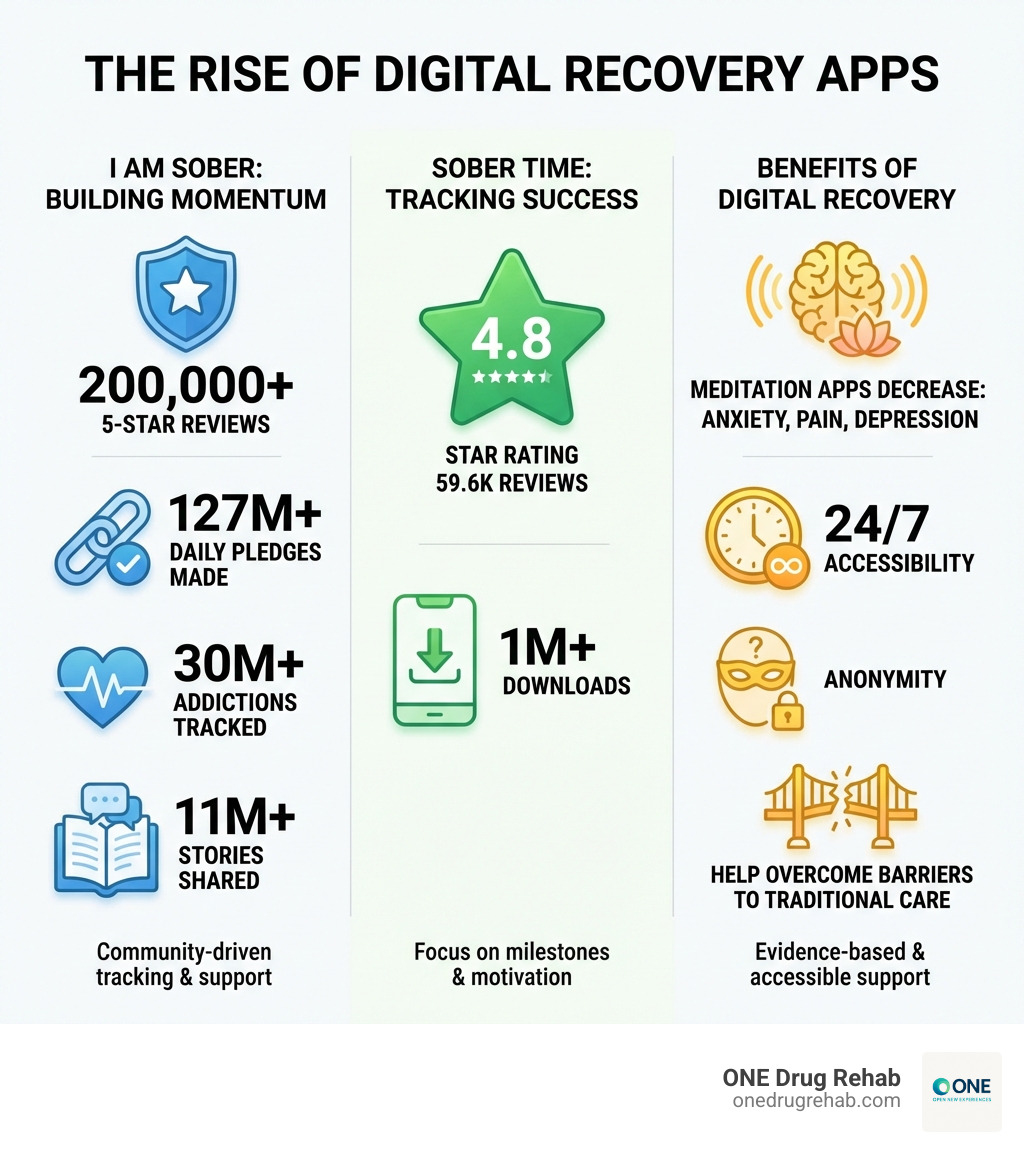
Simple guide to apps for sobriety:
The Best Apps for Sobriety: A Comprehensive Roundup
Navigating sobriety is easier with the right tools. We’ve scoured the digital landscape to bring you a roundup of the best apps for sobriety, categorized by their strengths.
Best Overall for Tracking & Motivation: I Am Sober
I Am Sober is a top all-in-one companion for recovery, praised for its comprehensive features. It integrates personal accountability with community support for lasting sobriety. The app boasts impressive statistics: over 200,000 five-star reviews, 127 million daily pledges, and 11 million stories shared.
Key features include:
- Daily Pledges and Reviews: Start and end your day with mindfulness and accountability to reinforce your commitment.
- Milestone Tracking: Track sober days and celebrate significant milestones, turning each day into a tangible achievement.
- Money Saved Calculator: Calculates the money you’ve saved by abstaining, a powerful motivator.
- Community Support: Connect with a vibrant community, often organized by sobriety milestones, to share stories and experiences.
- Workbooks and CBT Methods: Includes workbooks and Cognitive Behavioral Therapy (CBT) methods to help you understand triggers and build coping skills.
- Versatile Addiction Tracking: Track up to 10 different addictions, from alcohol and opioids to behavioral issues like pornography or video games.
A robust free version is available. The premium “Sober Plus” subscription ($9.99/month) adds deeper analytics and more content.
I Am Sober is available on both iOS and Android, ready to help you Reach new milestones.
Strongest for Community & Peer Support: Sober Grid & WEconnect
A strong support network is key to sobriety. These apps for sobriety excel at peer connection.
Sober Grid
Sober Grid is a social media platform for people in recovery. You can create an anonymous profile to interact with and support others on their journey.
- Social Network Style: Connect with others on a platform similar to Facebook.
- GPS Locator: Its GPS locator helps you find other sober people nearby, which is useful when traveling.
- Anonymous Check-ins: Anonymously check in on your status and mood to seek support.
- “Daily Quests”: Prompts designed to improve mood and reduce negative thinking.
WEconnect
This platform provides structured support and personalized reminders.
- Virtual Support Meetings: Offers daily virtual support meetings, including identity-specific (e.g., LGBTQIA+, parents) and harm reduction groups.
- 1-to-1 Peer Support: Access one-on-one peer support specialists for personalized connection.
- Contingency Management Rewards: Uses rewards to reinforce positive decision-making in recovery.
- Daily Reminders & “SOS” Feature: Provides daily reminders for your recovery plan and an “SOS” feature for immediate support.
Both apps emphasize that you’re not alone. WEconnect offers a free version and a premium subscription around $40/month.
For more on the power of peer connections, explore our resources on Recovery Support Groups.
Top for Education & Skill-Building: Reframe & reSET
These apps educate users on addiction and help build coping skills using evidence-based approaches.
Reframe
This app helps you build healthier drinking habits using neuroscience.
- Neuroscience-Backed Program: Its course library explains the science behind your habits and how to change them.
- Comprehensive Toolkit: Provides a toolkit of coping skills to manage cravings.
- “Cravings Mode”: This mode offers games and distractions to get through intense urges.
- Meditations: Includes guided meditations to help manage stress.
Reframe’s pricing starts around $24.99/month.
reSET
reSET is the first FDA-approved mobile medical app for treating substance use disorders.
- FDA-Approved Digital Therapy: It guides users through a 12-week program of lessons to develop recovery skills.
- Evidence-Based Efficacy: A clinical trial found it significantly improved abstinence rates (40.3% vs. 17.6% in a control group), highlighting its scientific backing.
- Prescription Required: It requires a prescription for individuals over 17.
The success of reSET underscores technology’s growing role in addiction treatment. For more on therapeutic approaches, check out More info about Addiction Therapy Methods. You can also learn more about Scientific research on contingency management, a method used by some apps.
Best for Building a Sober Lifestyle: Loosid
Loosid helps you build a vibrant sober lifestyle, challenging the misconception that sobriety is isolating.
- Sober Social Networking: Connect with sober individuals in your area to build a social circle.
- Finding Sober Activities: Find local sober-friendly events like concerts and fitness classes.
- Sober Dating: Offers a platform for sober dating to connect with like-minded people.
- Challenging Isolation: It helps combat isolation by providing avenues for social engagement.
Loosid offers a free version, with a premium subscription available for around $19.99/month.
Excellent for Building New, Healthy Habits: Finch
Finch uses gamification to make replacing harmful behaviors with healthy ones engaging and fun.
- Gamified Habit Tracking: Care for a virtual pet by completing real-life self-care and sobriety goals.
- Virtual Pet: Your virtual pet grows as you complete tasks, visually representing your progress.
- Journal Prompts: Includes journal prompts for self-reflection.
- Self-Care Goals: Helps you set and achieve various self-care goals for holistic well-being.
- Replacing Old Habits with New Ones: This gamified approach helps you build positive routines that support long-term sobriety.
Finch offers a free version, with a premium subscription around $9.99/month.
Key Features to Consider When Choosing an App
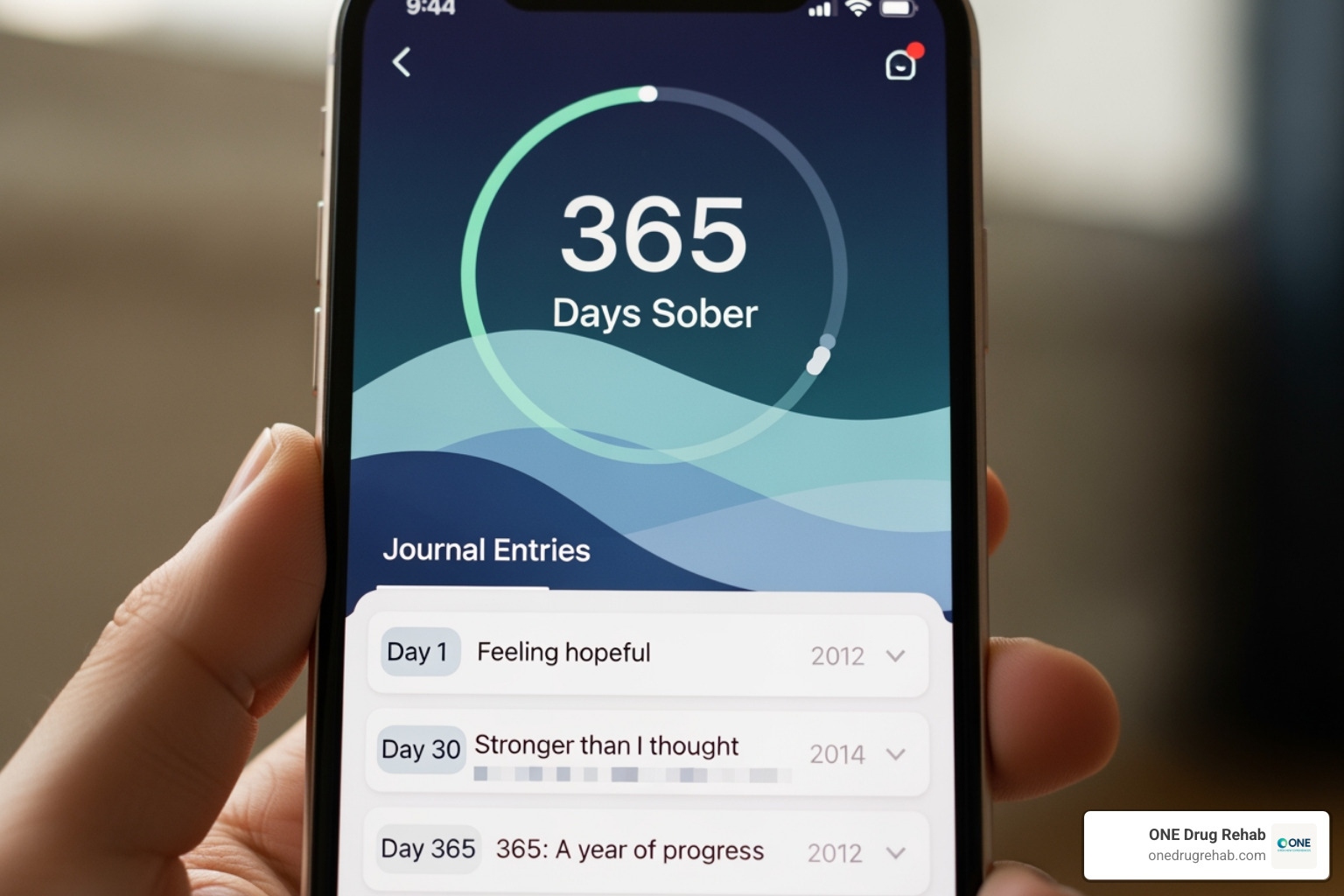
With so many options, choosing the right sobriety app can be overwhelming. Here are key features that make these apps for sobriety effective.
Sobriety Clocks, Milestone Tracking, and Motivation
Tracking your progress is a core, motivating feature of many sobriety apps.
- Sobriety Counter / Clean Time: This fundamental feature shows your sober time. Apps like Sober Time and I Am Sober provide a visual representation of your achievement.
- Streaks: Building a sober day “streak” is a powerful motivator to maintain it.
- Milestone Celebration: Many apps celebrate milestones like 30 days or 1 year with virtual rewards to keep you motivated.
- Daily Reminders & Motivational Quotes: Daily messages and motivational quotes reinforce your commitment.
- Financial Savings Tracker: Tracking money saved by not buying substances is a tangible motivator. SoberTool, for example, calculates these savings.
Community Forums vs. Professional Support
The type of support you receive from an app can vary.
- Peer Support: Many apps for sobriety integrate community forums for peer-to-peer connection, which reduces isolation. Sober Grid and I Am Sober have robust community features.
- Moderation Concerns: Moderation is crucial. Poorly moderated forums can expose users to toxic or triggering content. Developers must enforce guidelines to maintain a safe space.
- Anonymity: Anonymity is a key feature, offering relief for those not ready to disclose their recovery journey publicly.
- Integrated Therapy Options: Some apps offer professional support. I Am Sober partners with BetterHelp for discounted therapy, while Affect integrates counseling and group therapy. This blend can be very effective.
For those exploring self-help options, understanding the nuances of digital communities is key. Learn more about Self-Help Addiction.
Top Free Apps for Sobriety and Their Features
Many excellent apps for sobriety offer substantial features for free.
- Sober Time: This app provides free tracking of unlimited addictions, a community, daily motivation, and a journal. Its high rating and millions of downloads speak to its effectiveness.
- I Am Sober (Free Version): The free version of I Am Sober is robust, including daily pledges, milestone tracking, and community access.
- Meeting Guide: The free Meeting Guide app from Alcoholics Anonymous helps you find local AA meetings worldwide.
- Core Features Available: Free versions typically focus on core features like sober day counting, tracking, and community access.
- Ads vs. Ad-Free: Some free apps have ads, but others like I Am Sober are ad-free, improving the user experience.
These free apps are a great starting point for any recovery journey.
Premium Apps for Sobriety: Are They Worth the Cost?
Paid versions of apps for sobriety often provide deeper support and personalized tools.
- Advanced Features: Premium subscriptions offer in-depth analytics to track patterns in your recovery.
- Personalized Coaching: Some apps like Reframe offer personalized coaching from experts.
- Workbooks & Improved Content: Premium access often includes larger content libraries, workbooks, and specialized modules.
- Virtual Therapy Integration: Some premium apps integrate discounted virtual therapy for professional mental health support.
- Cost Breakdown:
- I Am Sober: $9.99/month or $119.88/year
- WEconnect: $40/month or $350/year
- Reframe: $24.99/month or $119.99/year (plus coaching)
- Loosid: $19.99/month
- Finch: $9.99/month or ~$49.99/year
- Headspace: $7.99/month (annual) or $12.95/month (monthly)
- Simple Habit: $11.99/month or $7.99/month (annual)
Whether a premium app is worth it depends on your needs and budget. The investment can be valuable if you need more in-depth tools or professional support for long-term sobriety.
Integrating Apps into Your Overall Recovery Strategy
While apps for sobriety are powerful tools, they are most effective as part of a larger, comprehensive recovery plan.
A Supplement, Not a Replacement
Apps for sobriety are supplementary tools, not replacements for professional medical advice or therapy.
- Limitations of Apps: Apps cannot diagnose or prescribe. For serious conditions like Alcohol Use Disorder (AUD) with withdrawal risk, professional guidance is non-negotiable.
- Importance of Human Connection: App communities offer peer support but don’t replace the deep connection of a sponsor, therapist, or face-to-face support groups.
- Using Apps Alongside Traditional Methods: The best approach uses apps to reinforce traditional methods, acting as a 24/7 assistant for your recovery plan.
For a deeper understanding of comprehensive care, read about the Benefits of Rehab.
Pairing Apps with 12-Step and Other Support Groups
Many apps for sobriety are designed to complement established recovery programs.
- AA Meeting Guide App: This app from Alcoholics Anonymous helps you find local meetings near you, streamlining access to traditional support.
- Digital Access to The Big Book: Apps like “AA Big Book Free” provide digital versions of foundational texts with search and note-taking features.
- SMART Recovery CBA App: The SMART Recovery Cost Benefit Analysis (CBA) app helps users weigh the pros and cons of actions, reinforcing program principles.
- Reinforcing Program Principles: App features like daily reflections and journaling can help you integrate program principles into daily life, acting as a bridge between meetings.
Privacy and Data Security: What You Need to Know
When using digital tools for recovery, privacy and data security are paramount.
- Anonymous Profiles: Many apps for sobriety, like Sober Grid, allow anonymous profiles for user privacy.
- Data Sharing Policies: Always review an app’s privacy policy to understand its data collection and sharing practices. Google Play provides information on Learn more about how developers declare sharing data.
- HIPAA Compliance: For apps with professional services, compliance with health privacy regulations like HIPAA is crucial.
- User Responsibility: Be mindful of what you share in public forums to protect your own privacy.
We encourage you to be an informed user and take steps to protect your personal information.
Frequently Asked Questions about Sobriety Apps
We often hear common questions about how to best use apps for sobriety and what their capabilities are. Let’s tackle some of them.
Can these apps be used for addictions beyond alcohol?
Yes. While many focus on alcohol, a significant number of apps for sobriety are versatile enough to track various addictions.
- Multiple Addictions: Apps like I Am Sober and Sober Time let you track multiple addictions at once.
- Substance Tracking: You can track sobriety from opioids, marijuana, nicotine, and other drugs.
- Behavioral Addictions: Many also track behavioral addictions like pornography, food addiction, or gambling.
- Customization Options: Customization options make them highly adaptable to your specific recovery journey.
This broad applicability makes these apps valuable tools for a wide spectrum of recovery needs.
How do you use an app to manage cravings?
Apps for sobriety offer several strategies to manage cravings effectively.
- Distraction Tools: Apps like Nomo and Reframe’s “Cravings Mode” include distraction games to help you refocus during intense urges.
- Journaling Triggers: Journaling features in apps like Sober Time and I Am Sober help you log feelings and identify triggers to develop proactive coping strategies.
- Reaching Out to Community: When a craving hits, apps like Sober Grid provide immediate access to a peer community for encouragement.
- SOS Buttons: Some apps like WEconnect have an “SOS” button for immediate support.
- Mindfulness Exercises: Guided meditations and mindfulness exercises, in-app or from apps like Headspace, can help you observe cravings without acting on them.
These features empower you to manage cravings in real-time, preventing potential relapse.
How do sobriety apps compare to traditional methods like AA?
This isn’t about “apps vs. AA,” but rather how they can work together.
- 24/7 Access vs. Scheduled Meetings: Apps offer 24/7 access, while traditional meetings are scheduled and in-person, which can be a barrier for some.
- Anonymity vs. In-Person Connection: Apps provide a high degree of anonymity, while AA offers face-to-face human connection.
- Data Tracking vs. Shared Stories: Apps excel at data tracking (sober days, money saved), while AA’s strength is in shared personal stories and sponsorship.
- Complementary Tools: The most effective approach uses apps for sobriety as a complementary tool to find 12 Step Meetings, track progress, and reinforce principles between meetings.
- Not a Replacement: Neither is a magic bullet; both require commitment. Apps supplement, but do not replace, the experience of sponsorship or in-person meetings.
Take the Next Step in Your Recovery Journey
The digital age offers powerful allies against addiction. Apps for sobriety can help you track progress, find community, learn coping skills, and cultivate a fulfilling sober lifestyle. They can be a constant companion, celebrating your wins and offering a lifeline during tough moments.
However, these tools are most effective when integrated into a broader recovery plan. Consider how these apps can support your journey alongside professional guidance and community support.
We encourage you to explore the options and find what resonates with you. If you’re ready to explore professional support, ONEDrugRehab.com is here to help you steer your options. Explore different types of addiction treatment and find the right path for you.