

Understanding the Path to Recovery: What Success Really Means
Inpatient vs outpatient alcohol rehab success rates present a complex picture. When deciding between residential treatment and outpatient care, understanding the research can help guide your choice.
Quick Answer: Success Rate Comparison
| Treatment Type | Key Findings |
|---|---|
| Inpatient Rehab | * Higher treatment completion rates (17-57% dropout vs 23-50% outpatient) * Better outcomes for severe alcohol dependence * Advantage for patients with suicidal ideation * More effective for initial withdrawal management |
| Outpatient Rehab | * Better abstinence rates in some short-term studies * Effective for less severe cases * Allows real-time skill application * Lower cost and greater flexibility |
| Overall Finding | When other factors are controlled, setting alone doesn’t predict success – patient characteristics and treatment quality matter more |
There is no clear winner in the inpatient versus outpatient debate. Research shows that both approaches can be effective for different people and situations. Success depends on matching the program to your specific needs, not just the setting.
One study of 2,476 adults found that for most people, the setting was not significantly associated with abstinence once other factors were controlled. However, the same research revealed that inpatient treatment offered significant advantages for specific groups, particularly those with recent suicidal thoughts or severe addiction.
Successful recovery depends on many factors beyond the treatment setting, including your motivation, the quality of care, treatment duration, family support, and what happens after your initial program ends.
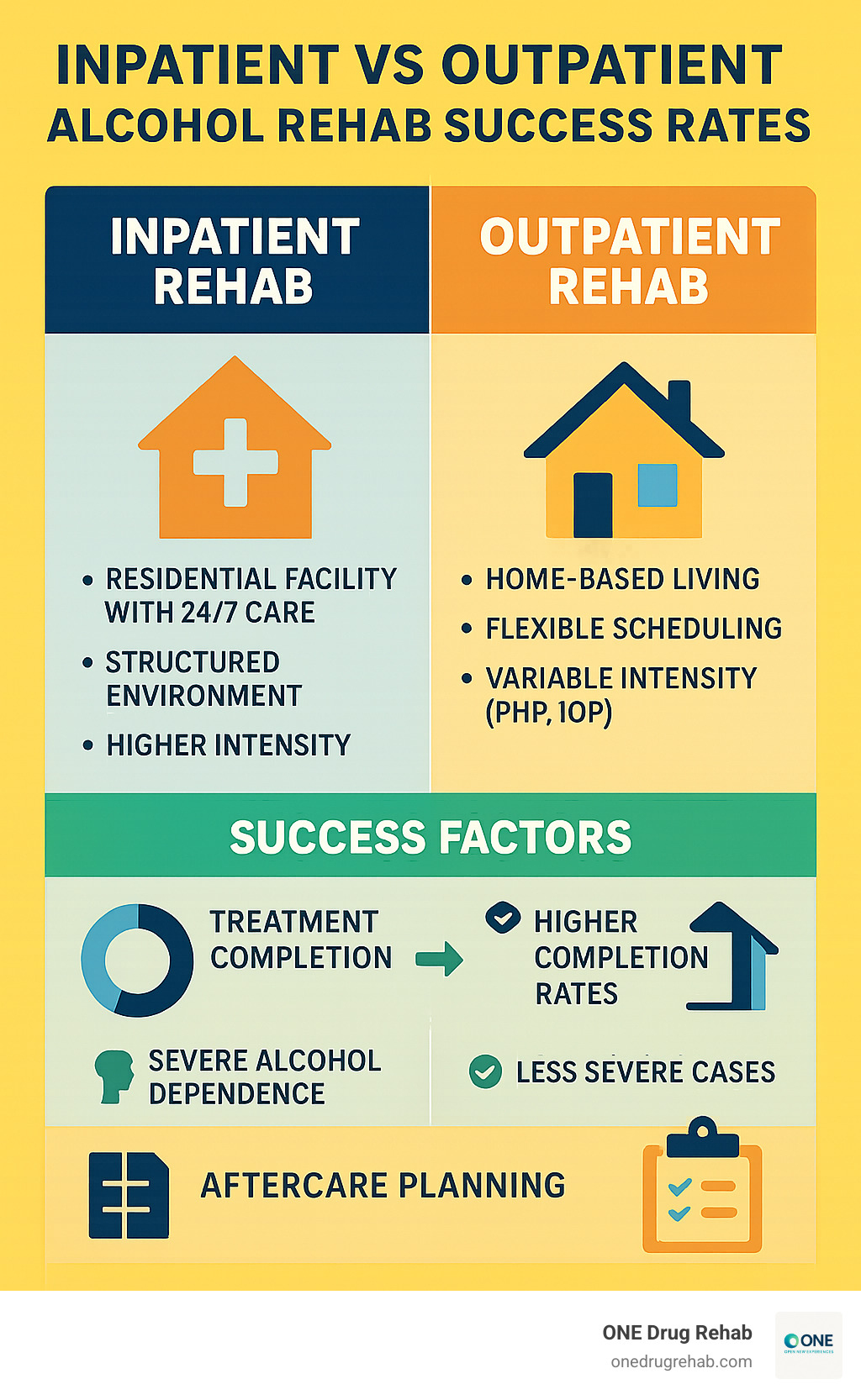
Explore more about inpatient vs outpatient alcohol rehab success rates:
Understanding the Core Differences: Inpatient vs. Outpatient Alcohol Rehab
This section compares the structure, intensity, and daily experience of both treatment modalities, helping you understand the fundamental choice you’re facing.
Alcohol rehab offers two distinct avenues: inpatient (residential) and outpatient care. While both aim for sobriety, their approaches to structure and daily life differ significantly. Understanding these differences is the first step in choosing the right path.
Inpatient Rehab: A Structured, Immersive Environment
Inpatient rehab provides an immersive environment where you reside at a facility, allowing you to focus completely on recovery without outside distractions.

A key feature is 24/7 medical supervision, which is crucial for safe alcohol detoxification, as withdrawal can be dangerous. Medical staff ensure safety and comfort during this critical initial phase.
The controlled, trigger-free environment removes you from people, places, and situations that might prompt relapse, creating a safe space focused on recovery.
Days in inpatient rehab follow a structured schedule, which often includes:
- Group therapy sessions: Sharing experiences and learning from peers.
- Individual counseling: Exploring underlying issues and developing a personalized recovery plan.
- Educational workshops: Learning about addiction science and relapse prevention.
- Holistic therapies: Activities like yoga, meditation, or art therapy to support well-being.
Programs typically last 30, 60, or 90 days, sometimes longer, to allow for comprehensive healing and skill development before returning to daily life.
To learn more about residential care, visit our page on Inpatient Rehab for Drugs.
Outpatient Rehab: Flexibility and Real-World Integration
Outpatient rehab allows you to live at home and attend scheduled treatment sessions. It’s designed for those who need to maintain daily responsibilities like work, school, or family.

Outpatient programs offer varying levels of intensity to meet diverse needs:
- Partial Hospitalization Programs (PHPs): The most intensive outpatient care, requiring attendance for several hours a day, most days of the week.
- Intensive Outpatient Programs (IOPs): A step down from PHPs, typically involving 9-20 hours of treatment per week.
- Standard Outpatient Programs: The least intensive level, with just a few sessions per week.
A key benefit is applying learned skills in real-time. You can practice new coping strategies in your everyday environment, integrating recovery directly into your life.
This model offers more autonomy but requires strong self-discipline and a supportive home environment to manage triggers and maintain sobriety.
For more details on outpatient treatment, check out our pages on Outpatient Alcohol Rehab Programs and 30 Day Outpatient Rehab.
[TABLE] Comparing Inpatient vs. Outpatient Alcohol Rehab
Here’s a quick overview of the key differences:
| Key Features | Inpatient Rehab | Outpatient Rehab |
|---|---|---|
| Location | Resides at facility (24/7) | Lives at home, commutes to sessions |
| Intensity | High, immersive, structured | Variable (PHP, IOP, standard); less immersive |
| Medical Supervision | 24/7 medical and psychiatric care (especially for detox) | As-needed; typically not 24/7 medical supervision |
| Cost | Generally higher (due to accommodation, 24/7 staff) | Generally lower (no room/board) |
| Flexibility | Low (full commitment to program) | High (allows for work, family, school) |
| Environment | Controlled, trigger-free, supportive bubble | Real-world, requires navigating triggers and temptations |
| Focus | Initial stabilization, deep therapeutic work | Skill application, long-term integration of recovery |
A Deep Dive into Inpatient vs. Outpatient Alcohol Rehab Success Rates
Success in rehab is complex and not always straightforward. This section examines what the data says about effectiveness and the factors that truly drive positive outcomes.
When choosing between inpatient and outpatient care, it’s tempting to look for a clear winner. However, inpatient vs outpatient alcohol rehab success rates don’t tell a simple story. The best choice depends on your individual situation, as success can mean different things to different people—from complete abstinence to improved mental health.
What the Research Says About Inpatient vs. Outpatient Alcohol Rehab Success Rates
Decades of research comparing these two approaches have found that there’s no single winner in terms of effectiveness. This is good news, as it means both paths can lead to recovery.
Data shows higher treatment completion rates in inpatient settings (17-57% dropout vs. 23-50% outpatient), likely due to the immersive environment. However, completion is just one metric.
Short-term abstinence rates are mixed, with some studies favoring outpatient programs. This suggests the intensity of inpatient care isn’t always necessary for everyone to succeed.
For people with severe alcohol use disorders, inpatient care often shows a clear advantage. Research indicates that high-severity drinkers in residential treatment showed significant reductions in alcohol use, benefits that weren’t as pronounced in outpatient settings.
When researchers control for factors like motivation and addiction severity, the setting itself doesn’t predict success for most people. What matters more is finding a program that matches your specific needs. An important exception is for people who’ve recently experienced suicidal thoughts or attempts. For this group, the 24/7 support of residential care can be life-saving.
Addiction is a chronic condition. Relapse rates are around 40-60%, similar to other chronic diseases like diabetes or heart disease. This doesn’t mean treatment fails; it means recovery is a process that may require adjusting your approach over time.
The NIH research on treatment effectiveness provides valuable insights. You can also explore more in our guide to Addiction Recovery Success Rates.
Key Factors That Influence Treatment Success Regardless of Setting
Research consistently shows that certain factors are more influential than the treatment setting itself. These are the real drivers of lasting recovery.
- Patient motivation: Individuals who actively engage in their treatment and commit to the process have better outcomes, regardless of the setting.
- Treatment duration: Longer stays in treatment—whether a 90-day inpatient program or six months of outpatient care—are linked to better long-term success. Meaningful change typically requires at least three months.
- Quality of care: Programs using evidence-based therapies, employing qualified staff, and creating individualized treatment plans produce better results.
- Therapeutic alliance: A strong, supportive relationship with your counselor or therapist is crucial for staying engaged in treatment.
- Family involvement: Addiction affects the entire family. Programs that include family therapy often see better outcomes because a supportive family can be a powerful ally.
- Aftercare participation: Initial treatment is just the beginning. Long-term success often depends on continuing with therapy, support groups, and other recovery activities after the formal program ends.
Understanding these factors can help you choose a program that sets you up for success. For more insights, see our article on the Success Rate of Rehab for Drugs.
Making the Right Choice: Which Program is Best for You?
The most successful treatment is the one that aligns with your unique circumstances. Consider these factors to determine your best path forward.
Choosing between inpatient and outpatient alcohol rehab isn’t about a magic formula. As the inpatient vs outpatient alcohol rehab success rates show, both can be effective. The key is finding the right fit for your unique situation. Be honest with yourself about your needs to find the path that gives you the best chance at lasting recovery.
When Inpatient Rehab Might Be the Better Option
Sometimes, life circumstances require more intensive support, making inpatient treatment essential.
- Severe alcohol use disorder: The 24/7 support of inpatient care is often necessary for those with heavy daily drinking, blackouts, or an inability to stop. Research supports this approach for severely dependent individuals.
- Co-occurring mental health conditions: If you’re dealing with depression, anxiety, or PTSD alongside alcohol use, inpatient facilities are often better equipped to treat both conditions simultaneously with 24/7 psychiatric care.
- Unsupportive home environment: If your living situation is chaotic, unsupportive, or full of triggers, removing yourself to an inpatient facility can provide the space needed to heal.
- History of multiple relapses: If you’ve tried other treatments and relapsed, the structured, immersive nature of inpatient rehab could provide the breakthrough you need.
- Need for medical detox: Alcohol withdrawal can be dangerous. Inpatient care provides round-the-clock medical monitoring to ensure your safety and comfort during detox.
- Suicidal thoughts or attempts: Research, like a study on suicidal ideation and treatment setting, found that inpatient treatment significantly improves outcomes for people with recent suicidal ideation. The constant support can be life-saving.
When Outpatient Rehab Could Be a Good Fit
Outpatient treatment offers a balance of support and independence, which is ideal for many people.
- Mild to moderate alcohol use disorder: Outpatient care is often effective for less severe AUD, providing therapy while you maintain your daily routine. It’s suitable if you can manage withdrawal safely at home.
- Strong support system: Having supportive family and friends provides a powerful advantage, offering accountability and encouragement.
- Stable living situation: You need a safe place to live and reliable transportation to consistently attend treatment sessions.
- Work and family responsibilities: Outpatient treatment allows you to get help while maintaining essential commitments like work or childcare.
- Cost considerations: Outpatient programs are generally less expensive because they don’t include room and board. See our Rehab Cost Comparison or explore Free Alcohol Rehab options if cost is a barrier.
Key Questions to Ask Any Treatment Program
Whether you’re leaning toward inpatient or outpatient care, asking the right questions is crucial.
- What are the credentials of your staff? Ensure counselors are trained in addiction and that qualified medical professionals are on staff.
- What therapies do you use? Look for evidence-based approaches like Cognitive Behavioral Therapy (CBT) or Motivational Interviewing.
- What is your approach to aftercare planning? Lasting recovery depends on what happens after the program. Ask about the structure and duration of aftercare support.
- How do you measure success? Good programs are transparent about their outcomes and how they define success, such as completion rates or long-term abstinence.
- How is family involved? Ask if the program includes family therapy or education to help repair relationships.
- What are the full costs and insurance coverage? Get complete financial information upfront, including what your insurance covers and if payment plans are available. Our Medicaid Approved Rehab Centers page can help.
- Do you treat co-occurring conditions? If you struggle with mental health issues like depression or anxiety, ensure the program can address all aspects of your health.
The Critical Role of Aftercare and Long-Term Support
Initial treatment is just the beginning. Lasting recovery is built on a foundation of ongoing support and relapse prevention.
The discussion of inpatient vs outpatient alcohol rehab success rates often misses a key point: long-term success is heavily dependent on what happens after the initial program. Initial rehab provides the tools, but lasting sobriety is built through ongoing practice and support.
Addiction is a chronic condition with relapse rates of 40-60%, similar to other chronic illnesses. This doesn’t mean treatment fails; it means recovery is an ongoing journey that requires continued attention.
Building a Foundation for Lasting Sobriety
Recovery is like tending a garden—it needs daily attention and care.
- Relapse prevention strategies are your daily toolkit. This means learning to identify and manage personal triggers, whether they are related to stress, social situations, or other events.
- Continued therapy is invaluable for many, even long after initial treatment. Regular check-ins with a counselor help you process life challenges through the lens of recovery.
- Sober living homes can be a crucial stepping stone, especially after inpatient care. They provide a supportive environment to practice independent living while surrounded by others committed to sobriety.
- Alumni programs offered by treatment centers create an instant community of people who understand your journey, often including meetups, events, and mentorship.
Finding Your Community
One of the biggest predictors of long-term success is the community you build. Recovery works best when it’s not a solo journey.
- Peer support groups like Alcoholics Anonymous (AA) and SMART Recovery offer regular meetings and a built-in network of people who understand. AA follows a 12-step approach, while SMART Recovery focuses on self-management and motivation.
- Building a sober network extends beyond formal groups. It can involve joining new hobby groups, volunteering, or nurturing friendships with people who support your recovery. It’s about creating a social life that doesn’t revolve around drinking.
Whether you start with inpatient or outpatient treatment matters less than what you do in the months and years that follow. Those who thrive in recovery accept aftercare as an essential part of their journey. Asking for ongoing support isn’t a sign of weakness—it’s a sign of wisdom.
Conclusion: Your Recovery, Your Path
When you examine the inpatient vs outpatient alcohol rehab success rates, it’s clear there’s no one-size-fits-all answer. Research shows both approaches can be highly effective when matched to an individual’s unique situation.
Perhaps you need the intensive, 24/7 support of inpatient care due to severe addiction, co-occurring mental health issues, or an unsupportive home environment. In that case, residential treatment could provide the necessary foundation.
Alternatively, you might have a strong support system at home and responsibilities you can’t leave. The flexibility of outpatient care, which allows you to practice recovery skills in real-time, could be your ideal path to success.
The research tells us that the setting itself doesn’t guarantee success. What matters most is finding quality care that addresses your specific needs, committing to the process, and building a strong foundation of ongoing support.
Recovery is a journey that continues long after your initial program. Aftercare planning, support groups, and continued therapy are often what make the difference in long-term success.
Whether you choose inpatient or outpatient care, you’re taking a brave and important step. Both paths can lead to a life filled with health, purpose, and happiness. The key is to choose the approach that fits your circumstances and commit fully to the process.
As a neutral resource, ONEDrugRehab.com provides information on all Types of Addiction Treatment to help you explore your options without bias. We’re here to help you make an informed decision that’s right for you.
Your recovery is your own unique story. Begin exploring your options and take that first step toward the life you deserve by visiting our resources at https://onedrugrehab.com/.