

When Life Throws Two Problems at You, Not Just One
Integrated treatment programs combine mental health care and substance use treatment into a single, coordinated approach. Instead of bouncing between separate therapists and programs, you work with one team that addresses both conditions at the same time.
What You Need to Know About Integrated Treatment:
- What it is: Treatment for co-occurring mental health and substance use disorders delivered by the same clinical team, in the same place, at the same time
- Who needs it: Nearly 19.4 million people had both a substance use disorder and mental health condition in 2021
- Why it works: Integrated treatment leads to reduced substance use, improved mental health symptoms, fewer hospitalizations, better housing stability, and higher treatment success rates
- Core approach: One consistent message, one treatment plan, one team addressing both conditions together
Here’s the hard truth: roughly 50% of individuals with a substance use disorder will also experience a mental health disorder during their lifetime—and vice versa. That’s not a coincidence.
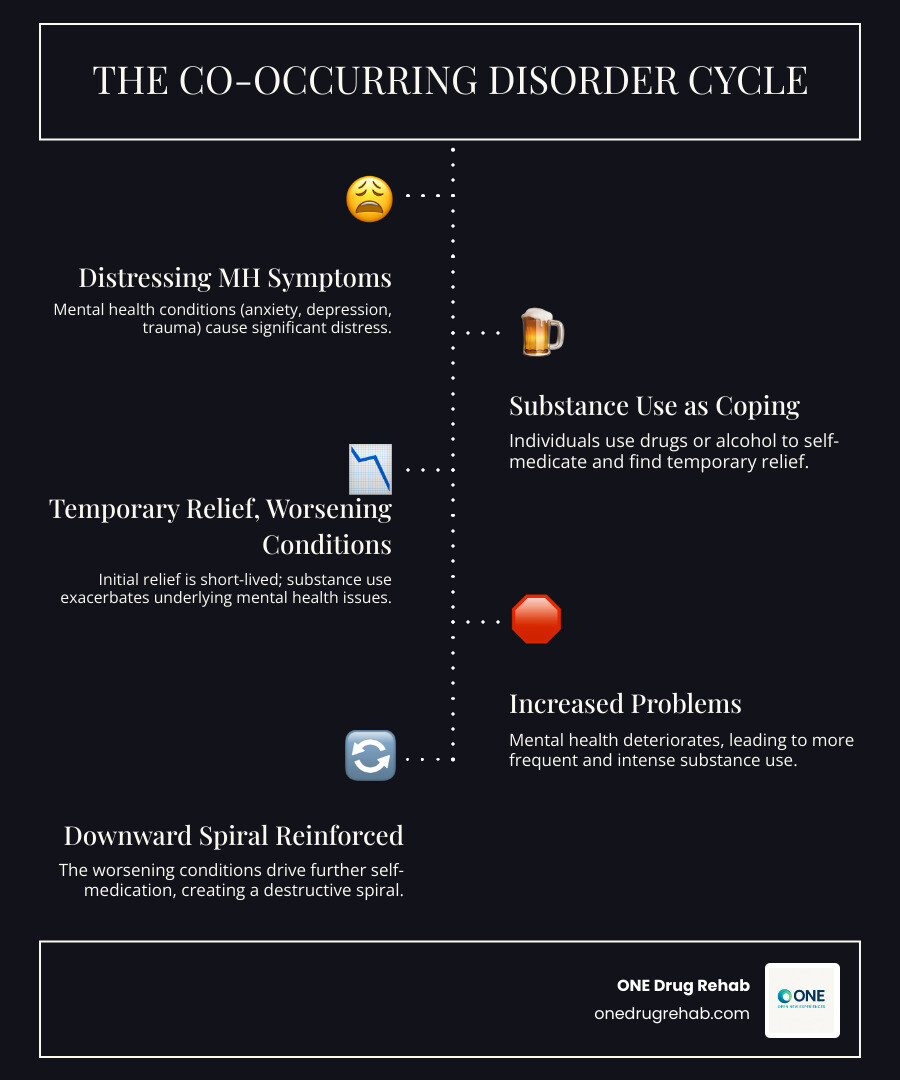
When someone is struggling with depression and alcohol misuse, or anxiety and drug use, treating just one part of the problem leaves the door wide open for relapse. The two conditions feed off each other. Depression drives someone to drink to cope. Drinking makes depression worse. It’s a cycle that separate treatment approaches simply can’t break.
For decades, the mental health system and addiction treatment system operated like two separate islands. If you showed up at a mental health clinic with a substance problem, you’d get sent to addiction treatment. Show up at addiction treatment with depression? Go see a psychiatrist first. People fell through the cracks—over and over again.
Integrated treatment changed that. It’s not just convenient—it’s essential. Research consistently shows that treating co-occurring disorders together produces better outcomes than treating them separately.
Why Separate Treatment Fails and Integration Succeeds
Co-occurring disorders, also known as a “dual diagnosis,” refer to the simultaneous presence of a mental health disorder and a substance use disorder (SUD). These conditions are highly comorbid, as studies find that 45% of people with a psychiatric condition have two or more disorders.
They often go hand-in-hand for several reasons:
- Self-Medication: A leading theory is that individuals use substances to cope with distressing mental health symptoms. For example, someone with social anxiety might use alcohol to feel more comfortable, which can lead to an alcohol addiction rehab.
- Shared Risk Factors: Genetic predispositions can make someone vulnerable to both mental health issues and SUDs. Environmental factors, especially trauma, also play a major role.
- Brain Chemistry: Substances alter neurotransmitters like dopamine and serotonin, which regulate mood. This can worsen existing mental health issues or even induce a substance-induced mental illness.
Here are some common co-occurring disorders:
- Anxiety Disorders and Alcohol Use Disorder: Using alcohol to calm nerves can lead to dependence.
- PTSD and Stimulant Use: Stimulants may be used to numb emotional pain from trauma, but PTSD symptoms can predict drug cravings.
- Depression and Opioid Use: Opioids provide temporary relief but often deepen depression long-term.
- Psychosis and Cannabis Use: Heavy cannabis use is linked to an increased risk of psychosis.
The risks of treating these conditions separately are substantial. When care is isolated, individuals face:
- Fragmented care: Shuffling between providers who don’t coordinate efforts.
- Conflicting messages: Receiving contradictory advice that causes confusion.
- Falling through the cracks: Being discharged from one program because the other condition isn’t stable, leading to higher dropout rates.
This outdated approach leaves people vulnerable to relapse. As researchers Kelly and Daley highlight, “Integrated treatment for comorbidity has been found to be consistently superior compared to treatment of individual disorders with separate treatment plans.” You can read more about this research here: Scientific research on integrated vs. parallel treatment.
The Benefits of an Integrated Approach
Integrated treatment is the evidence-based standard for co-occurring disorders. By addressing both conditions simultaneously, we see dramatic improvements:
- Improved outcomes: Significant reduction in substance use and improvement in psychiatric symptoms.
- Higher treatment retention: Clients are more likely to stay engaged when all their struggles are addressed in a seamless way.
- Reduced substance use & better psychiatric symptoms: Tackling underlying mental health issues helps achieve sobriety, and addressing substance use alleviates psychiatric symptoms.
- Increased housing stability: Better overall functioning leads to greater stability in life.
- Cost-effectiveness: Integrated care reduces long-term costs from repeated hospitalizations, emergency services, and incarceration.
The Gold Standard: A Deep Dive into Integrated Treatment Programs
Integrated treatment’s philosophy is to treat the whole person, not just symptoms. It provides simultaneous care for mental health and substance use disorders by one multidisciplinary team in one program. This collaborative, person-centered approach eliminates the confusion of navigating separate, fragmented systems.

What Are the Key Components of Effective Integrated Treatment Programs?
An effective program is built on several foundational components:
- Comprehensive Assessment: A thorough evaluation to screen for both disorders, ensuring an accurate dual diagnosis and a clear understanding of their interplay.
- Individualized Treatment Plan: A personalized plan developed with the individual to address their unique needs and goals, integrating interventions for both disorders.
- Case Management: A dedicated case manager coordinates appointments, medication, and community resources, acting as a central point of contact.
- Medication Management: Psychiatric care and medication management are included, with prescribers and therapists working together to ensure optimal, safe treatment.
- Psychoeducation: Education for individuals and families on their conditions, triggers, and the recovery process.
- Long-Term Perspective: Adopts a long-term, community-based view, recognizing that ongoing support is crucial for sustained recovery.
Evidence-Based Therapies Used in Treatment
Integrated programs use various evidence-based therapies, often combined to fit individual needs:
- Cognitive Behavioral Therapy (CBT): Helps change negative thought patterns and behaviors contributing to both conditions.
- Dialectical Behavior Therapy (DBT): Teaches skills in mindfulness, distress tolerance, and emotion regulation, useful for intense emotional dysregulation.
- Motivational Interviewing (MI): A client-centered approach to help resolve ambivalence about change and build motivation for recovery.
- Seeking Safety for PTSD and SUD: A therapy for co-occurring trauma and substance use that focuses on present-day coping skills and safety.
- Contingency Management (CM): Uses positive reinforcement (rewards) to encourage desired behaviors like abstinence.
- 12-Step Facilitation (TSF): Helps individuals engage with peer support groups like AA and NA, which are effective for maintaining sobriety.
For a deeper dive into the effectiveness of these approaches, you can explore reviews like this one on integrated psychological treatments.
Specific Considerations for Different Disorders
Integrated treatment is customized for specific co-occurring disorders:
- Psychosis and Cannabis Use: Treatment combines medication for psychosis, motivational counseling for cannabis use, CBT, and family therapy.
- Mood Disorders (Bipolar, Depression): For Bipolar Disorder and SUD, Interpersonal and Social Rhythm Therapy (IPSRT) helps stabilize routines. For Depression and SUD, combining antidepressants with CBT is highly effective.
- Anxiety Disorders and Alcohol: CBT is a primary treatment to teach coping skills for anxiety without using alcohol.
- PTSD and Trauma-Informed Care: Trauma-informed care is essential. Therapies like Seeking Safety address both issues by focusing on present-day safety, while more intensive trauma work may wait until substance use is stable.
Tailoring Treatment for Every Individual and Family
Effective integrated treatment recognizes that each person’s journey is unique. It’s about meeting individuals where they are, considering their individual needs, life stages, and the support systems around them.

Addressing the Needs of Different Age Groups
The impact of co-occurring disorders and the most effective treatment strategies can vary significantly depending on age.
- Adolescents: This is a crucial developmental period. Adolescents with SUD often struggle with other mental health conditions; more than 60% of adolescents in treatment studies have comorbid substance use and non-SUD. Peer influence is powerful, and their brains are still developing, making them particularly vulnerable to the long-term effects of substance use. Integrated treatment for teens digs into the “why” behind behaviors, helping them understand emotions, develop healthier coping strategies, and build life skills. Family involvement is critical at this stage. Further insights on this can be found in research on adolescents with SUD and mental health conditions.
- Young Adults: The transition to independence can be challenging, with many young adults using substances to cope with overwhelming emotions or identity confusion. Integrated programs for this age group offer support in building healthy coping skills, exploring identity and values, developing autonomy and accountability, and acquiring life skills needed for relationships, school, or work. Roughly 36% to 40% of young adults with a serious mental health condition or seeking treatment meet criteria for a SUD.
- Adults: Adults often face unique pressures related to career, family, and other life responsibilities. Integrated treatment for adults acknowledges this complexity, offering flexible options (e.g., outpatient rehab program ultimate guide) and involving partners and family in the healing process. It provides clinically sound support for both conditions, allowing individuals to pursue recovery while managing their daily lives.
The Critical Role of Family Involvement
Recovery is rarely a solo journey. The involvement of family and other loved ones is a powerful predictor of successful long-term outcomes in integrated treatment. Our approach often includes family in various ways:
- Family therapy: Provides a safe space for family members to communicate, process emotions, and heal together.
- Education for loved ones: Helps family members understand the nature of co-occurring disorders, reducing stigma and enabling them to provide effective support.
- Building a support network: Encourages the family to become a positive force in the individual’s recovery, offering encouragement and accountability.
- Setting healthy boundaries: Teaches family members how to establish and maintain boundaries that promote the individual’s recovery while protecting their own well-being.
- Improving communication: Improves family dynamics by fostering open, honest, and supportive communication patterns.
When families heal together, outcomes are stronger and more sustainable.
Access, Challenges, and the Future of Integrated Care
While the benefits of integrated treatment are clear, ensuring widespread access requires addressing healthcare policy and provider training.
Ensuring a ‘No Wrong Door’ Approach
A core principle for effective treatment systems is the “no wrong door” approach. This means that no matter where an individual seeks help—a mental health clinic, an alcoholism rehabilitation programs, a primary care doctor, or an emergency room—they should be assessed and receive appropriate care or referral for both their mental health and substance use disorders.
Key aspects of this approach include:
- System integration: Breaking down silos between mental health and SUD services through collaboration and coordinated care.
- Screening in all settings: Implementing routine screening for both conditions in all healthcare settings to ensure early detection.
- Cross-training for staff: Equipping all professionals with the skills to recognize and address co-occurring disorders.
- Reducing barriers to entry: Making it easier for individuals to access care without being turned away due to a co-occurring condition.
SAMHSA actively promotes a ‘no wrong door’ policy, recognizing its importance in improving access and outcomes.
Challenges in Accessing Integrated Treatment Programs
Despite the evidence, accessing integrated treatment still faces significant challenges:
- Lack of available programs: Integrated programs are not universally available. In 2020, just over half of outpatient facilities offered specialized programs for co-occurring disorders, showing slow progress and ongoing gaps in care.
- Insurance and funding issues: Navigating insurance can be complex, despite laws like the MHPAEA. Finding addiction treatment without insurance or Medicaid approved rehab centers remains a hurdle.
- Stigma: The stigma surrounding both mental illness and addiction can prevent people from seeking help.
- Workforce shortages: There is a shortage of professionals dually trained to treat both conditions, partly due to historically separate educational tracks.
- Regional disparities: The availability of integrated care varies significantly by state and region.
The Role of Professionals in Recovery
Social workers and other professionals are vital for successful integrated treatment and relapse prevention.
- Social workers: Often provide case management, therapy, and discharge planning, helping clients steer complex systems and develop coping skills.
- Therapists: Deliver evidence-based therapies (CBT, DBT, etc.) to help manage emotions and change behaviors.
- Case managers: Coordinate all aspects of care, from inpatient rehab options to different phases of outpatient rehab program, and connect clients to resources.
- Relapse prevention: The entire team works to create a robust relapse prevention plan, identifying triggers and building coping strategies.
- Community and aftercare support: Professionals connect individuals to vital long-term resources like 12 step groups near me, recovery support groups, and sober living homes guide 2025.
Frequently Asked Questions about Integrated Treatment
We understand that navigating treatment options can be overwhelming, especially when dealing with co-occurring conditions. Here are some common questions we hear about integrated treatment programs.
How do I know if I need an integrated treatment program?
If you suspect you’re struggling with both a mental health condition (like depression, anxiety, PTSD, or bipolar disorder) and a substance use disorder, an integrated treatment program is likely your best option.
- Signs of co-occurring disorders: You might be using substances to cope with difficult emotions or mental health symptoms (self-medication). Your mental health symptoms might worsen when you use substances, or your substance use might increase during periods of mental distress.
- Difficulty in previous treatments: If you’ve tried treating one condition separately (e.g., only going to therapy for depression while still using substances, or only attending rehab without addressing underlying anxiety) and found that your progress was limited or you relapsed, this is a strong indicator that an integrated approach is needed.
- Professional assessment is key: The most definitive way to know is to seek a comprehensive assessment from a qualified professional who can screen for both mental health and substance use disorders. This will provide a clear picture of your needs and help determine the best course of action.
How long does integrated treatment last?
There’s no fixed timeline for integrated treatment, as it’s highly individualized and depends on the severity of your conditions, your progress, and your personal goals.
- Varies by individual: Some individuals may require intensive inpatient care initially, while others might start with outpatient programs. The duration can range from several weeks to many months, or even years, with ongoing support.
- Not a fixed timeline: Recovery is a process, not an event. Integrated treatment is viewed as a long-term journey, recognizing that both mental health and substance use disorders are chronic, relapsing conditions that require sustained attention.
- Continuum of care: Effective integrated treatment involves a continuum of care, moving through different levels of support as your needs change. This can include:
- Inpatient or residential treatment: For initial stabilization and intensive therapy.
- Partial hospitalization programs (PHPs) or intensive outpatient programs (IOPs): Offering structured treatment while allowing you to live at home.
- Outpatient therapy and medication management: Ongoing support as you transition back to daily life.
- Aftercare planning: Including support groups, individual therapy, and sober living environment options to prevent relapse.
Is integrated treatment covered by insurance?
Insurance coverage for integrated treatment programs can vary, but recent legislative changes aim to improve access.
- Coverage varies by plan: The extent of coverage depends on your specific insurance provider and plan. It’s always best to verify your benefits directly with your insurance company. Our team can often help with rehab insurance verification.
- Mental Health Parity and Addiction Equity Act (MHPAEA): This federal law requires most health plans to cover mental health and substance use disorder services no more restrictively than medical and surgical benefits. This means if your plan covers medical treatments, it should also cover integrated treatment programs similarly.
- Verifying benefits: We recommend contacting your insurance provider to understand your specific benefits, deductibles, co-pays, and any pre-authorization requirements for integrated treatment.
- Program financing options: If insurance coverage is limited, many programs offer various financing options, sliding scale fees, or can help connect you with state or federal funding resources. Don’t let financial concerns prevent you from seeking help.
Conclusion
The journey to lasting recovery from co-occurring mental health and substance use disorders can feel daunting, but integrated treatment offers a guide of hope. It acknowledges the intricate connection between these conditions and provides a comprehensive, compassionate, and coordinated path to healing.
By treating the whole person—addressing both mental health and substance use simultaneously—integrated treatment leads to significantly better outcomes: reduced substance use, improved mental health, greater stability, and a higher chance of long-term recovery. It’s the evidence-based standard, a philosophy that says you don’t have to choose which part of yourself to heal first.
Just like the old saying, integrated treatment truly helps you hit “two birds with one stone,” allowing you to reclaim your life from the dual challenges you face.
If you or a loved one are ready to explore this effective approach, our directory at ONE Drug Rehab can help you find the support you need.
Find a dual diagnosis treatment center near you